
PressInfo #97 – Nytt Institutt for Fredsforskning, NIFF New Nordic Institute for Peace Research – A TRANSCEND Initiative

NIFF – a New Nordic Institute for Peace Research

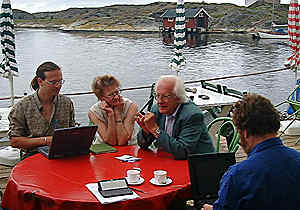
At a meeting in Stocken, Sweden, on the 24th of July, of Johan and Fumi Galtung, Kai Frithjof and Denisa Jacobsen, Ola and Erni Friholt, Jan Oberg, and Jorgen Johansen, TRANSCEND, TFF, and the ICL/Praxis for Peace agreed to cooperate on the joint launching of the New/Nordic Institute for Peace Research (NIFF according to the Scandinavian abbreviation, with N standing for both New and Nordic).

Similar initiatives are also being launched by TRANSCEND and the ICL in Canada and Romania (see next months TRANSCEND circular).

The aim of the institute is:

– to re-launch peace research in the Nordic countries.

The aim of NIFF is to promote the highest quality of research, building upon the TRANSCEND approach of Diagnosis – Prognosis – Therapy, combining clear and powerful critique with creative suggestions for what can be done.

As such, it is open to all members in Norway, Sweden, Denmark and Finland, and we would welcome suggestions for possible members from these countries.

When a sufficient number of Research Papers have been collected from the members of NIFF, a new web-site will be launched (www.niff.org) containing all NIFF Research and Publications.

In the beginning, the Institute will not have one concrete location, but will be based instead upon a network of researchers throughout the Nordic countries, cooperating on joint research programmes and publications.

NIFF Research Papers currently being prepared

1. An Epistemological Hoax: The Democratic Peace Theory

2. How Autocracies End

3. World Economic Crisis

4. A Deep Culture Theory of Peace

5. Coopting Social Movements – NGOs, GNGOs, CSOs

6. Development Imperialism: Aid and the Spread of Capitalism

7. Reconciliation and Forgiveness
Other Research Topics currently under consideration

1. Peace Research–Relaunching a Nordic Tradition

2. Alternative Defence–Peace by Peaceful Means vs.Increasing Militarism

3. Nonviolence and Satyagraha

4. Gender and Conflict

5. Youth and Conflict

6. Peace Education

1-Page outlines for each research topic are currently being developed and will be circulated to all NIFF members.

If you would like to receive copies of these outlines, please contact Kai Frithjof Brand-Jacobsen at <icl@c2i.net>. Suggestions and comments are welcome.

Books currently under preparation

2. The Struggle Continues–Peace Praxis, Kai Frithjof Brand-Jacobsen (<icl@c2i.net>to be translated into Norwegian).
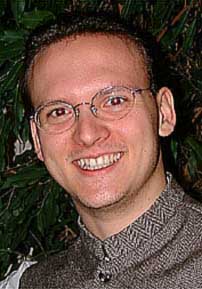
Kai Frithjof Brand-Jacobsen
TFF Peace Antenna

Education & Training

NIFF will be working to promote peace education in the Nordic countries. Current and potential sites include: Tromso (with Vidar Vambheim), Trondheim (with Magnus Haavelsrud), Sandnes (with Tore Lende and Eva Nordland), Bodo (with Martin Eide).

Further sites will be developed throughout the Nordic countries.

Action

NIFF will be involved in direct peace action, both in the Nordic countries, and in cooperation with others internationally.

Dissemination

Dissemination is crucial to NIFF and includes

NIFF Newsletter
A 1-Page Information on Specific Conflicts.

NIFF Research Papers
First internet, then hard-copy.

Channels
Internet – media – organizations – schools (all levels, including colleges, hoyskole, skills specific, etc.) – Shopping centres – journalists – local/national newspapers/television/radio

Targets
Peace activists and grassroots organizations – social and community organizations – teachers and students – journalists – policy makers – general population.

Funding

Initial funding for NIFF includes a 9-month stipend for Kai Frithjof Brand-Jacobsen, who will be working during this period to secure core funding for the institute as well as research specific funding for NIFF Research Programmes.

Motives and needs

The idea of peace, like the idea of health, must be as old as humankind, like the idea of (re)searching for peace. But institutionalized peace research can be traced to the Nordic countries in the late 1950s/1960s; combining scholarly concerns with innovative social science and activist concerns with the disastrous Cold War mix of stalinism and nuclearism.

Forty years, one generation, have now passed, and time has come to make a new, fresh start with a new institute for peace research, Nytt Institutt for fredsforskning, NIFF (N also stands for Nordic), drawing on TRANSCEND’s and ICL’s efforts to promote peace studies around the world, but organizationally independent of either (see www.transcend.org and www.globalsolidarity.org).

NIFF will, at least to start with, be “virtual” until somebody also offers NIFF an abode in real space, somewhere in the Nordic countries.

This is a proposal for a five point program:

(1) NIFF will promote peace by peaceful means by exploring and help enact nonviolent initiatives to defuse dangerous conflict formations (which are much broader than the conflict arenas the media and the governments/diplomats focus on).

(2) NIFF will work actively with peace movements and other NGOs that cannot be suspected of having hidden geopolitical/economic agendas, and develop ideas in dialogue with them.

(3) NIFF will generally work in the three Scandinavian languages, and in English.

(4) NIFF will as soon as possible establish a web-site with research papers by its members; numbered by the order in which they appear. Later they may also be available as working papers, but they will always be freely available through downloading.

(5) NIFF will establish a press service in Nordic languages for adequate journalistic coverage of important conflict formations, including the situation of “minorities” in the Nordic countries. Some of this will be formatted for quick downloading and local posting in shopping centers etc.
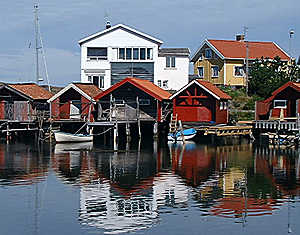
The NIFF initiative was launched in this white house

TFF and NIFF

“TFF is proud to be associated with this initiative. Nordic peace research has been successfully institutionalized as university institutes and state institutes over the mentioned four decades. This is well and good, but TFF has, from its inception in 1985, embodied two additional ideas or visions; first, that peace research must also develop outside and independent of these structures. Second, that at least some peace research must be useful to those hit by violence and inform its research by conducting empirical work in conflict regions. In short, research through engagement, not only through in-house academic exchanges and books.

NIFF’s aims and values are completely compatible with TFF’s and we can be highly useful to each other. Sometimes the search and re-search has to imply that we re-start and re-think what it is we want to do as intellectuals-cum-activists.

NIFF will solidify the triangular relations between TRANSCEND, The International Correspondence League ICL/Peace Practise and TFF. Kai is also a TFF Peace Antenna; Johan Galtung – a friend and TFF adviser – and I met for the first time in 1974 in a place that later on should become fateful for European politics and world order: the former Yugoslavia, Dubrovnik and the Inter-University Centre there to be more precise. It feels right to re-launch a peace research effort based on old ideals – such as nonviolence – and apply them to the hard problems of the contemporary world.

I believe that the end of the Cold War since 1989 and the conflicts in the Balkans also justify a re-think of what peace research can do and what roles it should play – and perhaps not play.

One more reason explains why TFF engages in this. We share the view that it is important to try to re-turn to a Nordic research focus which we more or less left with the publishing of “Nordic Security in the 1990s. Options in the Changing Europe” edited by me and published by Pinter Publishers in 1992 (see this site’s Publications section).

It seems to me that it is time to take up questions such as:

* How do people around the world see the Nordic countries, their cultures and policies? What have Nordic societies meant to others; until recently, they seem to have been a model or ideal to many?
* Do they individually and as a region have a special contribution to make to the deeply problematic world order developments these years?
* How come that Nordic security and foreign policies transformed themselves towards European integration and even full endorsement of NATO war-fighting in Europe with so little debate?
* How did each of the Nordic governments manage over a few years to become so loyal to European integration – and now European military integration and build-up – and skip the “Nordicness” of our policies, cultural values and philosophies which are rooted in centuries of traditions and popular visions.
* The Nordic values and social models could, and I believe still can, make an significant contribution to bigger future fields such as world development and social justice, security, peace and democratization. The question is how?

This autumn, TFF will launch a section on our homepage about this European military integration and its implication – helping everybody who cares to re-search what is going on underneath the official rhetoric. It also coincides with Sweden taking over the EU chairmanship from New Year 2001.

And one more thing: NIFF was launched at Stocken on the West coast of Sweden, a place of great natural beauty and peace. We were hosted by two remarkable people who embody peace in every step they take – Erni and Ola Friholt. PressInfo 98 will actually be about them!”

The focus is Nordic, but it is the Nordic region in a wider world perspective. So, we would love to have comments and ideas to all this from people around the world,” ends Jan Oberg. 
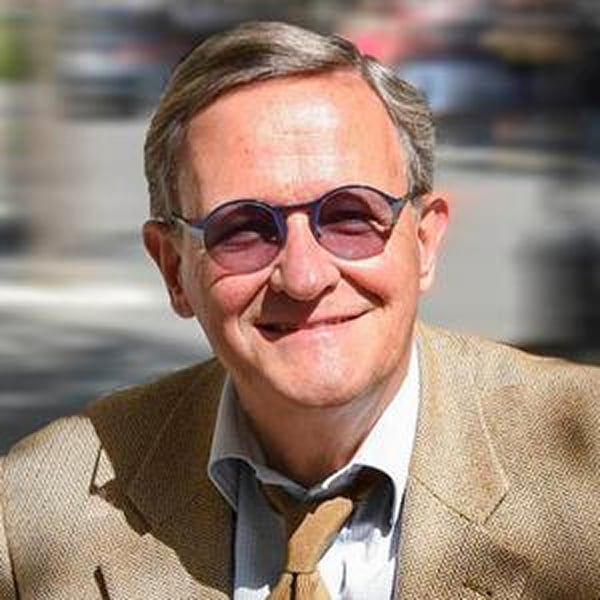
Peace & future researcher + ‌Art Photographer

Related Posts

The agreement is catastrophic both because of what it says and what it doesn’t mention. It reduces further the major asset of security policies: Freedom of action. Jan Oberg TFF director September 25, 2026 A couple of hours before the agreement was signed on September 22, 2026, I published the following 13 hypotheses about what it would most likely contain on TFF Substack (in English). I was wrong on only the first point. Contrary to what Trump had written on his Truth Social platform, it does not appear to come into force immediately. In fact, it turned out to be worse than even I had anticipated. After these hypotheses now come a number of reflections in light of what the agreement actually contains, and does not contain, as well as the way in which it has generally been presented by major media outlets and by the public-service broadcaster DR. My...
Below are TFF-related media mentions, comments, videos and social media posts published elsewhere but not on this homepage. We happen to catch and list only a fraction. Regarding video comments and debates, we recommend that you go to the TFF Video Channel on Substack where many of them are reproduced. Jan Oberg is a contributor to China Daily – 52 million daily clicks – and Global Times, CGTN and CCTV (the national television), China Investment, Xinhua News Agency and several others. Articles and videos on these media very often multiply into countless Chinese (and Western media) that re-post them from these main media. Thanks to The China Academy, his analyses, interviews and comments are frequently posted on YouTube channels such as Thinkers Forum and Wave Media. These videos are often re-posted on Bilibili (China’s YouTube), the China Content Center on TikTok, and on the Chinese edition of TikTok, Douyin.com. This means reaching hundreds of millions of viewers worldwide over a year. While there are too many to catch on all these...
Jan Oberg May 15, 2026 Go to this Fox News page and scroll the whole way down: President Donald Trump tells the world that his meeting with President Xi Jinping yielded a lot of very concrete political and economic results – of course, only where the Chinese side, according to him, agreed with him. He does not mention the Taiwan issue, but Secretary of State, Marco Rubio, says that it did not feature prominently in their talks and that the US policy on Taiwan has not changed. Then go to China Daily – or Global Times – and you will see that for the Chinese it is framework, principles, structure of cooperation etc. that matters – all embedded in the overall idea of “constructive bilateral relationship of strategic stability.” Nowhere is any concrete agreement or deal – all that Trump refers to – mentioned. At the general level, this gives you insights into the very different social...

Recent Articles

Tony Robinson October 4, 2026 Violence is easy to recognise when someone is being beaten, shot or killed. It becomes more difficult when nobody is holding a weapon. Poverty, discrimination, exploitation and repression can restrict a human life just as effectively, although they do so in very different ways and with very different consequences. Simply adding more categories to an ever-growing list of forms of violence does not really solve the problem. The more interesting question is what all these different situations have in common and why it makes sense to describe them using the same word. Human beings do not simply react to what happens around them. They remember the past, imagine things that do not yet exist, make plans and undertake projects. Workers organise because they imagine different working conditions; people migrate because they imagine another life somewhere else; social movements emerge because people refuse to accept the...
It’s a matter of principles, courage, vision and pulling together – while the militarist world is falling apart… Peter Langille October 3, 2026 “Here, then, is the problem which we present to you, stark and dreadful and inescapable: Shall we put an end to the human race; or shall mankind renounce war?”The Bertrand Russell—Albert Einstein Manifesto, July 9, 1955 ⁕ The forecast for what’s ahead is worrisome. The sharp rise in armed conflicts over the past three years is adding to what was already the highest level in over seventy years. Genocides, which should be prevented are supported. A shared climate emergency that jeopardises survival is ignored. Diverse polls now suggest that people are war-weary, worried and interested in a more effective United Nations. And, there are viable policy options for a more secure world! Yet governments are doubling-down, betting on more war and investing heavily. If current trends persist,...
Johan Galtung 1930-2024October 2015 Published here on October 3, 2026 Let us focus on Civilization for conflict analysis and remedies. Major forms of disorder use violence; war is state organized violence. The most belligerent states are the United States of America and Israel, both with civilization roots. National Evangelism, the US Protestant Christian civilization– more national than evangelical–justifies US warfare as exceptionalism of a people chosen by God, with a manifest destiny to run the world. Orthodox Judaism justifies Israeli warfare to conquer and expand from Nile to Euphrates as a religious right and duty to the Eternal One. The third most belligerent country, the UK, no longer believes it is God-chosen but chosen by the USA; not quite the same but something. But the root cause of global disorder lies in the Occident–with Islam–seeing itself as the single, universal civilization valid for all at all times, all others being...

TFF on Substack

Discover and subscribe to more peace materials on TFF Substack

Most Popular

Tony Robinson October 4, 2026 Violence is easy to recognise when someone is being beaten, shot or killed. It becomes more difficult when nobody is holding a weapon. Poverty, discrimination, exploitation and repression can restrict a human life just as effectively, although they do so in very different ways and with very different consequences. Simply adding more categories to an ever-growing list of forms of violence does not really solve the problem. The more interesting question is what all these different situations have in common and why it makes sense to describe them using the same word. Human beings do not simply react to what happens around them. They remember the past, imagine things that do not yet exist, make plans and undertake projects. Workers organise because they imagine different working conditions; people migrate because they imagine another life somewhere else; social movements emerge because people refuse to accept the...
It’s a matter of principles, courage, vision and pulling together – while the militarist world is falling apart… Peter Langille October 3, 2026 “Here, then, is the problem which we present to you, stark and dreadful and inescapable: Shall we put an end to the human race; or shall mankind renounce war?”The Bertrand Russell—Albert Einstein Manifesto, July 9, 1955 ⁕ The forecast for what’s ahead is worrisome. The sharp rise in armed conflicts over the past three years is adding to what was already the highest level in over seventy years. Genocides, which should be prevented are supported. A shared climate emergency that jeopardises survival is ignored. Diverse polls now suggest that people are war-weary, worried and interested in a more effective United Nations. And, there are viable policy options for a more secure world! Yet governments are doubling-down, betting on more war and investing heavily. If current trends persist,...
Johan Galtung 1930-2024October 2015 Published here on October 3, 2026 Let us focus on Civilization for conflict analysis and remedies. Major forms of disorder use violence; war is state organized violence. The most belligerent states are the United States of America and Israel, both with civilization roots. National Evangelism, the US Protestant Christian civilization– more national than evangelical–justifies US warfare as exceptionalism of a people chosen by God, with a manifest destiny to run the world. Orthodox Judaism justifies Israeli warfare to conquer and expand from Nile to Euphrates as a religious right and duty to the Eternal One. The third most belligerent country, the UK, no longer believes it is God-chosen but chosen by the USA; not quite the same but something. But the root cause of global disorder lies in the Occident–with Islam–seeing itself as the single, universal civilization valid for all at all times, all others being...
Read More
Living-Peace-Sign-Budapest-copy
Tony Robinson October 4, 2026 Violence is easy to recognise when someone is being beaten, shot or killed. It becomes more difficult when nobody is holding a weapon. Poverty, discrimination, exploitation and repression can restrict a human life just as effectively, although they do so in very different ways and with very different consequences. Simply adding more categories to an ever-growing list of forms of violence does not really solve the problem. The more interesting question is what all these different situations have in common and why it makes sense to describe them using the same word. Human beings do not simply react to what happens around them. They remember the past, imagine things that do not yet exist, make plans and undertake projects. Workers organise because they imagine different working conditions; people migrate because they imagine another life somewhere else; social movements emerge because people refuse to accept the...
b54a1f10-8c65-4f0b-9dd5-4abc0a7d04cc_2659x2659
It’s a matter of principles, courage, vision and pulling together – while the militarist world is falling apart… Peter Langille October 3, 2026 “Here, then, is the problem which we present to you, stark and dreadful and inescapable: Shall we put an end to the human race; or shall mankind renounce war?”The Bertrand Russell—Albert Einstein Manifesto, July 9, 1955 ⁕ The forecast for what’s ahead is worrisome. The sharp rise in armed conflicts over the past three years is adding to what was already the highest level in over seventy years. Genocides, which should be prevented are supported. A shared climate emergency that jeopardises survival is ignored. Diverse polls now suggest that people are war-weary, worried and interested in a more effective United Nations. And, there are viable policy options for a more secure world! Yet governments are doubling-down, betting on more war and investing heavily. If current trends persist,...
010
Johan Galtung 1930-2024October 2015 Published here on October 3, 2026 Let us focus on Civilization for conflict analysis and remedies. Major forms of disorder use violence; war is state organized violence. The most belligerent states are the United States of America and Israel, both with civilization roots. National Evangelism, the US Protestant Christian civilization– more national than evangelical–justifies US warfare as exceptionalism of a people chosen by God, with a manifest destiny to run the world. Orthodox Judaism justifies Israeli warfare to conquer and expand from Nile to Euphrates as a religious right and duty to the Eternal One. The third most belligerent country, the UK, no longer believes it is God-chosen but chosen by the USA; not quite the same but something. But the root cause of global disorder lies in the Occident–with Islam–seeing itself as the single, universal civilization valid for all at all times, all others being...
Screenshot 2026-10-02 011738
Jan ObergPhD, director, The Transnational Foundation for Peace and Future Research, TFFLund, Sweden October 2, 2026 This is my full original manuscript. The Chinese Academy of Social Science, CASS, makes two publications out if it. 1. China’s Five-year plan emphasized the capabilities of basic research and original innovation. It is regarded as the goal of the future social development, which, as required, should be significantly enhanced. Can you comment on the importance of original innovation in research and academic study? I believe it is easier to define “original innovation” in the natural sciences than in social sciences. The breaking points of what constitutes something new, or innovative, are not quite as sharp in the latter. But in both fields it is about opening up something that was closed, unseen, unexplored before – making manifest what was earlier latent. Innovations come in many forms and shapes – naming something that was not...
arctic-circle-map
The agreement is catastrophic both because of what it says and what it doesn’t mention. It reduces further the major asset of security policies: Freedom of action. Jan Oberg TFF director September 25, 2026 A couple of hours before the agreement was signed on September 22, 2026, I published the following 13 hypotheses about what it would most likely contain on TFF Substack (in English). I was wrong on only the first point. Contrary to what Trump had written on his Truth Social platform, it does not appear to come into force immediately. In fact, it turned out to be worse than even I had anticipated. After these hypotheses now come a number of reflections in light of what the agreement actually contains, and does not contain, as well as the way in which it has generally been presented by major media outlets and by the public-service broadcaster DR. My...
girl-5894831_1280
Below are TFF-related media mentions, comments, videos and social media posts published elsewhere but not on this homepage. We happen to catch and list only a fraction. Regarding video comments and debates, we recommend that you go to the TFF Video Channel on Substack where many of them are reproduced. Jan Oberg is a contributor to China Daily – 52 million daily clicks – and Global Times, CGTN and CCTV (the national television), China Investment, Xinhua News Agency and several others. Articles and videos on these media very often multiply into countless Chinese (and Western media) that re-post them from these main media. Thanks to The China Academy, his analyses, interviews and comments are frequently posted on YouTube channels such as Thinkers Forum and Wave Media. These videos are often re-posted on Bilibili (China’s YouTube), the China Content Center on TikTok, and on the Chinese edition of TikTok, Douyin.com. This means reaching hundreds of millions of viewers worldwide over a year. While there are too many to catch on all these...





