

PressInfo #228 – Kosovo – mange andremuligheder end uafhængighed

Den serbiske provins Kosovo, er befolket af en albansk separatist-sindet befolkningsmajoritet, og har ikke imødekommet de krav om at opfylde grundlæggende menneskerettigheder og politiske standarder, som det internationale samfund satte som forudsætninger for statusforhandlinger. Alligevel begynder i de kommende måneder forhandlinger om provinsens fremtidige status.

Denne grundlæggende konklusion findes i den længe ventede rapport fra FNs særlige udsending Kai Eide, som blev godkendt af Kofi Annan og som støttes fuldt ud af EU og USA – men rapporten afmystificerer ikke paradokset.

For kun to et halvt år siden bestemte det internationale samfund, at forhandlinger om provinsens status ikke kunne begynde før, der var opnået et bestemt niveau af menneskerettigheder.

Siden da er det kun blevet klarere, at Kosovos albanske flertal var uvilligt til at imødekomme kriterierne og at FN ikke var i stand til at gennemtvinge dem. Der har været en permanent udvanding af forudsætningerne indtil man nu med hr. Eides rapport endeligt begraver den proklamerede politik med “standarder først, derefter status”.

Hvorfor er det slået fejl? Er det på grund af frygt for den kosovoalbanske trussel om vold, hvis statusforhandlingerne ikke snart starter eller var denne politik allerede fra begyndelsen bluff ?

Hvilket signal giver det for de kommende forhandlingers retfærdighed? Vil trusler om etnisk vold i tilfælde af, at man ikke opnår “kosovoalbanernes eneste løsning – uafhængighed” igen spille en rolle ? Eller vil det internationale samfund komme over sin frygt og give både Pristina og Beograd grund til at tro, at løsningen vil blive forhandlet og holdbar, snarere end påtvunget, ensidig og konfliktskabende ?

Fortalere for Kosovos uafhængighed, som International Crisis Group, Wesley Clark, Richard Holbroke og et antal medlemmer af USAs Kongres, siger, at “uafhængighed er den eneste løsning”. USA har mere påtrængende problemer andetsteds. Men fuld uafhængighed kan ikke opnås ved forhandling, den kan kun påtvinges. “Uafhængigt Kosova” betyder, at kosovoalbanerne opnår deres maksimale krav med militære midler, mens Beograd og kosovoserberne og kosovo-romaerne ikke engang opnår deres minimale.

Det er en opskrift på fremtidige problemer.

Det vil også give bagslag for Europa og USA; det vil være tåbeligt at tage stilling for kosovoalbanerne og isolere Serbien – det tidligere Jugoslaviens mest multietnisk enhed; den er også strategisk vigtig, en retsstat med et marked på 10 millioner mennesker. At fortsætte med at straffe Serbien og serberne kollektivt for Milosevics brutalitet ville være umoralsk.

Et “uafhængigt Kosova” ville være et farligt fortilfælde for regionen, ikke mindst Bosnien og Makedonien, såvel som for folkeretten og for den europæiske integration. Og hvis Kosovo skal være selvstændigt, hvorfor så ikke Taiwan, Tibet, Tjetjenien, Tamil Eelam, Kashmir?

Verden har 200 stater og 5000 etniske grupper. Hvem synes det ville være en bedre verden med 4800 nye stater? Nej, fremtiden handler om menneskelig globalisering og integration.

Uafhængighed ville også stride mod FNs Sikkerhedsråds resolution 1244 af 1999 om Kosovo. Selv ikke hvis den fortolkes mest muligt liberalt, anerkender den uafhængighed. Uafhængighed ville belønne albanske ekstremister, som har været bag den etniske udrensningskampagne mod de ikke-albanske nationer, opmuntre dem, der eksporterer volden fra Kosovo til naboområderne, det sydlige Serbien og Makedonien. For det “afvæbnede” Kosovo-protektorat var hovedansvarlig for disse ting de seneste år.

Resultaterne af Milosevics autoritære politik er selvfølgelig at Kosovo ikke kan vende tilbage til sin stilling før 1999. Det anerkender Beograd i dag. Det internationale samfund for sin del nægter derimod at indse, at FN, NATO, EU og OSCE er mislykkedes totalt i deres forsøg på at skabe dét multietniske, tolerante og sikre Kosovo, som man påstod, at bombningerne skulle muliggøre.

Stort set ingen af 200.000 serbere og titusinder af andre ikke-albanere, der blev fordrevet af albanske nationalister og terrorister i 1999 – 2000, er vendt tilbage.

I forhold til befolkningstallet er det den største etniske udrensning i det forhenværende Jugoslavien. En halv million serbere i dagens Serbien er mennesker fordrevet fra Kroatien, Bosnien og Kosovo; det er Europas største – men helt oversete – flygtningeproblem. Man taler ikke om det. Kosovos økonomi ligger i ruiner – 70 % er arbejdsløse og økonomien er helt mafia-integreret.

Der er aldrig kun én løsning på et komplekst problem. Der er et utal af tænkelige løsninger mellem Kosovos gamle form for selvstyre og fuld uafhængighed, forskellige kombinationer af myndighedsfordeling på flere niveauer. De bør alle være på forhandlingsbordet,.

Således kan man tænke sig et borgernes eller civilsamfundets Kosovo, hvor den etniske baggrund er uden betydning; kantonisering, konsociering, forbundsstat, kondominium (to administrerer en tredje), dobbelt selvbestemmelse for minoriteterne dér og i Sydserbien, deling, formynderskab/forvalterskab, uafhængighed med særlige egenskaber,så som “bløde” grænser, ingen hær og garantier mod sammenslutning med Albanien.

Det mindst kreative af alt er “kun-en-løsning”, som alle de store foreslår det – fuldstændig uforeneligt med enhver anden aktörs “kun-en-mulig-løsning”.

Endelig vil ingen formel status kunne fungere, hvis folk forsætter med at hade hinanden og ikke ser nogen udviklingsmuligheder. Hvis vi ignorerer de menneskelige behov for mindskelse af frygten, dybere forsoning og økonomisk genrejsning, så bliver et uafhængigt Kosovo en anden “mislykket” stat, måske opslugt af borgerkrig. Selv et etnisk rent, kun-albansk-Kosovo er ingen garanti for regional stabilitet. Det kunne hurtigt blive en farlig byrde for EU.

Kosovo handler ikke kun om denne provins’ fremtid; men også om regionens og EUs. Faktisk handler Kosovo om verdenspolitik. I denne 11. time skulle FN, EU og USA omvurdere deres politik fra 1990erne og anerkende behovet for en mere intellektuelt og politisk åben tilgang, end hvad man har stået for hidtil. Stivhed, [kombineret med] manglende principfasthed og ønsketænkning kan let – endnu en gang – vise sig at være fjender af en holdbar fred i denne region.

TFF har virket med konfliktanalyse og -lægning i alle dele af det tidligere Jugoslavien siden 1991. Arbejdsgrupper fra TFF fungere i 1990erne som goodwill-rådgivere både for jugoslaviske regeringer og den nuværende præsident Ibrahim Rugovas kosovoalbanske ledelse.

Der findes mange andre lænker om krisen i Kosovo – og en fortegnelse over praktisk taget alle TFFs analyser og debatartikler her.

Oversat af Orla Jordal, www.jordals.dk, som en public service.

© TFF and the author 2005
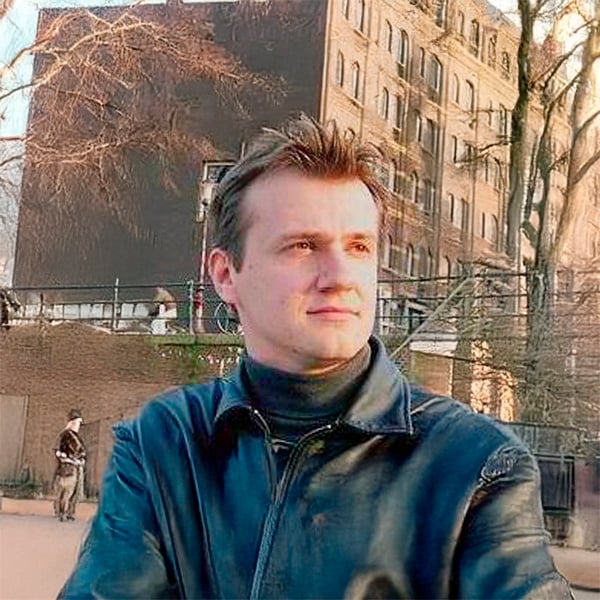
"September 2003 - present: PhD in Journalism and Communications, University of Belgrade. Working on the PhD thesis « Journalistic Responsibility in Crisis Situations : a Case-study Analysis of the Relationship between Media Management and Ethical Reporting ». 1996- 1997: Masters (M.A.) in International Affairs-Conflict Analysis, Carleton University, Ottawa Norman Paterson School of International Affairs, Carleton University, Ottawa. A-level GPA - Defended thesis ""with distinction"": ""Influence of the Media on Preventive Diplomacy: Three Cases from the Yugoslav Conflict"". 1992-1996: Bachelor of Journalism (B.J.) - Highest Honors in Journalism and Political Science, Carleton University, Ottawa"

Peace & future researcher + ‌Art Photographer

Related Posts

Small and different + among the 10% most active + 9,000 texts + 150 Associates + 60 000 a day — and a stubborn belief that peace is smarter and must be secured by peaceful means. In 2026, the Transnational Foundation for Peace and Future Research (TFF) turns 40. On Monday, October 5, 2026, a new TFF homepage will go live — a new gateway to more than 9,000 articles, analyses, research papers and other contributions produced over four decades of independent peace research. But this is not simply a new website. For four decades, TFF has worked from a simple conviction: peace is smarter than militarism and can be brought about by peaceful means. This is not merely an aspiration. It is the principle expressed in the UN Charter and the Gandhian tradition that has guided our work from the beginning. TFF is a research-based, independent and people-financed foundation....
The agreement is catastrophic both because of what it says and what it doesn’t mention. It reduces further the major asset of security policies: Freedom of action. Jan Oberg TFF director September 25, 2026 A couple of hours before the agreement was signed on September 22, 2026, I published the following 13 hypotheses about what it would most likely contain on TFF Substack (in English). I was wrong on only the first point. Contrary to what Trump had written on his Truth Social platform, it does not appear to come into force immediately. In fact, it turned out to be worse than even I had anticipated. After these hypotheses now come a number of reflections in light of what the agreement actually contains, and does not contain, as well as the way in which it has generally been presented by major media outlets and by the public-service broadcaster DR. My...
Jan Oberg May 15, 2026 Go to this Fox News page and scroll the whole way down: President Donald Trump tells the world that his meeting with President Xi Jinping yielded a lot of very concrete political and economic results – of course, only where the Chinese side, according to him, agreed with him. He does not mention the Taiwan issue, but Secretary of State, Marco Rubio, says that it did not feature prominently in their talks and that the US policy on Taiwan has not changed. Then go to China Daily – or Global Times – and you will see that for the Chinese it is framework, principles, structure of cooperation etc. that matters – all embedded in the overall idea of “constructive bilateral relationship of strategic stability.” Nowhere is any concrete agreement or deal – all that Trump refers to – mentioned. At the general level, this gives you insights into the very different social...

Recent Articles

Below are TFF-related media mentions, comments, videos and social media posts published elsewhere but not on this homepage. We happen to catch and list only a fraction. Regarding video comments and debates, we recommend that you go to the TFF Video Channel on Substack where many of them are reproduced. Jan Oberg is a contributor to China Daily – 52 million daily clicks – and Global Times, CGTN and CCTV (the national television), China Investment, Xinhua News Agency and several others. Articles and videos on these media very often multiply into countless Chinese (and Western media) that re-post them from these main media. Thanks to The China Academy, his analyses, interviews and comments are frequently posted on YouTube channels such as Thinkers Forum and Wave Media. These videos are often re-posted on Bilibili (China’s YouTube), the China Content Center on TikTok, and on the Chinese edition of TikTok, Douyin.com. This means reaching hundreds of millions of viewers worldwide over a year. While there are too many to catch on all these...
Jan Oberg TFF director October 13, 2026 According to Alfred Nobel’s will, the Nobel Peace Prize shall be awarded: ”to the person who has done the most or best to advance fellowship among nations, the abolition or reduction of standing armies, and the establishment and promotion of peace congresses.” Further down, he also expresses how the prize for the “champions of peace” shall be decided: “that for champions of peace by a committee of five persons to be selected by the Norwegian Storting. Alfred Nobel’s will is remarkably short and clear. But few seem to have read it. Nobel did not say that the committee itself should consist of members of parliament. He entrusted the Storting with appointing five persons. In principle, it could have selected diplomats, mediators, peace researchers, conflict-resolution specialists, or other individuals with recognised expertise in matters of peace from around the world. Instead, the Storting gradually...
The Quest for Humane Survival Richard Falk Professor emeritus, Princeton UniversityTFF Associate since 1986October 12, 2026 After decades of teaching and writing about international law in academic frameworks that were not institutionally situated within law school environments—at Princeton and the University of California, Santa Barbara—I found myself most receptive to the TWAIL outlook. It has been especially illuminating in clarifying the extent to which international law evolved as a dialogical critique of Europe’s efforts to legitimize its colonial undertakings. In particular, TWAIL has exposed how international law has functioned to legalize the subjugation of Third World peoples, securing conditions for exploitative investment and trade relations, the coercive enforcement of public debts, and an ideology of cultural superiority. TWAIL’s exposure of these economic legacies of colonialism has influenced my understanding of the history and development of international law, broadly conceived, as an ideological project of the Western sub-system of the world...

TFF on Substack

Discover and subscribe to more peace materials on TFF Substack

Most Popular

Below are TFF-related media mentions, comments, videos and social media posts published elsewhere but not on this homepage. We happen to catch and list only a fraction. Regarding video comments and debates, we recommend that you go to the TFF Video Channel on Substack where many of them are reproduced. Jan Oberg is a contributor to China Daily – 52 million daily clicks – and Global Times, CGTN and CCTV (the national television), China Investment, Xinhua News Agency and several others. Articles and videos on these media very often multiply into countless Chinese (and Western media) that re-post them from these main media. Thanks to The China Academy, his analyses, interviews and comments are frequently posted on YouTube channels such as Thinkers Forum and Wave Media. These videos are often re-posted on Bilibili (China’s YouTube), the China Content Center on TikTok, and on the Chinese edition of TikTok, Douyin.com. This means reaching hundreds of millions of viewers worldwide over a year. While there are too many to catch on all these...
Jan Oberg TFF director October 13, 2026 According to Alfred Nobel’s will, the Nobel Peace Prize shall be awarded: ”to the person who has done the most or best to advance fellowship among nations, the abolition or reduction of standing armies, and the establishment and promotion of peace congresses.” Further down, he also expresses how the prize for the “champions of peace” shall be decided: “that for champions of peace by a committee of five persons to be selected by the Norwegian Storting. Alfred Nobel’s will is remarkably short and clear. But few seem to have read it. Nobel did not say that the committee itself should consist of members of parliament. He entrusted the Storting with appointing five persons. In principle, it could have selected diplomats, mediators, peace researchers, conflict-resolution specialists, or other individuals with recognised expertise in matters of peace from around the world. Instead, the Storting gradually...
The Quest for Humane Survival Richard Falk Professor emeritus, Princeton UniversityTFF Associate since 1986October 12, 2026 After decades of teaching and writing about international law in academic frameworks that were not institutionally situated within law school environments—at Princeton and the University of California, Santa Barbara—I found myself most receptive to the TWAIL outlook. It has been especially illuminating in clarifying the extent to which international law evolved as a dialogical critique of Europe’s efforts to legitimize its colonial undertakings. In particular, TWAIL has exposed how international law has functioned to legalize the subjugation of Third World peoples, securing conditions for exploitative investment and trade relations, the coercive enforcement of public debts, and an ideology of cultural superiority. TWAIL’s exposure of these economic legacies of colonialism has influenced my understanding of the history and development of international law, broadly conceived, as an ideological project of the Western sub-system of the world...
Read More
girl-5894831_1280
Below are TFF-related media mentions, comments, videos and social media posts published elsewhere but not on this homepage. We happen to catch and list only a fraction. Regarding video comments and debates, we recommend that you go to the TFF Video Channel on Substack where many of them are reproduced. Jan Oberg is a contributor to China Daily – 52 million daily clicks – and Global Times, CGTN and CCTV (the national television), China Investment, Xinhua News Agency and several others. Articles and videos on these media very often multiply into countless Chinese (and Western media) that re-post them from these main media. Thanks to The China Academy, his analyses, interviews and comments are frequently posted on YouTube channels such as Thinkers Forum and Wave Media. These videos are often re-posted on Bilibili (China’s YouTube), the China Content Center on TikTok, and on the Chinese edition of TikTok, Douyin.com. This means reaching hundreds of millions of viewers worldwide over a year. While there are too many to catch on all these...
Nobel-Prize-Plaque
Jan Oberg TFF director October 13, 2026 According to Alfred Nobel’s will, the Nobel Peace Prize shall be awarded: ”to the person who has done the most or best to advance fellowship among nations, the abolition or reduction of standing armies, and the establishment and promotion of peace congresses.” Further down, he also expresses how the prize for the “champions of peace” shall be decided: “that for champions of peace by a committee of five persons to be selected by the Norwegian Storting. Alfred Nobel’s will is remarkably short and clear. But few seem to have read it. Nobel did not say that the committee itself should consist of members of parliament. He entrusted the Storting with appointing five persons. In principle, it could have selected diplomats, mediators, peace researchers, conflict-resolution specialists, or other individuals with recognised expertise in matters of peace from around the world. Instead, the Storting gradually...
law-419057_1280
The Quest for Humane Survival Richard Falk Professor emeritus, Princeton UniversityTFF Associate since 1986October 12, 2026 After decades of teaching and writing about international law in academic frameworks that were not institutionally situated within law school environments—at Princeton and the University of California, Santa Barbara—I found myself most receptive to the TWAIL outlook. It has been especially illuminating in clarifying the extent to which international law evolved as a dialogical critique of Europe’s efforts to legitimize its colonial undertakings. In particular, TWAIL has exposed how international law has functioned to legalize the subjugation of Third World peoples, securing conditions for exploitative investment and trade relations, the coercive enforcement of public debts, and an ideology of cultural superiority. TWAIL’s exposure of these economic legacies of colonialism has influenced my understanding of the history and development of international law, broadly conceived, as an ideological project of the Western sub-system of the world...
images-2
Advocates of nuclear disarmament are regularly dismissed by the champions of nuclear deterrence as naïve and unrealistic, utopian or even irresponsible. Yet this ‘doctrine’ of deterrence, regarded by France as the ‘cornerstone’ of its national security, is based on quasi-religious beliefs, a theory that cannot be proven, risky gambles and fragile assumptions. So much so that one might legitimately ask which side the ‘Care Bears’ are on. Marc FinaudVice-President of Initiatives for Nuclear Disarmament (IDN) October 9, 2026 This article was originally published on Pressenza When it comes to these things being treated as religious concepts, look here. Idealists and realists It was Hubert Védrine, François Mitterrand’s former Foreign Minister, who repeatedly coined the phrase: ‘Europeans are a sort of Care Bears who don’t realise they’re living in Jurassic Park’. He applies this reference to the cartoon for well-behaved children not only to what he regards as weakness or idealism...
8824b09f-33a5-43f9-9fd0-550f28cda24d_1536x1024
What the West Borrowed from Asia and What It Left Behind Jan Krikke October 8, 2026 The article was originally published here In the late 1960s, the musical Hair announced that the Age of Aquarius was dawning. Its opening anthem promised a transformation of human consciousness: an era of peace, harmony and understanding. Half a century later, a familiar echo of that promise is a meditation app offered by your employer. You can find it in the same list of benefits as the pension plan and the gym discount. How did a spiritual revolution become an employee benefit? The answer lies in the history of the movement known as New Age: where it came from, what it borrowed from Asia, and why the meaning of what it borrowed changed in the process. Two definitions will help. New Age is a loose label for a wide range of spiritual practices and...
Screenshot 2026-10-04 210142
Small and different + among the 10% most active + 9,000 texts + 150 Associates + 60 000 a day — and a stubborn belief that peace is smarter and must be secured by peaceful means. In 2026, the Transnational Foundation for Peace and Future Research (TFF) turns 40. On Monday, October 5, 2026, a new TFF homepage will go live — a new gateway to more than 9,000 articles, analyses, research papers and other contributions produced over four decades of independent peace research. But this is not simply a new website. For four decades, TFF has worked from a simple conviction: peace is smarter than militarism and can be brought about by peaceful means. This is not merely an aspiration. It is the principle expressed in the UN Charter and the Gandhian tradition that has guided our work from the beginning. TFF is a research-based, independent and people-financed foundation....






