Generic thumbnail

As a healthy response to the Bush Administration’s war policies, the number of people taking to the streets in protest is increasing with each step toward war. These protesters realize that they do not want the United States to initiate a pre-emptive and illegal war, but perhaps they do not yet realize that they are also fighting to retain an international order based on multilateralism, the rule of law and the United Nations itself.

To save the UN from the Administration’s destructive and radical unilateralism, other key nations will have to stand up to its bullying. France, Russia and China, because of their veto power in the Security Council, could withhold legal authority for America to proceed to war. Whether they will exercise this power, given the pressure they’re under from the Administration, remains to be seen. But if one or more of them does so, the Administration would be faced with acting in direct contravention of the Security Council, with a probable serious erosion of Congressional and public support. If it were to go ahead with war, it could deliver a death knell not only to Iraq but also to the UN itself. It is emblematic of US global waywardness that it is necessary to hope for a veto to uphold the legitimacy and effectiveness of the UN as a force for peace but to also be concerned that Administration threats of unilateral military action could render the veto ineffective and thereby the role of the Security Council largely meaningless.

The United States was instrumental in forming the UN and was a strong supporter of the organization until the Reagan presidency, when that Administration’s hostility toward the UN became pronounced. Reagan’s indictment of it as dominated by Third World concerns was largely rhetorical and symbolic but included calls for budgetary downsizing and withdrawal from UNESCO because of its alleged corruption and anti-American bias. In the Bush I presidency this antipathy was connected with US global economic interests; the Administration used American muscle to close down the Center on Transnational Corporations as a favor to multinationals. This confrontational approach was briefly reversed by Bush Senior’s use of the UN to mandate war against Iraq in 1991 to oust it from Kuwait. At the time, Bush surprised the world by sounding briefly like a second coming of Woodrow Wilson with his call for “a new world order” centered upon reliance on the collective security mechanisms of the UN Security Council to meet the challenges of aggression. When the dust settled at the end of the Gulf War, however, the White House realized that it did not want such global responsibilities or to build such expectations about an enhanced UN role. The language of a new world order was deliberately, as one high-level official then expressed it, “put back on the shelf.”

Bill Clinton’s 1992 presidential campaign seemed to offer prospects for enhanced recourse to the UN to address humanitarian challenges of the sort that were arising in the Balkans and sub-Saharan Africa. But as President, Clinton contributed to the post-cold war decline of the UN by abruptly reversing course on Somalia in 1993 after eighteen Americans were killed in the Black Hawk Down incident. Rather than accept responsibility for that debacle, the Clinton Administration blamed the UN. That Administration also turned its back on UN pleas for a commitment to stop genocide in Rwanda a year later, when a small contingent of UN troops could have prevented the mass murders there. The Clinton security team further sabotaged a Rwanda intervention by threatening to halt US funding for UN peacekeeping operations if the UN took on new peacekeeping commitments.

The Clinton White House expressed only lukewarm support for the UN role in Bosnia, while undermining support for UN action by providing arms to the Croats and Muslims. In Iraq, the Administration undermined and corrupted the UN inspection process by using US inspectors to conduct espionage. Clinton disappointingly celebrated the fiftieth anniversary of the UN by delivering an uninspired speech notable for its Wall Street calls for “downsizing” and “doing more with less,” and by turning increasingly to NATO to carry out what it deemed humanitarian interventions, culminating in the NATO war in Kosovo and Serbia in 1999. This war on behalf of the Kosovars was notable for the absence of any UN authorization for the use of force and a deliberate US decision to circumvent the UN in anticipation of Russian and Chinese vetoes.

But while the Clinton Administration did serious damage to the UN, the Bush presidency-with its repudiation of even minimal multilateralism, its hostility to existing arms control treaties, its rejection of the Kyoto Protocol on global warming and its efforts to undermine the International Criminal Court-created a pattern of anti-UN diplomacy never before seen in Washington. It represents a view that American power and resources should serve exclusively national strategic interests.

Since September 11, the Bush team has selectively used the UN to build a united front against global terrorism, specifically against Al Qaeda. Such an initiative led to a degree of formal multilateralism in the war in Afghanistan but has run into resistance since. In the months after Bush’s 2002 State of the Union address-which first outlined the “axis of evil” approach to the post-Afghanistan challenge and which made no reference whatsoever to the UN-Bush, in speech after speech, gave the impression that “regime change” in Baghdad was a matter of White House discretion. It was then that establishment realists, most prominently Brent Scowcroft and James Baker, sounded the alarm. The Bush war planners seemed quickly to realize that this time they had pushed unilateralism too far even for their Republican constituency, let alone their overseas allies. Congress and the UN were brought into the act, with obvious ambivalence, and the Administration shifted its overt call from “regime change” to “disarmament” via “coercive inspection.” Both Congress and the UN Security Council are being asked to underwrite this approach, and Congress has already capitulated.

There are two main ways to ruin the UN: to ignore its relevance in war/peace situations, or to turn it into a rubber stamp for geopolitical operations of dubious status under international law or the UN Charter. Before September 11, Bush pursued the former approach; since then-by calling on the UN to provide the world’s remaining superpower with its blessings for an unwarranted war-the latter.

Also damaging are the evident double standards and hypocrisy of the US call for enforcement of UN resolutions against Iraq, given consistent US unwillingness to do anything to implement the stream of Security Council resolutions directing Israel to withdraw from occupied Palestinian territories, to dismantle illegal settlements and to apply the Geneva Conventions governing military occupation. Ironically, Security Council Resolution 687, cited by Bush in his justification for war against Iraq, also recalls the objective of establishing a nuclear weapons-free zone in the Middle East and of working toward making the region free of all weapons of mass destruction. While these are clearly worthwhile objectives, no mention is made by the Bush Administration of Israel’s longstanding possession of nuclear weapons.

While the United States engages in such hypocrisy, it is attempting to use UN resolutions improperly to justify an illegal pre-emptive war against Iraq. Resolution 687, which welcomed the restoration of Kuwaiti sovereignty and set forth peace terms after the Gulf War, says nothing about the conditions under which additional force could be used against Iraq. Rather, it concludes by stating that the Security Council “decides to remain seized of the matter and to take such further steps as may be required for the implementation of the present resolution and to secure peace and security in the region.” Thus, any unilateral US enforcement action without Security Council approval would be illegal. If the Bush Administration pushes a resolution authorizing force through the UN Security Council, it will demonstrate only that it has succeeded in bending the organization to its will-in effect subverting the UN the same way it subverted the integrity of the US Congress. It is doubly ruining the UN by its domineering posture and through its repeated assertion that if the UN resists, it will act unilaterally. The worst aspect of the Bush II legacy may be its vicious undermining of multilateralism and international law in general, and of the United Nations in particular.

Published in The Nation, November 4, 2002
© TFF 2002

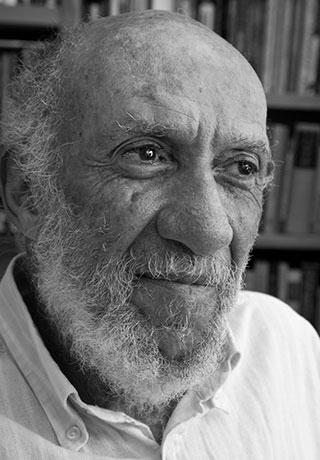
Professor Falk became an adviser to TFF when it was established in 1985.

Related Posts

The agreement is catastrophic both because of what it says and what it doesn’t mention. It reduces further the major asset of security policies: Freedom of action. Jan Oberg TFF director September 25, 2026 A couple of hours before the agreement was signed on September 22, 2026, I published the following 13 hypotheses about what it would most likely contain on TFF Substack (in English). I was wrong on only the first point. Contrary to what Trump had written on his Truth Social platform, it does not appear to come into force immediately. In fact, it turned out to be worse than even I had anticipated. After these hypotheses now come a number of reflections in light of what the agreement actually contains, and does not contain, as well as the way in which it has generally been presented by major media outlets and by the public-service broadcaster DR. My...
Below are TFF-related media mentions, comments, videos and social media posts published elsewhere but not on this homepage. We happen to catch and list only a fraction. Regarding video comments and debates, we recommend that you go to the TFF Video Channel on Substack where many of them are reproduced. Jan Oberg is a contributor to China Daily – 52 million daily clicks – and Global Times, CGTN and CCTV (the national television), China Investment, Xinhua News Agency and several others. Articles and videos on these media very often multiply into countless Chinese (and Western media) that re-post them from these main media. Thanks to The China Academy, his analyses, interviews and comments are frequently posted on YouTube channels such as Thinkers Forum and Wave Media. These videos are often re-posted on Bilibili (China’s YouTube), the China Content Center on TikTok, and on the Chinese edition of TikTok, Douyin.com. This means reaching hundreds of millions of viewers worldwide over a year. While there are too many to catch on all these...
Jan Oberg May 15, 2026 Go to this Fox News page and scroll the whole way down: President Donald Trump tells the world that his meeting with President Xi Jinping yielded a lot of very concrete political and economic results – of course, only where the Chinese side, according to him, agreed with him. He does not mention the Taiwan issue, but Secretary of State, Marco Rubio, says that it did not feature prominently in their talks and that the US policy on Taiwan has not changed. Then go to China Daily – or Global Times – and you will see that for the Chinese it is framework, principles, structure of cooperation etc. that matters – all embedded in the overall idea of “constructive bilateral relationship of strategic stability.” Nowhere is any concrete agreement or deal – all that Trump refers to – mentioned. At the general level, this gives you insights into the very different social...

Recent Articles

Tony Robinson October 4, 2026 Violence is easy to recognise when someone is being beaten, shot or killed. It becomes more difficult when nobody is holding a weapon. Poverty, discrimination, exploitation and repression can restrict a human life just as effectively, although they do so in very different ways and with very different consequences. Simply adding more categories to an ever-growing list of forms of violence does not really solve the problem. The more interesting question is what all these different situations have in common and why it makes sense to describe them using the same word. Human beings do not simply react to what happens around them. They remember the past, imagine things that do not yet exist, make plans and undertake projects. Workers organise because they imagine different working conditions; people migrate because they imagine another life somewhere else; social movements emerge because people refuse to accept the...
It’s a matter of principles, courage, vision and pulling together – while the militarist world is falling apart… Peter Langille October 3, 2026 “Here, then, is the problem which we present to you, stark and dreadful and inescapable: Shall we put an end to the human race; or shall mankind renounce war?”The Bertrand Russell—Albert Einstein Manifesto, July 9, 1955 ⁕ The forecast for what’s ahead is worrisome. The sharp rise in armed conflicts over the past three years is adding to what was already the highest level in over seventy years. Genocides, which should be prevented are supported. A shared climate emergency that jeopardises survival is ignored. Diverse polls now suggest that people are war-weary, worried and interested in a more effective United Nations. And, there are viable policy options for a more secure world! Yet governments are doubling-down, betting on more war and investing heavily. If current trends persist,...
Johan Galtung 1930-2024October 2015 Published here on October 3, 2026 Let us focus on Civilization for conflict analysis and remedies. Major forms of disorder use violence; war is state organized violence. The most belligerent states are the United States of America and Israel, both with civilization roots. National Evangelism, the US Protestant Christian civilization– more national than evangelical–justifies US warfare as exceptionalism of a people chosen by God, with a manifest destiny to run the world. Orthodox Judaism justifies Israeli warfare to conquer and expand from Nile to Euphrates as a religious right and duty to the Eternal One. The third most belligerent country, the UK, no longer believes it is God-chosen but chosen by the USA; not quite the same but something. But the root cause of global disorder lies in the Occident–with Islam–seeing itself as the single, universal civilization valid for all at all times, all others being...

TFF on Substack

Discover and subscribe to more peace materials on TFF Substack

Most Popular

Tony Robinson October 4, 2026 Violence is easy to recognise when someone is being beaten, shot or killed. It becomes more difficult when nobody is holding a weapon. Poverty, discrimination, exploitation and repression can restrict a human life just as effectively, although they do so in very different ways and with very different consequences. Simply adding more categories to an ever-growing list of forms of violence does not really solve the problem. The more interesting question is what all these different situations have in common and why it makes sense to describe them using the same word. Human beings do not simply react to what happens around them. They remember the past, imagine things that do not yet exist, make plans and undertake projects. Workers organise because they imagine different working conditions; people migrate because they imagine another life somewhere else; social movements emerge because people refuse to accept the...
It’s a matter of principles, courage, vision and pulling together – while the militarist world is falling apart… Peter Langille October 3, 2026 “Here, then, is the problem which we present to you, stark and dreadful and inescapable: Shall we put an end to the human race; or shall mankind renounce war?”The Bertrand Russell—Albert Einstein Manifesto, July 9, 1955 ⁕ The forecast for what’s ahead is worrisome. The sharp rise in armed conflicts over the past three years is adding to what was already the highest level in over seventy years. Genocides, which should be prevented are supported. A shared climate emergency that jeopardises survival is ignored. Diverse polls now suggest that people are war-weary, worried and interested in a more effective United Nations. And, there are viable policy options for a more secure world! Yet governments are doubling-down, betting on more war and investing heavily. If current trends persist,...
Johan Galtung 1930-2024October 2015 Published here on October 3, 2026 Let us focus on Civilization for conflict analysis and remedies. Major forms of disorder use violence; war is state organized violence. The most belligerent states are the United States of America and Israel, both with civilization roots. National Evangelism, the US Protestant Christian civilization– more national than evangelical–justifies US warfare as exceptionalism of a people chosen by God, with a manifest destiny to run the world. Orthodox Judaism justifies Israeli warfare to conquer and expand from Nile to Euphrates as a religious right and duty to the Eternal One. The third most belligerent country, the UK, no longer believes it is God-chosen but chosen by the USA; not quite the same but something. But the root cause of global disorder lies in the Occident–with Islam–seeing itself as the single, universal civilization valid for all at all times, all others being...
Read More
Living-Peace-Sign-Budapest-copy
Tony Robinson October 4, 2026 Violence is easy to recognise when someone is being beaten, shot or killed. It becomes more difficult when nobody is holding a weapon. Poverty, discrimination, exploitation and repression can restrict a human life just as effectively, although they do so in very different ways and with very different consequences. Simply adding more categories to an ever-growing list of forms of violence does not really solve the problem. The more interesting question is what all these different situations have in common and why it makes sense to describe them using the same word. Human beings do not simply react to what happens around them. They remember the past, imagine things that do not yet exist, make plans and undertake projects. Workers organise because they imagine different working conditions; people migrate because they imagine another life somewhere else; social movements emerge because people refuse to accept the...
b54a1f10-8c65-4f0b-9dd5-4abc0a7d04cc_2659x2659
It’s a matter of principles, courage, vision and pulling together – while the militarist world is falling apart… Peter Langille October 3, 2026 “Here, then, is the problem which we present to you, stark and dreadful and inescapable: Shall we put an end to the human race; or shall mankind renounce war?”The Bertrand Russell—Albert Einstein Manifesto, July 9, 1955 ⁕ The forecast for what’s ahead is worrisome. The sharp rise in armed conflicts over the past three years is adding to what was already the highest level in over seventy years. Genocides, which should be prevented are supported. A shared climate emergency that jeopardises survival is ignored. Diverse polls now suggest that people are war-weary, worried and interested in a more effective United Nations. And, there are viable policy options for a more secure world! Yet governments are doubling-down, betting on more war and investing heavily. If current trends persist,...
010
Johan Galtung 1930-2024October 2015 Published here on October 3, 2026 Let us focus on Civilization for conflict analysis and remedies. Major forms of disorder use violence; war is state organized violence. The most belligerent states are the United States of America and Israel, both with civilization roots. National Evangelism, the US Protestant Christian civilization– more national than evangelical–justifies US warfare as exceptionalism of a people chosen by God, with a manifest destiny to run the world. Orthodox Judaism justifies Israeli warfare to conquer and expand from Nile to Euphrates as a religious right and duty to the Eternal One. The third most belligerent country, the UK, no longer believes it is God-chosen but chosen by the USA; not quite the same but something. But the root cause of global disorder lies in the Occident–with Islam–seeing itself as the single, universal civilization valid for all at all times, all others being...
Screenshot 2026-10-02 011738
Jan ObergPhD, director, The Transnational Foundation for Peace and Future Research, TFFLund, Sweden October 2, 2026 This is my full original manuscript. The Chinese Academy of Social Science, CASS, makes two publications out if it. 1. China’s Five-year plan emphasized the capabilities of basic research and original innovation. It is regarded as the goal of the future social development, which, as required, should be significantly enhanced. Can you comment on the importance of original innovation in research and academic study? I believe it is easier to define “original innovation” in the natural sciences than in social sciences. The breaking points of what constitutes something new, or innovative, are not quite as sharp in the latter. But in both fields it is about opening up something that was closed, unseen, unexplored before – making manifest what was earlier latent. Innovations come in many forms and shapes – naming something that was not...
arctic-circle-map
The agreement is catastrophic both because of what it says and what it doesn’t mention. It reduces further the major asset of security policies: Freedom of action. Jan Oberg TFF director September 25, 2026 A couple of hours before the agreement was signed on September 22, 2026, I published the following 13 hypotheses about what it would most likely contain on TFF Substack (in English). I was wrong on only the first point. Contrary to what Trump had written on his Truth Social platform, it does not appear to come into force immediately. In fact, it turned out to be worse than even I had anticipated. After these hypotheses now come a number of reflections in light of what the agreement actually contains, and does not contain, as well as the way in which it has generally been presented by major media outlets and by the public-service broadcaster DR. My...
girl-5894831_1280
Below are TFF-related media mentions, comments, videos and social media posts published elsewhere but not on this homepage. We happen to catch and list only a fraction. Regarding video comments and debates, we recommend that you go to the TFF Video Channel on Substack where many of them are reproduced. Jan Oberg is a contributor to China Daily – 52 million daily clicks – and Global Times, CGTN and CCTV (the national television), China Investment, Xinhua News Agency and several others. Articles and videos on these media very often multiply into countless Chinese (and Western media) that re-post them from these main media. Thanks to The China Academy, his analyses, interviews and comments are frequently posted on YouTube channels such as Thinkers Forum and Wave Media. These videos are often re-posted on Bilibili (China’s YouTube), the China Content Center on TikTok, and on the Chinese edition of TikTok, Douyin.com. This means reaching hundreds of millions of viewers worldwide over a year. While there are too many to catch on all these...