
Two apparently related and revealing incidents have turned public attention briefly back to Libya just after the second anniversary of the NATO intervention that helped anti-Qaddafi rebel forces overthrow his regime. The first incident involved the infringement of Libyan sovereignty by an American special forces operation that seized the alleged al Qaeda operative, Abu Anas al-Libi (also known as Nizah Abdul Hamed al-Ruqai), on October 5, supposedly with the knowledge and consent of the Libyan government.

The second incident, evidently a response to the first seizure, was the kidnapping a few days later of the country’s prime minister, Ali Zeidan, while he lay asleep in his hotel lodgings in the center of Tripoli. He was easily captured by a squadron of 20 militia gunmen who arrived at the hotel around 2:00 am and proceeded without resistance from security guards to carry off the head of the Libyan state. Such a bold assault on the state’s essential character as the sole purveyor of legitimate violence (according to the famous conception of Max Weber) is a telltale sign of a political system of shadow governance, that is, without security.

The capture of Ali Zeidan was reportedly prompted both by anger at the government’s impotence in the face of such an overt violation of Libyan sovereignty by the United States, as well as serving to warn the political leadership of the country that any further effort to disarm militias would be resisted.

Ali Zeidan seizure was largely symbolic. He was held by his captors for only a few hours before being released. Nevertheless, the ease of the kidnapping sent shivers down the spine of the Western countries that had been so proud two years ago of their regime-changing intervention under NATO auspices. The incident also reinforced the impression in the West that prospects for lucrative foreign investment and substantial oil flows would have to be put on hold for the indefinite future.

According to journalistic accounts, the militia responsible for this daring challenge to governmental authority in Libya, seems to have recently formed, and is headed by Nuri Abusahmen, who is the speaker of the General National Assembly. Revealingly, Mr. Abusahmen sat serenely beside the prime minister as he addressed the nation shortly after regaining his freedom. For those conscious of Libyan realities, such a juxtaposition was a further indication that the capabilities of the elected government in Tripoli are modest as compared to that of the militias, and can be overridden at will by recalcitrant civil society forces. Perhaps, more to the point, there appears to be a seamless web in Libya between the government and the militias, between what is de jure and what is de facto, and between what is lawful and what is criminal. Of course, it was also highly disturbing that a prominent al Qaeda operative was roaming freely in Libya, and seemingly enjoying some level of national support.

There is no doubt that Libya is so pervasively armed that even the National Rifle Association might find excessive. Supposedly, every household is in possession of weapons either acquired by raids on Qaddafi arsenals as his regime was collapsing or acquired from NATO benefactors. Unlike several of the other countries experiencing a troubled aftermath to the Arab Upheavals, Libya is a rich economic prize, with the world’s fifth largest oil reserves generating a cash flow that could be a boon to the troubled economies of Europe that carried out the intervention, and have acted subsequently as if they have an entitlement to a fair market share of the economic opportunities for trade and investment.

Two years ago the concerns that prompted NATO to act were overtly associated with Qaddafi’s bloody crimes against his own people. The use of force was authorized in a circumscribed March 17, 2011 Security Council Resolution 1973 premised on protecting the entrapped civilian population of Benghazi against imminent attacks by the regime primarily through the establishment of a no-fly zone. The non-Western members of the UNSC were skeptical and suspicious at the time of the debate about authorizing military action fearing that more would be done than claimed, but agreed to abstain when it came to a vote, relying with reluctance on reassurances from pro-interventionist members of the Security Council that the undertaking was of a purely ‘humanitarian’ rather than what it became, a political initiative with a ‘regime-changing’ character.

As it turned out, almost from day one of the intervention it became clear that NATO was interpreting the UN mandate in the broadest possible way, engaging in military operations obviously intended to cause the collapse of the Qaddafi government in Tripoli, and only incidentally focused on protecting the people of Benghazi from immediate danger.

This maneuver was understandably interpreted as a betrayal of trust by those Security Council members who had been persuaded to abstain, especially Russia and China. One effect of such an action was to weaken, at least in the short run, the capacity of the UN to form a consensus in responses to humanitarian crises, as in Syria, and may also have undermined prospects for stable governance in Libya for many years to come.

The Libyan future remains highly uncertain at present with several scenarios plausible: partition based on fundamental ethnic and regional enmities, essentially creating two polities, one centered in Benghazi, the other in Tripoli; a perpetuation of tribal rivalries taking the form of cantonization of the country with governing authority appropriated by various militia, and likely producing a type of low-intensity warfare that creates chaos and precludes both meaningful democracy and successful programs of economic development; ‘a failed state’ that becomes a sanctuary for transnational extremist violence, and then becomes a counter-terrorist battlefield in the manner of Pakistan, Yemen, Somalia, Mali, the scene of deadly drone attacks and covert operations by special forces.

There is even talk of the return to power of Saif al-Islam Qaddafi, who might indeed provide the only road back to political stability. The seizure of al-Libi and the subsequent kidnapping of the prime minister may be metaphors of what ‘governance’ in Libya has come to signify.

The European media and political leaders worry aloud once more about these disturbing scenarios, but rarely hearken back to reassess the imperial moves of 2011 that were at least partly designed to restore European influence and create economic opportunities. It is one more instance of post-colonial unwillingness to respect the sovereign autonomy of states, or at least to limit their interference to operational undertakings in genuine emergency actions strictly within the scope of a UN mandate and truly restricted to the prevention and mitigation of humanitarian catastrophes.

The dynamics of self-determination may produce ugly strife and terrible human tragedy, but nothing can be much worse than what Western intervention produces. The logic of state-centric world order needs to be complemented by regional and world community institutions and procedures that can address the internal failures of sovereign states and the machinations of global private sector manipulations of domestic tensions that has contributed so insidiously to massive bloodshed to sub-Saharan Africa. [See Noam Chomsky & Andre Vltchek, On Western Terrorism from Hiroshima to Drone Warfare (2013) for convincing elaboration of this latter contention]

There are obviously no easy answers, but there is no shortage of obscurantist commentary. For instance, there is an image of a ‘failed state’ as one that poses a threat to Western interests or fails to govern in a manner that precludes its territory from being used to mount hostile violence directed at the West or its property. But is not Egypt as much, or more, of a failed state than Libya, and yet it is not so regarded? A strong and oppressive state, especially if not anti-Western, is seen as compatible with geostrategic interests even if it commits terrible crimes against humanity against its domestic opponents as has been the case with the al-Sisi led coup in Egypt.

We can only wonder whether Libya as of 2013 is not better understood as a ‘militia state’ rather than a ‘failed state,’ which seems like an emerging pattern for societies that endure Western military intervention. The parallels of Libya with Iraq and Afghanistan are uncomfortably suggestive.
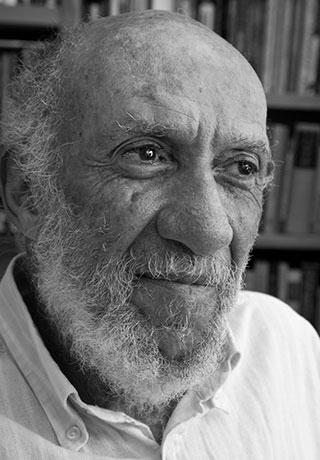

Professor Falk became an adviser to TFF when it was established in 1985.

Related Posts

This is not another geopolitical commentary on the Arctic. It is a visionary peace proposal that can save the region from militarised rivalry and ecological ruin. A blueprint for shared security, sustainable development, and human dignity — benefitting Greenland, the Arctic, and the rest of us. Jan Oberg TFF director Lund, Sweden, February 17, 2026 I. Four Principles for a New Arctic Vision The Arctic is often framed as a cold arena of rivalry — a place where great powers test each other’s resolve. But this worldview is outdated, unimaginative, and ultimately self‑defeating. The Arctic is not a vacuum waiting to be militarised; it is a living region, a climate stabiliser, and a cultural homeland whose future will shape the future of humanity. If we begin from that understanding, a far more rational Arctic order becomes possible — one that is peaceful, cooperative, and centred on the people who actually live there. This vision rests...
Photos © TFF 2000 Read PressInfo 90 “Lift the Sanctions and Bring More Aid to Yugoslavia” See Pictures from Belgrade © TFF 2000 Please reprint, copy, archive, quote or re-post this item, but please retain the source.
PART 2 — Diplomacy, Law and Nonviolent Power By Jan ObergTFF co-founder and director January 26, 2026 This is the second of four TFF-created idea portfolios designed to curb the global reach of the United States and, in both the short and long term, help catalyse a worldwide nonviolent resistance to what many observers describe as the Trump administration’s uniquely confrontational, destructive and world-threatening policies. These portfolios outline what governments and citizens across the world can do through dynamic diplomacy, creative initiatives, and strictly nonviolent means. They are typical TFF works in that we do not only tell what the problem is and how bad it will go – as 90+% of all commentators, experts and scholars do – we tell what we think can be done, inviting you to think of what you think you can do. It seems painfully clear to me that the current political dynamics in Washington increasingly resemble the most dangerous...

Recent Articles

Tony Robinson October 4, 2026 Violence is easy to recognise when someone is being beaten, shot or killed. It becomes more difficult when nobody is holding a weapon. Poverty, discrimination, exploitation and repression can restrict a human life just as effectively, although they do so in very different ways and with very different consequences. Simply adding more categories to an ever-growing list of forms of violence does not really solve the problem. The more interesting question is what all these different situations have in common and why it makes sense to describe them using the same word. Human beings do not simply react to what happens around them. They remember the past, imagine things that do not yet exist, make plans and undertake projects. Workers organise because they imagine different working conditions; people migrate because they imagine another life somewhere else; social movements emerge because people refuse to accept the...
It’s a matter of principles, courage, vision and pulling together – while the militarist world is falling apart… Peter Langille October 3, 2026 “Here, then, is the problem which we present to you, stark and dreadful and inescapable: Shall we put an end to the human race; or shall mankind renounce war?”The Bertrand Russell—Albert Einstein Manifesto, July 9, 1955 ⁕ The forecast for what’s ahead is worrisome. The sharp rise in armed conflicts over the past three years is adding to what was already the highest level in over seventy years. Genocides, which should be prevented are supported. A shared climate emergency that jeopardises survival is ignored. Diverse polls now suggest that people are war-weary, worried and interested in a more effective United Nations. And, there are viable policy options for a more secure world! Yet governments are doubling-down, betting on more war and investing heavily. If current trends persist,...
Johan Galtung 1930-2024October 2015 Published here on October 3, 2026 Let us focus on Civilization for conflict analysis and remedies. Major forms of disorder use violence; war is state organized violence. The most belligerent states are the United States of America and Israel, both with civilization roots. National Evangelism, the US Protestant Christian civilization– more national than evangelical–justifies US warfare as exceptionalism of a people chosen by God, with a manifest destiny to run the world. Orthodox Judaism justifies Israeli warfare to conquer and expand from Nile to Euphrates as a religious right and duty to the Eternal One. The third most belligerent country, the UK, no longer believes it is God-chosen but chosen by the USA; not quite the same but something. But the root cause of global disorder lies in the Occident–with Islam–seeing itself as the single, universal civilization valid for all at all times, all others being...

TFF on Substack

Discover and subscribe to more peace materials on TFF Substack

Most Popular

Tony Robinson October 4, 2026 Violence is easy to recognise when someone is being beaten, shot or killed. It becomes more difficult when nobody is holding a weapon. Poverty, discrimination, exploitation and repression can restrict a human life just as effectively, although they do so in very different ways and with very different consequences. Simply adding more categories to an ever-growing list of forms of violence does not really solve the problem. The more interesting question is what all these different situations have in common and why it makes sense to describe them using the same word. Human beings do not simply react to what happens around them. They remember the past, imagine things that do not yet exist, make plans and undertake projects. Workers organise because they imagine different working conditions; people migrate because they imagine another life somewhere else; social movements emerge because people refuse to accept the...
It’s a matter of principles, courage, vision and pulling together – while the militarist world is falling apart… Peter Langille October 3, 2026 “Here, then, is the problem which we present to you, stark and dreadful and inescapable: Shall we put an end to the human race; or shall mankind renounce war?”The Bertrand Russell—Albert Einstein Manifesto, July 9, 1955 ⁕ The forecast for what’s ahead is worrisome. The sharp rise in armed conflicts over the past three years is adding to what was already the highest level in over seventy years. Genocides, which should be prevented are supported. A shared climate emergency that jeopardises survival is ignored. Diverse polls now suggest that people are war-weary, worried and interested in a more effective United Nations. And, there are viable policy options for a more secure world! Yet governments are doubling-down, betting on more war and investing heavily. If current trends persist,...
Johan Galtung 1930-2024October 2015 Published here on October 3, 2026 Let us focus on Civilization for conflict analysis and remedies. Major forms of disorder use violence; war is state organized violence. The most belligerent states are the United States of America and Israel, both with civilization roots. National Evangelism, the US Protestant Christian civilization– more national than evangelical–justifies US warfare as exceptionalism of a people chosen by God, with a manifest destiny to run the world. Orthodox Judaism justifies Israeli warfare to conquer and expand from Nile to Euphrates as a religious right and duty to the Eternal One. The third most belligerent country, the UK, no longer believes it is God-chosen but chosen by the USA; not quite the same but something. But the root cause of global disorder lies in the Occident–with Islam–seeing itself as the single, universal civilization valid for all at all times, all others being...
Read More
Living-Peace-Sign-Budapest-copy
Tony Robinson October 4, 2026 Violence is easy to recognise when someone is being beaten, shot or killed. It becomes more difficult when nobody is holding a weapon. Poverty, discrimination, exploitation and repression can restrict a human life just as effectively, although they do so in very different ways and with very different consequences. Simply adding more categories to an ever-growing list of forms of violence does not really solve the problem. The more interesting question is what all these different situations have in common and why it makes sense to describe them using the same word. Human beings do not simply react to what happens around them. They remember the past, imagine things that do not yet exist, make plans and undertake projects. Workers organise because they imagine different working conditions; people migrate because they imagine another life somewhere else; social movements emerge because people refuse to accept the...
b54a1f10-8c65-4f0b-9dd5-4abc0a7d04cc_2659x2659
It’s a matter of principles, courage, vision and pulling together – while the militarist world is falling apart… Peter Langille October 3, 2026 “Here, then, is the problem which we present to you, stark and dreadful and inescapable: Shall we put an end to the human race; or shall mankind renounce war?”The Bertrand Russell—Albert Einstein Manifesto, July 9, 1955 ⁕ The forecast for what’s ahead is worrisome. The sharp rise in armed conflicts over the past three years is adding to what was already the highest level in over seventy years. Genocides, which should be prevented are supported. A shared climate emergency that jeopardises survival is ignored. Diverse polls now suggest that people are war-weary, worried and interested in a more effective United Nations. And, there are viable policy options for a more secure world! Yet governments are doubling-down, betting on more war and investing heavily. If current trends persist,...
010
Johan Galtung 1930-2024October 2015 Published here on October 3, 2026 Let us focus on Civilization for conflict analysis and remedies. Major forms of disorder use violence; war is state organized violence. The most belligerent states are the United States of America and Israel, both with civilization roots. National Evangelism, the US Protestant Christian civilization– more national than evangelical–justifies US warfare as exceptionalism of a people chosen by God, with a manifest destiny to run the world. Orthodox Judaism justifies Israeli warfare to conquer and expand from Nile to Euphrates as a religious right and duty to the Eternal One. The third most belligerent country, the UK, no longer believes it is God-chosen but chosen by the USA; not quite the same but something. But the root cause of global disorder lies in the Occident–with Islam–seeing itself as the single, universal civilization valid for all at all times, all others being...
Screenshot 2026-10-02 011738
Jan ObergPhD, director, The Transnational Foundation for Peace and Future Research, TFFLund, Sweden October 2, 2026 This is my full original manuscript. The Chinese Academy of Social Science, CASS, makes two publications out if it. 1. China’s Five-year plan emphasized the capabilities of basic research and original innovation. It is regarded as the goal of the future social development, which, as required, should be significantly enhanced. Can you comment on the importance of original innovation in research and academic study? I believe it is easier to define “original innovation” in the natural sciences than in social sciences. The breaking points of what constitutes something new, or innovative, are not quite as sharp in the latter. But in both fields it is about opening up something that was closed, unseen, unexplored before – making manifest what was earlier latent. Innovations come in many forms and shapes – naming something that was not...
arctic-circle-map
The agreement is catastrophic both because of what it says and what it doesn’t mention. It reduces further the major asset of security policies: Freedom of action. Jan Oberg TFF director September 25, 2026 A couple of hours before the agreement was signed on September 22, 2026, I published the following 13 hypotheses about what it would most likely contain on TFF Substack (in English). I was wrong on only the first point. Contrary to what Trump had written on his Truth Social platform, it does not appear to come into force immediately. In fact, it turned out to be worse than even I had anticipated. After these hypotheses now come a number of reflections in light of what the agreement actually contains, and does not contain, as well as the way in which it has generally been presented by major media outlets and by the public-service broadcaster DR. My...
girl-5894831_1280
Below are TFF-related media mentions, comments, videos and social media posts published elsewhere but not on this homepage. We happen to catch and list only a fraction. Regarding video comments and debates, we recommend that you go to the TFF Video Channel on Substack where many of them are reproduced. Jan Oberg is a contributor to China Daily – 52 million daily clicks – and Global Times, CGTN and CCTV (the national television), China Investment, Xinhua News Agency and several others. Articles and videos on these media very often multiply into countless Chinese (and Western media) that re-post them from these main media. Thanks to The China Academy, his analyses, interviews and comments are frequently posted on YouTube channels such as Thinkers Forum and Wave Media. These videos are often re-posted on Bilibili (China’s YouTube), the China Content Center on TikTok, and on the Chinese edition of TikTok, Douyin.com. This means reaching hundreds of millions of viewers worldwide over a year. While there are too many to catch on all these...




