
Opening the other eye: Charles Taylor and selective criminal accountability

From all that we know Charles Taylor deserves to be held criminally accountable for his role in the atrocities committed in Sierra Leone during the period 1998-2002. Taylor was then President of Liberia, and did his best to encourage violent uprisings against the governments in neighboring countries so as to finance his own bloody schemes and extend his regional influence.

It was in Sierra Leone that ‘blood diamonds,’ later more judiciously called ‘conflict diamonds’ were to be found in such abundance as to enter into the lucrative world trade, with many of these diamonds finding their way onto the shelves of such signature jewelry stores as Cartier, Bulgari, and Harry Winston, and thereby circumventing some rather weak international initiatives designed to prevent this outcome.

It is fine that Charles Taylor was convicted of 11 counts of aiding and abetting war crimes and crimes against humanity of the rebel militias that committed atrocities of an unspeakable nature, and he will be sentenced in early May. And it may impress some that liberal legal procedures led to Taylor’s acquittal with respect to the more serious charges of ‘command responsibility’ or ‘joint criminal enterprise.’

Surely the circumstantial evidence sufficiently implicated Taylor that it would have seemed reasonable to hold him criminally responsible for the acts performed, and not just for aiding and abetting their commission. In general, it is better not convict defendants involving crimes of state when clear evidence is not available to uphold specific charges beyond any reasonable doubt. In this respect, the Taylor conviction seems restrained, professional, and not vindictive.

But as Christine Cheng has shown in a perceptive article published online in Al Jazeera English there are some elements of this conviction that feed the suspicion that the West is up to its old tricks of seizing the high moral ground while pursuing economic and geopolitical goals that obstruct the political independence and sovereignty of countries that were once their colonies.

The financing of the Special Court on Sierra Leone was almost totally handled by the United States, United Kingdom, the Netherlands, and Canada. In addition, there were reasons to believe that if Taylor were allowed to foment trouble from his base of operations in Liberia he would make it more difficult to restore stability, and begin ‘legitimate’ mining operations, which is what the West wanted for the region.

What is dramatically ironic about the whole picture is that the United States is the number one advocate of international criminal justice for others, while holding itself self-righteously aloof from accountability on the main ground that the process might be tainted by politicized motivations!

The U.S. Congress has even threatened that it would use military force to rescue any Americans that were somehow called to account by the International Criminal Court in The Hague, and has signed agreements with over 100 governments not to hand over American citizens to the ICC.

And yet it is American criminal lawyers and human rights NGOs that have been most loudly applauding the outcome in the Taylor case, and without even a whimper of acknowledgement that there may be some issues relating to double standards.

If aiding and abetting is what the evidence demonstrates, then should there not be at least discussion of whether the jewelry retailers making huge profits by selling these tainted diamonds should not have been investigated, and even prosecuted?

There was a voluntary, self-regulating process established, the Kimberly Process (2001) named after the city in South Africa where the meeting of concerned governments took place. A British NGO, Global Witness, reports that almost none of the prominent diamond retailers took any notice of this cooperative effort that was evidently designed to avoid a civil society backlash of the sort that animal rights activists organized to protest cruelty to animals. But isn’t it interesting that Western corporations are asked to act in a morally responsible manner as a voluntary undertaking while political leaders of sovereign states are subject to the rigors of international criminal law?

These issues are kept out of the Western public discourse. Take the self-satisfied editorial appearing in the Financial Times (April 27, 2012). It starts with words affirming the larger meaning of Taylor’s conviction: “A strong message was sent to tyrants and warlords around the world yesterday. International law may be slow, but even those in the higher ranks of power can be held to account for atrocities committed against the innocent.”

And the editorial ends even more triumphantly, and without bothering to notice the elephant standing in the middle of the room, that leaders “..in states weak and strong — now know that there can be no impunity for national leaders when it comes to human rights.”

Such language needs to be decoded to convey its real message as follows: “national leaders of non-Western countries should realize that if their operations henceforth stand in the way of geopolitical priorities, they will held criminal responsible for any wrongdoing on their part.”

There are several observations that follow:

(1) If non-Western leaders are supportive of Western interests, their atrocities will be overlooked, but if there is a direct confrontation, then the liberal establishment will be encouraged to start ‘war crimes talk’ (thus Milosevic, Saddam Hussein, Qaddafi (killed before proceedings initiated) were charged with crimes, while the crimes of those governing Bahrain, Saudi Arabia, and Israel[1] were ignored);

(2) The great majority of cases dealing with international crimes have been up to this point associated with sub-Saharan Africa, confirming the extent to which this region has been devastated by bitter conflicts, many of which are attributable to the remnants of colonialism (divide and rule; slave trade; arbitrary boundaries separating tribal and ethnic communities; continuing quest for valuable mineral resources by international business interests);

(3) The Western mind is trained so as not to notice, much less acknowledge, either the historical responsibility of the colonial powers or the unwillingness of the West to submit to the same accountability procedures that are being relied upon to impose criminal responsibility on those who stand in the way of Western demands.

The United States is particularly vulnerable from these perspectives. When we hear the names of Guantanamo Bay and Abu Ghraib the immediate association is with American war crimes. When American leaders openly endorse reliance on interrogation techniques that are generally condemned as ‘torture’ we should notice the gaping chasm separating ‘law’ from its consistent implementation.

When a soldier, such as Bradley Manning, exposes the atrocities of the Iraq and Afghanistan wars he is held in humiliating prison circumstances and prosecuted for breaching secrecy, with suggestions that his intent was ‘treasonous,’ intended to help enemies.

At least, if there was a measure of good faith in Washington, it should have been possible to move forward on parallel paths: hold Manning responsible for releasing classified materials, mitigated by his motives and absence of private gain, but vigorously repudiate and investigate the horrible crimes being committed against civilians in Iraq and Afghanistan, as well as the battlefield practices and training programs that give rise to such atrocities.

The Western powers have gone further in sculpting international law to their liking. They have excluded ‘aggressive war’ from the list of international crimes contained in the Rome Treaty that governs the scope of ICC jurisdiction. When the defendants were the losers in World War II, aggressive war was treated at Nuremberg (and Tokyo) as the supreme war crime as it was declared to encompass the others.

The UN Charter was drafted to reflect this outlook by unconditionally prohibiting any recourse to force by a state except in self-defense narrowly defined as a response to a prior armed attack. But in the decades that followed each of the countries that sat in judgment at Nuremberg engaged in aggressive war and made non-defensive uses of force, and so the concept became too contested to be any longer codified as law.

This reversal and regression exemplifies the Janus face of geopolitics when it comes to criminal accountability: when the application of international criminal law serves the cause of the powerful, it will be invoked, extended, celebrated, even institutionalized, but only so long as it is not turned against the powerful. One face of Janus is that of international justice and the rule of law, the other is one of stern look that submits to the rule of power on behalf of the war gods.

Where does this line of reasoning end? Should we be hypocrites and punish those whose crimes offend the geopolitical gatekeepers?

Or should we insist that law to be law must be applied consistently? At least these questions should be asked, a certain humility emerge, especially among liberals in the West.

[1] Of course, Israel is only geographically non-Western, and its leadership enjoys the same kind of impunity available to American leaders and those of allied countries.
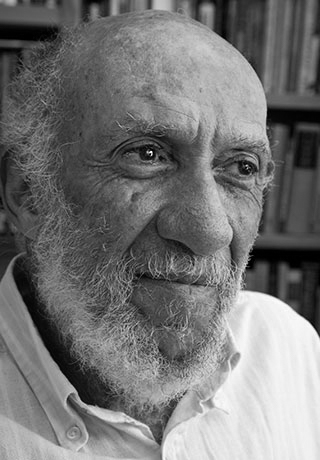

Professor Falk became an adviser to TFF when it was established in 1985.

Related Posts

The agreement is catastrophic both because of what it says and what it doesn’t mention. It reduces further the major asset of security policies: Freedom of action. Jan Oberg TFF director September 25, 2026 A couple of hours before the agreement was signed on September 22, 2026, I published the following 13 hypotheses about what it would most likely contain on TFF Substack (in English). I was wrong on only the first point. Contrary to what Trump had written on his Truth Social platform, it does not appear to come into force immediately. In fact, it turned out to be worse than even I had anticipated. After these hypotheses now come a number of reflections in light of what the agreement actually contains, and does not contain, as well as the way in which it has generally been presented by major media outlets and by the public-service broadcaster DR. My...
This is not another geopolitical commentary on the Arctic. It is a visionary peace proposal that can save the region from militarised rivalry and ecological ruin. A blueprint for shared security, sustainable development, and human dignity — benefitting Greenland, the Arctic, and the rest of us. Jan Oberg TFF director Lund, Sweden, February 17, 2026 I. Four Principles for a New Arctic Vision The Arctic is often framed as a cold arena of rivalry — a place where great powers test each other’s resolve. But this worldview is outdated, unimaginative, and ultimately self‑defeating. The Arctic is not a vacuum waiting to be militarised; it is a living region, a climate stabiliser, and a cultural homeland whose future will shape the future of humanity. If we begin from that understanding, a far more rational Arctic order becomes possible — one that is peaceful, cooperative, and centred on the people who actually live there. This vision rests...
Photos © TFF 2000 Read PressInfo 90 “Lift the Sanctions and Bring More Aid to Yugoslavia” See Pictures from Belgrade © TFF 2000 Please reprint, copy, archive, quote or re-post this item, but please retain the source.

Recent Articles

Photo above: Carl Fredrik Reuterswärd’s Non-Violence outside UN Headquarters in New York. Kirill Levin, CC BY-NC-SA 2. Jan Oberg November 3, 2026 I am happy to be published in Horizons which is produced by the Center for International Relations and Sustainable Development, CIRSD, in Belgrade. My contribution brings out a radical re-thinking of what concepts such as defence, security, deterrence – and peace – may mean if we want to create a more peaceful world. It also summarises a few things I have been working with the last few decades. Please read it here Og her er den på dansk, takket være Johnny Baltzersens lynhurtige oversættelse
UNITE-tillid, DREAM-velstand og andre konstruktive komponenter Normally we publish articles in English here. But this is a translation of a very important TFF document that should reach as many as possible in Denmark since this country’s government has been one of the most hardline in Europe and, up till now at least, has refused to use diplomacy and, instead, spent tremendous sums on arming Ukraine with the express goal of defeating Russia. Thus this – unique – article is in Danish. Vi er Johnny Baltzersen og hans Fælles Sikkerhed – Fælles Fremtid på Substack overmåde taknemmelige for at have oversat og publiceret TFF’s 2025-portfølje for fredsidéer med henblik på Ukraines fremtid. Vi håber den nu kan nå mange flere danskere – som også vil sprede den og skabe debat – nu den danske regerings og folketingspartiernes politik på dette område siden 2022 står nu – forudsigeligt – ved vejs ende....
Jan Oberg TFF director October 28, 2026 Exactly one month has now passed since I published my criticism of the introduction to the special issue on Johan Galtung published by the Journal of Global Security Studies, JoGSS, and of Tor Egil Førland’s chapter about Galtung which serves as a preview to his forthcoming biography of Galtung to be published by PRIO. See the original on The Transnational here and the same article on TFF Substack with many general and critical comments and, in particular, the people who decided to withdraw from the biography project in protest. The special issue itself was extraordinary. It was devoted to the intellectual legacy of one of the founders of peace research and contained a number of strong assessments of his personality, scholarship, intellectual trajectory, and public role. Such assessments are, of course, entirely legitimate. No scholar is beyond criticism, and neither was Johan Galtung....

TFF on Substack

Discover and subscribe to more peace materials on TFF Substack

Most Popular

Photo above: Carl Fredrik Reuterswärd’s Non-Violence outside UN Headquarters in New York. Kirill Levin, CC BY-NC-SA 2. Jan Oberg November 3, 2026 I am happy to be published in Horizons which is produced by the Center for International Relations and Sustainable Development, CIRSD, in Belgrade. My contribution brings out a radical re-thinking of what concepts such as defence, security, deterrence – and peace – may mean if we want to create a more peaceful world. It also summarises a few things I have been working with the last few decades. Please read it here Og her er den på dansk, takket være Johnny Baltzersens lynhurtige oversættelse
UNITE-tillid, DREAM-velstand og andre konstruktive komponenter Normally we publish articles in English here. But this is a translation of a very important TFF document that should reach as many as possible in Denmark since this country’s government has been one of the most hardline in Europe and, up till now at least, has refused to use diplomacy and, instead, spent tremendous sums on arming Ukraine with the express goal of defeating Russia. Thus this – unique – article is in Danish. Vi er Johnny Baltzersen og hans Fælles Sikkerhed – Fælles Fremtid på Substack overmåde taknemmelige for at have oversat og publiceret TFF’s 2025-portfølje for fredsidéer med henblik på Ukraines fremtid. Vi håber den nu kan nå mange flere danskere – som også vil sprede den og skabe debat – nu den danske regerings og folketingspartiernes politik på dette område siden 2022 står nu – forudsigeligt – ved vejs ende....
Jan Oberg TFF director October 28, 2026 Exactly one month has now passed since I published my criticism of the introduction to the special issue on Johan Galtung published by the Journal of Global Security Studies, JoGSS, and of Tor Egil Førland’s chapter about Galtung which serves as a preview to his forthcoming biography of Galtung to be published by PRIO. See the original on The Transnational here and the same article on TFF Substack with many general and critical comments and, in particular, the people who decided to withdraw from the biography project in protest. The special issue itself was extraordinary. It was devoted to the intellectual legacy of one of the founders of peace research and contained a number of strong assessments of his personality, scholarship, intellectual trajectory, and public role. Such assessments are, of course, entirely legitimate. No scholar is beyond criticism, and neither was Johan Galtung....
Read More
knotted gun
Photo above: Carl Fredrik Reuterswärd’s Non-Violence outside UN Headquarters in New York. Kirill Levin, CC BY-NC-SA 2. Jan Oberg November 3, 2026 I am happy to be published in Horizons which is produced by the Center for International Relations and Sustainable Development, CIRSD, in Belgrade. My contribution brings out a radical re-thinking of what concepts such as defence, security, deterrence – and peace – may mean if we want to create a more peaceful world. It also summarises a few things I have been working with the last few decades. Please read it here Og her er den på dansk, takket være Johnny Baltzersens lynhurtige oversættelse
TFFPortfolioVign
UNITE-tillid, DREAM-velstand og andre konstruktive komponenter Normally we publish articles in English here. But this is a translation of a very important TFF document that should reach as many as possible in Denmark since this country’s government has been one of the most hardline in Europe and, up till now at least, has refused to use diplomacy and, instead, spent tremendous sums on arming Ukraine with the express goal of defeating Russia. Thus this – unique – article is in Danish. Vi er Johnny Baltzersen og hans Fælles Sikkerhed – Fælles Fremtid på Substack overmåde taknemmelige for at have oversat og publiceret TFF’s 2025-portfølje for fredsidéer med henblik på Ukraines fremtid. Vi håber den nu kan nå mange flere danskere – som også vil sprede den og skabe debat – nu den danske regerings og folketingspartiernes politik på dette område siden 2022 står nu – forudsigeligt – ved vejs ende....
JoGSS-Silent
Jan Oberg TFF director October 28, 2026 Exactly one month has now passed since I published my criticism of the introduction to the special issue on Johan Galtung published by the Journal of Global Security Studies, JoGSS, and of Tor Egil Førland’s chapter about Galtung which serves as a preview to his forthcoming biography of Galtung to be published by PRIO. See the original on The Transnational here and the same article on TFF Substack with many general and critical comments and, in particular, the people who decided to withdraw from the biography project in protest. The special issue itself was extraordinary. It was devoted to the intellectual legacy of one of the founders of peace research and contained a number of strong assessments of his personality, scholarship, intellectual trajectory, and public role. Such assessments are, of course, entirely legitimate. No scholar is beyond criticism, and neither was Johan Galtung....
Screenshot 2026-10-26 115647
An aspect of Iran’s culture and civilisation you’ve probably never heard about. Don’t be surprised if the US and Israel also try to bomb them. Jan ObergTFF director October 26, 2026 Today – under the “USraeli” threat of new “annihilating” bombings – opens the 7th International Conference on Peace and Conflict Resolution at Tehran’s University. As far as I can tell, this is the only permanent, advanced peace research institution in West Asia/the Middle East. Perhaps more countries in that region could be inspired? I mean, how many military “security” institutes and military academies do they have? Many peace research institutes and university departments have been established since the 1950s in the West. They are now all under attack; some have closed down, some have gone mainstream, yet others kept the name but do nothing to research peace and disseminate results or advice; instead, they cooperate with militarism’s platforms such...
Screenshot 2026-10-15 141837
Let’s discuss using AI to create peace – in contrast to boring geopolitics devoid of creative healing and visions. Jan Oberg TFF director October 15, 2026 I asked VEED to create a short video exemplifying how peace is preferable to war, then chose the lady as a template. Simple as that. In less than a minute, it produced this video, which any peace-loving person would appreciate. The only problem is that human intelligence (HI), at least the one that exists among Western decision-makers, isn’t half as moral or smart as AI. I have used AI to dialogue about peace and peace plans, creative conflict resolution and visions of a better future for humankind. It so happens that I am having more stimulating, intelligent, creative and moral discussions with AI than I could possibly have with any EU or NATO leader today. Yes, AI has very problematic and dangerous aspects; used...
girl-5894831_1280
Below are TFF-related media mentions, comments, videos and social media posts published elsewhere but not on this homepage. We happen to catch and list only a fraction. Regarding video comments and debates, we recommend that you go to the TFF Video Channel on Substack where many of them are reproduced. Jan Oberg is a contributor to China Daily – 52 million daily clicks – and Global Times, CGTN and CCTV (the national television), China Investment, Xinhua News Agency and several others. Articles and videos on these media very often multiply into countless Chinese (and Western media) that re-post them from these main media. Thanks to The China Academy, his analyses, interviews and comments are frequently posted on YouTube channels such as Thinkers Forum and Wave Media. These videos are often re-posted on Bilibili (China’s YouTube), the China Content Center on TikTok, and on the Chinese edition of TikTok, Douyin.com. This means reaching hundreds of millions of viewers worldwide over a year. While there are too many to catch on all these...




