
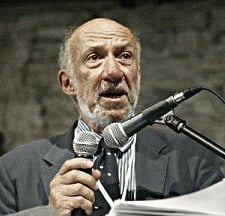
Open Letter – about the blogosphere and free speech

I have had a recurrent struggle to set boundaries on the comments section of this blog. At first, I was determined to have an open forum welcoming critical commentary on any issue, excluding only those comments that seemed struck me as clear instances of hate speech.

This approach seemed to work okay except with respect to Israel/Palestine, which increasingly attracted either long argumentative comments posing a list of rhetorical questions or angry serial comment contributors that insulted me as well as others who had submitted comments that were interpreted by them as being pro-Palestinian or hostile to Israel and Zionism.

There was no symmetry in the sense the blog received no serial or long provocative comments written by those who more or less supportive of the Palestinian struggle for justice. From blog readers I received mixed reactions, but I was most persuaded by those who expressed dismay about the tendency to fill the comments section with insults and counter-insults or with argumentative views that did not invite serious dialogue.

In reaction after some months, I reached the conclusion that it was preferable, on balance, to limit the comment space of my blog to likeminded views on Israel/Palestine. This meant excluding those annoying serial comments and those pro-Israeli comments that struck me as merely argumentative or dismissive of pro-Palestinian positions. In my view, this more restrictive approach did succeed in raising the quality of interaction between my posts and the authors of comments, as well as enhanced the dialogue among comment writers.

At the same time, as might have been predicted, such selective monitoring provoked angry reactions from those whose comments were being excluded. See David Singer, “Palestine-UN Special Rapporteur Bans Free Speech,” Canada Free Press. It was claimed that I was violating canons of free speech, and that this was especially wrong, given my position as Special Rapporteur for the UN Human Rights Council. I am not persuaded by these objections. A blog is not necessarily an arena that should observe standards that are respectful free speech or necessarily exhibit openness to all sincerely held viewpoints.

The media governs access to its arenas of expression by its editorial policies, and no one insists that it has no constitutional right to do this, although a newspaper or TV channel is more of a public entity than is a personal blog. If you do not like the editorial approach of say, the Wall Street Journal or Fox TV, you can in a democracy go elsewhere, or find ways to encourage the establishment of more congenial media. Public radio and TV makes a greater effort, partly because of tax policy and funding sources, to be ‘objective,’ that is, to present opposing responsible viewpoints without taking sides.

Many of us, however, feel that what CNN views as impartial and objective, seems unduly reflective of the mainstream consensus, and is unreceptive to progressive critical viewpoints, especially those associated with the anti-militarist, anti-capitalist portions of the political spectrum.

As far as my UN role is concerned, it seems irrelevant in relation to a private blog that makes no claim to be associated with my formal position, which is essentially voluntary and unpaid. I retain my right as a private citizen to express personal views on a range of public issues, including those that pertain to Israel & Palestine. My reports to the UN are based, to the best of my ability, on an objective assessment of evidence and procedures of impartial interpretation.

My efforts along these lines have been obstructed from the outset by Israel’s refusal to cooperate with this undertaking to gather facts even to the minimal extent of granting me access to the Occupied Palestine Territories; in fact, I was expelled from Israel on December 14, 2008 when I tried to carry out a UN mission to examine conditions in the West Bank and East Jerusalem, and was detained for some hours in a prison located near to the Ben Gurion Airport. Israel has been able to sustain this position throughout my tenure as Special Rapporteur, despite numerous attempts to request reconsideration and Israel’s treaty obligation as a member of the UN to cooperate with its official undertakings. As in other sectors of Israel’s behavior, the realities of impunity shield its officials and government from accountability.

As before, I welcome, and have learned from, a wide range of thoughtful and gracious comments, some critical, some supportive, some inbetween. I have tried to be responsive to well intentioned criticism, learn from my mistakes, and express gratitude to all those who have used the comment section in a constructive spirit. I welcome further discussion on this theme, a continuing struggle to find the right balance for a blog with an avowedly emancipatory political agenda. I offer no apology for this posture of dedication to the pursuit of global justice.

I am most grateful to all those that have given me feedback and support, and made me feel that despite the overcrowded blogosphere, these posts of mine are not completely superfluous wilderness whimperings, and reach a community of co-believers that shares with me the vision that our lives on this planet are spiritual journeys, really pilgrimages.

You make a reasonable case against my blog policy that I have adopted reluctantly. My main disagreement with you is that I do not consider a blog to be a venue for free speech, but rather for civil discourse. I had many complaints about allowing recurrent email that took issue repeatedly and consistently with my views.

This blog has nothing to do with my role as a UN Special Rapporteur, which in any event is a burdensome unpaid position that I do as conscientiously as possible. I consider the blog, a birthday gift from my daughter, to be a semi-private way of communicating with likeminded persons, not that all the comments, such as the one you refer to, are to my liking. I do not expect you to understand or accept my view on this issue, but at least I thought it worthwhile to offer this response, and it leads me to think that I should address the issue briefly in a future post.


Professor Falk became an adviser to TFF when it was established in 1985.

Related Posts

Lena Petrova of “World Affairs In Context” with more than half a million subscribers on YouTube wanted to explore what a peace researcher like me has to say about, among other things, the First and the Second Cold War and why eethics has disappeared from politics. I am particularly happy about this conversation that also yielded an amazing number of very appreciative comments on YouTube. No doubt, people are longing for alternatives, including peace perspectives.
Photos © TFF 2000 Read PressInfo 90 “Lift the Sanctions and Bring More Aid to Yugoslavia” See Pictures from Belgrade © TFF 2000 Please reprint, copy, archive, quote or re-post this item, but please retain the source.
PRESS RELEASE – 6 OCTOBER 2025 LAY DOWN YOUR ARMSPEACE PRIZE FOR 2025 is awarded Francesca Albanese The United Nations Special Rapporteur on the occupied Palestinian territories – as the person who, in accordance with Alfred Nobel’s will, has “done the most or the best work for fraternity between nations and for the abolition or reduction of standing armies as well as for the holding and promotion of peace congresses.” Francesca Albanese has forcefully and unwaveringly worked against Israel’s full-scale war on the occupied Palestinian territories, in particular Israel´s ongoing genocide against the Palestinian people. She has confronted Israel’s systematic war crimes and crimes against humanity in a truly global outreach. Further, she has brought governments, international organisations and people’s groups together to underline the responsibility of the world at large to act and to stop arming, enabling, and profiting from Israel’s ongoing criminal actions. But first of all, Albanese...

Recent Articles

Below are TFF-related media mentions, comments, videos and social media posts published elsewhere but not on this homepage. We happen to catch and list only a fraction. Regarding video comments and debates, we recommend that you go to the TFF Video Channel on Substack where many of them are reproduced. Jan Oberg is a contributor to China Daily – 52 million daily clicks – and Global Times, CGTN and CCTV (the national television), China Investment, Xinhua News Agency and several others. Articles and videos on these media very often multiply into countless Chinese (and Western media) that re-post them from these main media. Thanks to The China Academy, his analyses, interviews and comments are frequently posted on YouTube channels such as Thinkers Forum and Wave Media. These videos are often re-posted on Bilibili (China’s YouTube), the China Content Center on TikTok, and on the Chinese edition of TikTok, Douyin.com. This means reaching hundreds of millions of viewers worldwide over a year. While there are too many to catch on all these...
Jan Oberg TFF director October 13, 2026 According to Alfred Nobel’s will, the Nobel Peace Prize shall be awarded: ”to the person who has done the most or best to advance fellowship among nations, the abolition or reduction of standing armies, and the establishment and promotion of peace congresses.” Further down, he also expresses how the prize for the “champions of peace” shall be decided: “that for champions of peace by a committee of five persons to be selected by the Norwegian Storting. Alfred Nobel’s will is remarkably short and clear. But few seem to have read it. Nobel did not say that the committee itself should consist of members of parliament. He entrusted the Storting with appointing five persons. In principle, it could have selected diplomats, mediators, peace researchers, conflict-resolution specialists, or other individuals with recognised expertise in matters of peace from around the world. Instead, the Storting gradually...
The Quest for Humane Survival Richard Falk Professor emeritus, Princeton UniversityTFF Associate since 1986October 12, 2026 After decades of teaching and writing about international law in academic frameworks that were not institutionally situated within law school environments—at Princeton and the University of California, Santa Barbara—I found myself most receptive to the TWAIL outlook. It has been especially illuminating in clarifying the extent to which international law evolved as a dialogical critique of Europe’s efforts to legitimize its colonial undertakings. In particular, TWAIL has exposed how international law has functioned to legalize the subjugation of Third World peoples, securing conditions for exploitative investment and trade relations, the coercive enforcement of public debts, and an ideology of cultural superiority. TWAIL’s exposure of these economic legacies of colonialism has influenced my understanding of the history and development of international law, broadly conceived, as an ideological project of the Western sub-system of the world...

TFF on Substack

Discover and subscribe to more peace materials on TFF Substack

Most Popular

Below are TFF-related media mentions, comments, videos and social media posts published elsewhere but not on this homepage. We happen to catch and list only a fraction. Regarding video comments and debates, we recommend that you go to the TFF Video Channel on Substack where many of them are reproduced. Jan Oberg is a contributor to China Daily – 52 million daily clicks – and Global Times, CGTN and CCTV (the national television), China Investment, Xinhua News Agency and several others. Articles and videos on these media very often multiply into countless Chinese (and Western media) that re-post them from these main media. Thanks to The China Academy, his analyses, interviews and comments are frequently posted on YouTube channels such as Thinkers Forum and Wave Media. These videos are often re-posted on Bilibili (China’s YouTube), the China Content Center on TikTok, and on the Chinese edition of TikTok, Douyin.com. This means reaching hundreds of millions of viewers worldwide over a year. While there are too many to catch on all these...
Jan Oberg TFF director October 13, 2026 According to Alfred Nobel’s will, the Nobel Peace Prize shall be awarded: ”to the person who has done the most or best to advance fellowship among nations, the abolition or reduction of standing armies, and the establishment and promotion of peace congresses.” Further down, he also expresses how the prize for the “champions of peace” shall be decided: “that for champions of peace by a committee of five persons to be selected by the Norwegian Storting. Alfred Nobel’s will is remarkably short and clear. But few seem to have read it. Nobel did not say that the committee itself should consist of members of parliament. He entrusted the Storting with appointing five persons. In principle, it could have selected diplomats, mediators, peace researchers, conflict-resolution specialists, or other individuals with recognised expertise in matters of peace from around the world. Instead, the Storting gradually...
The Quest for Humane Survival Richard Falk Professor emeritus, Princeton UniversityTFF Associate since 1986October 12, 2026 After decades of teaching and writing about international law in academic frameworks that were not institutionally situated within law school environments—at Princeton and the University of California, Santa Barbara—I found myself most receptive to the TWAIL outlook. It has been especially illuminating in clarifying the extent to which international law evolved as a dialogical critique of Europe’s efforts to legitimize its colonial undertakings. In particular, TWAIL has exposed how international law has functioned to legalize the subjugation of Third World peoples, securing conditions for exploitative investment and trade relations, the coercive enforcement of public debts, and an ideology of cultural superiority. TWAIL’s exposure of these economic legacies of colonialism has influenced my understanding of the history and development of international law, broadly conceived, as an ideological project of the Western sub-system of the world...
Read More
girl-5894831_1280
Below are TFF-related media mentions, comments, videos and social media posts published elsewhere but not on this homepage. We happen to catch and list only a fraction. Regarding video comments and debates, we recommend that you go to the TFF Video Channel on Substack where many of them are reproduced. Jan Oberg is a contributor to China Daily – 52 million daily clicks – and Global Times, CGTN and CCTV (the national television), China Investment, Xinhua News Agency and several others. Articles and videos on these media very often multiply into countless Chinese (and Western media) that re-post them from these main media. Thanks to The China Academy, his analyses, interviews and comments are frequently posted on YouTube channels such as Thinkers Forum and Wave Media. These videos are often re-posted on Bilibili (China’s YouTube), the China Content Center on TikTok, and on the Chinese edition of TikTok, Douyin.com. This means reaching hundreds of millions of viewers worldwide over a year. While there are too many to catch on all these...
Nobel-Prize-Plaque
Jan Oberg TFF director October 13, 2026 According to Alfred Nobel’s will, the Nobel Peace Prize shall be awarded: ”to the person who has done the most or best to advance fellowship among nations, the abolition or reduction of standing armies, and the establishment and promotion of peace congresses.” Further down, he also expresses how the prize for the “champions of peace” shall be decided: “that for champions of peace by a committee of five persons to be selected by the Norwegian Storting. Alfred Nobel’s will is remarkably short and clear. But few seem to have read it. Nobel did not say that the committee itself should consist of members of parliament. He entrusted the Storting with appointing five persons. In principle, it could have selected diplomats, mediators, peace researchers, conflict-resolution specialists, or other individuals with recognised expertise in matters of peace from around the world. Instead, the Storting gradually...
law-419057_1280
The Quest for Humane Survival Richard Falk Professor emeritus, Princeton UniversityTFF Associate since 1986October 12, 2026 After decades of teaching and writing about international law in academic frameworks that were not institutionally situated within law school environments—at Princeton and the University of California, Santa Barbara—I found myself most receptive to the TWAIL outlook. It has been especially illuminating in clarifying the extent to which international law evolved as a dialogical critique of Europe’s efforts to legitimize its colonial undertakings. In particular, TWAIL has exposed how international law has functioned to legalize the subjugation of Third World peoples, securing conditions for exploitative investment and trade relations, the coercive enforcement of public debts, and an ideology of cultural superiority. TWAIL’s exposure of these economic legacies of colonialism has influenced my understanding of the history and development of international law, broadly conceived, as an ideological project of the Western sub-system of the world...
images-2
Advocates of nuclear disarmament are regularly dismissed by the champions of nuclear deterrence as naïve and unrealistic, utopian or even irresponsible. Yet this ‘doctrine’ of deterrence, regarded by France as the ‘cornerstone’ of its national security, is based on quasi-religious beliefs, a theory that cannot be proven, risky gambles and fragile assumptions. So much so that one might legitimately ask which side the ‘Care Bears’ are on. Marc FinaudVice-President of Initiatives for Nuclear Disarmament (IDN) October 9, 2026 This article was originally published on Pressenza When it comes to these things being treated as religious concepts, look here. Idealists and realists It was Hubert Védrine, François Mitterrand’s former Foreign Minister, who repeatedly coined the phrase: ‘Europeans are a sort of Care Bears who don’t realise they’re living in Jurassic Park’. He applies this reference to the cartoon for well-behaved children not only to what he regards as weakness or idealism...
8824b09f-33a5-43f9-9fd0-550f28cda24d_1536x1024
What the West Borrowed from Asia and What It Left Behind Jan Krikke October 8, 2026 The article was originally published here In the late 1960s, the musical Hair announced that the Age of Aquarius was dawning. Its opening anthem promised a transformation of human consciousness: an era of peace, harmony and understanding. Half a century later, a familiar echo of that promise is a meditation app offered by your employer. You can find it in the same list of benefits as the pension plan and the gym discount. How did a spiritual revolution become an employee benefit? The answer lies in the history of the movement known as New Age: where it came from, what it borrowed from Asia, and why the meaning of what it borrowed changed in the process. Two definitions will help. New Age is a loose label for a wide range of spiritual practices and...
Screenshot 2026-10-04 210142
Small and different + among the 10% most active + 9,000 texts + 150 Associates + 60 000 a day — and a stubborn belief that peace is smarter and must be secured by peaceful means. In 2026, the Transnational Foundation for Peace and Future Research (TFF) turns 40. On Monday, October 5, 2026, a new TFF homepage will go live — a new gateway to more than 9,000 articles, analyses, research papers and other contributions produced over four decades of independent peace research. But this is not simply a new website. For four decades, TFF has worked from a simple conviction: peace is smarter than militarism and can be brought about by peaceful means. This is not merely an aspiration. It is the principle expressed in the UN Charter and the Gandhian tradition that has guided our work from the beginning. TFF is a research-based, independent and people-financed foundation....




