One way to counter Western Sinophobic Cold and Warm wars on China: Citizens’ bridge-building

First version – to be revised

I was recently asked by Abhishek Bhaya at CGTN – China Global Television Network, see Wikipedia here and the network itself here with about 150 million followers across the globe – whether, as a peace researcher, I had any ideas what decision-makers in both the West and in China could do to avoid the worst possible scenario – given the present confrontation, or Cold War-like atmosphere.

It’s the first time in a very long time that any media asked me a question about peace – that discourse has disappeared or been disappeared. In preparing my answer, I wrote this:

  1. It seems pretty unlikely that the US under Biden/Blinken should come to its senses quickly, if at all. Policy documents, statement and budget laws point in the direction of a well-planned long-term Cold War-like campaign against anything China – 7-8 standard negative stories, perhaps some new coming – and no positive news or analyses. This applies to research, media and politic – in the US and, very much too, among its allies whose capacity for alternatives-to-Washington thinking has come down close to zero during the last decades.
  2. So, perhaps it would be wise to not expect much good from the “decision-makers”. Instead, let’s look at what is very dear to the Chinese way of thinking of society – the importance of ordinary citizens of all walks of life – and ask: What would we, the peoples, do to counter negative attitudes and build peace between our cultures and countries? I mean, one fallacy of Western political thinking is that governments who are run by people who have been elected will also do what the people want them to do. We know that that is not true.
  3. One catchword would be citizens’ diplomacy – coupled with citizens media and citizens’ policy – even, perhaps citizens’ research or, at least, mutual learning through dialogue. Citizens diplomacy has been practised for decades between both British and US citizens, on the one hand, and Russian citizens (and decision-making circles), some of the first being the British Quakers.
  4. I’ll just make use of a very simple observation – my own and that of lots of other people: A large majority of those who travel to, say, China, Russia or Iran, and experience it with their own eyes and ears return home and say something like this: “It was so much more interesting, multi-faceted and hospitable – I found the country and the people much much more positive than the image I had from my domestic media before I want.” I myself visited China as a member of a Danish cultural delegation back in 1983 and travelled around completely on my own with no fixed plan for 6 weeks in 2018. Although I never believed the Western demonization, I did experience in innumerable ways the huge difference between real reality and medialised “reality” – the same as I have in all conflict zones I’ve worked in.
    So could this sort of experience, this positive potential, be used constructively for bridge-building purposes?
  5. China is now (2017 statistics) the fourth most visited country in the world. France received 87 million tourists, Spain 82 million, the US 76 million and China 61 million foreign visitors (Forbes 2018). Important too is that about 850 000 foreigners live permanently in China, however of course only a minority from the West. Turn the picture around and 155 million Chinese tourists go abroad every year. After the Corona, all this is going to increase – provided the Western campaign does not convince Westerners that it is dangerous to visit China. Another potential resource would be the fact that about 50 million Chinese live abroad, about 13 of them in Europe, the Americas and elsewhere.
    There is something to build on here. The personal human face-to-face meeting remains important in everyone’s life.
  6. Imagine that Chinese and Western citizens opened up for much more mutual visits and contacts – study or learning tourism, dialogues via Zoom and WeChat, school exchanges, culture and sports exchanges; that researchers did much more to link up and explore possible cooperative projects and peace-making.
    Imagine much more Citizens’ journalism that is already practised by foreigners who live in China permanently and have their own channels on YouTube or Vimeo and tell their fellow citizens what they experience from inside China. It could be expanded. The China-negative Western media and news bureaus no longer deserve to have a sort of monopoly and it can be broken by many more knowledgeable media entrepreneurs in years to come.
    I do not predominantly think of trips arranged by Chinese government authorities – although that could be speeding up too – for instance, inviting even more international governmental and civil society organisations to China and to see for themselves – dialogue and learn.
    Imagine that Western civil society organisations, CSOs – such as the peace movements – began to work systematically with their Chinese counterparts. Yes, they have little funds – but it is affordable to use Zoom and set up networks of cooperation about mutually important topics – such as how to conduct dialogues and create mutual learning platforms – and prepare later meeting in reality.
    And imagine how useful it could to expand the idea of friendship cities – pairing or gathering more around certain themes of mutual interest.
    And why not add friendship professions – Western and Chinese engineers, doctors, entertainers, authors, architects – having the same profession means that it is easier to start talking, doesn’t it?

It would, of course, be naive to believe that all these millions of people on both sides would see themselves as peace-makers or would want to be. But there might be an under-utilised potential here of quite some importance for the future – particularly if this type of citizens’ diplomacy would get on more people’s and organisations’ radar and corporations and others would invest in it.

I am not in doubt that it would be a win-win for all. People love to do important things and most people are curious and open-minded. If given an opportunity.

In an era where the Western mantra is win/lose – and will lead to lose/lose and undermine the problem solving of humanity’s common problems, thinking along the above lines may be much more realistic than waiting for Western decision-makers to build peace. They have not been good at that anywhere.

So let’s give people – and peace – a new chance!

Did this article gave you new perspectives? Did you like – and perhaps share – it with your friends? Then please consider rewarding TFF for continuing to publish genuinely independent and constructive analyses and ideas for a better world – thanks!
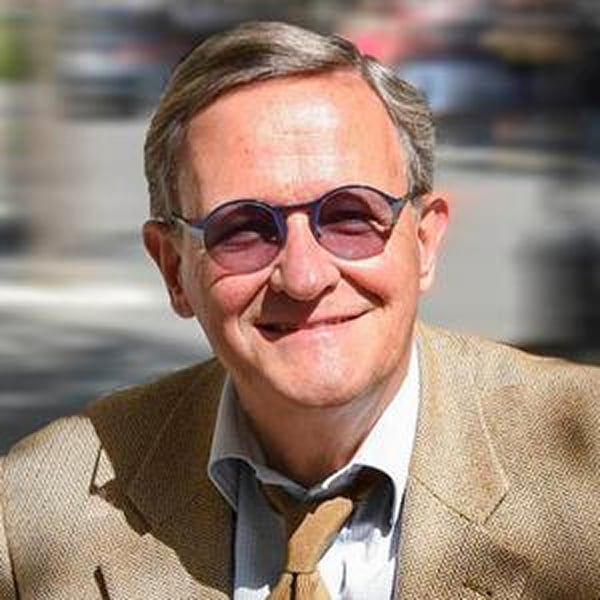

Peace & future researcher + ‌Art Photographer

One Response

  1. Very good and relevant reflections – form our view, the peoples view. We are all people but some are more people than others, – who have forgotten where they came from. Not all but sadly almost all.

Related Posts

Johan Galtung 1930-2024October 2015 Published here on October 3, 2026 Let us focus on Civilization for conflict analysis and remedies. Major forms of disorder use violence; war is state organized violence. The most belligerent states are the United States of America and Israel, both with civilization roots. National Evangelism, the US Protestant Christian civilization– more national than evangelical–justifies US warfare as exceptionalism of a people chosen by God, with a manifest destiny to run the world. Orthodox Judaism justifies Israeli warfare to conquer and expand from Nile to Euphrates as a religious right and duty to the Eternal One. The third most belligerent country, the UK, no longer believes it is God-chosen but chosen by the USA; not quite the same but something. But the root cause of global disorder lies in the Occident–with Islam–seeing itself as the single, universal civilization valid for all at all times, all others being...
Jan ObergPhD, director, The Transnational Foundation for Peace and Future Research, TFFLund, Sweden October 2, 2026 This is my full original manuscript. The Chinese Academy of Social Science, CASS, makes two publications out if it. 1. China’s Five-year plan emphasized the capabilities of basic research and original innovation. It is regarded as the goal of the future social development, which, as required, should be significantly enhanced. Can you comment on the importance of original innovation in research and academic study? I believe it is easier to define “original innovation” in the natural sciences than in social sciences. The breaking points of what constitutes something new, or innovative, are not quite as sharp in the latter. But in both fields it is about opening up something that was closed, unseen, unexplored before – making manifest what was earlier latent. Innovations come in many forms and shapes – naming something that was not...
The agreement is catastrophic both because of what it says and what it doesn’t mention. It reduces further the major asset of security policies: Freedom of action. Jan Oberg TFF director September 25, 2026 A couple of hours before the agreement was signed on September 22, 2026, I published the following 13 hypotheses about what it would most likely contain on TFF Substack (in English). I was wrong on only the first point. Contrary to what Trump had written on his Truth Social platform, it does not appear to come into force immediately. In fact, it turned out to be worse than even I had anticipated. After these hypotheses now come a number of reflections in light of what the agreement actually contains, and does not contain, as well as the way in which it has generally been presented by major media outlets and by the public-service broadcaster DR. My...

Recent Articles

Tony Robinson October 4, 2026 Violence is easy to recognise when someone is being beaten, shot or killed. It becomes more difficult when nobody is holding a weapon. Poverty, discrimination, exploitation and repression can restrict a human life just as effectively, although they do so in very different ways and with very different consequences. Simply adding more categories to an ever-growing list of forms of violence does not really solve the problem. The more interesting question is what all these different situations have in common and why it makes sense to describe them using the same word. Human beings do not simply react to what happens around them. They remember the past, imagine things that do not yet exist, make plans and undertake projects. Workers organise because they imagine different working conditions; people migrate because they imagine another life somewhere else; social movements emerge because people refuse to accept the...
It’s a matter of principles, courage, vision and pulling together – while the militarist world is falling apart… Peter Langille October 3, 2026 “Here, then, is the problem which we present to you, stark and dreadful and inescapable: Shall we put an end to the human race; or shall mankind renounce war?”The Bertrand Russell—Albert Einstein Manifesto, July 9, 1955 ⁕ The forecast for what’s ahead is worrisome. The sharp rise in armed conflicts over the past three years is adding to what was already the highest level in over seventy years. Genocides, which should be prevented are supported. A shared climate emergency that jeopardises survival is ignored. Diverse polls now suggest that people are war-weary, worried and interested in a more effective United Nations. And, there are viable policy options for a more secure world! Yet governments are doubling-down, betting on more war and investing heavily. If current trends persist,...
Johan Galtung 1930-2024October 2015 Published here on October 3, 2026 Let us focus on Civilization for conflict analysis and remedies. Major forms of disorder use violence; war is state organized violence. The most belligerent states are the United States of America and Israel, both with civilization roots. National Evangelism, the US Protestant Christian civilization– more national than evangelical–justifies US warfare as exceptionalism of a people chosen by God, with a manifest destiny to run the world. Orthodox Judaism justifies Israeli warfare to conquer and expand from Nile to Euphrates as a religious right and duty to the Eternal One. The third most belligerent country, the UK, no longer believes it is God-chosen but chosen by the USA; not quite the same but something. But the root cause of global disorder lies in the Occident–with Islam–seeing itself as the single, universal civilization valid for all at all times, all others being...

TFF on Substack

Discover and subscribe to more peace materials on TFF Substack

Most Popular

Tony Robinson October 4, 2026 Violence is easy to recognise when someone is being beaten, shot or killed. It becomes more difficult when nobody is holding a weapon. Poverty, discrimination, exploitation and repression can restrict a human life just as effectively, although they do so in very different ways and with very different consequences. Simply adding more categories to an ever-growing list of forms of violence does not really solve the problem. The more interesting question is what all these different situations have in common and why it makes sense to describe them using the same word. Human beings do not simply react to what happens around them. They remember the past, imagine things that do not yet exist, make plans and undertake projects. Workers organise because they imagine different working conditions; people migrate because they imagine another life somewhere else; social movements emerge because people refuse to accept the...
It’s a matter of principles, courage, vision and pulling together – while the militarist world is falling apart… Peter Langille October 3, 2026 “Here, then, is the problem which we present to you, stark and dreadful and inescapable: Shall we put an end to the human race; or shall mankind renounce war?”The Bertrand Russell—Albert Einstein Manifesto, July 9, 1955 ⁕ The forecast for what’s ahead is worrisome. The sharp rise in armed conflicts over the past three years is adding to what was already the highest level in over seventy years. Genocides, which should be prevented are supported. A shared climate emergency that jeopardises survival is ignored. Diverse polls now suggest that people are war-weary, worried and interested in a more effective United Nations. And, there are viable policy options for a more secure world! Yet governments are doubling-down, betting on more war and investing heavily. If current trends persist,...
Johan Galtung 1930-2024October 2015 Published here on October 3, 2026 Let us focus on Civilization for conflict analysis and remedies. Major forms of disorder use violence; war is state organized violence. The most belligerent states are the United States of America and Israel, both with civilization roots. National Evangelism, the US Protestant Christian civilization– more national than evangelical–justifies US warfare as exceptionalism of a people chosen by God, with a manifest destiny to run the world. Orthodox Judaism justifies Israeli warfare to conquer and expand from Nile to Euphrates as a religious right and duty to the Eternal One. The third most belligerent country, the UK, no longer believes it is God-chosen but chosen by the USA; not quite the same but something. But the root cause of global disorder lies in the Occident–with Islam–seeing itself as the single, universal civilization valid for all at all times, all others being...
Read More
Living-Peace-Sign-Budapest-copy
Tony Robinson October 4, 2026 Violence is easy to recognise when someone is being beaten, shot or killed. It becomes more difficult when nobody is holding a weapon. Poverty, discrimination, exploitation and repression can restrict a human life just as effectively, although they do so in very different ways and with very different consequences. Simply adding more categories to an ever-growing list of forms of violence does not really solve the problem. The more interesting question is what all these different situations have in common and why it makes sense to describe them using the same word. Human beings do not simply react to what happens around them. They remember the past, imagine things that do not yet exist, make plans and undertake projects. Workers organise because they imagine different working conditions; people migrate because they imagine another life somewhere else; social movements emerge because people refuse to accept the...
b54a1f10-8c65-4f0b-9dd5-4abc0a7d04cc_2659x2659
It’s a matter of principles, courage, vision and pulling together – while the militarist world is falling apart… Peter Langille October 3, 2026 “Here, then, is the problem which we present to you, stark and dreadful and inescapable: Shall we put an end to the human race; or shall mankind renounce war?”The Bertrand Russell—Albert Einstein Manifesto, July 9, 1955 ⁕ The forecast for what’s ahead is worrisome. The sharp rise in armed conflicts over the past three years is adding to what was already the highest level in over seventy years. Genocides, which should be prevented are supported. A shared climate emergency that jeopardises survival is ignored. Diverse polls now suggest that people are war-weary, worried and interested in a more effective United Nations. And, there are viable policy options for a more secure world! Yet governments are doubling-down, betting on more war and investing heavily. If current trends persist,...
010
Johan Galtung 1930-2024October 2015 Published here on October 3, 2026 Let us focus on Civilization for conflict analysis and remedies. Major forms of disorder use violence; war is state organized violence. The most belligerent states are the United States of America and Israel, both with civilization roots. National Evangelism, the US Protestant Christian civilization– more national than evangelical–justifies US warfare as exceptionalism of a people chosen by God, with a manifest destiny to run the world. Orthodox Judaism justifies Israeli warfare to conquer and expand from Nile to Euphrates as a religious right and duty to the Eternal One. The third most belligerent country, the UK, no longer believes it is God-chosen but chosen by the USA; not quite the same but something. But the root cause of global disorder lies in the Occident–with Islam–seeing itself as the single, universal civilization valid for all at all times, all others being...
Screenshot 2026-10-02 011738
Jan ObergPhD, director, The Transnational Foundation for Peace and Future Research, TFFLund, Sweden October 2, 2026 This is my full original manuscript. The Chinese Academy of Social Science, CASS, makes two publications out if it. 1. China’s Five-year plan emphasized the capabilities of basic research and original innovation. It is regarded as the goal of the future social development, which, as required, should be significantly enhanced. Can you comment on the importance of original innovation in research and academic study? I believe it is easier to define “original innovation” in the natural sciences than in social sciences. The breaking points of what constitutes something new, or innovative, are not quite as sharp in the latter. But in both fields it is about opening up something that was closed, unseen, unexplored before – making manifest what was earlier latent. Innovations come in many forms and shapes – naming something that was not...
arctic-circle-map
The agreement is catastrophic both because of what it says and what it doesn’t mention. It reduces further the major asset of security policies: Freedom of action. Jan Oberg TFF director September 25, 2026 A couple of hours before the agreement was signed on September 22, 2026, I published the following 13 hypotheses about what it would most likely contain on TFF Substack (in English). I was wrong on only the first point. Contrary to what Trump had written on his Truth Social platform, it does not appear to come into force immediately. In fact, it turned out to be worse than even I had anticipated. After these hypotheses now come a number of reflections in light of what the agreement actually contains, and does not contain, as well as the way in which it has generally been presented by major media outlets and by the public-service broadcaster DR. My...
girl-5894831_1280
Below are TFF-related media mentions, comments, videos and social media posts published elsewhere but not on this homepage. We happen to catch and list only a fraction. Regarding video comments and debates, we recommend that you go to the TFF Video Channel on Substack where many of them are reproduced. Jan Oberg is a contributor to China Daily – 52 million daily clicks – and Global Times, CGTN and CCTV (the national television), China Investment, Xinhua News Agency and several others. Articles and videos on these media very often multiply into countless Chinese (and Western media) that re-post them from these main media. Thanks to The China Academy, his analyses, interviews and comments are frequently posted on YouTube channels such as Thinkers Forum and Wave Media. These videos are often re-posted on Bilibili (China’s YouTube), the China Content Center on TikTok, and on the Chinese edition of TikTok, Douyin.com. This means reaching hundreds of millions of viewers worldwide over a year. While there are too many to catch on all these...