
On the Brink: The NATO-Russia Ukrainian War Comes to Europe

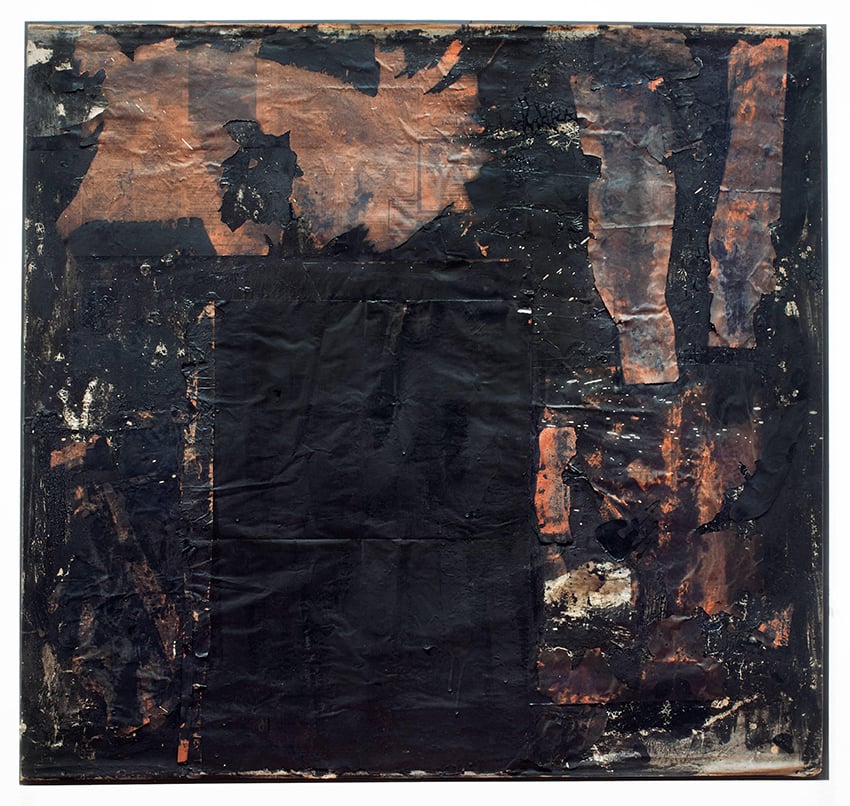
Robert Rauschenberg, Untitled (Black Painting with Portal Form), 1952-53 (alternative orientation) San Francisco MOMA.

Gordon Hahn

June 4, 2024

The NATO-Russia Ukrainian war for and against NATO expansion, is on the brink of expanding to the NATO countries that provoked Russia to invade Ukraine on 24 February 2024 and have supported its continuation ever since, save one—the United States of America—ironically, the real force behind the war’s genesis. Sixteen years ago today’s CIA Director, at the time US Ambassador to Moscow, William Burns was ignored when he informed Washington: 

“Ukraine and Georgia’s NATO aspirations not only touch a raw nerve in Russia, they engender serious concerns about the consequences for stability in the region.  Not only does Russia perceive encirclement, and efforts to undermine Russia’s influence in the region, but it also fears unpredictable and uncontrolled consequences which would seriously affect Russian security interests.  Experts tell us that Russia is particularly worried that the strong divisions in Ukraine over NATO membership, with much of the ethnic-Russian community against membership, could lead to a major split, involving violence or at worst, civil war. In that eventuality, Russia would have to decide whether to intervene; a decision Russia does not want to have to face. ….“Russia’s opposition to NATO membership for Ukraine and Georgia is both emotional and based on perceived strategic concerns about the impact on Russia’s interests in the region. It is also politically popular to paint the U.S. and NATO as Russia’s adversaries and to use NATO’s outreach to Ukraine and Georgia as a means of generating support from Russian nationalists. While Russian opposition to the first round of NATO enlargement in the mid-1990’s was strong, Russia now feels itself able to respond more forcefully to what it perceives as actions contrary to its national interests” (https://wikileaks.org/plusd/cables/08MOSCOW265_a.html).

Rather than heed Burns’s warning and that of numerous objective experts, the US and NATO tried to remake Ukraine, funding anti-Russian forces and backing what became a violent, terrorist coup led by neofascists in February 2013, confounding an agreement worked out by the regime, opposition, Europe, and Russia that would have resolved the crisis. 

The post-coup NATO involvement in Ukraine was discussed in unusual pieces. One had purposes beyond the present discussion, The New York Times (NYT), acknowledged that the CIA was involved in Maidan Ukraine no later than immediately after the coup (https://www.nytimes.com/2024/02/25/world/europe/cia-ukraine-intelligence-russia-war.html).

In one rare objective opinion published in NYT on the subject, it was noted: “Over the next decade, the US and its allies built a powerful Ukrainian army while sabotaging the Minsk agreement and later (after the Russian invasion) also sabotaged the Istanbul negotiations. Weapon systems poured in, Ukrainian ports were modernised to fit American warships, and Ukraine was becoming a de facto NATO member. Top Ukrainian officials like Arestovich argued openly they were preparing for a war with Russia. A top adviser to former president Nicolas Sarkozy, warned that the US-Ukraine Charter on Strategic Partnership of November 2021 convinced Russia that it must attack or be attacked’.” (https://www.nytimes.com/2022/05/31/opinion/us-ukraine-putin-war.html).

The decision to supply nuclear capable F-16 fighter jets to Kiev and the recent French and presumably other Western countries’ coming declarations making official their previous and future deployments of ‘instructors’ and ‘advisors’ to the Ukrainian front is dangerously escalatory enough. Moscow is required to respond with an answering escalation to save face internally before the Russian people and externally before the world.

Now NATO, in the person of its GenSec, has opened up the Overton window by way of convening discussions with member-states on the introduction of troops and the use of Western-supplied mid-range rockets to hit deep inside Russian territory. Poland is on the verge of deploying its missile defense systems to protect Ukraine from Russia attacks. Moreover, a claim is being circulated to the effect that decision of 12 NATO countries (UK, France, Netherlands, Denmark, Canada, Sweden, Finland, Poland, the Czech Republic, Estonia, Latvia, and Lithuania so far) to allow Kiev to use Western missiles to strike deep into Russia — as far as Moscow and Russia’s ‘second capital’ of St. Petersburg.

Germany, not included in the list, has apparently changed its position and now supports attacks on Russia using Western weapons, as Chancellor Olaf Shultz stated, standing next to French President Emmanuel Macron last week. Berlin also is still considering sending long-range Taurus missiles to Kiev.

For its part, the US is considering giving permission to Kiev to use US weapons, such as ATACM missiles (180-mile range), against military targets deep inside Russia (https://www.wsj.com/world/blinken-signals-u-s-may-allow-ukraine-to-strike-inside-russia-with-u-s-weapons-61fedb10). The US has announced that it will allow the use of weapons it has supplied to Ukraine for attacks on Russian proper in the battle in the Kharkov (Kharkiv) border region now the focus of a Russian counteroffensive.

Otherwise, for the moment, Washington will continue to pretend it is opposed to Ukraine’s use of American weapons against Russia proper, using official statements and media plants to this tune: “a U.S. official said Washington had expressed concerns to Kyiv over Ukraine’s strikes — using its own weapons — on Russian radar stations that provide conventional air defense and early warning of nuclear launches by the West.” (https://www.washingtonpost.com/national-security/2024/05/30/ukraine-us-strategy-disagreement-corruption/). But Ukraine’s armed forces could not have made this attack without US assistance.

The US also will soon conclude a US-Ukraine Security Pact likely intended to institutionalize US weapons, training, intelligence, operational, and financial support to Kiev for the ‘long war.’ Fifteen European states have already concluded such long-term security agreements with Kiev over the last few months (https://www.pravda.com.ua/rus/news/2024/05/31/7458547/).

All this — added to the Western weapons, intelligence, training, operational planning, and undercover military personnel contributed to Kiev — makes Ukraine de facto a full-fledged NATO member-state. In other words, NATO countries — and thus de facto NATO itself — are preparing to do officially what they have been doing clandestinely since February 2022: fight Russia in Ukraine for the right to expand NATO when and where Washington and Brussels want.

Before all this, Western countries — all the leading members of NATO — were de facto and de jure co-belligerents with Ukraine against Russia. Suffice it to note that Ukraine does not have space-based reconnaissance data for targeting but is receiving such from French, German, US and other NATO militaries.

It appears that the recent Western escalations are driven in part by the need to prevent a Russian victory at all costs in order to save face for the US and NATO and, perhaps no less importantly, to salvage US President Joe Biden’s career in the coming presidential elections—a career that has been so disastrous for his family, Americans in general, and now the world. The authoritarianizing Democrat Party-state Biden administration has no limits in what it will do to achieve foreign and domestic hegemony; regarding the latter, witness the weaponization of the judicial system against both rank-and-file American citizens and former US President Donald Trump.

To achieve its ends, Washington and other Western countries are willing to mount an over-escalation that very possibly will provoke Russian to target Western sites, perhaps ‘decision-making centres’ as some Russians have proposed. It is more likely that Moscow will target any objects located in NATO countries used for air sorties for attacks on Russia: airfields in Poland and Romania, operational and intelligence centers, air defense installations in Poland, and the like.

In the event, a Europe-wide war conflagration threatens to break out. Such Russian retaliation will cause NATO to invoke Chapter 5 requiring a decision on whether to undertake military measures against Moscow directly. Russian officials and media are already preparing the Russian public for the likelihood of a broader war  sparked by the West. 

Two weeks ago, Ukraine attacked and damaged or destroyed 2 of Russia’s 10 early ballistic missile warning systems designed to pick up nuclear missile attacks on Russia coming from the south. The Austrian Armed Forces published an analysis suggesting that the attacks could have been sanctioned by the US and were meant as a warning to Moscow, because these targets were of no military value for Kiev.

If this is how Austrian military elements see this attack, one can imagine how the Russian GRU, SVR, and other security-interested elements see this attack, at least in symbolic terms or future potentialities, since the radar systems were not aimed at discovering missiles coming from the west. 

These attacks were clearly intended by Ukrainian leader Volodomyr Zelensky to intensify tensions between Russia and the West and provoke Moscow into an overreaction in order to bring NATO closer to direct military intervention in the war. Zelensky has attempted this numerous times, from attacking Crimea and the Black Sea Fleet with Western rockets, using American intelligence for targeting, to claiming Russian plots to explode nuclear power plants and the like. He will now have a much easier job pushing the West and, thus, Russia over red lines. Expanding the war is the only way to save himself, the Maidan regime, and a Ukraine — if a rump one — with a viable opportunity to join NATO and the EU.

Although these intensifications of the war crisis may not occur immediately, once the Russian forces’ offensive seems destined to reach the Dniepr River and/or political instability breaks out in Kiev, Washington will be forced to return to the issue and likely ‘pull the trigger’ allowing Kiev to use Western missiles and operations to hit targets deep inside Russia. This may come in autumn. 

This dangerous approach would be consistent with the West’s possible strategy of upping the length and costs of the war so that it lasts until Putin’s health falters and/or war costs damage the Russian economy’s health, prompting his political demise. This ‘long’ war strategy is reflected in the noted security pacts between Ukraine and 15 European states, with Washington soon to follow.

Worse still, the European NATO war risks expanding into a world war, if, for example, in addition to Belarus, other CSTO states were to send equipment or even troops to support Moscow in Ukraine, or if China were to intervene on Moscow’s behalf more aggressively in these or other ways. Western criticism of Chinese trade and technology transfers with military applicability and more recent Western claims that China is already supplying weapons to Moscow demonstrate just how this vector in the expansion of the NATO-Russia Ukraine War is already kinetic rather than theoretical.

China cannot allow Moscow to lose its ‘special military operation’ that likely would deprive it of its most powerful ally at a time when Washington is gearing up for a twilight struggle against Beijing. Moreover, once the war spreads beyond Ukraine, the temptation on both sides to machinate asymmetrical escalations elsewhere grow.

The West might target Georgia, Kazakhstan, or, again Belarus, Syria, and Iran. Moldova and Armenia could become Russian foci of asymmetrical escalation. In a grave pinch, China and Russia might be able to entice North Korea to attack South Korea. The US and China can provoke each other on Taiwan or in the South China Sea.

The US’s hundreds of military and intelligence installations abroad could become targets, transformed from assets into liabilities. A kind of perfect storm is coming.

This autumn there likely will be a collapse of the Ukrainian front and/or army and/or regime; the Russian army’s approach to the Dniepr and perhaps encirclement of Zaporozhe, Kharkiv, and even Kyiv; and an American political crisis (given the guilty verdict against Republican presidential candidate Donald Trump).

The possibilities are almost endless, and some rather dire ones are becoming increasingly more probable.

This article was originally published on Gordon Hahn’s homepage on June 2, 2024, here.

Related Posts

The agreement is catastrophic both because of what it says and what it doesn’t mention. It reduces further the major asset of security policies: Freedom of action. Jan Oberg TFF director September 25, 2026 A couple of hours before the agreement was signed on September 22, 2026, I published the following 13 hypotheses about what it would most likely contain on TFF Substack (in English). I was wrong on only the first point. Contrary to what Trump had written on his Truth Social platform, it does not appear to come into force immediately. In fact, it turned out to be worse than even I had anticipated. After these hypotheses now come a number of reflections in light of what the agreement actually contains, and does not contain, as well as the way in which it has generally been presented by major media outlets and by the public-service broadcaster DR. My...
The MSC’s closed groupthink militarism offers only one prescription — more weapons — even as record military expenditures, squeezed from taxpayers in economic crisis, destroy diplomacy and drive escalation to the highest war risks in decades. Jan Oberg TFF director February 13, 2026 From Dialogue Forum to Militarised Ritual For decades, the Munich Security Conference (MSC) – which opened today and runs till Sunday – was one of the few places where adversaries could meet without theatrics. Founded in 1963 as the Wehrkundetagung, it served as a discreet Cold War dialogue forum between NATO and the Warsaw Pact. Even at moments of high tension, Soviet and later Russian representatives were present, and Munich allowed uncomfortable messages to be delivered directly rather than through press releases or military manoeuvres. That era has vanished. The MSC has become something entirely different: a €13–20 million annual gathering of a closed Western security elite, a polished meeting...
PART 2 — Diplomacy, Law and Nonviolent Power By Jan ObergTFF co-founder and director January 26, 2026 This is the second of four TFF-created idea portfolios designed to curb the global reach of the United States and, in both the short and long term, help catalyse a worldwide nonviolent resistance to what many observers describe as the Trump administration’s uniquely confrontational, destructive and world-threatening policies. These portfolios outline what governments and citizens across the world can do through dynamic diplomacy, creative initiatives, and strictly nonviolent means. They are typical TFF works in that we do not only tell what the problem is and how bad it will go – as 90+% of all commentators, experts and scholars do – we tell what we think can be done, inviting you to think of what you think you can do. It seems painfully clear to me that the current political dynamics in Washington increasingly resemble the most dangerous...

Recent Articles

Below are TFF-related media mentions, comments, videos and social media posts published elsewhere but not on this homepage. We happen to catch and list only a fraction. Regarding video comments and debates, we recommend that you go to the TFF Video Channel on Substack where many of them are reproduced. Jan Oberg is a contributor to China Daily – 52 million daily clicks – and Global Times, CGTN and CCTV (the national television), China Investment, Xinhua News Agency and several others. Articles and videos on these media very often multiply into countless Chinese (and Western media) that re-post them from these main media. Thanks to The China Academy, his analyses, interviews and comments are frequently posted on YouTube channels such as Thinkers Forum and Wave Media. These videos are often re-posted on Bilibili (China’s YouTube), the China Content Center on TikTok, and on the Chinese edition of TikTok, Douyin.com. This means reaching hundreds of millions of viewers worldwide over a year. While there are too many to catch on all these...
Jan Oberg TFF director October 13, 2026 According to Alfred Nobel’s will, the Nobel Peace Prize shall be awarded: ”to the person who has done the most or best to advance fellowship among nations, the abolition or reduction of standing armies, and the establishment and promotion of peace congresses.” Further down, he also expresses how the prize for the “champions of peace” shall be decided: “that for champions of peace by a committee of five persons to be selected by the Norwegian Storting. Alfred Nobel’s will is remarkably short and clear. But few seem to have read it. Nobel did not say that the committee itself should consist of members of parliament. He entrusted the Storting with appointing five persons. In principle, it could have selected diplomats, mediators, peace researchers, conflict-resolution specialists, or other individuals with recognised expertise in matters of peace from around the world. Instead, the Storting gradually...
The Quest for Humane Survival Richard Falk Professor emeritus, Princeton UniversityTFF Associate since 1986October 12, 2026 After decades of teaching and writing about international law in academic frameworks that were not institutionally situated within law school environments—at Princeton and the University of California, Santa Barbara—I found myself most receptive to the TWAIL outlook. It has been especially illuminating in clarifying the extent to which international law evolved as a dialogical critique of Europe’s efforts to legitimize its colonial undertakings. In particular, TWAIL has exposed how international law has functioned to legalize the subjugation of Third World peoples, securing conditions for exploitative investment and trade relations, the coercive enforcement of public debts, and an ideology of cultural superiority. TWAIL’s exposure of these economic legacies of colonialism has influenced my understanding of the history and development of international law, broadly conceived, as an ideological project of the Western sub-system of the world...

TFF on Substack

Discover and subscribe to more peace materials on TFF Substack

Most Popular

Below are TFF-related media mentions, comments, videos and social media posts published elsewhere but not on this homepage. We happen to catch and list only a fraction. Regarding video comments and debates, we recommend that you go to the TFF Video Channel on Substack where many of them are reproduced. Jan Oberg is a contributor to China Daily – 52 million daily clicks – and Global Times, CGTN and CCTV (the national television), China Investment, Xinhua News Agency and several others. Articles and videos on these media very often multiply into countless Chinese (and Western media) that re-post them from these main media. Thanks to The China Academy, his analyses, interviews and comments are frequently posted on YouTube channels such as Thinkers Forum and Wave Media. These videos are often re-posted on Bilibili (China’s YouTube), the China Content Center on TikTok, and on the Chinese edition of TikTok, Douyin.com. This means reaching hundreds of millions of viewers worldwide over a year. While there are too many to catch on all these...
Jan Oberg TFF director October 13, 2026 According to Alfred Nobel’s will, the Nobel Peace Prize shall be awarded: ”to the person who has done the most or best to advance fellowship among nations, the abolition or reduction of standing armies, and the establishment and promotion of peace congresses.” Further down, he also expresses how the prize for the “champions of peace” shall be decided: “that for champions of peace by a committee of five persons to be selected by the Norwegian Storting. Alfred Nobel’s will is remarkably short and clear. But few seem to have read it. Nobel did not say that the committee itself should consist of members of parliament. He entrusted the Storting with appointing five persons. In principle, it could have selected diplomats, mediators, peace researchers, conflict-resolution specialists, or other individuals with recognised expertise in matters of peace from around the world. Instead, the Storting gradually...
The Quest for Humane Survival Richard Falk Professor emeritus, Princeton UniversityTFF Associate since 1986October 12, 2026 After decades of teaching and writing about international law in academic frameworks that were not institutionally situated within law school environments—at Princeton and the University of California, Santa Barbara—I found myself most receptive to the TWAIL outlook. It has been especially illuminating in clarifying the extent to which international law evolved as a dialogical critique of Europe’s efforts to legitimize its colonial undertakings. In particular, TWAIL has exposed how international law has functioned to legalize the subjugation of Third World peoples, securing conditions for exploitative investment and trade relations, the coercive enforcement of public debts, and an ideology of cultural superiority. TWAIL’s exposure of these economic legacies of colonialism has influenced my understanding of the history and development of international law, broadly conceived, as an ideological project of the Western sub-system of the world...
Read More
girl-5894831_1280
Below are TFF-related media mentions, comments, videos and social media posts published elsewhere but not on this homepage. We happen to catch and list only a fraction. Regarding video comments and debates, we recommend that you go to the TFF Video Channel on Substack where many of them are reproduced. Jan Oberg is a contributor to China Daily – 52 million daily clicks – and Global Times, CGTN and CCTV (the national television), China Investment, Xinhua News Agency and several others. Articles and videos on these media very often multiply into countless Chinese (and Western media) that re-post them from these main media. Thanks to The China Academy, his analyses, interviews and comments are frequently posted on YouTube channels such as Thinkers Forum and Wave Media. These videos are often re-posted on Bilibili (China’s YouTube), the China Content Center on TikTok, and on the Chinese edition of TikTok, Douyin.com. This means reaching hundreds of millions of viewers worldwide over a year. While there are too many to catch on all these...
Nobel-Prize-Plaque
Jan Oberg TFF director October 13, 2026 According to Alfred Nobel’s will, the Nobel Peace Prize shall be awarded: ”to the person who has done the most or best to advance fellowship among nations, the abolition or reduction of standing armies, and the establishment and promotion of peace congresses.” Further down, he also expresses how the prize for the “champions of peace” shall be decided: “that for champions of peace by a committee of five persons to be selected by the Norwegian Storting. Alfred Nobel’s will is remarkably short and clear. But few seem to have read it. Nobel did not say that the committee itself should consist of members of parliament. He entrusted the Storting with appointing five persons. In principle, it could have selected diplomats, mediators, peace researchers, conflict-resolution specialists, or other individuals with recognised expertise in matters of peace from around the world. Instead, the Storting gradually...
law-419057_1280
The Quest for Humane Survival Richard Falk Professor emeritus, Princeton UniversityTFF Associate since 1986October 12, 2026 After decades of teaching and writing about international law in academic frameworks that were not institutionally situated within law school environments—at Princeton and the University of California, Santa Barbara—I found myself most receptive to the TWAIL outlook. It has been especially illuminating in clarifying the extent to which international law evolved as a dialogical critique of Europe’s efforts to legitimize its colonial undertakings. In particular, TWAIL has exposed how international law has functioned to legalize the subjugation of Third World peoples, securing conditions for exploitative investment and trade relations, the coercive enforcement of public debts, and an ideology of cultural superiority. TWAIL’s exposure of these economic legacies of colonialism has influenced my understanding of the history and development of international law, broadly conceived, as an ideological project of the Western sub-system of the world...
images-2
Advocates of nuclear disarmament are regularly dismissed by the champions of nuclear deterrence as naïve and unrealistic, utopian or even irresponsible. Yet this ‘doctrine’ of deterrence, regarded by France as the ‘cornerstone’ of its national security, is based on quasi-religious beliefs, a theory that cannot be proven, risky gambles and fragile assumptions. So much so that one might legitimately ask which side the ‘Care Bears’ are on. Marc FinaudVice-President of Initiatives for Nuclear Disarmament (IDN) October 9, 2026 This article was originally published on Pressenza When it comes to these things being treated as religious concepts, look here. Idealists and realists It was Hubert Védrine, François Mitterrand’s former Foreign Minister, who repeatedly coined the phrase: ‘Europeans are a sort of Care Bears who don’t realise they’re living in Jurassic Park’. He applies this reference to the cartoon for well-behaved children not only to what he regards as weakness or idealism...
8824b09f-33a5-43f9-9fd0-550f28cda24d_1536x1024
What the West Borrowed from Asia and What It Left Behind Jan Krikke October 8, 2026 The article was originally published here In the late 1960s, the musical Hair announced that the Age of Aquarius was dawning. Its opening anthem promised a transformation of human consciousness: an era of peace, harmony and understanding. Half a century later, a familiar echo of that promise is a meditation app offered by your employer. You can find it in the same list of benefits as the pension plan and the gym discount. How did a spiritual revolution become an employee benefit? The answer lies in the history of the movement known as New Age: where it came from, what it borrowed from Asia, and why the meaning of what it borrowed changed in the process. Two definitions will help. New Age is a loose label for a wide range of spiritual practices and...
Screenshot 2026-10-04 210142
Small and different + among the 10% most active + 9,000 texts + 150 Associates + 60 000 a day — and a stubborn belief that peace is smarter and must be secured by peaceful means. In 2026, the Transnational Foundation for Peace and Future Research (TFF) turns 40. On Monday, October 5, 2026, a new TFF homepage will go live — a new gateway to more than 9,000 articles, analyses, research papers and other contributions produced over four decades of independent peace research. But this is not simply a new website. For four decades, TFF has worked from a simple conviction: peace is smarter than militarism and can be brought about by peaceful means. This is not merely an aspiration. It is the principle expressed in the UN Charter and the Gandhian tradition that has guided our work from the beginning. TFF is a research-based, independent and people-financed foundation....




