
It is far too simple to be merely outraged by the arrogant presumptuousness of today’s speech by the Israeli Prime Minister to a joint session of Congress two weeks prior to national elections in Israel. The Netanyahu visit has encouraged various forms of wishful thinking.

Perhaps, the most common one is to suppose that bump in the road of U.S./Israeli relations will lead to a foreign policy reset that is more in accord with American national interests (in the spirit of the Mearsheimer/Walt critique of the baneful influence of the Israeli lobby) or that it signifies the death knell of AIPAC or the permanent alienation of the Democratic Party from its knee jerk support for Israel.

In my view, none of these developments will happen in the wake of Netanyahu visit, no matter how obnoxious or divisive or inappropriate as his presence appears to be.

First of all, it is important to separate three main dimensions of the Netanyahu speech to Congress:

1) its impact on efforts to reach a diplomatic solution in relation to Iran;

2) its impact on U.S./Israel relations;

3) its effects on the Israeli elections scheduled for March 17th.

In my view, the biggest damage is likely to result from (1), with few lasting consequences arising from (2) and (3), although on 3) there is a serious possibility that the speech, contrary to Netanyahu’s apparent intentions, will weaken his reelection prospects because Israelis will worry (needlessly) that there will be permanent negative fallout with respect to the Israel-United States relationship if Netanyahu remains as the head of the Israeli government.

There is a fourth dimension, even more speculative than the others, yet probably of significance:

4) the impact of the speech on the rising tide of anti-Semitism.

Here, we need to be careful to distinguish a) allegations of anti-Semitism that are used to stifle criticism of Israel and what I would call b) genuine anti-Semitism that exhibits and stems from hatred of Jews.

It is a sad commentary on the current situation that these two contradictory realities are merged in toxic ways by current Zionist discourses on anti-Semitism, playing on Jewish post-Holocaust fears to shield Israel from justifiable criticism for its abusive behavior toward the Palestinian people and the related neglect of Palestinian fundamental rights.

My greatest worry is that the Netanyahu speech will stiffen still further the anti-Obama will of the Republican members of Congress, as abetted by the most diehard Israel supporters among the Democratic lawmakers, as to put a impassable roadblock in the path of mutually beneficial negotiations with Iran that are now at a critical make or break stage.

To some extent this roadblock is likely to be somewhat disguised by taking the form of retaining strong sanctions (never justified) until Iran demonstrates its good faith for several years by adhering to all the limitations on its nuclear program, including free access for international monitoring.

If diplomacy fails, it will have at least two detrimental effects: first, it will definitely tilt the domestic balance in Iran toward the hardliners, and likely make Iran more repressive internally and more belligerent externally; and secondly, it will increase regional tensions, and if Iran proceeds with its nuclear program, as it most probably would, this would greatly heighten the prospect of a military confrontation.

In such a setting, the Netanyahu speech is a dangerous wild card that would never have been played by responsible political actors, although threatening to deliver such a speech might have achieved a comparable harmful result without the backlash. But no one has ever claimed subtlety to be a Netanyahu virtue.

Yet let us suppose that Netanyahu had given in to pressure to cancel the speech with the side effect of psycho-political gratitude from most sectors of influential opinion in the United States. At that point Netanyahu could have exacted more than a pound or two of flesh from a foolishly grateful and supine Obama White House.

We should not forget that in the context of nuclear weapons policy in the Middle East there is a surrealistic element present: Israel mounts its objections to a remote possibility of Iran acquiring nuclear weapons while avoiding any objections to the retention of its own nuclear arsenal, secretly developed. Such a diplomatic asymmetry should not be allowed to pass unnoticed. Indeed, it should not be allowed!

When it comes to weakening support among Democrats or Jewish voters, the news of Israel’s demise, to invoke the authority of Mark Twain, is greatly exaggerated. Democrats will explain their absence from the speech as a reaction limited to the Speaker John Boehner irresponsible and partisan rupture of Congressional protocol and to Netanyahu’s untimely presence.

At the same time, they will do as other American political leaders, such as John Kerry are doing, seize the occasion to reaffirm their support for the unbreakable nature of the Israel/U.S. partnership. Already we hear strident reassurances to Israel of the underlying American commitment to the security and wellbeing of Israel as understood by the Israeli government.

As for Jewish voters and funders, they may possibly be conscience stricken, and even annoyed, for the moment, but it is highly probable that even if Netanyahu wins the election in two weeks their fundamental allegiances will be reaffirmed. I believe this is especially true in the wake of the Charlie Hebdo and Copenhagen synagogue incidents and the regional rise of ISIS.

Such a prediction should not be interpreted as a sign that the rise of solidarity with the Palestinian struggle will lose its impressive recent momentum within universities, churches, and labor unions.

In this sense, I expect the disconnect between Washington and the rest of the country will widen after the Netanyahu visit — mending fences in Washington while mounting new challenges to Israeli policies and practices throughout civil society. This will be expressed by further victories for divestment initiatives on American campuses and robust growth for the BDS campaign.

As far as the Israeli elections are concerned, it seems a black box. What is so notable, as authoritatively observed by Uri Avnery, is the deliberate unwillingness of the centrist anti-Likud coalition led by Isaac Herzog to dwell on the need for ‘peace’ or for a just solution to the conflict. The electoral debate seems to have evoked little interest in Israel, and what disagreement there is, concerns bread and butter issues relating to economic policy.

There is one misperception that it is important to counter, the idea that persists, despite all evidence to the contrary, that the outlook for a just peace would greatly improve if Netanyahu and Likud are defeated. There is not a shred of support for this kind of mindless optimism that remains so prevalent in the ranks of liberal Zionism, which hangs on to the vain belief that a two-state solution is still feasible and has any appeal for the Israeli electorate.

It should have been clear years ago that a tacit consensus exists in Israel, and is not opposed by Washington, that Oslo diplomacy has reached a dead end. The only requirement for the sake of public opinion is to keep aloft the banner of false consciousness that with tough concessions on both sides a sustainable peace can still be achieved, and only by such means.

The issue of anti-Semitism is not likely to disappear. As mentioned, it will continue to be used to blunt and divert criticism of Israel.

As well, the continued frustration of Palestinians and other Arab victims of Israeli policies and Islamophobia are likely to commit hate crimes (although to a far lesser extent than to be the target of such crimes). There is no doubt that the deft playing of the anti-Semitic card by Zionist forces has encroached upon academic freedom throughout the world, targeting critics and civil society peace and humanitarian activists.

Troublesome as this is, more disturbing is the extent to which such tactics are reinforced by academic administrators and politicians who are either complicit or craven, scared by the disproportionate influence of Zionist advocacy in the media, government, and among the wealthy. For elaboration see the fine March 1, 2015 analysis and commentary by Philip Weiss in Mondoweiss online news service.

What we can hope for in the wake of this latest Netanyahu experience is some greater appreciation of what is at stake in the Iranian diplomacy and the realization that the Palestinian ordeal is the defining human rights issue of our time.

But don’t look to Washington for this to happen anytime soon. I expect that even Obama will swallow hard, and then do his best to resume relations as if nothing had ever happened, perhaps harboring secret fantasies of a devastating defeat for Netanyahu and his Likud Party on March 17th.
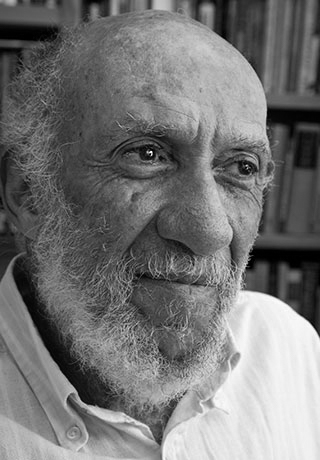

Professor Falk became an adviser to TFF when it was established in 1985.

Related Posts

It’s a matter of principles, courage, vision and pulling together – while the militarist world is falling apart… Peter Langille October 3, 2026 “Here, then, is the problem which we present to you, stark and dreadful and inescapable: Shall we put an end to the human race; or shall mankind renounce war?”The Bertrand Russell—Albert Einstein Manifesto, July 9, 1955 ⁕ The forecast for what’s ahead is worrisome. The sharp rise in armed conflicts over the past three years is adding to what was already the highest level in over seventy years. Genocides, which should be prevented are supported. A shared climate emergency that jeopardises survival is ignored. Diverse polls now suggest that people are war-weary, worried and interested in a more effective United Nations. And, there are viable policy options for a more secure world! Yet governments are doubling-down, betting on more war and investing heavily. If current trends persist,...
Johan Galtung 1930-2024October 2015 Published here on October 3, 2026 Let us focus on Civilization for conflict analysis and remedies. Major forms of disorder use violence; war is state organized violence. The most belligerent states are the United States of America and Israel, both with civilization roots. National Evangelism, the US Protestant Christian civilization– more national than evangelical–justifies US warfare as exceptionalism of a people chosen by God, with a manifest destiny to run the world. Orthodox Judaism justifies Israeli warfare to conquer and expand from Nile to Euphrates as a religious right and duty to the Eternal One. The third most belligerent country, the UK, no longer believes it is God-chosen but chosen by the USA; not quite the same but something. But the root cause of global disorder lies in the Occident–with Islam–seeing itself as the single, universal civilization valid for all at all times, all others being...
The agreement is catastrophic both because of what it says and what it doesn’t mention. It reduces further the major asset of security policies: Freedom of action. Jan Oberg TFF director September 25, 2026 A couple of hours before the agreement was signed on September 22, 2026, I published the following 13 hypotheses about what it would most likely contain on TFF Substack (in English). I was wrong on only the first point. Contrary to what Trump had written on his Truth Social platform, it does not appear to come into force immediately. In fact, it turned out to be worse than even I had anticipated. After these hypotheses now come a number of reflections in light of what the agreement actually contains, and does not contain, as well as the way in which it has generally been presented by major media outlets and by the public-service broadcaster DR. My...

Recent Articles

Photo above: Carl Fredrik Reuterswärd’s Non-Violence outside UN Headquarters in New York. Kirill Levin, CC BY-NC-SA 2. Jan Oberg November 3, 2026 I am happy to be published in Horizons which is produced by the Center for International Relations and Sustainable Development, CIRSD, in Belgrade. My contribution brings out a radical re-thinking of what concepts such as defence, security, deterrence – and peace – may mean if we want to create a more peaceful world. It also summarises a few things I have been working with the last few decades. Please read it here Og her er den på dansk, takket være Johnny Baltzersens lynhurtige oversættelse
UNITE-tillid, DREAM-velstand og andre konstruktive komponenter Normally we publish articles in English here. But this is a translation of a very important TFF document that should reach as many as possible in Denmark since this country’s government has been one of the most hardline in Europe and, up till now at least, has refused to use diplomacy and, instead, spent tremendous sums on arming Ukraine with the express goal of defeating Russia. Thus this – unique – article is in Danish. Vi er Johnny Baltzersen og hans Fælles Sikkerhed – Fælles Fremtid på Substack overmåde taknemmelige for at have oversat og publiceret TFF’s 2025-portfølje for fredsidéer med henblik på Ukraines fremtid. Vi håber den nu kan nå mange flere danskere – som også vil sprede den og skabe debat – nu den danske regerings og folketingspartiernes politik på dette område siden 2022 står nu – forudsigeligt – ved vejs ende....
Jan Oberg TFF director October 28, 2026 Exactly one month has now passed since I published my criticism of the introduction to the special issue on Johan Galtung published by the Journal of Global Security Studies, JoGSS, and of Tor Egil Førland’s chapter about Galtung which serves as a preview to his forthcoming biography of Galtung to be published by PRIO. See the original on The Transnational here and the same article on TFF Substack with many general and critical comments and, in particular, the people who decided to withdraw from the biography project in protest. The special issue itself was extraordinary. It was devoted to the intellectual legacy of one of the founders of peace research and contained a number of strong assessments of his personality, scholarship, intellectual trajectory, and public role. Such assessments are, of course, entirely legitimate. No scholar is beyond criticism, and neither was Johan Galtung....

TFF on Substack

Discover and subscribe to more peace materials on TFF Substack

Most Popular

Photo above: Carl Fredrik Reuterswärd’s Non-Violence outside UN Headquarters in New York. Kirill Levin, CC BY-NC-SA 2. Jan Oberg November 3, 2026 I am happy to be published in Horizons which is produced by the Center for International Relations and Sustainable Development, CIRSD, in Belgrade. My contribution brings out a radical re-thinking of what concepts such as defence, security, deterrence – and peace – may mean if we want to create a more peaceful world. It also summarises a few things I have been working with the last few decades. Please read it here Og her er den på dansk, takket være Johnny Baltzersens lynhurtige oversættelse
UNITE-tillid, DREAM-velstand og andre konstruktive komponenter Normally we publish articles in English here. But this is a translation of a very important TFF document that should reach as many as possible in Denmark since this country’s government has been one of the most hardline in Europe and, up till now at least, has refused to use diplomacy and, instead, spent tremendous sums on arming Ukraine with the express goal of defeating Russia. Thus this – unique – article is in Danish. Vi er Johnny Baltzersen og hans Fælles Sikkerhed – Fælles Fremtid på Substack overmåde taknemmelige for at have oversat og publiceret TFF’s 2025-portfølje for fredsidéer med henblik på Ukraines fremtid. Vi håber den nu kan nå mange flere danskere – som også vil sprede den og skabe debat – nu den danske regerings og folketingspartiernes politik på dette område siden 2022 står nu – forudsigeligt – ved vejs ende....
Jan Oberg TFF director October 28, 2026 Exactly one month has now passed since I published my criticism of the introduction to the special issue on Johan Galtung published by the Journal of Global Security Studies, JoGSS, and of Tor Egil Førland’s chapter about Galtung which serves as a preview to his forthcoming biography of Galtung to be published by PRIO. See the original on The Transnational here and the same article on TFF Substack with many general and critical comments and, in particular, the people who decided to withdraw from the biography project in protest. The special issue itself was extraordinary. It was devoted to the intellectual legacy of one of the founders of peace research and contained a number of strong assessments of his personality, scholarship, intellectual trajectory, and public role. Such assessments are, of course, entirely legitimate. No scholar is beyond criticism, and neither was Johan Galtung....
Read More
knotted gun
Photo above: Carl Fredrik Reuterswärd’s Non-Violence outside UN Headquarters in New York. Kirill Levin, CC BY-NC-SA 2. Jan Oberg November 3, 2026 I am happy to be published in Horizons which is produced by the Center for International Relations and Sustainable Development, CIRSD, in Belgrade. My contribution brings out a radical re-thinking of what concepts such as defence, security, deterrence – and peace – may mean if we want to create a more peaceful world. It also summarises a few things I have been working with the last few decades. Please read it here Og her er den på dansk, takket være Johnny Baltzersens lynhurtige oversættelse
TFFPortfolioVign
UNITE-tillid, DREAM-velstand og andre konstruktive komponenter Normally we publish articles in English here. But this is a translation of a very important TFF document that should reach as many as possible in Denmark since this country’s government has been one of the most hardline in Europe and, up till now at least, has refused to use diplomacy and, instead, spent tremendous sums on arming Ukraine with the express goal of defeating Russia. Thus this – unique – article is in Danish. Vi er Johnny Baltzersen og hans Fælles Sikkerhed – Fælles Fremtid på Substack overmåde taknemmelige for at have oversat og publiceret TFF’s 2025-portfølje for fredsidéer med henblik på Ukraines fremtid. Vi håber den nu kan nå mange flere danskere – som også vil sprede den og skabe debat – nu den danske regerings og folketingspartiernes politik på dette område siden 2022 står nu – forudsigeligt – ved vejs ende....
JoGSS-Silent
Jan Oberg TFF director October 28, 2026 Exactly one month has now passed since I published my criticism of the introduction to the special issue on Johan Galtung published by the Journal of Global Security Studies, JoGSS, and of Tor Egil Førland’s chapter about Galtung which serves as a preview to his forthcoming biography of Galtung to be published by PRIO. See the original on The Transnational here and the same article on TFF Substack with many general and critical comments and, in particular, the people who decided to withdraw from the biography project in protest. The special issue itself was extraordinary. It was devoted to the intellectual legacy of one of the founders of peace research and contained a number of strong assessments of his personality, scholarship, intellectual trajectory, and public role. Such assessments are, of course, entirely legitimate. No scholar is beyond criticism, and neither was Johan Galtung....
Screenshot 2026-10-26 115647
An aspect of Iran’s culture and civilisation you’ve probably never heard about. Don’t be surprised if the US and Israel also try to bomb them. Jan ObergTFF director October 26, 2026 Today – under the “USraeli” threat of new “annihilating” bombings – opens the 7th International Conference on Peace and Conflict Resolution at Tehran’s University. As far as I can tell, this is the only permanent, advanced peace research institution in West Asia/the Middle East. Perhaps more countries in that region could be inspired? I mean, how many military “security” institutes and military academies do they have? Many peace research institutes and university departments have been established since the 1950s in the West. They are now all under attack; some have closed down, some have gone mainstream, yet others kept the name but do nothing to research peace and disseminate results or advice; instead, they cooperate with militarism’s platforms such...
Screenshot 2026-10-15 141837
Let’s discuss using AI to create peace – in contrast to boring geopolitics devoid of creative healing and visions. Jan Oberg TFF director October 15, 2026 I asked VEED to create a short video exemplifying how peace is preferable to war, then chose the lady as a template. Simple as that. In less than a minute, it produced this video, which any peace-loving person would appreciate. The only problem is that human intelligence (HI), at least the one that exists among Western decision-makers, isn’t half as moral or smart as AI. I have used AI to dialogue about peace and peace plans, creative conflict resolution and visions of a better future for humankind. It so happens that I am having more stimulating, intelligent, creative and moral discussions with AI than I could possibly have with any EU or NATO leader today. Yes, AI has very problematic and dangerous aspects; used...
girl-5894831_1280
Below are TFF-related media mentions, comments, videos and social media posts published elsewhere but not on this homepage. We happen to catch and list only a fraction. Regarding video comments and debates, we recommend that you go to the TFF Video Channel on Substack where many of them are reproduced. Jan Oberg is a contributor to China Daily – 52 million daily clicks – and Global Times, CGTN and CCTV (the national television), China Investment, Xinhua News Agency and several others. Articles and videos on these media very often multiply into countless Chinese (and Western media) that re-post them from these main media. Thanks to The China Academy, his analyses, interviews and comments are frequently posted on YouTube channels such as Thinkers Forum and Wave Media. These videos are often re-posted on Bilibili (China’s YouTube), the China Content Center on TikTok, and on the Chinese edition of TikTok, Douyin.com. This means reaching hundreds of millions of viewers worldwide over a year. While there are too many to catch on all these...




