After three weeks in China I have returned to the United States yesterday before departing for Turkey and Rhodes later today. I mention this to explain my failure to post during this period or to comment or monitor comments on the blog.

This failure was not due to a lack of access to the Internet or even finding time during a busy travel schedule. It was due to my lack of skill in circumventing what is known as ‘The Great Firewall of China’ that blocks entry to most blogs, Facebook, Youtube, Twitter, as well as assorted other sites. Sophisticated Chinese know how to circumvent, and the authorities do not seem to mind, as the blockade is apparently intended to limit access on the part of ordinary Chinese. This is true of the Chinese media generally, which is highly regulated, especially TV, giving only official views, although the English language dailies, which are quite informative are more objective, and do not read as propaganda.

While in China the media was dominated by the intense Chinese reaction to the Japanese government decision to purchase the Daioyu Islands (called Senkaku Islands by Japan) from private Japanese owners, which was interpreted as a provocative step toward implementing Japanese disputed sovereignty claims. There were sustained, sometimes violent, demonstrations against the Japanese move in all major Chinese cities, interpreted by residents as events largely orchestrated by the Chinese Communist Party.

At the same time there is an undercurrent of anti-Japanese resentment that is genuine, activating memories from the era of Japanese imperialism, which inflicted many harsh abuses on China. There seemed to occur anti-Japanese spontaneous acts throughout China in recent days that probably exceeded what the authorities in Beijing wanted, including attacks of Japanese cars, restaurants, and boycotts of products.

Some Japanese business establishments flew Chinese flags or posted notices to show that they supported the Chinese position with respect to the islands. It is generally in believed that neither government wants the dispute to escalate further as it could severely harm, if it has not already done so, the extensive trade and investment relations between the two countries. It was a widely shared opinion that while the government took the lead in promoting the popular demonstrations, it might experience difficulty in containing this genie of anti-Japanese sentiment once in gained its freedom. Similarly, in Japan, nationalist sentiments in internal politics will complicate any diplomatic retreat by Tokyo.

This was my third visit to China. The first in 1972 involved a delicate mission to escort three American pilots, shot down in the Vietnam War, from their prison cells in Hanoi to the United States. The pilots had been prisoners of war for varying lengths of time, and were released into my custody along with other ‘representatives of the American peace movement,’ William Sloan Coffin, Cora Weiss, and David Dellinger, on condition that they return to territorial United States in our custody.

There was an express understanding that any future prisoner release would be influenced by whether we could uphold this condition, which we took seriously. After their release, we spent another week in what was then North Vietnam, especially visiting various cities and villages that had experienced serious bomb damage. I was struck by the astonishing lack of bitterness on the Vietnamese side considering their extreme vulnerability to these high tech attacks.

There was political sensitivity on all sides: the pilots were concerned that they might be denounced, or even prosecuted, as collaborators, the U.S. Government was worried at a time close to the presidential elections that these pilots could influentially criticize the war policies, China was concerned at a time shortly before the Nixon-Kissinger visit that Washington might cancel or defer this historic diplomatic breakthrough, and we were worried that we might be in trouble for engaging in ‘private diplomacy’ prohibited by an old and unused law.

Actually none of these concerns materialized, but our ten days or so in China were very circumscribed partly because the authorities did not want to publicize their facilitative role, and it was the last throes of the Cultural Revolution, which was evident in the city of Wuhan where we were confined for a week while the remainder of the logistics of the trip were worked out. After a long journey via Beijing, Moscow, and Copenhagen we did manage to get these pilots back to Kennedy Airport in NYC where before deplaning they were, in effect, rearrested, this time by the U.S. Government, to avoid media contact under the pretext of the need for a ‘medical debriefing.’ Among those who boarded the plane was a Pentagon official who had studied at Princeton, and made a point of apologizing to me for this harsh welcome being given to these young Americans who had endured being shot down, Vietnamese imprisonment, and the uncertainties that awaited them at home.

My second visit in 1987 was comparatively low profile so far as media attention was concerned. I gave a few lectures in Beijing and Shanghai as part of an exchange program with Princeton, and my Chinese hosts arranged three weeks of travel throughout the country, which included a trip along the Yangtze River including the Three Gorges segment prior to the construction of major dams, Chunking, and Tibet.

I did meet with the Deputy Foreign Minister of China who told me that if United States wanted positive relations with China it should show support for the remnants of the Khmer Rouge (in Cambodia) and stop encouraging resistance to the sovereign Chinese presence in Tibet.

As a strong critic of the genocidal behavior of the Khmer Rouge and a supporter of Tibetan self-determination, I was somewhat surprised that a high Chinese official was naïve enough to suppose that I was a suitable conduit for such an unwelcome diplomatic communication.

More satisfactory, by far, was a meeting of China’s Vietnam experts in Beijing that had been organized at my request. I had heard the Vietnamese side of the story as to why relations between the two supposed allies had so badly deteriorated after the American departure in 1975, and wanted to get a sense of how the Chinese portrayed the relationship. In essence, the Vietnamese claimed that China wanted the war to go on until ‘the last Vietnamese’ while the Chinese generally faulted Vietnam for being ‘ungrateful’ for extensive assistance at a time of economic hardship in China.

While in China I was accompanied at all times by a Chinese ‘interpreter’ who monitored my agenda and became a friend; during our river travels he asked that I give him a daily lecture on international relations, which I gladly did; he later took a bold step and allowed us to meet some young fiction writers in Shanghai, departing from the approved agenda, which at that time, took a measure of personal courage.

In China there was a sense of relief that the Cultural Revolution was over, and repudiated. There were few signs of the historic move to modernization, or receptivity to foreign capital, which were destined to revolutionize China in the following decades. Traffic in the big cities was almost exclusively by bicycle, with a few government cars and occasional taxis. I remember being in a taxi in Shanghai that had stopped at an intersection when it was struck by a cyclist who had fallen asleep. The taxi was immediately surrounded by an angry crowd, which dissipated only when it became clear that the accident was entirely the fault of the man on the bicycle.

On this third trip China had become a different country! The ‘New China’ had many extraordinary features, including the dark sides of rapid modernization – terrible pollution and traffic gridlock. On Nanjing Road in Shanghai, a shopping thoroughfare closed to cars, there were huge Western stores, including an Apple mega-store and many world class luxury shops. It was notable that many of these stores were rather empty, although the street outside was jammed with pedestrians.

Modern China is an enigma in many ways. It still almost impossible for a foreigner to get along unless fluent in the language, and even difficult to do such routine things as go to a well known hotel or train station without a native speaker and guide. We had great difficulties going from the Shanghai train station where the fast train arrived and a large Marriot hotel in the city center. Many taxis refuse to take foreigners, and it takes great perseverance to find someone, usually a person under 25, who speaks some English. The fast train, traveling at speeds in excess of 185 mph, was comfortable, on time, an excellent way to get from Beijing to Shanghai, and a grim reminder that the U.S. enslaved to the auto industry, is a backward country when it comes to public transportation.

There is much that could be said about this visit to China. I will write a separate post about a workshop and public meeting at Peking University and a quite extraordinary conference on religious traditions in China that took place in Dengfeng, China’s ancient capital and a UNESCO cultural heritage site since 2010.

At this point I will limit myself to a few reflections: there is taking place a serious effort to blend traditional Chinese culture and thought with the new China; few expect any change for the better politically within China over the course of the next ten years; there is great appreciation of American higher education and no hostility toward the United States; the U.S. Secretary of Defense, Leon Panetta, visited a few days ago and was greeted as a valued friend by Chinese leaders, who spoke of greater cooperation between the armed forces of the two countries. There is not much interest in the world outside of East Asia although American popular culture is a definite exception; I found divided attitudes on the part of Chinese intellectuals toward Mao who remains the face of modern China (e.g. a massive portrait at the entry to the Forbidden City), blamed for the mistakes of the 1950s, 1960s, and 1970s but appreciated as the dominant revolutionary leader. There is a sense that there is a widening sphere of freedom of thought so long as the red lines of anti-state activism are not crossed, particularly in organized fashion; there is also quite some realization that the rapid growth of recent years is unlikely to continue due to a mixture of internal and global reasons, especially rising labor costs and insufficient consumer demand; and a seeming rising dissatisfaction with the one-child policy.

Despite all the qualifications and criticisms, what China has achieved for its people, and in a sense for the world, is remarkable, unsurpassed in human history.

I remember attending an off-the-record briefing by the lead journalists (I recall Dan Rather, Eric Severeid, but there were others) who had accompanied Nixon to China in 1972 that was held for invited guests at the Plaza Hotel in NYC. I was seated at a table with several presidents of American airline companies who seemed as astonished as I was by what we were told.

The journalists formed a panel and took questions, and I remember, especially, the words of Severeid, which I paraphrase from memory: “We were scared to tell the American people how impressed we were by what we saw and experienced in China. We came away with the belief that China possessed a superior civilization.” Of course, China had been off limits to Westerners since the Communists took over in 1949, and American Cold War propaganda had been intense during the period of the Vietnam War.

It is odd in light of later developments, including the war between China and Vietnam in the 1970s, that the U.S. Government believed that North Vietnam was essentially an extension of China, referring to the Vietnamese in official documents at the time as ‘ChiComs.’ So much for the great political understanding of the Washington cable-reading intelligence community!
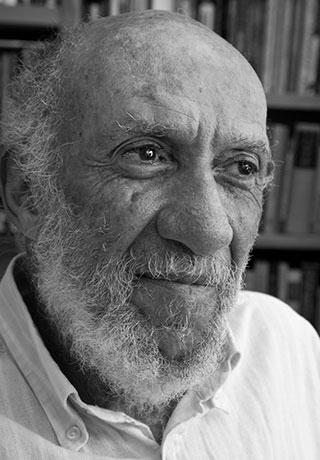

Professor Falk became an adviser to TFF when it was established in 1985.

Related Posts

The agreement is catastrophic both because of what it says and what it doesn’t mention. It reduces further the major asset of security policies: Freedom of action. Jan Oberg TFF director September 25, 2026 A couple of hours before the agreement was signed on September 22, 2026, I published the following 13 hypotheses about what it would most likely contain on TFF Substack (in English). I was wrong on only the first point. Contrary to what Trump had written on his Truth Social platform, it does not appear to come into force immediately. In fact, it turned out to be worse than even I had anticipated. After these hypotheses now come a number of reflections in light of what the agreement actually contains, and does not contain, as well as the way in which it has generally been presented by major media outlets and by the public-service broadcaster DR. My...
Below are TFF-related media mentions, comments, videos and social media posts published elsewhere but not on this homepage. We happen to catch and list only a fraction. Regarding video comments and debates, we recommend that you go to the TFF Video Channel on Substack where many of them are reproduced. Jan Oberg is a contributor to China Daily – 52 million daily clicks – and Global Times, CGTN and CCTV (the national television), China Investment, Xinhua News Agency and several others. Articles and videos on these media very often multiply into countless Chinese (and Western media) that re-post them from these main media. Thanks to The China Academy, his analyses, interviews and comments are frequently posted on YouTube channels such as Thinkers Forum and Wave Media. These videos are often re-posted on Bilibili (China’s YouTube), the China Content Center on TikTok, and on the Chinese edition of TikTok, Douyin.com. This means reaching hundreds of millions of viewers worldwide over a year. While there are too many to catch on all these...
Jan Oberg May 15, 2026 Go to this Fox News page and scroll the whole way down: President Donald Trump tells the world that his meeting with President Xi Jinping yielded a lot of very concrete political and economic results – of course, only where the Chinese side, according to him, agreed with him. He does not mention the Taiwan issue, but Secretary of State, Marco Rubio, says that it did not feature prominently in their talks and that the US policy on Taiwan has not changed. Then go to China Daily – or Global Times – and you will see that for the Chinese it is framework, principles, structure of cooperation etc. that matters – all embedded in the overall idea of “constructive bilateral relationship of strategic stability.” Nowhere is any concrete agreement or deal – all that Trump refers to – mentioned. At the general level, this gives you insights into the very different social...

Recent Articles

Tony Robinson October 4, 2026 Violence is easy to recognise when someone is being beaten, shot or killed. It becomes more difficult when nobody is holding a weapon. Poverty, discrimination, exploitation and repression can restrict a human life just as effectively, although they do so in very different ways and with very different consequences. Simply adding more categories to an ever-growing list of forms of violence does not really solve the problem. The more interesting question is what all these different situations have in common and why it makes sense to describe them using the same word. Human beings do not simply react to what happens around them. They remember the past, imagine things that do not yet exist, make plans and undertake projects. Workers organise because they imagine different working conditions; people migrate because they imagine another life somewhere else; social movements emerge because people refuse to accept the...
It’s a matter of principles, courage, vision and pulling together – while the militarist world is falling apart… Peter Langille October 3, 2026 “Here, then, is the problem which we present to you, stark and dreadful and inescapable: Shall we put an end to the human race; or shall mankind renounce war?”The Bertrand Russell—Albert Einstein Manifesto, July 9, 1955 ⁕ The forecast for what’s ahead is worrisome. The sharp rise in armed conflicts over the past three years is adding to what was already the highest level in over seventy years. Genocides, which should be prevented are supported. A shared climate emergency that jeopardises survival is ignored. Diverse polls now suggest that people are war-weary, worried and interested in a more effective United Nations. And, there are viable policy options for a more secure world! Yet governments are doubling-down, betting on more war and investing heavily. If current trends persist,...
Johan Galtung 1930-2024October 2015 Published here on October 3, 2026 Let us focus on Civilization for conflict analysis and remedies. Major forms of disorder use violence; war is state organized violence. The most belligerent states are the United States of America and Israel, both with civilization roots. National Evangelism, the US Protestant Christian civilization– more national than evangelical–justifies US warfare as exceptionalism of a people chosen by God, with a manifest destiny to run the world. Orthodox Judaism justifies Israeli warfare to conquer and expand from Nile to Euphrates as a religious right and duty to the Eternal One. The third most belligerent country, the UK, no longer believes it is God-chosen but chosen by the USA; not quite the same but something. But the root cause of global disorder lies in the Occident–with Islam–seeing itself as the single, universal civilization valid for all at all times, all others being...

TFF on Substack

Discover and subscribe to more peace materials on TFF Substack

Most Popular

Tony Robinson October 4, 2026 Violence is easy to recognise when someone is being beaten, shot or killed. It becomes more difficult when nobody is holding a weapon. Poverty, discrimination, exploitation and repression can restrict a human life just as effectively, although they do so in very different ways and with very different consequences. Simply adding more categories to an ever-growing list of forms of violence does not really solve the problem. The more interesting question is what all these different situations have in common and why it makes sense to describe them using the same word. Human beings do not simply react to what happens around them. They remember the past, imagine things that do not yet exist, make plans and undertake projects. Workers organise because they imagine different working conditions; people migrate because they imagine another life somewhere else; social movements emerge because people refuse to accept the...
It’s a matter of principles, courage, vision and pulling together – while the militarist world is falling apart… Peter Langille October 3, 2026 “Here, then, is the problem which we present to you, stark and dreadful and inescapable: Shall we put an end to the human race; or shall mankind renounce war?”The Bertrand Russell—Albert Einstein Manifesto, July 9, 1955 ⁕ The forecast for what’s ahead is worrisome. The sharp rise in armed conflicts over the past three years is adding to what was already the highest level in over seventy years. Genocides, which should be prevented are supported. A shared climate emergency that jeopardises survival is ignored. Diverse polls now suggest that people are war-weary, worried and interested in a more effective United Nations. And, there are viable policy options for a more secure world! Yet governments are doubling-down, betting on more war and investing heavily. If current trends persist,...
Johan Galtung 1930-2024October 2015 Published here on October 3, 2026 Let us focus on Civilization for conflict analysis and remedies. Major forms of disorder use violence; war is state organized violence. The most belligerent states are the United States of America and Israel, both with civilization roots. National Evangelism, the US Protestant Christian civilization– more national than evangelical–justifies US warfare as exceptionalism of a people chosen by God, with a manifest destiny to run the world. Orthodox Judaism justifies Israeli warfare to conquer and expand from Nile to Euphrates as a religious right and duty to the Eternal One. The third most belligerent country, the UK, no longer believes it is God-chosen but chosen by the USA; not quite the same but something. But the root cause of global disorder lies in the Occident–with Islam–seeing itself as the single, universal civilization valid for all at all times, all others being...
Read More
Living-Peace-Sign-Budapest-copy
Tony Robinson October 4, 2026 Violence is easy to recognise when someone is being beaten, shot or killed. It becomes more difficult when nobody is holding a weapon. Poverty, discrimination, exploitation and repression can restrict a human life just as effectively, although they do so in very different ways and with very different consequences. Simply adding more categories to an ever-growing list of forms of violence does not really solve the problem. The more interesting question is what all these different situations have in common and why it makes sense to describe them using the same word. Human beings do not simply react to what happens around them. They remember the past, imagine things that do not yet exist, make plans and undertake projects. Workers organise because they imagine different working conditions; people migrate because they imagine another life somewhere else; social movements emerge because people refuse to accept the...
b54a1f10-8c65-4f0b-9dd5-4abc0a7d04cc_2659x2659
It’s a matter of principles, courage, vision and pulling together – while the militarist world is falling apart… Peter Langille October 3, 2026 “Here, then, is the problem which we present to you, stark and dreadful and inescapable: Shall we put an end to the human race; or shall mankind renounce war?”The Bertrand Russell—Albert Einstein Manifesto, July 9, 1955 ⁕ The forecast for what’s ahead is worrisome. The sharp rise in armed conflicts over the past three years is adding to what was already the highest level in over seventy years. Genocides, which should be prevented are supported. A shared climate emergency that jeopardises survival is ignored. Diverse polls now suggest that people are war-weary, worried and interested in a more effective United Nations. And, there are viable policy options for a more secure world! Yet governments are doubling-down, betting on more war and investing heavily. If current trends persist,...
010
Johan Galtung 1930-2024October 2015 Published here on October 3, 2026 Let us focus on Civilization for conflict analysis and remedies. Major forms of disorder use violence; war is state organized violence. The most belligerent states are the United States of America and Israel, both with civilization roots. National Evangelism, the US Protestant Christian civilization– more national than evangelical–justifies US warfare as exceptionalism of a people chosen by God, with a manifest destiny to run the world. Orthodox Judaism justifies Israeli warfare to conquer and expand from Nile to Euphrates as a religious right and duty to the Eternal One. The third most belligerent country, the UK, no longer believes it is God-chosen but chosen by the USA; not quite the same but something. But the root cause of global disorder lies in the Occident–with Islam–seeing itself as the single, universal civilization valid for all at all times, all others being...
Screenshot 2026-10-02 011738
Jan ObergPhD, director, The Transnational Foundation for Peace and Future Research, TFFLund, Sweden October 2, 2026 This is my full original manuscript. The Chinese Academy of Social Science, CASS, makes two publications out if it. 1. China’s Five-year plan emphasized the capabilities of basic research and original innovation. It is regarded as the goal of the future social development, which, as required, should be significantly enhanced. Can you comment on the importance of original innovation in research and academic study? I believe it is easier to define “original innovation” in the natural sciences than in social sciences. The breaking points of what constitutes something new, or innovative, are not quite as sharp in the latter. But in both fields it is about opening up something that was closed, unseen, unexplored before – making manifest what was earlier latent. Innovations come in many forms and shapes – naming something that was not...
arctic-circle-map
The agreement is catastrophic both because of what it says and what it doesn’t mention. It reduces further the major asset of security policies: Freedom of action. Jan Oberg TFF director September 25, 2026 A couple of hours before the agreement was signed on September 22, 2026, I published the following 13 hypotheses about what it would most likely contain on TFF Substack (in English). I was wrong on only the first point. Contrary to what Trump had written on his Truth Social platform, it does not appear to come into force immediately. In fact, it turned out to be worse than even I had anticipated. After these hypotheses now come a number of reflections in light of what the agreement actually contains, and does not contain, as well as the way in which it has generally been presented by major media outlets and by the public-service broadcaster DR. My...
girl-5894831_1280
Below are TFF-related media mentions, comments, videos and social media posts published elsewhere but not on this homepage. We happen to catch and list only a fraction. Regarding video comments and debates, we recommend that you go to the TFF Video Channel on Substack where many of them are reproduced. Jan Oberg is a contributor to China Daily – 52 million daily clicks – and Global Times, CGTN and CCTV (the national television), China Investment, Xinhua News Agency and several others. Articles and videos on these media very often multiply into countless Chinese (and Western media) that re-post them from these main media. Thanks to The China Academy, his analyses, interviews and comments are frequently posted on YouTube channels such as Thinkers Forum and Wave Media. These videos are often re-posted on Bilibili (China’s YouTube), the China Content Center on TikTok, and on the Chinese edition of TikTok, Douyin.com. This means reaching hundreds of millions of viewers worldwide over a year. While there are too many to catch on all these...