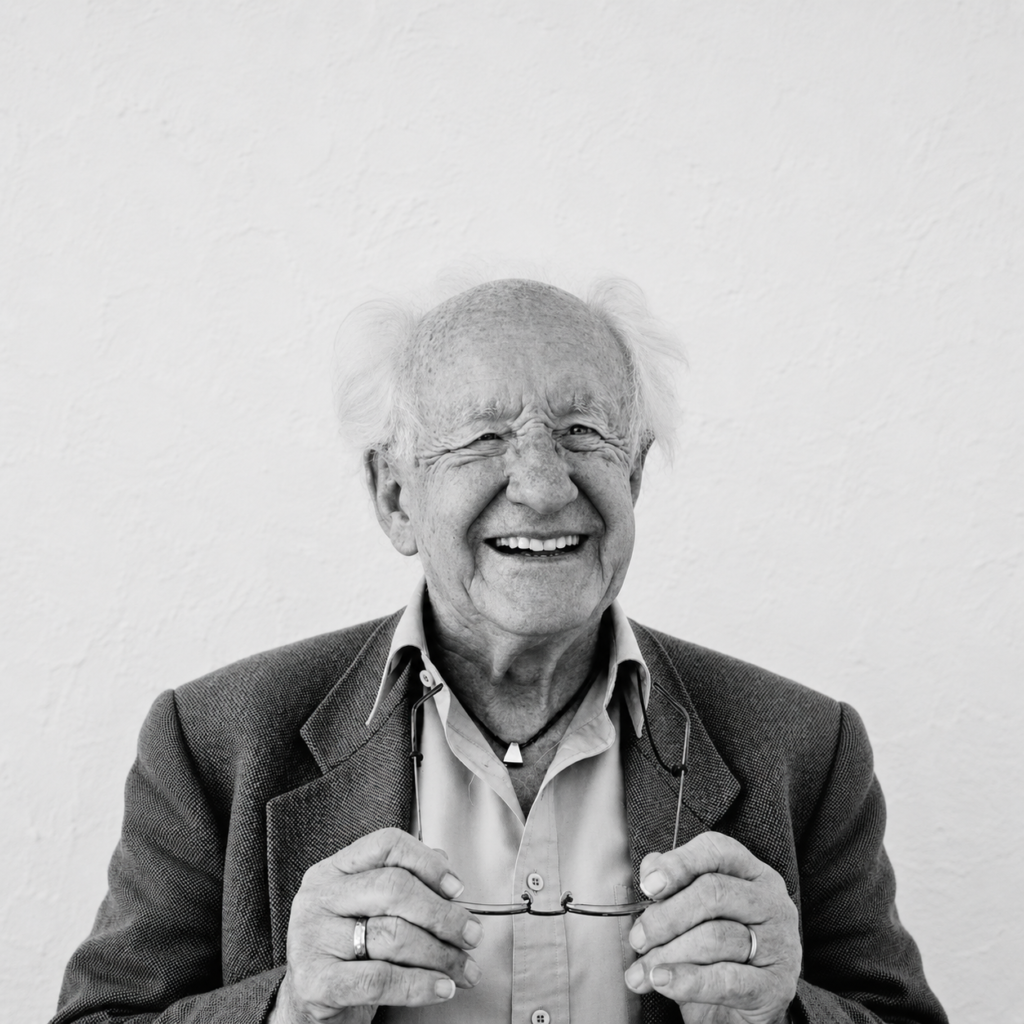
johangaltung

Jondal, Hardangerakademiet, Norway, August 1, 2016

The Hardanger Academy is focused on the three UN concerns, peace-development-environment. This year’s symposium was brilliantly opened by Vandana Shiva, a gift to the world from India. She encompassed all three themes with deep insights; holistic and very dialectic in her approach, with forces and counter-forces in all her proposed solutions; with her optimistic activism and engagement. The media missed a golden opportunity to tell the Norwegian public.

She was imported for a week from India, and met with dedicated counterparts and groups in Norway. They are not very visible in public space either; but the Hardanger Academy will try to change that.

What is in public space in Norway?

A mirror image of US public space. If the US media say that Russian hacking was behind the enormous WikiLeaks revelations from the Democratic National Committee computer, so do the Norwegian media. If US media do not tell the content, so do the Norwegian media. The general rhetoric of the Clinton-Trump controversy is slavishly imitated, including the idea that Trump is an agent for Putin, and the silence about Clinton’s massive killing as Secretary of State. The behavior one would expect from a compliant client country. But there is more to it.

What is the basic concern of the Norwegian media?

Lifestyle, in short, for good–live graciously, in comfort–and for bad, the many breakdowns, suicides-homicides, divorces, alcoholism. The politics of everyday, personal, life. That in itself is welcome, however, not as a veil draped over national and global politics.

How about Norwegian artists?

With a few exceptions, they are on that line, intensely focused on personal life, often their own, in the smallest detail. No artists write about Norwegian military snipers killing massively in Afghanistan, and the air force by bombing in Libya for the USA–some even presented as useful training exercises.

At the same time Norwegian peace policy by a self-designated peace state–in Palestine-Israel, in Sri Lanka–coming to nothing or worse: Israeli genocide in Gaza, massacre of Tamils in Sri Lanka. Again presented as useful training by the leader, Erik Solheim.

Sheer incompetence? No doubt an element. Norwegian killing in Afghanistan, by sniping, has been criticized by an official committee headed by Björn Tore Godal, former foreign and defense secretary. Conclusion from Norwegian participation 2001-2014: Taliban is stronger than any time since 2001, and the only goal that has been obtained is “to show solidarity and offer support to USA, and to contribute to secure the relevance of NATO”. More open debate, demands Godal.

Those may have been the ends, and Afghanistan only the means.

The general growth in Norwegian armament, maybe the highest after USA, is on the basis of Norwegian foreign policy: the millennium old fear of Russia since Vikings attacked: “Only USA can protect us if they come”. Not only more arms but also more offensive arms, “to deter” as they all say, only that from the other side it might be interpreted as “to attack”.

At the same time, local-based militia-defense in Norway is cut out in favor of “expedition defense”, meaning joining USA anywhere; referred to as “security”.

There is massive critique inside the military, even if to a large extent silenced. The general idea is clear: if the elites really believed the “Russians are coming”, much more defense of Norwegian territory would have been the answer. But it is almost absent.

Why such a foreign-military-security policy?

Because it relates to USA, not Russia. The Voice spoken is His Master’s. Solid clientelism. But there is an additional, darker, interpretation.

Not that they – the policy elites – do not know that USA intervenes and organizes coups, invades, snipes, bombs all over. But compliance may secure Norway against the same fate: USA invading Norway.

Look at Dimitry Orlov, “The Power of ‘Nyet’. The US Decides What It Wants Russia To Do. Russia Says ‘Nyet’.” Cluborlov 26 July 2016:

“The way things are supposed to work on this planet is like this. The US power structures, public and private, decide what the rest of the world is supposed to do. They communicate their wishes through official and unofficial channels, expecting automatic cooperation. If cooperation is not immediately forthcoming, they apply political, economic and financial pressure. If that still doesn’t produce the intended effect, they attempt a regime change through a color revolution or a military coup, or organize and finance an insurgency leading to terrorist attacks and civil war in the recalcitrant nation. If that still doesn’t work they bomb the nation back to the stone age. This is the way it worked in the 1990s and the 2000s, but as of late, a new dynamic has emerged.”

How can Russia do that? Because it has a weapon that deters even the USA–the reason that they hate proliferation. North Korea can do the same as Russia; they also have nuclear bombs and delivery system.

Not strange, given this reality, that the USA hates Russia even more, and simplifies life for itself by narrowing Russian reality to one person, Putin, who is then demonized the way Orwell describes in 1984. That book is about efforts to construct irreversible societies; “all animals are equal” is often quoted from Animal Farm, good, but less important. The title should have been 1985, the year Thatcher-Reagan tried to construct an irreversible world, an Anglo-American capitalist order.

That “order” is very well described by Orlov above. The key point is an empirically well-founded fear of the USA, based on what the USA is doing. However, never say so openly lest the same fate should visit yourself. A conspiracy, yes; paranoia, no. Realism.

Does it matter whether Norway complies out of trust, out of fear, or–most likely–out of both? It does. If out of friendship, Norway may assist US imperialism all the way down, and get ever more enemies. Fear may serve as an excuse. And motivate Norway to drop its paranoid relation to Russia in favor of non-military cooperation; the threat of a Russian invasion should not be used as a US pretext for the same.

As it stands now, either of them invading Norway to preempt the other is a likely scenario. England and Germany did, in 1940. Security?

Originally published at Transcend Media Service, TMS, here.
Related Posts

Photos © TFF 2000 Read PressInfo 90 “Lift the Sanctions and Bring More Aid to Yugoslavia” See Pictures from Belgrade © TFF 2000 Please reprint, copy, archive, quote or re-post this item, but please retain the source.
LONDON – So far so good, at least on the wider level. While internally Iraq seems on the edge of chaos, the much heralded clash of civilizations between the Muslim and Judaeo-Christian worlds has yet to become apparent. We have anger and despair aplenty in the Arab and Muslim worlds. But very little rushing to the standard and there was no great pilgrimage of warriors to join the fight, as happened when the Soviet Union invaded Afghanistan twenty years ago, and then, having driven the Red Army out, were left to ferment in that mountainous redoubt. With the armaments supplied by the CIA the mujahidin were transformed into Al Qaeda that became, for a relatively brief moment as these things go, ‘the greatest threat to the homeland that America has ever known.’ Nevertheless a ‘Cold War’ between much of the Muslim world and the West is certainly in full swing. Winston...
The Challenge of Nuclear Weaponsin the Twenty-first CenturyA Path Forward The peoples and governments of the world face an urgent challenge relating to weaponry of mass destruction and particularly to nuclear weaponry.  At the crossroads of technology, terrorism, geopolitical ambition, and policies of preemption are new and potent dangers for humanity. Despite ending the nuclear standoff of the Cold War era, nuclear weaponry is again menacing the peoples of the world with catastrophic possibilities.  We recognize the need for any government to pursue its security interests in accordance with international law; and further, we recognize that distinctive threats to these interests now exist as a result of an active international terrorist network having declared war on the United States and its allies. Nonetheless, we reject the assessment of the current US administration that upgrading a reliance on nuclear weapons is in any sense justified as a response. We find it...

Recent Articles

Serious but also a lot of laughs and positive energy. Because peace is also about conviviality and enchantment… Jan Oberg, TFF director November 16, 2026 This is a long (129 minutes) conversation with me. We cover very many, also personal, issues that makes a somewhat unusual media event. I am very grateful to Flemming Blicher for giving me this opportunity. I can’t remember any channel or editor who spent as much time as he did preparing it – including also asking me to answer a series of pre-interview questions, which are now posted under the conversation. If you sympathise with its content, please share it. Watch it here
A Message from Jan Oberg November 6, 2026 Over the past fifty years, I have devoted roughly 175,000 hours to research and public education for a more peaceful world: thinking, researching, writing, organising, publishing, debating, maintaining websites, corresponding, reaching out, leading a foundation, work in conflict and war zones, professorships, teaching courses and giving public lectures and doing media work. In short, ten hours a day, seven days a week, for half a century. The focus was on international political peace – analysing and trying to stop wars, address underlying conflicts and making alternative peace plans – at the desk and on the ground. Important as that has been and remains, it is only one kind of peace and it is now in a tragic militarist state compared with what it could have been.  Lately, however, I have found myself thinking about a concept from economics as well as everyday...
Photo above: Carl Fredrik Reuterswärd’s Non-Violence outside UN Headquarters in New York. Kirill Levin, CC BY-NC-SA 2. Jan Oberg November 3, 2026 I am happy to be published in Horizons which is produced by the Center for International Relations and Sustainable Development, CIRSD, in Belgrade. My contribution brings out a radical re-thinking of what concepts such as defence, security, deterrence – and peace – may mean if we want to create a more peaceful world. It also summarises a few things I have been working with the last few decades. Please read it here Og her er den på dansk, takket være Johnny Baltzersens lynhurtige oversættelse

TFF on Substack

Discover and subscribe to more peace materials on TFF Substack

Most Popular

Serious but also a lot of laughs and positive energy. Because peace is also about conviviality and enchantment… Jan Oberg, TFF director November 16, 2026 This is a long (129 minutes) conversation with me. We cover very many, also personal, issues that makes a somewhat unusual media event. I am very grateful to Flemming Blicher for giving me this opportunity. I can’t remember any channel or editor who spent as much time as he did preparing it – including also asking me to answer a series of pre-interview questions, which are now posted under the conversation. If you sympathise with its content, please share it. Watch it here
A Message from Jan Oberg November 6, 2026 Over the past fifty years, I have devoted roughly 175,000 hours to research and public education for a more peaceful world: thinking, researching, writing, organising, publishing, debating, maintaining websites, corresponding, reaching out, leading a foundation, work in conflict and war zones, professorships, teaching courses and giving public lectures and doing media work. In short, ten hours a day, seven days a week, for half a century. The focus was on international political peace – analysing and trying to stop wars, address underlying conflicts and making alternative peace plans – at the desk and on the ground. Important as that has been and remains, it is only one kind of peace and it is now in a tragic militarist state compared with what it could have been.  Lately, however, I have found myself thinking about a concept from economics as well as everyday...
Photo above: Carl Fredrik Reuterswärd’s Non-Violence outside UN Headquarters in New York. Kirill Levin, CC BY-NC-SA 2. Jan Oberg November 3, 2026 I am happy to be published in Horizons which is produced by the Center for International Relations and Sustainable Development, CIRSD, in Belgrade. My contribution brings out a radical re-thinking of what concepts such as defence, security, deterrence – and peace – may mean if we want to create a more peaceful world. It also summarises a few things I have been working with the last few decades. Please read it here Og her er den på dansk, takket være Johnny Baltzersens lynhurtige oversættelse
Read More
Screenshot 2026-11-10 174455
Serious but also a lot of laughs and positive energy. Because peace is also about conviviality and enchantment… Jan Oberg, TFF director November 16, 2026 This is a long (129 minutes) conversation with me. We cover very many, also personal, issues that makes a somewhat unusual media event. I am very grateful to Flemming Blicher for giving me this opportunity. I can’t remember any channel or editor who spent as much time as he did preparing it – including also asking me to answer a series of pre-interview questions, which are now posted under the conversation. If you sympathise with its content, please share it. Watch it here
AbstractVision_2017_#1_800 (kopia)
A Message from Jan Oberg November 6, 2026 Over the past fifty years, I have devoted roughly 175,000 hours to research and public education for a more peaceful world: thinking, researching, writing, organising, publishing, debating, maintaining websites, corresponding, reaching out, leading a foundation, work in conflict and war zones, professorships, teaching courses and giving public lectures and doing media work. In short, ten hours a day, seven days a week, for half a century. The focus was on international political peace – analysing and trying to stop wars, address underlying conflicts and making alternative peace plans – at the desk and on the ground. Important as that has been and remains, it is only one kind of peace and it is now in a tragic militarist state compared with what it could have been.  Lately, however, I have found myself thinking about a concept from economics as well as everyday...
knotted gun
Photo above: Carl Fredrik Reuterswärd’s Non-Violence outside UN Headquarters in New York. Kirill Levin, CC BY-NC-SA 2. Jan Oberg November 3, 2026 I am happy to be published in Horizons which is produced by the Center for International Relations and Sustainable Development, CIRSD, in Belgrade. My contribution brings out a radical re-thinking of what concepts such as defence, security, deterrence – and peace – may mean if we want to create a more peaceful world. It also summarises a few things I have been working with the last few decades. Please read it here Og her er den på dansk, takket være Johnny Baltzersens lynhurtige oversættelse
TFFPortfolioVign
UNITE-tillid, DREAM-velstand og andre konstruktive komponenter Normally we publish articles in English here. But this is a translation of a very important TFF document that should reach as many as possible in Denmark since this country’s government has been one of the most hardline in Europe and, up till now at least, has refused to use diplomacy and, instead, spent tremendous sums on arming Ukraine with the express goal of defeating Russia. Thus this – unique – article is in Danish. Vi er Johnny Baltzersen og hans Fælles Sikkerhed – Fælles Fremtid på Substack overmåde taknemmelige for at have oversat og publiceret TFF’s 2025-portfølje for fredsidéer med henblik på Ukraines fremtid. Vi håber den nu kan nå mange flere danskere – som også vil sprede den og skabe debat – nu den danske regerings og folketingspartiernes politik på dette område siden 2022 står nu – forudsigeligt – ved vejs ende....
JoGSS-Silent
Jan Oberg TFF director October 28, 2026 Exactly one month has now passed since I published my criticism of the introduction to the special issue on Johan Galtung published by the Journal of Global Security Studies, JoGSS, and of Tor Egil Førland’s chapter about Galtung which serves as a preview to his forthcoming biography of Galtung to be published by PRIO. See the original on The Transnational here and the same article on TFF Substack with many general and critical comments and, in particular, the people who decided to withdraw from the biography project in protest. The special issue itself was extraordinary. It was devoted to the intellectual legacy of one of the founders of peace research and contained a number of strong assessments of his personality, scholarship, intellectual trajectory, and public role. Such assessments are, of course, entirely legitimate. No scholar is beyond criticism, and neither was Johan Galtung....
Screenshot 2026-10-26 115647
An aspect of Iran’s culture and civilisation you’ve probably never heard about. Don’t be surprised if the US and Israel also try to bomb them. Jan ObergTFF director October 26, 2026 Today – under the “USraeli” threat of new “annihilating” bombings – opens the 7th International Conference on Peace and Conflict Resolution at Tehran’s University. As far as I can tell, this is the only permanent, advanced peace research institution in West Asia/the Middle East. Perhaps more countries in that region could be inspired? I mean, how many military “security” institutes and military academies do they have? Many peace research institutes and university departments have been established since the 1950s in the West. They are now all under attack; some have closed down, some have gone mainstream, yet others kept the name but do nothing to research peace and disseminate results or advice; instead, they cooperate with militarism’s platforms such...