

Nobel Peace Prize Goes to Qualified Recipient for First Time in at Least Six Years

Congratulations are in order for Nihon Hidankyo, the Japan Confederation of A- and H-Bomb Sufferers Organizations. The Nobel Peace Prize has for the first time in at least six years gone to a group of people who work to reduce warmaking, people who in fact seek to abolish nuclear weapons. Nihon Hidankyo has relentlessly done the work of educating the world, thanklessly, for many years. This prize should be celebrated far and wide.

Congratulations are also in order to the Nobel Committee for somehow maintaining the prestige of the Nobel Peace Prize despite how the committee has mistreated it time and time again and for — this time — getting it right. May this mark a new principled commitment!

This article was first published on WorldBeyondWar.org

And congratulations may also be deserved by the Nobel Peace Prize Watch, which has worked for many years to influence the Nobel Committee to begin complying with the requirements of the will of Alfred Nobel, and to the group’s leader, the late Fredrik S. Heffermehl, whose books on the topic of the Nobel Peace Prize — including  on who should have been awarded it 123 different years — have been oustandingly educational and inspiring.

In recent years, nuclear weapons have been the one strong point for the Nobel Committee, the one area of overlap between what they have treated as the purpose of the prize and the actual original purpose of the prize. In 2017, the prize was awarded to the International Campaign to Abolish Nuclear Weapons.

This year’s award is being given to Nihon Hidankyo “for its efforts to achieve a world free of nuclear weapons and for demonstrating through witness testimony that nuclear weapons must never be used again.”

It’s unfortunate that the Nobel Peace Prize website, just below the announcement, puts in big, bold font: “Did you know no nuclear weapon has been used in war in nearly 80 years?” In an important sense, this is true, but in two important senses it is only true because the words “in war” are included. One is the horrific, deadly, and land-stealing testing that has been done. The other is the one stressed by the late Daniel Ellsberg: a gun used in a bank robbery without being fired has nonetheless been used. Possessors of nuclear weapons have threatened to use them many times. The nuclear weapons industry is also used to pressure governments to support nuclear energy. Nuclear weapons are also used to transfer massive resources out of human and environmental needs into the insane construction of instruments of terracide. Nuclear weapons manufacturers are even used to teach children the acceptability and nobility of war-making.

The Nobel Committee once gave the prize to U.S. President Barack Obama who, after delivering the only pro-war Nobel Peace Prize acceptance speech ever, went to Hiroshima and told everyone there, including the survivors of the nuclear bombs, that nuclear weapons would not be eliminated in his lifetime. He then proceeded to peddle familiar pro-war myths. Now the Nobel Committee has given the prize to a group that demands the immediate elimination of nuclear weapons, fully aware that people in this lifetime have the exact same genes and tendencies as people in any other more responsible, decent, and wise lifetime.

Last year, I confess I almost gave up hope. The Nobel Committee awarded a peace prize that violated the will of Alfred Nobel and the purpose for which the prize had been created, selecting a recipient who blatantly was not “the person who has done the most or best to advance fellowship among nations, the abolition or reduction of standing armies, and the establishment and promotion of peace congresses.”

There is no question that advocating for human rights is a good thing, or that doing so under an oppressive government is a courageous thing, or that doing so without hypocritically using violence is a wise thing. But the Nobel Peace Prize was created to support war abolition, not a random selection of good issue advocacy. And the practice of selectively awarding the prize to victims of the governments targeted by the U.S. military supports, rather than reduces, militarism. Of the most oppressive governments on Earth, there are only a few not armed, trained, and supplied by the U.S. military, and only one with which the U.S. government has recently torn up an agreement that stalled the drive toward war in Washington. The recipient of last year’s (2023) prize, Narges Mohammadi, like her colleague and previous recipient Shirin Ebadi, opposed both abuses by the Iranian government and sanctions and threats of war from the U.S. government. But the awarding of the prize did not serve peace, and only strengthened senseless global division. Everyone knows that no Western political journalist prisoner, such as Julian Assange, would ever be given such a prize.

In 2022, with its eyes on the news of the day, there was no question that the Committee would find some way to focus on Ukraine. But it steered clear of anyone seeking to reduce the risk of the at-the-time relatively minor war escalating or creating a nuclear apocalypse. It avoided anyone opposing both sides of the war, or anyone advocating for a ceasefire or negotiations or disarmament. It did not even make the choice one might have expected of picking an opponent of Russian warmaking in Russia and an opponent of Ukrainian warmaking in Ukraine. Instead, the Nobel Committee chose advocates for human rights and democracy in Belarus, Russia, and Ukraine. But the group in Ukraine was recognized for having  “engaged in efforts to identify and document Russian war crimes against the Ukrainian civilian population,” with no mention of war as a crime or of the possibility that the Ukrainian side of the war was committing atrocities. The Nobel Committee may have learned from Amnesty International’s experience of being widely denounced for documenting war crimes by the Ukrainian side.

In 2021 the prize went to advocates for human rights in Russia and in the Philippines. In 2020 the prize went to the World Food Programme. In 2019 the prize went to the President of Ethiopia and claimed some releationship to peace as he had been part of a peace agreement. But he was a president and commander of a military and not in any need of funding or support. He had engaged in all sorts of violence and human rights abuses, so that an advocate for human rights in his country could be given the prize if the U.S. government’s relationship to that country changes.

The 2018 prize did not go after war itself, but did go after sexual violence in wars. Not bad, relatively speaking. The 2013 prize went after chemical weapons. But stretching back through the years, we see a common practice of most often awarding a peace prize to either actual warmakers or to avocates for good causes that are not peace, as well as the practice of using the prize for Western politcal purposes that are hostile to peace. Although virtually every topic can be tangentially connected to war and peace, the avoidance of actual peace activism intentionally misses the point of the prize’s creation by Alfred Nobel and the influence of Bertha von Suttner.

The Nobel Peace Prize has largely devolved into a prize for random good things that don’t offend a culture dedicated to endless war. It has been awarded for journalism, for working against hunger, for protecting children’s rights or women’s rights, for teaching about climate change, and for opposing poverty. These are all good causes and can all be connected to war and peace. But these causes should go find their own prizes.

The Nobel Peace Prize is so devoted to awarding powerful officials and avoiding peace activism that it is often awarded to the wagers of wars, including Abiy Ahmed, Juan Manuel Santos, the European Union, and Barack Obama, among others. At times the prize has gone to opponents of some aspect of war, advancing the idea of reforming even while maintaining the institution of war. These awards have come closest to the purpose for which the prize was created, and include the 2017, 2018, and 2024 prizes.

The prize has also been used to advance the propaganda of some of the world’s major war makers. Awards like that of 2023 have been used to denounce violations of human rights in non-Western nations targeted in the weapons-funding propaganda of Western nations. This record allows Western media outlets each year to speculate before the prize announcement on whether it will go to favorite propaganda topics, such as Alexei Navalny. The awarding of the prize has done nothing in recent years to diminish warmaking, and has perhaps done the opposite, with prizes going to opponents of the Russian government prior to escalations of the war in Ukraine. One can only hope that the 2023 prize does not encourage a war on Iran.

In 2021, at a moment when the world’s largest weapons dealer, most frequent launcher of wars, dominant deployer of troops to foreign bases, greatest enemy of the International Criminal Court and the rule of law in international affairs, and supporter of oppressive governments — the U.S. government — was trumpeting a division between so-called democracies and non-democracies, the Nobel Committee chose to throw gas on the fire, declaring:

“Since its start-up in 1993, Novaja Gazeta has published critical articles on subjects ranging from corruption, police violence, unlawful arrests, electoral fraud and ‘troll factories’ to the use of Russian military forces both within and outside Russia. Novaja Gazeta’s opponents have responded with harassment, threats, violence, and murder.”

Also given the prize that year was a journalist from the Philippines already funded by CNN and by the U.S. government, in fact by a U.S. government agency often involved in funding military coups.

That there are always numerous candidates who plausibly meet the criteria of Alfred Nobel’s will each year and could have been appropriately awarded a Nobel Peace Prize has been established by the list of nominees published each year by Nobel Peace Prize Watch, and by the War Abolisher Awards. World BEYOND War has created the War Abolisher Awards to fill the gap left by the Nobel Committee’s frequent abandonment of the cause of ending war.
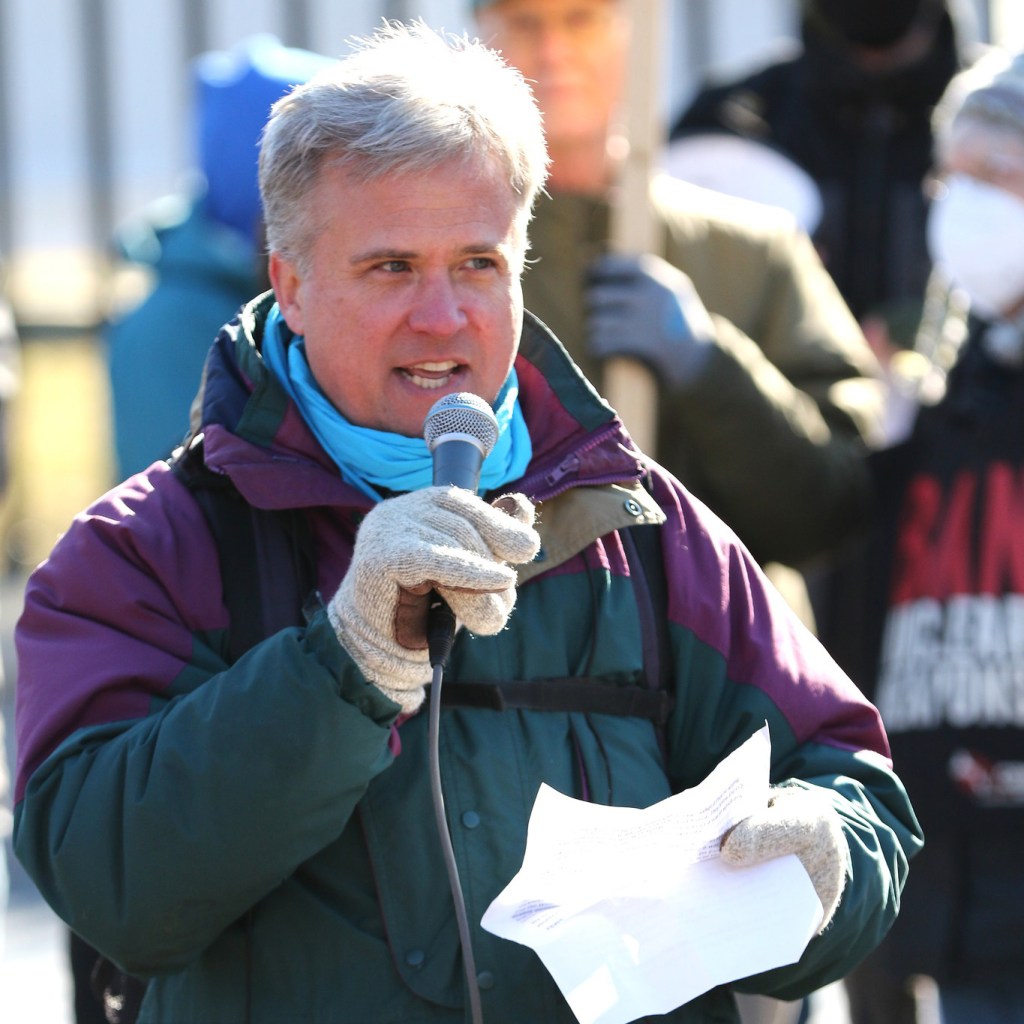
The author
David Swanson is Co-Founder, Executive Director, and a Board Member of World BEYOND War. He is based in Virginia in the United States. David is an author, activist, journalist, and radio host. He is campaign coordinator for RootsAction.org. Swanson’s books include War Is A Lie. He blogs at DavidSwanson.org and WarIsACrime.org. He hosts Talk World Radio.He is a Nobel Peace Prize nominee, and was awarded the 2018 Peace Prize by the U.S. Peace Memorial Foundation. Longer bio and photos and videos here. Follow him on Twitter: @davidcnswanson and FaceBook.  Sample videos.

David is also a TFF Associate since many years back.
One Response

  1. there can be no doubt that war is allways a crime, in fact production and sale of military weapons and of course war, are all severe crimes against humanity, and soldier is the most depictable thing a human being can ever be.

Related Posts

Tony Robinson October 4, 2026 Violence is easy to recognise when someone is being beaten, shot or killed. It becomes more difficult when nobody is holding a weapon. Poverty, discrimination, exploitation and repression can restrict a human life just as effectively, although they do so in very different ways and with very different consequences. Simply adding more categories to an ever-growing list of forms of violence does not really solve the problem. The more interesting question is what all these different situations have in common and why it makes sense to describe them using the same word. Human beings do not simply react to what happens around them. They remember the past, imagine things that do not yet exist, make plans and undertake projects. Workers organise because they imagine different working conditions; people migrate because they imagine another life somewhere else; social movements emerge because people refuse to accept the...
It’s a matter of principles, courage, vision and pulling together – while the militarist world is falling apart… Peter Langille October 3, 2026 “Here, then, is the problem which we present to you, stark and dreadful and inescapable: Shall we put an end to the human race; or shall mankind renounce war?”The Bertrand Russell—Albert Einstein Manifesto, July 9, 1955 ⁕ The forecast for what’s ahead is worrisome. The sharp rise in armed conflicts over the past three years is adding to what was already the highest level in over seventy years. Genocides, which should be prevented are supported. A shared climate emergency that jeopardises survival is ignored. Diverse polls now suggest that people are war-weary, worried and interested in a more effective United Nations. And, there are viable policy options for a more secure world! Yet governments are doubling-down, betting on more war and investing heavily. If current trends persist,...
Johan Galtung 1930-2024October 2015 Published here on October 3, 2026 Let us focus on Civilization for conflict analysis and remedies. Major forms of disorder use violence; war is state organized violence. The most belligerent states are the United States of America and Israel, both with civilization roots. National Evangelism, the US Protestant Christian civilization– more national than evangelical–justifies US warfare as exceptionalism of a people chosen by God, with a manifest destiny to run the world. Orthodox Judaism justifies Israeli warfare to conquer and expand from Nile to Euphrates as a religious right and duty to the Eternal One. The third most belligerent country, the UK, no longer believes it is God-chosen but chosen by the USA; not quite the same but something. But the root cause of global disorder lies in the Occident–with Islam–seeing itself as the single, universal civilization valid for all at all times, all others being...

Recent Articles

Tony Robinson October 4, 2026 Violence is easy to recognise when someone is being beaten, shot or killed. It becomes more difficult when nobody is holding a weapon. Poverty, discrimination, exploitation and repression can restrict a human life just as effectively, although they do so in very different ways and with very different consequences. Simply adding more categories to an ever-growing list of forms of violence does not really solve the problem. The more interesting question is what all these different situations have in common and why it makes sense to describe them using the same word. Human beings do not simply react to what happens around them. They remember the past, imagine things that do not yet exist, make plans and undertake projects. Workers organise because they imagine different working conditions; people migrate because they imagine another life somewhere else; social movements emerge because people refuse to accept the...
It’s a matter of principles, courage, vision and pulling together – while the militarist world is falling apart… Peter Langille October 3, 2026 “Here, then, is the problem which we present to you, stark and dreadful and inescapable: Shall we put an end to the human race; or shall mankind renounce war?”The Bertrand Russell—Albert Einstein Manifesto, July 9, 1955 ⁕ The forecast for what’s ahead is worrisome. The sharp rise in armed conflicts over the past three years is adding to what was already the highest level in over seventy years. Genocides, which should be prevented are supported. A shared climate emergency that jeopardises survival is ignored. Diverse polls now suggest that people are war-weary, worried and interested in a more effective United Nations. And, there are viable policy options for a more secure world! Yet governments are doubling-down, betting on more war and investing heavily. If current trends persist,...
Johan Galtung 1930-2024October 2015 Published here on October 3, 2026 Let us focus on Civilization for conflict analysis and remedies. Major forms of disorder use violence; war is state organized violence. The most belligerent states are the United States of America and Israel, both with civilization roots. National Evangelism, the US Protestant Christian civilization– more national than evangelical–justifies US warfare as exceptionalism of a people chosen by God, with a manifest destiny to run the world. Orthodox Judaism justifies Israeli warfare to conquer and expand from Nile to Euphrates as a religious right and duty to the Eternal One. The third most belligerent country, the UK, no longer believes it is God-chosen but chosen by the USA; not quite the same but something. But the root cause of global disorder lies in the Occident–with Islam–seeing itself as the single, universal civilization valid for all at all times, all others being...

TFF on Substack

Discover and subscribe to more peace materials on TFF Substack

Most Popular

Tony Robinson October 4, 2026 Violence is easy to recognise when someone is being beaten, shot or killed. It becomes more difficult when nobody is holding a weapon. Poverty, discrimination, exploitation and repression can restrict a human life just as effectively, although they do so in very different ways and with very different consequences. Simply adding more categories to an ever-growing list of forms of violence does not really solve the problem. The more interesting question is what all these different situations have in common and why it makes sense to describe them using the same word. Human beings do not simply react to what happens around them. They remember the past, imagine things that do not yet exist, make plans and undertake projects. Workers organise because they imagine different working conditions; people migrate because they imagine another life somewhere else; social movements emerge because people refuse to accept the...
It’s a matter of principles, courage, vision and pulling together – while the militarist world is falling apart… Peter Langille October 3, 2026 “Here, then, is the problem which we present to you, stark and dreadful and inescapable: Shall we put an end to the human race; or shall mankind renounce war?”The Bertrand Russell—Albert Einstein Manifesto, July 9, 1955 ⁕ The forecast for what’s ahead is worrisome. The sharp rise in armed conflicts over the past three years is adding to what was already the highest level in over seventy years. Genocides, which should be prevented are supported. A shared climate emergency that jeopardises survival is ignored. Diverse polls now suggest that people are war-weary, worried and interested in a more effective United Nations. And, there are viable policy options for a more secure world! Yet governments are doubling-down, betting on more war and investing heavily. If current trends persist,...
Johan Galtung 1930-2024October 2015 Published here on October 3, 2026 Let us focus on Civilization for conflict analysis and remedies. Major forms of disorder use violence; war is state organized violence. The most belligerent states are the United States of America and Israel, both with civilization roots. National Evangelism, the US Protestant Christian civilization– more national than evangelical–justifies US warfare as exceptionalism of a people chosen by God, with a manifest destiny to run the world. Orthodox Judaism justifies Israeli warfare to conquer and expand from Nile to Euphrates as a religious right and duty to the Eternal One. The third most belligerent country, the UK, no longer believes it is God-chosen but chosen by the USA; not quite the same but something. But the root cause of global disorder lies in the Occident–with Islam–seeing itself as the single, universal civilization valid for all at all times, all others being...
Read More
Living-Peace-Sign-Budapest-copy
Tony Robinson October 4, 2026 Violence is easy to recognise when someone is being beaten, shot or killed. It becomes more difficult when nobody is holding a weapon. Poverty, discrimination, exploitation and repression can restrict a human life just as effectively, although they do so in very different ways and with very different consequences. Simply adding more categories to an ever-growing list of forms of violence does not really solve the problem. The more interesting question is what all these different situations have in common and why it makes sense to describe them using the same word. Human beings do not simply react to what happens around them. They remember the past, imagine things that do not yet exist, make plans and undertake projects. Workers organise because they imagine different working conditions; people migrate because they imagine another life somewhere else; social movements emerge because people refuse to accept the...
b54a1f10-8c65-4f0b-9dd5-4abc0a7d04cc_2659x2659
It’s a matter of principles, courage, vision and pulling together – while the militarist world is falling apart… Peter Langille October 3, 2026 “Here, then, is the problem which we present to you, stark and dreadful and inescapable: Shall we put an end to the human race; or shall mankind renounce war?”The Bertrand Russell—Albert Einstein Manifesto, July 9, 1955 ⁕ The forecast for what’s ahead is worrisome. The sharp rise in armed conflicts over the past three years is adding to what was already the highest level in over seventy years. Genocides, which should be prevented are supported. A shared climate emergency that jeopardises survival is ignored. Diverse polls now suggest that people are war-weary, worried and interested in a more effective United Nations. And, there are viable policy options for a more secure world! Yet governments are doubling-down, betting on more war and investing heavily. If current trends persist,...
010
Johan Galtung 1930-2024October 2015 Published here on October 3, 2026 Let us focus on Civilization for conflict analysis and remedies. Major forms of disorder use violence; war is state organized violence. The most belligerent states are the United States of America and Israel, both with civilization roots. National Evangelism, the US Protestant Christian civilization– more national than evangelical–justifies US warfare as exceptionalism of a people chosen by God, with a manifest destiny to run the world. Orthodox Judaism justifies Israeli warfare to conquer and expand from Nile to Euphrates as a religious right and duty to the Eternal One. The third most belligerent country, the UK, no longer believes it is God-chosen but chosen by the USA; not quite the same but something. But the root cause of global disorder lies in the Occident–with Islam–seeing itself as the single, universal civilization valid for all at all times, all others being...
Screenshot 2026-10-02 011738
Jan ObergPhD, director, The Transnational Foundation for Peace and Future Research, TFFLund, Sweden October 2, 2026 This is my full original manuscript. The Chinese Academy of Social Science, CASS, makes two publications out if it. 1. China’s Five-year plan emphasized the capabilities of basic research and original innovation. It is regarded as the goal of the future social development, which, as required, should be significantly enhanced. Can you comment on the importance of original innovation in research and academic study? I believe it is easier to define “original innovation” in the natural sciences than in social sciences. The breaking points of what constitutes something new, or innovative, are not quite as sharp in the latter. But in both fields it is about opening up something that was closed, unseen, unexplored before – making manifest what was earlier latent. Innovations come in many forms and shapes – naming something that was not...
arctic-circle-map
The agreement is catastrophic both because of what it says and what it doesn’t mention. It reduces further the major asset of security policies: Freedom of action. Jan Oberg TFF director September 25, 2026 A couple of hours before the agreement was signed on September 22, 2026, I published the following 13 hypotheses about what it would most likely contain on TFF Substack (in English). I was wrong on only the first point. Contrary to what Trump had written on his Truth Social platform, it does not appear to come into force immediately. In fact, it turned out to be worse than even I had anticipated. After these hypotheses now come a number of reflections in light of what the agreement actually contains, and does not contain, as well as the way in which it has generally been presented by major media outlets and by the public-service broadcaster DR. My...
girl-5894831_1280
Below are TFF-related media mentions, comments, videos and social media posts published elsewhere but not on this homepage. We happen to catch and list only a fraction. Regarding video comments and debates, we recommend that you go to the TFF Video Channel on Substack where many of them are reproduced. Jan Oberg is a contributor to China Daily – 52 million daily clicks – and Global Times, CGTN and CCTV (the national television), China Investment, Xinhua News Agency and several others. Articles and videos on these media very often multiply into countless Chinese (and Western media) that re-post them from these main media. Thanks to The China Academy, his analyses, interviews and comments are frequently posted on YouTube channels such as Thinkers Forum and Wave Media. These videos are often re-posted on Bilibili (China’s YouTube), the China Content Center on TikTok, and on the Chinese edition of TikTok, Douyin.com. This means reaching hundreds of millions of viewers worldwide over a year. While there are too many to catch on all these...





