
Nobel Peace Prize 2017: Law and morality versus violent geopolitics

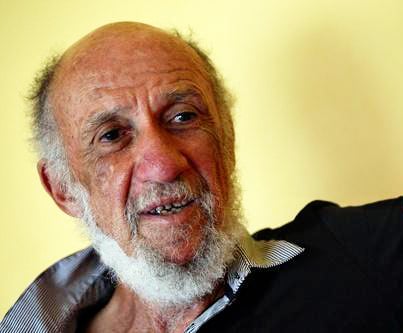
Professor emeritus of international law at Princeton University and University of California, Santa Barbara, board member of The Nuclear Age Peace Foundation and TFF Associate since 1985

Finally, the committee in Oslo that picks a winner of the Nobel Peace Prize each year selected in 2017 an awardee that is a true embodiment of the intended legacy of Alfred Nobel when he established the prize more than a century ago.

It is also a long overdue acknowledgement of the extraordinary dedication of anti-nuclear activists around the planet who for decades have done all in their power to rid the world of this infernal weaponry before it inflicts catastrophe upon all living beings even more unspeakable that what befell the cities of Hiroshima and Nagasaki on two infamous days in August 1945.

Such a prize result was actually anticipated days before the announcement by Fredrik Heffermehl, a crusading Norwegian critic of past departures from Nobel’s vision by the prize committee.

In making the prediction that the 2017 prize would be given in recognition of anti-nuclear activism Heffermehl prophetically relied on the outlook of the current chair of the Nobel selection committee, a distinguished Norwegian lawyer, Berit Reiss-Andersen, who has publicly affirmed her belief in the correlation between adherence to international law and world peace.

The recipient of the prize is ICAN, International Campaign to Abolish Nuclear Weapons, a coalition of more than 450 civil society groups around the world that is justly credited with spreading an awareness of the dire humanitarian impacts of nuclear weapons and of making the heroic effort to generate grassroots pressure sufficient to allow for the adoption of the UN Treaty on the Prohibition of Nuclear Weapons by 122 UN members on 7 July 2017 (known as the ‘BAN Treaty’).

The treaty was officially signed by 53 governments of UN member states this September and will come into force when 50 instruments of ratifications have been deposited at UN Headquarters, which suggests its legal status will soon be realized as a signature is almost always followed by ratification.

The core provision of the BAN Treaty sets forth an unconditional legal prohibition of the weaponry that is notable for its comprehensiveness—the prohibition extends to “the developing, testing, producing, manufacturing, possessing, stockpiling and deploying nuclear weapons, transferring or receiving them from others, using or threatening to use them, or allowing any stationing or deployment of nuclear weapons on national territories of signatories, and assisting, encouraging, or inducing any of these prohibited acts.” Each signatory state is obligated to develop “legal, administrative and other measures, including the imposition of penal sanctions, to prevent and suppress” activities prohibited by the treaty. It should be understood that the prohibition contributes to the further delegitimation of nuclear weapons, but it does nothing directly by way of disarmament.

The BAN Treaty nowhere claims to mandate disarmament except by an extension of the reasoning that if something is prohibited, then it should certainly not be possessed, and the conscientious move would be to seek a prudent way to get rid of the weaponry step by step. In this regard, it is notable that none of the nuclear weapons states are expected to become parties to the BAN Treaty, and therefore are under no immediate legal obligation to respect the prohibition or implement its purpose by seeking a disarmament arrangement.

A next step for the ICAN coalition might be to have the BAN prohibition declared by the UN General Assembly and other institutions around the world (from cities to the UN System) to be binding on all political actors (whether parties to the treaty or not), an expression of what international lawyers call ‘peremptory norms,’ those that are binding and authoritative without treaty membership and cannot be changed by the action of sovereign states.

Standing in opposition to the BAN Treaty are all of the present nuclear weapons states, led by the United States. Indeed, all five permanent members (P-5) of the UN Security Council and their allies refused to join in this legal prohibition of nuclear weapons, and to a disturbing degree, seem addicted sustainers of the war system in its most horrific dimensions.

Their rationale for such a posture can be reduced to the proposition that deterrence is more congenial than disarmament. Yet the nuclearism is a deeply discrediting contention that the P-5 provide the foundations of responsible global leadership, and therefore have accorded favourable status.

What the BAN Treaty makes clear is the cleavage between those who want to get rid of the weaponry, and regard international law as a crucial step in this process, and those who prefer to take their chances by retaining and even further developing this omnicidal weaponry and then hoping for the best.

Leaders like Donald Trump and Kim Jung-un make us aware of how irresponsible it is to hope to avoid the use of nuclear weapons over time when such unstable and impulsive individuals are only an arm’s reach away from decreeing a nuclear Armageddon.

What the Cuban Missile Crisis of 1962 should have taught the world, but didn’t, is that even highly rational governments of the world’s most powerful states can come within a hair’s breath of launching a nuclear war merely to avoid an appearance of geopolitical weakness (the U.S. initial refusal to remove nuclear missiles deployed in Turkey even though they were already scheduled for removal because obsolete as it feared that such a step would be taken as a sign of weakness in its rivalry with the Soviet Union).

Further, we know that it was only the unusual and unexpected willingness of an unheralded Soviet submarine officer to disobey a rogue order to fire off a nuclear missile that then saved the world from a terrifying chain of events.

The nuclear weapons states, governed by political realists, basically have no trust in law or morality when it comes to national security, but base their faith in the hyper-rationality of destructive military power, which in the nuclear age is expressed in the arcane idiom of deterrence, an idea more transparently known in the Cold War Era as Mutually Assured Destruction (or MAD)!!

It is impossible to grasp the essential links between geopolitical ambition and security without understanding the complementary relationship of deterrence and the nonproliferation regime (its geopolitical implementation to avoid the disarmament obligation of Article VI).

In essence, the grandest Faustian Bargain of all times is contained within the confines of the Nonproliferation Regime, which is a geopolitical instrument of control by permanently dividing the world between those that have the bomb and decide who else should be allowed to develop the capability and those who are without the bomb but also without any way to secure a world in which no political actor possesses a nuclear weapons option.

In a central respect, the issue between the militarized leadership of the nuclear weapons states and the peoples of the world is a question of trust – that is, a matter of geopolitics as practiced versus international law if reliably implemented.

Everything in the human domain is contingent, including even species survival.

This makes it rational to be prudent, especially in relation to risks that have no upper limit and could produce massive suffering and devastation far beyond tragedies of the past.

Of course, there are also risks with a world legally committed to prohibit the possession, threat, and use of nuclear weapons, although if nuclear disarmament were to carry forward the overriding intent of the BAN Treaty, a disarming process would seek with the greatest possible diligence to minimize these risks.

A world without nuclear weapons would almost certainly be a safer, saner, more humane world than the one we now inhabit.

Beyond that it would move national and international policy away from the gross immorality of a security system premised on mass destruction of civilian life along with assorted secondary effects of ‘nuclear famine’ caused by dense smoke blockage of the sun, potentially imperilling the well-being of all inhabitants of the planet. The dissemination of toxic radiation as far as winds will carry is an inevitable side effect with disastrous consequences even for future generations. Such an ecocidal gamble is not only a throw of the dice with respect to the human future but also in relation to the habitability of the planet by every living species. As such, it profiles an aggravated form of Crimes Against Nature, which while not codified, epitomizes the peak of anthropogenic hubris.

It is with these considerations in mind that one reads with consternation the cynical, flippant, and condescending response of The Economist: “This year’s Nobel peace prize rewards a nice but pointless idea.” Such a choice of words, ‘nice,’ ‘pointless’ tells it all.

What is being expressed is the elite mainstream consensus that it is the height of futility to challenge conventional realist wisdom, that is, the Faustian Bargain mentioned earlier. The challenge is declared futile without even considering the dubious record of geopolitics over the centuries of war upon war, which in the process has deprived humanity of untold resources wasted on generations of deadly weaponry that have inflicted massive suffering and could have been put to many far better and necessary uses.

Of course, the BAN Treaty as an expression of faith in the path of international law and morality radically diverges conceptually and behaviorally from the political path of nuclearism, hard power, and political realism.

It will require nothing less than a passionate and determined mobilization of peoples throughout the world to get rid of nuclear weapons, and its accompanying deep ideology of nuclearism.

This is a far preferable alternative than passively waiting for the occurrence of a traumatizing sequence of events that so jolt political consciousness as to topple the power structures that now shape security policy throughout the world.

What the BAN Treaty achieves, and the Nobel Prize recognizes, is that the cleavage is now clear between international law and geopolitics with respect to nuclear weapons.

The BAN Treaty provides like-minded governments and animated citizen pilgrims throughout the world with a roadmap for closing the gap from the side of law and morality.

It will be an epic struggle, but now at least there are some reasons to be hopeful, which should itself strengthen the political will of the global community of anti-nuclear militants.

It is helpful to appreciate that this BAN Treaty was achieved despite the strenuous opposition of the geopolitical forces that run the world order system.

Just as Nehru read the outcome of the Russo-Japanese War of 1904-05 as a decisive sign that European colonialism was vulnerable to national resistance, despite military inferiority, so let us believe and act as if this occasion of the Nobel Peace Prize is another tipping point in the balance between morality/legality on one side and violent geopolitics on the other.


 

Professor Falk became an adviser to TFF when it was established in 1985.

Related Posts

Jan Oberg TFF director October 13, 2026 According to Alfred Nobel’s will, the Nobel Peace Prize shall be awarded: ”to the person who has done the most or best to advance fellowship among nations, the abolition or reduction of standing armies, and the establishment and promotion of peace congresses.” Further down, he also expresses how the prize for the “champions of peace” shall be decided: “that for champions of peace by a committee of five persons to be selected by the Norwegian Storting. Alfred Nobel’s will is remarkably short and clear. But few seem to have read it. Nobel did not say that the committee itself should consist of members of parliament. He entrusted the Storting with appointing five persons. In principle, it could have selected diplomats, mediators, peace researchers, conflict-resolution specialists, or other individuals with recognised expertise in matters of peace from around the world. Instead, the Storting gradually...
The Quest for Humane Survival Richard Falk Professor emeritus, Princeton UniversityTFF Associate since 1986October 12, 2026 After decades of teaching and writing about international law in academic frameworks that were not institutionally situated within law school environments—at Princeton and the University of California, Santa Barbara—I found myself most receptive to the TWAIL outlook. It has been especially illuminating in clarifying the extent to which international law evolved as a dialogical critique of Europe’s efforts to legitimize its colonial undertakings. In particular, TWAIL has exposed how international law has functioned to legalize the subjugation of Third World peoples, securing conditions for exploitative investment and trade relations, the coercive enforcement of public debts, and an ideology of cultural superiority. TWAIL’s exposure of these economic legacies of colonialism has influenced my understanding of the history and development of international law, broadly conceived, as an ideological project of the Western sub-system of the world...
Johan Galtung 1930-2024October 2015 Published here on October 3, 2026 Let us focus on Civilization for conflict analysis and remedies. Major forms of disorder use violence; war is state organized violence. The most belligerent states are the United States of America and Israel, both with civilization roots. National Evangelism, the US Protestant Christian civilization– more national than evangelical–justifies US warfare as exceptionalism of a people chosen by God, with a manifest destiny to run the world. Orthodox Judaism justifies Israeli warfare to conquer and expand from Nile to Euphrates as a religious right and duty to the Eternal One. The third most belligerent country, the UK, no longer believes it is God-chosen but chosen by the USA; not quite the same but something. But the root cause of global disorder lies in the Occident–with Islam–seeing itself as the single, universal civilization valid for all at all times, all others being...

Recent Articles

Photo above: Carl Fredrik Reuterswärd’s Non-Violence outside UN Headquarters in New York. Kirill Levin, CC BY-NC-SA 2. Jan Oberg November 3, 2026 I am happy to be published in Horizons which is produced by the Center for International Relations and Sustainable Development, CIRSD, in Belgrade. My contribution brings out a radical re-thinking of what concepts such as defence, security, deterrence – and peace – may mean if we want to create a more peaceful world. It also summarises a few things I have been working with the last few decades. Please read it here Og her er den på dansk, takket være Johnny Baltzersens lynhurtige oversættelse
UNITE-tillid, DREAM-velstand og andre konstruktive komponenter Normally we publish articles in English here. But this is a translation of a very important TFF document that should reach as many as possible in Denmark since this country’s government has been one of the most hardline in Europe and, up till now at least, has refused to use diplomacy and, instead, spent tremendous sums on arming Ukraine with the express goal of defeating Russia. Thus this – unique – article is in Danish. Vi er Johnny Baltzersen og hans Fælles Sikkerhed – Fælles Fremtid på Substack overmåde taknemmelige for at have oversat og publiceret TFF’s 2025-portfølje for fredsidéer med henblik på Ukraines fremtid. Vi håber den nu kan nå mange flere danskere – som også vil sprede den og skabe debat – nu den danske regerings og folketingspartiernes politik på dette område siden 2022 står nu – forudsigeligt – ved vejs ende....
Jan Oberg TFF director October 28, 2026 Exactly one month has now passed since I published my criticism of the introduction to the special issue on Johan Galtung published by the Journal of Global Security Studies, JoGSS, and of Tor Egil Førland’s chapter about Galtung which serves as a preview to his forthcoming biography of Galtung to be published by PRIO. See the original on The Transnational here and the same article on TFF Substack with many general and critical comments and, in particular, the people who decided to withdraw from the biography project in protest. The special issue itself was extraordinary. It was devoted to the intellectual legacy of one of the founders of peace research and contained a number of strong assessments of his personality, scholarship, intellectual trajectory, and public role. Such assessments are, of course, entirely legitimate. No scholar is beyond criticism, and neither was Johan Galtung....

TFF on Substack

Discover and subscribe to more peace materials on TFF Substack

Most Popular

Photo above: Carl Fredrik Reuterswärd’s Non-Violence outside UN Headquarters in New York. Kirill Levin, CC BY-NC-SA 2. Jan Oberg November 3, 2026 I am happy to be published in Horizons which is produced by the Center for International Relations and Sustainable Development, CIRSD, in Belgrade. My contribution brings out a radical re-thinking of what concepts such as defence, security, deterrence – and peace – may mean if we want to create a more peaceful world. It also summarises a few things I have been working with the last few decades. Please read it here Og her er den på dansk, takket være Johnny Baltzersens lynhurtige oversættelse
UNITE-tillid, DREAM-velstand og andre konstruktive komponenter Normally we publish articles in English here. But this is a translation of a very important TFF document that should reach as many as possible in Denmark since this country’s government has been one of the most hardline in Europe and, up till now at least, has refused to use diplomacy and, instead, spent tremendous sums on arming Ukraine with the express goal of defeating Russia. Thus this – unique – article is in Danish. Vi er Johnny Baltzersen og hans Fælles Sikkerhed – Fælles Fremtid på Substack overmåde taknemmelige for at have oversat og publiceret TFF’s 2025-portfølje for fredsidéer med henblik på Ukraines fremtid. Vi håber den nu kan nå mange flere danskere – som også vil sprede den og skabe debat – nu den danske regerings og folketingspartiernes politik på dette område siden 2022 står nu – forudsigeligt – ved vejs ende....
Jan Oberg TFF director October 28, 2026 Exactly one month has now passed since I published my criticism of the introduction to the special issue on Johan Galtung published by the Journal of Global Security Studies, JoGSS, and of Tor Egil Førland’s chapter about Galtung which serves as a preview to his forthcoming biography of Galtung to be published by PRIO. See the original on The Transnational here and the same article on TFF Substack with many general and critical comments and, in particular, the people who decided to withdraw from the biography project in protest. The special issue itself was extraordinary. It was devoted to the intellectual legacy of one of the founders of peace research and contained a number of strong assessments of his personality, scholarship, intellectual trajectory, and public role. Such assessments are, of course, entirely legitimate. No scholar is beyond criticism, and neither was Johan Galtung....
Read More
knotted gun
Photo above: Carl Fredrik Reuterswärd’s Non-Violence outside UN Headquarters in New York. Kirill Levin, CC BY-NC-SA 2. Jan Oberg November 3, 2026 I am happy to be published in Horizons which is produced by the Center for International Relations and Sustainable Development, CIRSD, in Belgrade. My contribution brings out a radical re-thinking of what concepts such as defence, security, deterrence – and peace – may mean if we want to create a more peaceful world. It also summarises a few things I have been working with the last few decades. Please read it here Og her er den på dansk, takket være Johnny Baltzersens lynhurtige oversættelse
TFFPortfolioVign
UNITE-tillid, DREAM-velstand og andre konstruktive komponenter Normally we publish articles in English here. But this is a translation of a very important TFF document that should reach as many as possible in Denmark since this country’s government has been one of the most hardline in Europe and, up till now at least, has refused to use diplomacy and, instead, spent tremendous sums on arming Ukraine with the express goal of defeating Russia. Thus this – unique – article is in Danish. Vi er Johnny Baltzersen og hans Fælles Sikkerhed – Fælles Fremtid på Substack overmåde taknemmelige for at have oversat og publiceret TFF’s 2025-portfølje for fredsidéer med henblik på Ukraines fremtid. Vi håber den nu kan nå mange flere danskere – som også vil sprede den og skabe debat – nu den danske regerings og folketingspartiernes politik på dette område siden 2022 står nu – forudsigeligt – ved vejs ende....
JoGSS-Silent
Jan Oberg TFF director October 28, 2026 Exactly one month has now passed since I published my criticism of the introduction to the special issue on Johan Galtung published by the Journal of Global Security Studies, JoGSS, and of Tor Egil Førland’s chapter about Galtung which serves as a preview to his forthcoming biography of Galtung to be published by PRIO. See the original on The Transnational here and the same article on TFF Substack with many general and critical comments and, in particular, the people who decided to withdraw from the biography project in protest. The special issue itself was extraordinary. It was devoted to the intellectual legacy of one of the founders of peace research and contained a number of strong assessments of his personality, scholarship, intellectual trajectory, and public role. Such assessments are, of course, entirely legitimate. No scholar is beyond criticism, and neither was Johan Galtung....
Screenshot 2026-10-26 115647
An aspect of Iran’s culture and civilisation you’ve probably never heard about. Don’t be surprised if the US and Israel also try to bomb them. Jan ObergTFF director October 26, 2026 Today – under the “USraeli” threat of new “annihilating” bombings – opens the 7th International Conference on Peace and Conflict Resolution at Tehran’s University. As far as I can tell, this is the only permanent, advanced peace research institution in West Asia/the Middle East. Perhaps more countries in that region could be inspired? I mean, how many military “security” institutes and military academies do they have? Many peace research institutes and university departments have been established since the 1950s in the West. They are now all under attack; some have closed down, some have gone mainstream, yet others kept the name but do nothing to research peace and disseminate results or advice; instead, they cooperate with militarism’s platforms such...
Screenshot 2026-10-15 141837
Let’s discuss using AI to create peace – in contrast to boring geopolitics devoid of creative healing and visions. Jan Oberg TFF director October 15, 2026 I asked VEED to create a short video exemplifying how peace is preferable to war, then chose the lady as a template. Simple as that. In less than a minute, it produced this video, which any peace-loving person would appreciate. The only problem is that human intelligence (HI), at least the one that exists among Western decision-makers, isn’t half as moral or smart as AI. I have used AI to dialogue about peace and peace plans, creative conflict resolution and visions of a better future for humankind. It so happens that I am having more stimulating, intelligent, creative and moral discussions with AI than I could possibly have with any EU or NATO leader today. Yes, AI has very problematic and dangerous aspects; used...
girl-5894831_1280
Below are TFF-related media mentions, comments, videos and social media posts published elsewhere but not on this homepage. We happen to catch and list only a fraction. Regarding video comments and debates, we recommend that you go to the TFF Video Channel on Substack where many of them are reproduced. Jan Oberg is a contributor to China Daily – 52 million daily clicks – and Global Times, CGTN and CCTV (the national television), China Investment, Xinhua News Agency and several others. Articles and videos on these media very often multiply into countless Chinese (and Western media) that re-post them from these main media. Thanks to The China Academy, his analyses, interviews and comments are frequently posted on YouTube channels such as Thinkers Forum and Wave Media. These videos are often re-posted on Bilibili (China’s YouTube), the China Content Center on TikTok, and on the Chinese edition of TikTok, Douyin.com. This means reaching hundreds of millions of viewers worldwide over a year. While there are too many to catch on all these...




