
Nigeria – I have seen the future and know it works

/10/jonathanpower2.jpg”>
Did you know that Nigeria, the most populated country in black Africa, is now one of the top five fastest growing big economies in the world? (The others are China, India, Turkey and Argentina.)

The image of Nigeria is of poverty, crime, corruption, election fiddling and maladministration. Africa, I find from my family and friends, is still a continent where death stalks – war, starving children and impoverished refugees.

But the tale of progress is unsung. This wretchedness is the only news that penetrates. Only one western newspaper, the Financial Times, has a full time correspondent in Nigeria where one third of all the black people in the world live. The rest get their news from the fickle eye of television and the rest of the newspaper pack.

In the last six months the only news from Nigeria is the bombings of the extremist Islamic grouping, Boko Haram. It has caused a lot of mayhem yet its influence and damage is mainly confined to a handful of northern states. If you have watched the Academy Award winner, “The Iron Lady”, you will have seen that the Irish Republican Army was far more frightening. By a hair’s breadth it failed to blow up Prime Minister Margaret Thatcher and murdered the Queen’s cousin. Nothing comparable to this has happened in Nigeria.

Before Boko Haram the media’s focus was on the insurgents of the delta area of the great Niger river. One of the world’s major oil producers, oil has polluted both the land and minds of local inhabitants. One result was young men picking up guns, blowing up oil wells, kidnapping oil workers and stealing vast amounts of oil. Great television. Exciting news reports.

Now that the late president, Uramu Yar’Adua and his successor, President Goodluck Jonathan, have ended most of the insurgency with careful negotiation that involved an amnesty and a hefty financial settlement that includes job training, the violence is dramatically down. This end of the story has been reported only a little.

In Abuja I interviewed the resident chief of the International Monetary Fund, Scott Rogers. He told me if you take out the oil sector and agriculture from the national income statistics Nigeria is growing at 12% a year which he calls “phenomenal”. Growth is happening in manufacturing, telecommunications (which grew at the astonishing rate of 35% and adds 2% to the annual growth rate of the whole economy), retail and wholesale trade, solid minerals and construction. Just in the last year the number of informal businesses has doubled.

Last year trade with the UK increased by 65%. If Nigeria can get a grip on its power shortage problem, says the brilliant, reforming finance minister, Ngozi Iweala, growth will hit double digits. Even the traditional poor relation, agriculture, is growing at 6% a year, a good step ahead of population growth. That is one of the top three in Africa.

In many parts of Nigeria the state of health clinics and schools remains appalling. Infant mortality in the north is one of the worst in the world. Although it has an extensive network of good tarmac highways too many roads have serious potholes.

Still the progress is very visible. One indicator of the “trickle down” of the wealth to the masses is the proliferation of motorbikes – with helmet clad riders. There are a number of cities which have become “modern”. Abuja is one – although its poorer workers are located in deprived satellite towns. Calabar is another – a city of a million where two successive governors have transformed it. There are tree-lined and pothole-free roads, flower beds common, parks, health clinics, clean water, inoculations, primary schools for everyone and a lack of slums. Along the river is built a beautiful esplanade.

I asked President Goodluck Jonathan why this couldn’t be emulated. “It is commitment”, he replied. “States are not short of money but it is how they use it. Corruption and the siphoning off of state funds is a serious problem.”

– “But look at Lagos”, he went on, “a city of 15 million with a bad reputation. You now see good, clean, roads with trees all along, interchanges with flowers and no litter and bus lanes. The traffic is moving and delays are less. Poverty is decreasing and crime is down. Investment from overseas is increasing at a fast rate and the economy is growing at well over 10% a year. There are more health clinics and elementary schools. Again, it is because of two good governors.” The airport has dramatically improved. However, the port is still a nest of inefficiency and corruption.

I remember Lagos before Olusegun Obasanjo was elected after the fall of the military dictatorship. One could even find the occasional dead body on the edge of the road waiting to be picked up.

I came away after a two week stay convinced I have seen the future and know it works.

Copyright: Jonathan Power
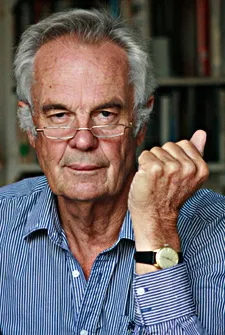
Foreign affairs columnist, film-maker and author

Related Posts

LONDON – So far so good, at least on the wider level. While internally Iraq seems on the edge of chaos, the much heralded clash of civilizations between the Muslim and Judaeo-Christian worlds has yet to become apparent. We have anger and despair aplenty in the Arab and Muslim worlds. But very little rushing to the standard and there was no great pilgrimage of warriors to join the fight, as happened when the Soviet Union invaded Afghanistan twenty years ago, and then, having driven the Red Army out, were left to ferment in that mountainous redoubt. With the armaments supplied by the CIA the mujahidin were transformed into Al Qaeda that became, for a relatively brief moment as these things go, ‘the greatest threat to the homeland that America has ever known.’ Nevertheless a ‘Cold War’ between much of the Muslim world and the West is certainly in full swing. Winston...
In the 17th century, Ming China represented roughly one-third of global output, and Mughal India a little less. Together the two countries accounted for more than half of the world’s output, with a corresponding size of populations (as a proportion of the total global population). By the 1950s, Mao China was a mere 5 per cent of global GDP. India only 1 per cent. Today, after several decades of exceptional economic progress, particularly in China, there is now a historic rise of the Global South. The two behemoths – China and India, and others in the South – are now reclaiming their historic economic weight in the world.  The 2013 UNDP Human Development Report documented this rise of the Global South presenting evidence that China, India, and Brazil were collectively in the process of exceeding western developed countries in terms of trade and global output. China is now the largest...
Photo by Cherry Laithang on Unsplash Maria Popova August 3, 2023 “This is an extraordinary time full of vital, transformative movements that could not be foreseen. It’s also a nightmarish time. Full engagement requires the ability to perceive both.” “There is no love of life without despair of life,” wrote Albert Camus — a man who in the midst of World War II, perhaps the darkest period in human history, saw grounds for luminous hope and issued a remarkable clarion call for humanity to rise to its highest potential on those grounds. It was his way of honoring the same duality that artist Maira Kalman would capture nearly a century later in her marvelous meditation on the pursuit of happiness, where she observed: “We hope. We despair. We hope. We despair. That is what governs us. We have a bipolar system.” In my own reflections on hope, cynicism, and the stories we tell ourselves, I’ve considered...

Recent Articles

Tony Robinson October 4, 2026 Violence is easy to recognise when someone is being beaten, shot or killed. It becomes more difficult when nobody is holding a weapon. Poverty, discrimination, exploitation and repression can restrict a human life just as effectively, although they do so in very different ways and with very different consequences. Simply adding more categories to an ever-growing list of forms of violence does not really solve the problem. The more interesting question is what all these different situations have in common and why it makes sense to describe them using the same word. Human beings do not simply react to what happens around them. They remember the past, imagine things that do not yet exist, make plans and undertake projects. Workers organise because they imagine different working conditions; people migrate because they imagine another life somewhere else; social movements emerge because people refuse to accept the...
It’s a matter of principles, courage, vision and pulling together – while the militarist world is falling apart… Peter Langille October 3, 2026 “Here, then, is the problem which we present to you, stark and dreadful and inescapable: Shall we put an end to the human race; or shall mankind renounce war?”The Bertrand Russell—Albert Einstein Manifesto, July 9, 1955 ⁕ The forecast for what’s ahead is worrisome. The sharp rise in armed conflicts over the past three years is adding to what was already the highest level in over seventy years. Genocides, which should be prevented are supported. A shared climate emergency that jeopardises survival is ignored. Diverse polls now suggest that people are war-weary, worried and interested in a more effective United Nations. And, there are viable policy options for a more secure world! Yet governments are doubling-down, betting on more war and investing heavily. If current trends persist,...
Johan Galtung 1930-2024October 2015 Published here on October 3, 2026 Let us focus on Civilization for conflict analysis and remedies. Major forms of disorder use violence; war is state organized violence. The most belligerent states are the United States of America and Israel, both with civilization roots. National Evangelism, the US Protestant Christian civilization– more national than evangelical–justifies US warfare as exceptionalism of a people chosen by God, with a manifest destiny to run the world. Orthodox Judaism justifies Israeli warfare to conquer and expand from Nile to Euphrates as a religious right and duty to the Eternal One. The third most belligerent country, the UK, no longer believes it is God-chosen but chosen by the USA; not quite the same but something. But the root cause of global disorder lies in the Occident–with Islam–seeing itself as the single, universal civilization valid for all at all times, all others being...

TFF on Substack

Discover and subscribe to more peace materials on TFF Substack

Most Popular

Tony Robinson October 4, 2026 Violence is easy to recognise when someone is being beaten, shot or killed. It becomes more difficult when nobody is holding a weapon. Poverty, discrimination, exploitation and repression can restrict a human life just as effectively, although they do so in very different ways and with very different consequences. Simply adding more categories to an ever-growing list of forms of violence does not really solve the problem. The more interesting question is what all these different situations have in common and why it makes sense to describe them using the same word. Human beings do not simply react to what happens around them. They remember the past, imagine things that do not yet exist, make plans and undertake projects. Workers organise because they imagine different working conditions; people migrate because they imagine another life somewhere else; social movements emerge because people refuse to accept the...
It’s a matter of principles, courage, vision and pulling together – while the militarist world is falling apart… Peter Langille October 3, 2026 “Here, then, is the problem which we present to you, stark and dreadful and inescapable: Shall we put an end to the human race; or shall mankind renounce war?”The Bertrand Russell—Albert Einstein Manifesto, July 9, 1955 ⁕ The forecast for what’s ahead is worrisome. The sharp rise in armed conflicts over the past three years is adding to what was already the highest level in over seventy years. Genocides, which should be prevented are supported. A shared climate emergency that jeopardises survival is ignored. Diverse polls now suggest that people are war-weary, worried and interested in a more effective United Nations. And, there are viable policy options for a more secure world! Yet governments are doubling-down, betting on more war and investing heavily. If current trends persist,...
Johan Galtung 1930-2024October 2015 Published here on October 3, 2026 Let us focus on Civilization for conflict analysis and remedies. Major forms of disorder use violence; war is state organized violence. The most belligerent states are the United States of America and Israel, both with civilization roots. National Evangelism, the US Protestant Christian civilization– more national than evangelical–justifies US warfare as exceptionalism of a people chosen by God, with a manifest destiny to run the world. Orthodox Judaism justifies Israeli warfare to conquer and expand from Nile to Euphrates as a religious right and duty to the Eternal One. The third most belligerent country, the UK, no longer believes it is God-chosen but chosen by the USA; not quite the same but something. But the root cause of global disorder lies in the Occident–with Islam–seeing itself as the single, universal civilization valid for all at all times, all others being...
Read More
Living-Peace-Sign-Budapest-copy
Tony Robinson October 4, 2026 Violence is easy to recognise when someone is being beaten, shot or killed. It becomes more difficult when nobody is holding a weapon. Poverty, discrimination, exploitation and repression can restrict a human life just as effectively, although they do so in very different ways and with very different consequences. Simply adding more categories to an ever-growing list of forms of violence does not really solve the problem. The more interesting question is what all these different situations have in common and why it makes sense to describe them using the same word. Human beings do not simply react to what happens around them. They remember the past, imagine things that do not yet exist, make plans and undertake projects. Workers organise because they imagine different working conditions; people migrate because they imagine another life somewhere else; social movements emerge because people refuse to accept the...
b54a1f10-8c65-4f0b-9dd5-4abc0a7d04cc_2659x2659
It’s a matter of principles, courage, vision and pulling together – while the militarist world is falling apart… Peter Langille October 3, 2026 “Here, then, is the problem which we present to you, stark and dreadful and inescapable: Shall we put an end to the human race; or shall mankind renounce war?”The Bertrand Russell—Albert Einstein Manifesto, July 9, 1955 ⁕ The forecast for what’s ahead is worrisome. The sharp rise in armed conflicts over the past three years is adding to what was already the highest level in over seventy years. Genocides, which should be prevented are supported. A shared climate emergency that jeopardises survival is ignored. Diverse polls now suggest that people are war-weary, worried and interested in a more effective United Nations. And, there are viable policy options for a more secure world! Yet governments are doubling-down, betting on more war and investing heavily. If current trends persist,...
010
Johan Galtung 1930-2024October 2015 Published here on October 3, 2026 Let us focus on Civilization for conflict analysis and remedies. Major forms of disorder use violence; war is state organized violence. The most belligerent states are the United States of America and Israel, both with civilization roots. National Evangelism, the US Protestant Christian civilization– more national than evangelical–justifies US warfare as exceptionalism of a people chosen by God, with a manifest destiny to run the world. Orthodox Judaism justifies Israeli warfare to conquer and expand from Nile to Euphrates as a religious right and duty to the Eternal One. The third most belligerent country, the UK, no longer believes it is God-chosen but chosen by the USA; not quite the same but something. But the root cause of global disorder lies in the Occident–with Islam–seeing itself as the single, universal civilization valid for all at all times, all others being...
Screenshot 2026-10-02 011738
Jan ObergPhD, director, The Transnational Foundation for Peace and Future Research, TFFLund, Sweden October 2, 2026 This is my full original manuscript. The Chinese Academy of Social Science, CASS, makes two publications out if it. 1. China’s Five-year plan emphasized the capabilities of basic research and original innovation. It is regarded as the goal of the future social development, which, as required, should be significantly enhanced. Can you comment on the importance of original innovation in research and academic study? I believe it is easier to define “original innovation” in the natural sciences than in social sciences. The breaking points of what constitutes something new, or innovative, are not quite as sharp in the latter. But in both fields it is about opening up something that was closed, unseen, unexplored before – making manifest what was earlier latent. Innovations come in many forms and shapes – naming something that was not...
arctic-circle-map
The agreement is catastrophic both because of what it says and what it doesn’t mention. It reduces further the major asset of security policies: Freedom of action. Jan Oberg TFF director September 25, 2026 A couple of hours before the agreement was signed on September 22, 2026, I published the following 13 hypotheses about what it would most likely contain on TFF Substack (in English). I was wrong on only the first point. Contrary to what Trump had written on his Truth Social platform, it does not appear to come into force immediately. In fact, it turned out to be worse than even I had anticipated. After these hypotheses now come a number of reflections in light of what the agreement actually contains, and does not contain, as well as the way in which it has generally been presented by major media outlets and by the public-service broadcaster DR. My...
girl-5894831_1280
Below are TFF-related media mentions, comments, videos and social media posts published elsewhere but not on this homepage. We happen to catch and list only a fraction. Regarding video comments and debates, we recommend that you go to the TFF Video Channel on Substack where many of them are reproduced. Jan Oberg is a contributor to China Daily – 52 million daily clicks – and Global Times, CGTN and CCTV (the national television), China Investment, Xinhua News Agency and several others. Articles and videos on these media very often multiply into countless Chinese (and Western media) that re-post them from these main media. Thanks to The China Academy, his analyses, interviews and comments are frequently posted on YouTube channels such as Thinkers Forum and Wave Media. These videos are often re-posted on Bilibili (China’s YouTube), the China Content Center on TikTok, and on the Chinese edition of TikTok, Douyin.com. This means reaching hundreds of millions of viewers worldwide over a year. While there are too many to catch on all these...





