
There are two ways of responding to an invitation from an American president. I recall that when Amory Lovins, the guru of market-oriented environmentalism, was asked about what was his main goal when invited to the White House to meet the president he responded self-assuredly: ‘To be invited back.” That is, be sure to say nothing that might so disturb the high and mighty to an extent that might jeopardize future invitations.

A positive reading of such an approach would point out that Lovins was just being realistic. If he hoped to have any influence at all in the future he needed to confine his present advice to an areas situated well within the president’s comfort zone. A less charitable interpretation would assume that what mattered to Lovins was the thrill of access to such an august portal of power.

Never receiving such an invitation, I had a lesser experience, but experienced similar temptations, being invited by a kind of institutional miscalculation to be the banquet speaker at West Point at the end of an international week at this elite military academy in which the cadets and representatives from a couple of hundred colleges had been fed the government line by top officials at the Pentagon and State Department.

The officer tasked with arranging the program decided that it might be more interesting to have for once a speaker who had a more critical outlook on the U.S. role in the world. I was invited, and accepted with mixed feelings of being both co-opted and challenged. It turns out that the seductive part of the occasion was to find myself housed in a suite normally reserved for the president or Secretary of Defense; it was luxurious and so spacious that it took me some time to locate the bedroom, although I did almost immediately find the fridge stocked with beer and food. First things first. Anyway, after a momentary crisis of confidence, I decided that I should not give in to the lure of this splendid treatment. Despite some pangs of self-doubt, I went ahead and presented my prepared talk on “The Menace of American Militarism.”

The time was just after the end of the Vietnam War, and my remarks that evening were greeted with enthusiasm by the invited delegates from other colleges around the country who had endured a week of high level government propaganda, with mixed responses from the several hundred cadets who seemed divided in their reactions to what I had said, and with stony silence by the West Point faculty who evidently felt that I abused the occasion, and even at the social reception afterwards refused to talk with me or look in my direction. I suppose the justification in their view was that rudeness begets rudeness. Actually, I would have welcomed discussion of my essential contention that a permanent war footing since 1945 was hurting American society in ways difficult to overcome, creating a militarized political culture, but it was not to be. Sullen silence was their only response on that evening long ago.

The most dramatic moment at the talk occurred during the question period when a young female cadet stood up, and said some words to this effect,”[a]s I am persuaded by what you have said, would you advise me to resign my commission?” This was a challenge for which my text had no answers, nor was the audience ready for such drama. There was total silence in the vast hall.

It is one thing to encourage a critical view of the role of the military in American and global society, it is another to encroach upon the life decisions of a young person whose future is being rather fundamentally called into question. Without knowing how best to respond, and I still don’t after all these years, I more or less threw the question back at her, saying “[o]n such matters, only you can decide how best to live your life.”

I never discovered what happened to her, but do not feel ashamed of my response. And overall, I felt that my overall performance had kept the faith. To prove it, I was never invited back, and since that was the test I had set for myself when I accepted the invitation, I felt that the evening, awkward as it became, was not a personal failure. Whether I made some among the audience of young people think a bit differently about the country, and war/peace and security issues, I will never know.

It is against this background that I was struck a few days ago by the marvelous display of courage and composure by Malala Yousafzai who went to the White House, and media venues of great influence (The Daily Show, Diane Sawyer), to continue with her advocacy of the right of girls everywhere, but especially in her native Pakistan and Afghanistan, to receive an education, but also to link human security with the abandonment of war and violence.

Malala was a kind of child marvel, apparently speaking in her neighborhood throughout the Swat Valley of such issues from the age of nine with astonishing fluency and intelligence. The fact that she was shot in the face by a Taliban extremist on her way home in a school bus a year ago gave her life and cause an immediate visibility around the world. When she rather miraculously recovered (the bullet grazing her brain) and resumed her campaign, there was an understandable admiration for a girl so young who was not only courageous, but had this burning passion for knowledge and education, but also was urging whoever would listen that war and violence could not lead humanity to a better future.

Her advice: “Instead of sending guns, send pens, instead of sending tanks, send books.” “You are powerful when you have a pen because through a pen you can save lives and that’s the change we want to bring to our society.” It was a message that needed to be heard in Washington, and Malala was the ideal messenger! In fact, Washington was receptive to the education part of the message, but not to the anti-war part, which it did its best to ignore.

When emerging from her meeting with the Obama family at the White House her statement was brilliantly crafted to catch the light of the occasion as well as to dispel its darkness: “I thanked President Obama for U.S. work in supporting education in Pakistan and Afghanistan and for Syrian refugees. I also expressed my concerns that drone attacks are fueling terrorism. Innocent victims are killed in those acts, they lead to resentment among the Pakistani people. If we refocus on education it will make a big impact.”

The White House also made a statement praising Malala for her commitment to education and courage, but pointedly overlooking that part of her comment devoted to drones. Such silence in view of such a challenge has an eerie quality. Such a reaction from the president tried to make Malala stand for only a message about education, when in reality her real message was to connect education with peace and real security. Not since the great seer of Brazil, Paolo Freire, told of the emancipatory potential of teaching illiterate peasants how to read and write had someone so powerfully linked learning and empowerment (see Freire’s Pedagogy of the Oppressed for a transformative account of his work in the Brazilian countryside).

Of course, so long as Malala’s exploits validated an anti-Islamic and pro-American slant, it is a no brainer to celebrate her achievements, even lamenting the oversight by the Nobel Prize selection committee, and generally commend a campaign that wants to see girls everywhere empowered by education.

The harder part is being able to listen to a critical comment that touches on a life and death issue such as the terror wrought by drones in Pakistan. In my view, for Obama to ignore that part of Malala’s message is to dishonor her visit, and exploit it for his own public relations purposes!

It is somewhat odd that Obama failed to listen to Malala whole message. After all, only recently did the United States Government announce that it is ceasing drone attacks on Pakistan due to the adverse reactions among Pakistanis. Obama seemed able to listen to Medea Benjamin a few months ago when she disrupted his drone talk at the National Defense University.

Obama might have used this occasion to acknowledge that he was listening and heeding the cries of anguish coming from distant communities facing the terrorizing threats of drone warfare, but then again, I should know better. Our warrior presidents always seem afraid of appearing weak if they show the slightest compassion for the victims of our militarism, while proudly standing tall while weeping over the bodies of those victimized by the enemy as in relation to the recent.

Malala’s experience reminded me of another White House event 45 years earlier. Eartha Kitt, a beloved African American singer who whispered her sensual lyrics into the microphone, earning her the alluring label of ‘sex kitten,’ was invited to the White House as one of fifty prominent women to discuss the rise of urban crime among American youth with President Lyndon Johnson’s wife, Ladybird. It was January 1968 at the height of the Vietnam War, which was casting a dark shadow over the LBJ’s presidency, so much so that he would shock the country a few months later by decreeing a bombing pause in the war and announcing his completely unexpected decision not to seek a second presidential term in office.

When Eartha Kitt was given the opportunity to speak a few words she seized the moment, saying what any reasonably sensitive person well understood, that there were connections between sending young Americans off to risk death in a senseless war and the alarming drug/crime scene in the country’s cities. But for the mostly white and august women at this White House luncheon it was a shocker.

The rest of the guests, apparently without exception, were reported to react in “embarrassed silence” to what the NY Times condescendingly described as “an emotional tirade against the war.” Worse yet, Ladybird Johnson was “stunned” and “in tears,” presumably realizing that her ‘do good’ luncheon had collapsed before the desert had even been served.

This smart Texas First Lady was personally bold and liberal, inviting popular cultural figures such as Eartha Kitt along with her more reliably loyal cohort to discuss a national issue. But what does Eartha Kitt do, but spoil the occasion by refusing to play along, and treat urban crime as some sort of domestic disorder that could be delinked from the Vietnam War. Such delinking was absurd, considering that it was the poor and minorities who were doing most of the fighting and dying in Vietnam.

Eartha Kitt’s comments at the White House luncheon are worth recalling: “You send the best of the country off to be shot and maimed. They rebel in the streets. They take pot…and they will get high. They don’t want to go to school because they’re going to be snatched off from their mothers to be shot in Vietnam.”

Perhaps, not the most eloquent statement, but it was authentic, replete with genuine feelings. She was made to pay dearly for these words of truth telling. In a chilling aftermath, Eartha Kitt’s career came virtually to an end. Many contracts to appear at clubs were cancelled, few new opportunities for performances or recordings emerged, her career was severely damaged, if not destroyed. Nothing was forthcoming from the White House in her defense. To her credit, despite these cruel pressures and harsh backlash, Eartha Kitt never backed down, never apologized.

I connect Malala and Eartha Kitt in my mind because both seized the moment to speak truth to power, probably sensing that it meant they would never be invited back, and for Eartha Kitt it was worse than that. It seems almost certain that neither of these fearless women would have been invited in the first place if their intentions to speak out had been known in advance.

America is a democracy so long as its dirty laundry is kept from public view, but when such obvious moral failures as the Vietnam War or drone attacks are exposed, the response from on high is one of shocked hurt, anger, or at best, silence and deflection. Revealingly, for Earth Kitt the response was vindictive, but for Malala it is likely to be one of moving on, ignoring the drone comment, and refocusing on the liberal part of her mission as a crusading advocate of education for women as a matter of right (while suppressing the more radical part that condemns warmaking and military intervention).

Happily for the White House, the media played along, emphasizing how Malala giggled like a young and innocent adolescent when she met the queen in Buckingham Palace a few days later.
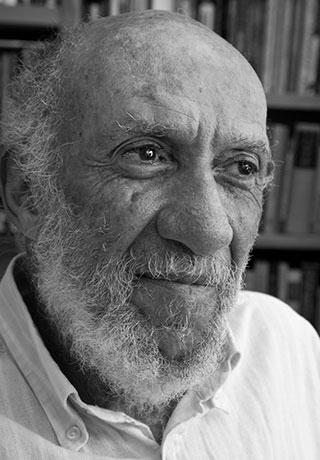

Professor Falk became an adviser to TFF when it was established in 1985.

Related Posts

It’s a matter of principles, courage, vision and pulling together – while the militarist world is falling apart… Peter Langille October 3, 2026 “Here, then, is the problem which we present to you, stark and dreadful and inescapable: Shall we put an end to the human race; or shall mankind renounce war?”The Bertrand Russell—Albert Einstein Manifesto, July 9, 1955 ⁕ The forecast for what’s ahead is worrisome. The sharp rise in armed conflicts over the past three years is adding to what was already the highest level in over seventy years. Genocides, which should be prevented are supported. A shared climate emergency that jeopardises survival is ignored. Diverse polls now suggest that people are war-weary, worried and interested in a more effective United Nations. And, there are viable policy options for a more secure world! Yet governments are doubling-down, betting on more war and investing heavily. If current trends persist,...
The agreement is catastrophic both because of what it says and what it doesn’t mention. It reduces further the major asset of security policies: Freedom of action. Jan Oberg TFF director September 25, 2026 A couple of hours before the agreement was signed on September 22, 2026, I published the following 13 hypotheses about what it would most likely contain on TFF Substack (in English). I was wrong on only the first point. Contrary to what Trump had written on his Truth Social platform, it does not appear to come into force immediately. In fact, it turned out to be worse than even I had anticipated. After these hypotheses now come a number of reflections in light of what the agreement actually contains, and does not contain, as well as the way in which it has generally been presented by major media outlets and by the public-service broadcaster DR. My...
Below are TFF-related media mentions, comments, videos and social media posts published elsewhere but not on this homepage. We happen to catch and list only a fraction. Regarding video comments and debates, we recommend that you go to the TFF Video Channel on Substack where many of them are reproduced. Jan Oberg is a contributor to China Daily – 52 million daily clicks – and Global Times, CGTN and CCTV (the national television), China Investment, Xinhua News Agency and several others. Articles and videos on these media very often multiply into countless Chinese (and Western media) that re-post them from these main media. Thanks to The China Academy, his analyses, interviews and comments are frequently posted on YouTube channels such as Thinkers Forum and Wave Media. These videos are often re-posted on Bilibili (China’s YouTube), the China Content Center on TikTok, and on the Chinese edition of TikTok, Douyin.com. This means reaching hundreds of millions of viewers worldwide over a year. While there are too many to catch on all these...

Recent Articles

Tony Robinson October 4, 2026 Violence is easy to recognise when someone is being beaten, shot or killed. It becomes more difficult when nobody is holding a weapon. Poverty, discrimination, exploitation and repression can restrict a human life just as effectively, although they do so in very different ways and with very different consequences. Simply adding more categories to an ever-growing list of forms of violence does not really solve the problem. The more interesting question is what all these different situations have in common and why it makes sense to describe them using the same word. Human beings do not simply react to what happens around them. They remember the past, imagine things that do not yet exist, make plans and undertake projects. Workers organise because they imagine different working conditions; people migrate because they imagine another life somewhere else; social movements emerge because people refuse to accept the...
It’s a matter of principles, courage, vision and pulling together – while the militarist world is falling apart… Peter Langille October 3, 2026 “Here, then, is the problem which we present to you, stark and dreadful and inescapable: Shall we put an end to the human race; or shall mankind renounce war?”The Bertrand Russell—Albert Einstein Manifesto, July 9, 1955 ⁕ The forecast for what’s ahead is worrisome. The sharp rise in armed conflicts over the past three years is adding to what was already the highest level in over seventy years. Genocides, which should be prevented are supported. A shared climate emergency that jeopardises survival is ignored. Diverse polls now suggest that people are war-weary, worried and interested in a more effective United Nations. And, there are viable policy options for a more secure world! Yet governments are doubling-down, betting on more war and investing heavily. If current trends persist,...
Johan Galtung 1930-2024October 2015 Published here on October 3, 2026 Let us focus on Civilization for conflict analysis and remedies. Major forms of disorder use violence; war is state organized violence. The most belligerent states are the United States of America and Israel, both with civilization roots. National Evangelism, the US Protestant Christian civilization– more national than evangelical–justifies US warfare as exceptionalism of a people chosen by God, with a manifest destiny to run the world. Orthodox Judaism justifies Israeli warfare to conquer and expand from Nile to Euphrates as a religious right and duty to the Eternal One. The third most belligerent country, the UK, no longer believes it is God-chosen but chosen by the USA; not quite the same but something. But the root cause of global disorder lies in the Occident–with Islam–seeing itself as the single, universal civilization valid for all at all times, all others being...

TFF on Substack

Discover and subscribe to more peace materials on TFF Substack

Most Popular

Tony Robinson October 4, 2026 Violence is easy to recognise when someone is being beaten, shot or killed. It becomes more difficult when nobody is holding a weapon. Poverty, discrimination, exploitation and repression can restrict a human life just as effectively, although they do so in very different ways and with very different consequences. Simply adding more categories to an ever-growing list of forms of violence does not really solve the problem. The more interesting question is what all these different situations have in common and why it makes sense to describe them using the same word. Human beings do not simply react to what happens around them. They remember the past, imagine things that do not yet exist, make plans and undertake projects. Workers organise because they imagine different working conditions; people migrate because they imagine another life somewhere else; social movements emerge because people refuse to accept the...
It’s a matter of principles, courage, vision and pulling together – while the militarist world is falling apart… Peter Langille October 3, 2026 “Here, then, is the problem which we present to you, stark and dreadful and inescapable: Shall we put an end to the human race; or shall mankind renounce war?”The Bertrand Russell—Albert Einstein Manifesto, July 9, 1955 ⁕ The forecast for what’s ahead is worrisome. The sharp rise in armed conflicts over the past three years is adding to what was already the highest level in over seventy years. Genocides, which should be prevented are supported. A shared climate emergency that jeopardises survival is ignored. Diverse polls now suggest that people are war-weary, worried and interested in a more effective United Nations. And, there are viable policy options for a more secure world! Yet governments are doubling-down, betting on more war and investing heavily. If current trends persist,...
Johan Galtung 1930-2024October 2015 Published here on October 3, 2026 Let us focus on Civilization for conflict analysis and remedies. Major forms of disorder use violence; war is state organized violence. The most belligerent states are the United States of America and Israel, both with civilization roots. National Evangelism, the US Protestant Christian civilization– more national than evangelical–justifies US warfare as exceptionalism of a people chosen by God, with a manifest destiny to run the world. Orthodox Judaism justifies Israeli warfare to conquer and expand from Nile to Euphrates as a religious right and duty to the Eternal One. The third most belligerent country, the UK, no longer believes it is God-chosen but chosen by the USA; not quite the same but something. But the root cause of global disorder lies in the Occident–with Islam–seeing itself as the single, universal civilization valid for all at all times, all others being...
Read More
Living-Peace-Sign-Budapest-copy
Tony Robinson October 4, 2026 Violence is easy to recognise when someone is being beaten, shot or killed. It becomes more difficult when nobody is holding a weapon. Poverty, discrimination, exploitation and repression can restrict a human life just as effectively, although they do so in very different ways and with very different consequences. Simply adding more categories to an ever-growing list of forms of violence does not really solve the problem. The more interesting question is what all these different situations have in common and why it makes sense to describe them using the same word. Human beings do not simply react to what happens around them. They remember the past, imagine things that do not yet exist, make plans and undertake projects. Workers organise because they imagine different working conditions; people migrate because they imagine another life somewhere else; social movements emerge because people refuse to accept the...
b54a1f10-8c65-4f0b-9dd5-4abc0a7d04cc_2659x2659
It’s a matter of principles, courage, vision and pulling together – while the militarist world is falling apart… Peter Langille October 3, 2026 “Here, then, is the problem which we present to you, stark and dreadful and inescapable: Shall we put an end to the human race; or shall mankind renounce war?”The Bertrand Russell—Albert Einstein Manifesto, July 9, 1955 ⁕ The forecast for what’s ahead is worrisome. The sharp rise in armed conflicts over the past three years is adding to what was already the highest level in over seventy years. Genocides, which should be prevented are supported. A shared climate emergency that jeopardises survival is ignored. Diverse polls now suggest that people are war-weary, worried and interested in a more effective United Nations. And, there are viable policy options for a more secure world! Yet governments are doubling-down, betting on more war and investing heavily. If current trends persist,...
010
Johan Galtung 1930-2024October 2015 Published here on October 3, 2026 Let us focus on Civilization for conflict analysis and remedies. Major forms of disorder use violence; war is state organized violence. The most belligerent states are the United States of America and Israel, both with civilization roots. National Evangelism, the US Protestant Christian civilization– more national than evangelical–justifies US warfare as exceptionalism of a people chosen by God, with a manifest destiny to run the world. Orthodox Judaism justifies Israeli warfare to conquer and expand from Nile to Euphrates as a religious right and duty to the Eternal One. The third most belligerent country, the UK, no longer believes it is God-chosen but chosen by the USA; not quite the same but something. But the root cause of global disorder lies in the Occident–with Islam–seeing itself as the single, universal civilization valid for all at all times, all others being...
Screenshot 2026-10-02 011738
Jan ObergPhD, director, The Transnational Foundation for Peace and Future Research, TFFLund, Sweden October 2, 2026 This is my full original manuscript. The Chinese Academy of Social Science, CASS, makes two publications out if it. 1. China’s Five-year plan emphasized the capabilities of basic research and original innovation. It is regarded as the goal of the future social development, which, as required, should be significantly enhanced. Can you comment on the importance of original innovation in research and academic study? I believe it is easier to define “original innovation” in the natural sciences than in social sciences. The breaking points of what constitutes something new, or innovative, are not quite as sharp in the latter. But in both fields it is about opening up something that was closed, unseen, unexplored before – making manifest what was earlier latent. Innovations come in many forms and shapes – naming something that was not...
arctic-circle-map
The agreement is catastrophic both because of what it says and what it doesn’t mention. It reduces further the major asset of security policies: Freedom of action. Jan Oberg TFF director September 25, 2026 A couple of hours before the agreement was signed on September 22, 2026, I published the following 13 hypotheses about what it would most likely contain on TFF Substack (in English). I was wrong on only the first point. Contrary to what Trump had written on his Truth Social platform, it does not appear to come into force immediately. In fact, it turned out to be worse than even I had anticipated. After these hypotheses now come a number of reflections in light of what the agreement actually contains, and does not contain, as well as the way in which it has generally been presented by major media outlets and by the public-service broadcaster DR. My...
girl-5894831_1280
Below are TFF-related media mentions, comments, videos and social media posts published elsewhere but not on this homepage. We happen to catch and list only a fraction. Regarding video comments and debates, we recommend that you go to the TFF Video Channel on Substack where many of them are reproduced. Jan Oberg is a contributor to China Daily – 52 million daily clicks – and Global Times, CGTN and CCTV (the national television), China Investment, Xinhua News Agency and several others. Articles and videos on these media very often multiply into countless Chinese (and Western media) that re-post them from these main media. Thanks to The China Academy, his analyses, interviews and comments are frequently posted on YouTube channels such as Thinkers Forum and Wave Media. These videos are often re-posted on Bilibili (China’s YouTube), the China Content Center on TikTok, and on the Chinese edition of TikTok, Douyin.com. This means reaching hundreds of millions of viewers worldwide over a year. While there are too many to catch on all these...




