Lily Lynch: How NATO seduced the European Left

By Lily Lynch

May 29, 2023

The anti-war movement has fallen for a progressive circus

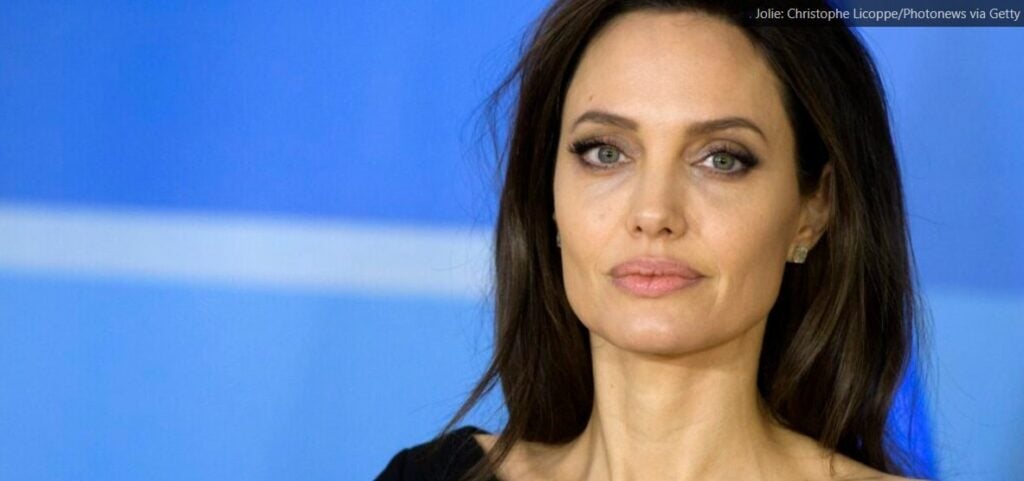
In January 2018, Nato Secretary-General Jens Stoltenberg held an unprecedented press conference with Angelina Jolie. While InStyle reported that Jolie “was dressed in a black off-the-shoulder sheath dress, a matching capelet and classic pumps (also black)”, there was a deeper purpose to this meeting: sexual violence in war. The pair had just co-authored a piece for the Guardian entitled “Why NATO must defend women’s rights”.

The timing was significant. At the height of the #MeToo movement, the most powerful military alliance in the world had become a feminist ally. “Ending gender-based violence is a vital issue of peace and security as well as of social justice,” they wrote. “NATO can be a leader in this effort.”

Originally published at UnHerd on May 16, 2023

This was a new and progressive face for NATO, the same one it has since used to seduce much of the European Left. Previously, in the Nordic countries, Atlanticists have had to sell war and militarism to largely pacifist publics. This was achieved in part by presenting Nato not as a rapacious, pro-war military alliance but as an enlightened, “progressive” peace alliance. As Timothy Garton Ash effused in the Guardian in 2002, “NATO has become a European peace movement” where one could watch “John Lennon meet George Bush”.

Today, by contrast, following Russia’s full-scale invasion of Ukraine, Sweden and Finland abandoned their long-standing traditions of neutrality and opted for membership. Nato is portrayed as a military alliance — and Ukraine a war­ — that even former pacifists can get behind. All its proponents seem to be singing is “Give War a Chance”.

The Jolie campaign marked a dramatic turn in what Katharine A.M. Wright and Annika Bergman Rosamond call “NATO’s strategic narrative” in several ways. First, the alliance embraced celebrity star power for the first time, imbuing its unremarkable brand with elite glamour and beauty. Jolie’s star power meant that the alluring images of the event reached apolitical audiences with little knowledge of Nato.

Second, the partnership seemed to usher in an era in which women’s rights, gendered violence and feminism would assume a more prominent role in Nato rhetoric. Since then, and especially in the past 12 months, telegenic female leaders such as the Finnish Prime Minister, Sanna Marin, German Foreign Minister, Annalena Baerbock, and Estonian Prime Minister, Kaja Kallas, have increasingly served as the spokespersons of enlightened militarism in Europe. The alliance has also intensified its engagement with popular culture, new technologies, and youth influencers.

Of course, NATO has always been PR-conscious, and has long engaged culture, entertainment, and the arts. Who could forget the 1999 album Distant Early Warning from electronic duo Icebreaker International, recorded with funding from the defunct “NATOarts” and inspired by the radar stations along Alaska and Canada’s northern periphery built to alert Nato of an incoming Soviet nuclear strike?

Or the 2007 feature film HQ, produced by Nato’s public diplomacy division, which depicts life inside the alliance and a mock diplomatic response to a crisis in the fictional state of Seismania? Just about everyone it turns out. But what makes Nato’s more recent strategic turn so effective is that it has successfully echoed candidate countries’ progressive local traditions and identities.

No political party in Europe better exemplifies the shift from militant pacifism to ardent pro-war Atlanticism than the German Greens. Most of the original Greens had been radicals during the student protests of 1968; many had demonstrated against American wars. The early Greens advocated for West Germany’s withdrawal from NATO.

But as the founding members entered middle age, fissures began to appear in the party that would one day tear it apart. Two camps began to coalesce: the “Realos” were the moderate Greens, politically pragmatists. The “Fundis” were the radical, uncompromising camp; they wanted the party to remain faithful to its fundamental values no matter what.

Predictably, the Fundis believed that European peace would be best served by West Germany’s withdrawal from the alliance and tended to favour military neutrality. Meanwhile, the Realos believed that West Germany needed NATO. They even argued that withdrawal would return matters of security to the German nation-state and risk rekindling militaristic nationalism.

Their Nato was a post-national, cosmopolitan alliance, speaking numerous languages and flying a multitude of flags, protecting Europe from Germany’s most destructive impulses. But NATO membership at the end of history was one thing. Germany going to war again — the most forbidden of taboos after World War II — was something else entirely.

Kosovo changed everything. In 1999 — the 50th anniversary of Nato’s founding — the alliance began what academic Merje Kuus has called a “discursive metamorphosis”. From the mere defensive alliance, it was during the Cold War, it was becoming an active military compact concerned with spreading and defending values such as human rights, democracy, peace, and freedom well beyond the borders of its member states.

The 78-day NATO bombing of what remained of Yugoslavia, ostensibly to halt war crimes committed by Serbian security forces in Kosovo, would forever transform the German Greens.

At a chaotic May 1999 party conference in Bielefeld, the Realos and Fundis fought bitterly over the bombing. Green Foreign Minister Joschka Fischer, the most prominent Realo, supported NATO’s war; for this, conference attendees pelted him with red paint. The Fundis’ proposal called for an unconditional cessation of the bombing, which would have also meant the collapse of the Green-Social Democratic Party (SDP) coalition government.

The peace proposal failed, crushing the anti-war faction of the party, who would leave the Greens in droves. Instead, the Realos’ moderate resolution triumphed by a comfortable margin. After a brief pause, the bombing of Yugoslavia was allowed to continue. With the Greens’ crucial support, the Luftwaffe flew sorties over Belgrade, 58 years after their last aerial bombardment of the Serbian capital.

It was the first German military operation undertaken in Europe since the Second World War.

Following the start of the full-scale war in Ukraine, the German Greens’ Foreign Minister Annalena Baerbock has continued in Fischer’s tradition, scolding countries with traditions of military neutrality and imploring them to join NATO. She has invoked Desmond Tutu’s line: “If you are neutral in situations of injustice, you have chosen the side of the oppressor.” And the Greens have even ventriloquised their own dead members, including Petra Kelly, an anti-war icon and longtime advocate for non-alignment who died in 1992.

Last year, Greens co-founder Eva Quistorp wrote an imaginary letter to Petra Kelly in the newspaper TAZ. The letter borrows Kelly’s moral stances and inverts them to justify the Greens’ embrace of war. Quistorp wants us to think that if Kelly were alive today, she would have been a NATO supporter. Addressing the long-dead Kelly, Quistorp asserts, “I bet you would shout out that radical pacifism makes blackmail possible.”

Earlier this year, Germany’s Federal Foreign Office also rolled out a new “Feminist Foreign Policy”, the latest of several European foreign ministries to have done so. This new orientation, also adopted by France, the Netherlands, Luxembourg and Spain, paints cosmopolitan militarism with a faux-radical feminist gloss, opening the domain of war and security to women’s rights activists. No-nonsense feminist leaders are depicted as the ideal foil to authoritarian “strongmen”.

Sweden was the first country to adopt such a policy in 2014, permitting it to project its longstanding state feminism abroad, and to assume a new moral posture in the international arena. Domestically, there were positive Atlanticist stories in women’s magazines.

In the “Mama” section of the Swedish newspaper Expressen, targeted at female readers, one interview with Angelina Jolie emphasised that NATO can protect women from sexual violence in war. Jolie also stressed that there is little difference between humanitarian aid workers and NATO soldiers, as they “are striving towards the same goal: peace”.

The academic Merje Kuus has written that Nato enlargement involves “a two-fold legitimation” strategy. First, NATO is rendered ordinary and unremarkable, pedestrian and everyday, and second, it is portrayed as above reproach, vital, an absolute moral good. The effect of this, she says, is the simultaneous banalisation and glorification of NATO: it becomes so blandly bureaucratic that it is below debate, and so “existential and essential”, that it is above debate.

And this legitimation strategy has been evident in the limited, tightly-controlled debate about Euro-Atlantic integration in the Nordic countries, neither of which held referendums on membership. After decades of popular resistance to the alliance, NATO, it seems, is above democracy. But as Kuss writes, that does not mean that Nato is imposed on a society. The aim is instead “to integrate it into entertainment, education, and civic life more broadly”.

Evidence of this is everywhere. In February, NATO held its first-ever gaming event. A young employee of the alliance joined popular Twitch streamer ZeRoyalViking to play Among Us and casually chat about the danger disinformation poses to democracy. With them was a mountaineer influencer and environmental activist named Caroline Gleich.

As their astronaut avatars navigated a cartoon spaceship, they spoke about NATO in glowing terms. By the event’s end, the stream had turned into a recruitment effort: the alliance employee talked about the perks of his job and encouraged viewers to check the Nato website for employment opportunities in fields such as graphic design and video editing.

The event was part of NATO’s “Protect the Future” campaign. This year it included a graphic novel competition for young artists. The alliance also courted dozens of influencers with large followings on TikTok, YouTube, and Instagram, and brought them out to the headquarters in Brussels. Other influencers were dispatched to last year’s NATO Summit in Madrid, where they were asked to create content for their audiences.

The European Left has been utterly captivated by this show. Following the path taken by the German Greens, major Left-wing parties have abandoned military neutrality and opposition to war and now champion NATO. It is a stunning reversal.

During the Cold War, the European Left organised mass protests attended by millions against US-led militarism and Nato’s deployment of Pershing-II and cruise missiles in Europe. Today, little more than the hollowed-out radical rhetoric remains. With hardly any remaining opposition to NATO left in Europe, and the alliance’s creeping expansion beyond the Euro-Atlantic area, its hegemony is now nearly absolute.

Originally published at UnHerd on May 16, 2023

About the author

Lily Lynch is a writer and journalist based in Belgrade.

Please help TFF remain truly independent if you liked this article

Click here now!

3 Responses

  1. Agree with everything you have said here and it is very enlightening to see the insidious propaganda machine at work. However, one remark really stands out as a blatant disregard for the atrocities the Serbs inflicted on the Muslim population at the fall of Srebrenica. Your remark that the Serbs ‘ostensibly’ committed war crimes against the approximately 7000 to 8000 males they horribly massacred and dumped in mass graves, is a true demasqué of your whole point.

  2. The author does not say that. Where she mentions war crimes and the word “ostensibly,” she deals with Kosovo and NATO’s bombing there. It’s always a good idea to read and be sure to have understood a text correctly before criticising the author. But we remain glad that you could agreed with the text as such. Best, Jan Oberg Editor of The Transnational.

  3. ‘Ostensibly’ is simply not appropriate here because in 1995 we clearly witnessed the genocidal intentions of the Serbs in Srebrenica. Hoping or thinking or wishing it would be any different in Kosovo in 1999 is to be at least totally naïve but i can think of stronger words in this case than just ‘naïve’. I agree with the article in everything else but this point, the point is definitely more than simple semantics. Casting doubt on what the Serbs did and further intended to do if not stopped is factually incorrect. Yes, both parties were warring, but that doesn’t change the facts.

Related Posts

The agreement is catastrophic both because of what it says and what it doesn’t mention. It reduces further the major asset of security policies: Freedom of action. Jan Oberg TFF director September 25, 2026 A couple of hours before the agreement was signed on September 22, 2026, I published the following 13 hypotheses about what it would most likely contain on TFF Substack (in English). I was wrong on only the first point. Contrary to what Trump had written on his Truth Social platform, it does not appear to come into force immediately. In fact, it turned out to be worse than even I had anticipated. After these hypotheses now come a number of reflections in light of what the agreement actually contains, and does not contain, as well as the way in which it has generally been presented by major media outlets and by the public-service broadcaster DR. My...
Below are TFF-related media mentions, comments, videos and social media posts published elsewhere but not on this homepage. We happen to catch and list only a fraction. Regarding video comments and debates, we recommend that you go to the TFF Video Channel on Substack where many of them are reproduced. Jan Oberg is a contributor to China Daily – 52 million daily clicks – and Global Times, CGTN and CCTV (the national television), China Investment, Xinhua News Agency and several others. Articles and videos on these media very often multiply into countless Chinese (and Western media) that re-post them from these main media. Thanks to The China Academy, his analyses, interviews and comments are frequently posted on YouTube channels such as Thinkers Forum and Wave Media. These videos are often re-posted on Bilibili (China’s YouTube), the China Content Center on TikTok, and on the Chinese edition of TikTok, Douyin.com. This means reaching hundreds of millions of viewers worldwide over a year. While there are too many to catch on all these...
Photos © TFF 2000 Read PressInfo 90 “Lift the Sanctions and Bring More Aid to Yugoslavia” See Pictures from Belgrade © TFF 2000 Please reprint, copy, archive, quote or re-post this item, but please retain the source.

Recent Articles

Tony Robinson October 4, 2026 Violence is easy to recognise when someone is being beaten, shot or killed. It becomes more difficult when nobody is holding a weapon. Poverty, discrimination, exploitation and repression can restrict a human life just as effectively, although they do so in very different ways and with very different consequences. Simply adding more categories to an ever-growing list of forms of violence does not really solve the problem. The more interesting question is what all these different situations have in common and why it makes sense to describe them using the same word. Human beings do not simply react to what happens around them. They remember the past, imagine things that do not yet exist, make plans and undertake projects. Workers organise because they imagine different working conditions; people migrate because they imagine another life somewhere else; social movements emerge because people refuse to accept the...
It’s a matter of principles, courage, vision and pulling together – while the militarist world is falling apart… Peter Langille October 3, 2026 “Here, then, is the problem which we present to you, stark and dreadful and inescapable: Shall we put an end to the human race; or shall mankind renounce war?”The Bertrand Russell—Albert Einstein Manifesto, July 9, 1955 ⁕ The forecast for what’s ahead is worrisome. The sharp rise in armed conflicts over the past three years is adding to what was already the highest level in over seventy years. Genocides, which should be prevented are supported. A shared climate emergency that jeopardises survival is ignored. Diverse polls now suggest that people are war-weary, worried and interested in a more effective United Nations. And, there are viable policy options for a more secure world! Yet governments are doubling-down, betting on more war and investing heavily. If current trends persist,...
Johan Galtung 1930-2024October 2015 Published here on October 3, 2026 Let us focus on Civilization for conflict analysis and remedies. Major forms of disorder use violence; war is state organized violence. The most belligerent states are the United States of America and Israel, both with civilization roots. National Evangelism, the US Protestant Christian civilization– more national than evangelical–justifies US warfare as exceptionalism of a people chosen by God, with a manifest destiny to run the world. Orthodox Judaism justifies Israeli warfare to conquer and expand from Nile to Euphrates as a religious right and duty to the Eternal One. The third most belligerent country, the UK, no longer believes it is God-chosen but chosen by the USA; not quite the same but something. But the root cause of global disorder lies in the Occident–with Islam–seeing itself as the single, universal civilization valid for all at all times, all others being...

TFF on Substack

Discover and subscribe to more peace materials on TFF Substack

Most Popular

Tony Robinson October 4, 2026 Violence is easy to recognise when someone is being beaten, shot or killed. It becomes more difficult when nobody is holding a weapon. Poverty, discrimination, exploitation and repression can restrict a human life just as effectively, although they do so in very different ways and with very different consequences. Simply adding more categories to an ever-growing list of forms of violence does not really solve the problem. The more interesting question is what all these different situations have in common and why it makes sense to describe them using the same word. Human beings do not simply react to what happens around them. They remember the past, imagine things that do not yet exist, make plans and undertake projects. Workers organise because they imagine different working conditions; people migrate because they imagine another life somewhere else; social movements emerge because people refuse to accept the...
It’s a matter of principles, courage, vision and pulling together – while the militarist world is falling apart… Peter Langille October 3, 2026 “Here, then, is the problem which we present to you, stark and dreadful and inescapable: Shall we put an end to the human race; or shall mankind renounce war?”The Bertrand Russell—Albert Einstein Manifesto, July 9, 1955 ⁕ The forecast for what’s ahead is worrisome. The sharp rise in armed conflicts over the past three years is adding to what was already the highest level in over seventy years. Genocides, which should be prevented are supported. A shared climate emergency that jeopardises survival is ignored. Diverse polls now suggest that people are war-weary, worried and interested in a more effective United Nations. And, there are viable policy options for a more secure world! Yet governments are doubling-down, betting on more war and investing heavily. If current trends persist,...
Johan Galtung 1930-2024October 2015 Published here on October 3, 2026 Let us focus on Civilization for conflict analysis and remedies. Major forms of disorder use violence; war is state organized violence. The most belligerent states are the United States of America and Israel, both with civilization roots. National Evangelism, the US Protestant Christian civilization– more national than evangelical–justifies US warfare as exceptionalism of a people chosen by God, with a manifest destiny to run the world. Orthodox Judaism justifies Israeli warfare to conquer and expand from Nile to Euphrates as a religious right and duty to the Eternal One. The third most belligerent country, the UK, no longer believes it is God-chosen but chosen by the USA; not quite the same but something. But the root cause of global disorder lies in the Occident–with Islam–seeing itself as the single, universal civilization valid for all at all times, all others being...
Read More
Living-Peace-Sign-Budapest-copy
Tony Robinson October 4, 2026 Violence is easy to recognise when someone is being beaten, shot or killed. It becomes more difficult when nobody is holding a weapon. Poverty, discrimination, exploitation and repression can restrict a human life just as effectively, although they do so in very different ways and with very different consequences. Simply adding more categories to an ever-growing list of forms of violence does not really solve the problem. The more interesting question is what all these different situations have in common and why it makes sense to describe them using the same word. Human beings do not simply react to what happens around them. They remember the past, imagine things that do not yet exist, make plans and undertake projects. Workers organise because they imagine different working conditions; people migrate because they imagine another life somewhere else; social movements emerge because people refuse to accept the...
b54a1f10-8c65-4f0b-9dd5-4abc0a7d04cc_2659x2659
It’s a matter of principles, courage, vision and pulling together – while the militarist world is falling apart… Peter Langille October 3, 2026 “Here, then, is the problem which we present to you, stark and dreadful and inescapable: Shall we put an end to the human race; or shall mankind renounce war?”The Bertrand Russell—Albert Einstein Manifesto, July 9, 1955 ⁕ The forecast for what’s ahead is worrisome. The sharp rise in armed conflicts over the past three years is adding to what was already the highest level in over seventy years. Genocides, which should be prevented are supported. A shared climate emergency that jeopardises survival is ignored. Diverse polls now suggest that people are war-weary, worried and interested in a more effective United Nations. And, there are viable policy options for a more secure world! Yet governments are doubling-down, betting on more war and investing heavily. If current trends persist,...
010
Johan Galtung 1930-2024October 2015 Published here on October 3, 2026 Let us focus on Civilization for conflict analysis and remedies. Major forms of disorder use violence; war is state organized violence. The most belligerent states are the United States of America and Israel, both with civilization roots. National Evangelism, the US Protestant Christian civilization– more national than evangelical–justifies US warfare as exceptionalism of a people chosen by God, with a manifest destiny to run the world. Orthodox Judaism justifies Israeli warfare to conquer and expand from Nile to Euphrates as a religious right and duty to the Eternal One. The third most belligerent country, the UK, no longer believes it is God-chosen but chosen by the USA; not quite the same but something. But the root cause of global disorder lies in the Occident–with Islam–seeing itself as the single, universal civilization valid for all at all times, all others being...
Screenshot 2026-10-02 011738
Jan ObergPhD, director, The Transnational Foundation for Peace and Future Research, TFFLund, Sweden October 2, 2026 This is my full original manuscript. The Chinese Academy of Social Science, CASS, makes two publications out if it. 1. China’s Five-year plan emphasized the capabilities of basic research and original innovation. It is regarded as the goal of the future social development, which, as required, should be significantly enhanced. Can you comment on the importance of original innovation in research and academic study? I believe it is easier to define “original innovation” in the natural sciences than in social sciences. The breaking points of what constitutes something new, or innovative, are not quite as sharp in the latter. But in both fields it is about opening up something that was closed, unseen, unexplored before – making manifest what was earlier latent. Innovations come in many forms and shapes – naming something that was not...
arctic-circle-map
The agreement is catastrophic both because of what it says and what it doesn’t mention. It reduces further the major asset of security policies: Freedom of action. Jan Oberg TFF director September 25, 2026 A couple of hours before the agreement was signed on September 22, 2026, I published the following 13 hypotheses about what it would most likely contain on TFF Substack (in English). I was wrong on only the first point. Contrary to what Trump had written on his Truth Social platform, it does not appear to come into force immediately. In fact, it turned out to be worse than even I had anticipated. After these hypotheses now come a number of reflections in light of what the agreement actually contains, and does not contain, as well as the way in which it has generally been presented by major media outlets and by the public-service broadcaster DR. My...
girl-5894831_1280
Below are TFF-related media mentions, comments, videos and social media posts published elsewhere but not on this homepage. We happen to catch and list only a fraction. Regarding video comments and debates, we recommend that you go to the TFF Video Channel on Substack where many of them are reproduced. Jan Oberg is a contributor to China Daily – 52 million daily clicks – and Global Times, CGTN and CCTV (the national television), China Investment, Xinhua News Agency and several others. Articles and videos on these media very often multiply into countless Chinese (and Western media) that re-post them from these main media. Thanks to The China Academy, his analyses, interviews and comments are frequently posted on YouTube channels such as Thinkers Forum and Wave Media. These videos are often re-posted on Bilibili (China’s YouTube), the China Content Center on TikTok, and on the Chinese edition of TikTok, Douyin.com. This means reaching hundreds of millions of viewers worldwide over a year. While there are too many to catch on all these...