
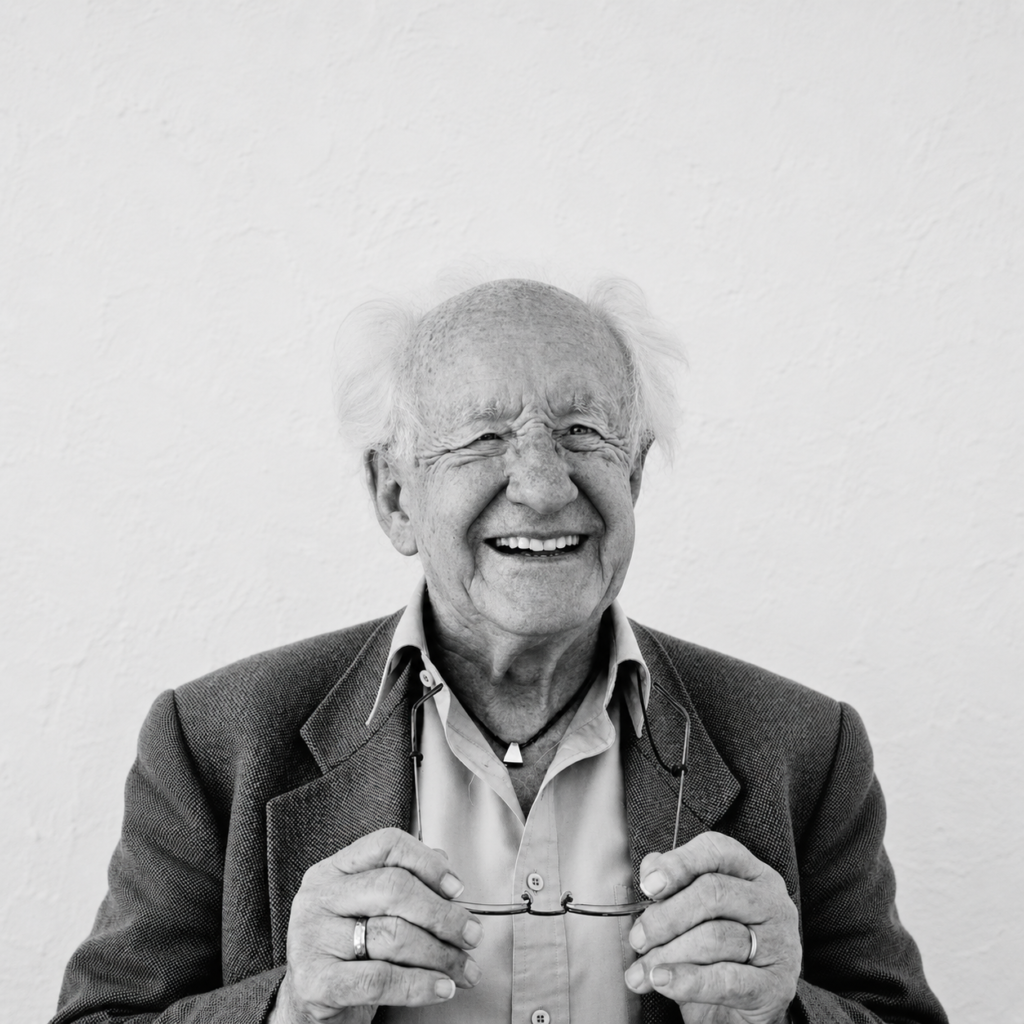
johangaltung

 70 years have passed since Japan capitulated to the Allies 15 August 1945. The key early postwar Japanese politicians, diplomats, academic advisers etc. have now retired and give highly interesting accounts, revealing some of the tricks and lies of the state system.

That may also apply to them if trying to relieve themselves of bad conscience. However, leaving that aside, the focus here is on how I myself, conventionally knowledgeable of Japan, revisit, and revise.

More particularly, on three aspects of Asia-Pacific history:

• I thought, “Asia for Asians” meant “Asia for Japan”; but what happened?

• Japan pre-1945; the economic-military-cultural-political legacy?

• Japanese atrocities particularly in Korea and China; apologies?

Only Japan in the whole world fought all Western colonial powers: Russia 1904-05, Germany WWI, USSR WWII, English-French-Dutch December 1941, USA after Pearl Harbor. For that, they all hated Japan. Other Asians, not China, fought their own: India-Malaya-Burma the English, Vietnam the French (and Japan-USA-China), Indonesia the Dutch-Portuguese.

Japan “advanced”, filling gaps left by West, occupied, extracted resources. Nevertheless, for those who experienced this for the longest time, Taiwan since 1895 and Korea since 1910, with obvious shortcomings, it was an inclusion in an expanding Japan, very different from Western colonization.

The Taiwanese and Koreans had the same education as the Japanese, had top imperial universities installed in Taipei and Seoul, still occupying top rank, and were accepted by the highest military academy and imperial universities in Japan.

So, what was it?

Not “Asia for Japan”; rather “Japan in Asia”, “Asia Japanized”.

Invited? Not by Western colonialists. The Ching and Yi dynasties in China and Korea were declining; there were openings, indications.

However, history is written by victors; Japan was punished, still is.

Japan’s legacy? Western colonialism put their colonies lowest in the world economic system – most still are – to get resources, little or no education, let alone higher education, with a tiny elite trained in the “mother” country. What happened to those Japan “included”?

Japan left behind an economic model with Buddhist and Confucian culture built into it, a “B-C” economy, not “J-C” for Judeo-Christian. A collective capitalism with rights and duties both high up and low down, and less inequality. And a very concrete development model.

Worth mentioning is one person, the economist Kaname Akamatsu, known in the West for the “flying geese” with a lead goose, Japan; but not known for what makes them fly.

He challenged a pillar in Western economic thought, Ricardo’s comparative advantages, in favor of changing the factor profile by ever higher processing of resources, also human resources, investing the value added in more processing.

He worked out of occupied Malaya and Singapore, as adviser.

Western colonialism kept the processing for itself and pocketed the value added; Japan shared the value added with countries included.

The four “dragons” – South Korea, Taiwan, Hong Kong, Singapore – had all been parts of the system, enabling them to compete with Japan itself later, in the 1970s, 1980s, with very high-level products.

The economy Deng Xiaoping launched in China from 1980 onward was inspired by Singapore, but attributed to the politician Lee Kwan Yew; not to Akamatsu. To him private vs state ownership mattered less, what mattered is ever higher value added invested in processing. The result 35 years later, today, is a booming Chinese economy partly based on the Akamatsu theory, with a Buddhist-Marxist focus on basic needs.

Buddhism-Confucianism, shared all over East Asia is good soil for sowing these Japanese seeds. Collectivism used to be brought inside the company as lifelong employment and seniority promotion, keeping the cohort entering same year together; but this was less copied.

Militarily-politically, post-1945 de facto occupied Japan became a client of USA even interpreting A9 as compatible with “collective self-defense”. East Asia got some of the best of Japan; USA got a satellite, and pushed on Japan their own economy, as “reforms”.

What about atrocities?

Japan was accused of many at the Tokyo tribunal, seven Class-A war criminals were executed; hundreds by military tribunals in China, USSR and other countries in Asia that Japan had occupied.

Most infamous are the Nanjing massacre of presumably 300,000 civilians, thousands of Korean “comfort women” used by Japanese soldiers, and the medical experiment camp in Manchuria; not revisited.

Atrocities did occur, but they were twisted and exaggerated.

Maybe one tenth that number in the Nanjing museum, said to be financed by Japanese trade unions. The majority might have been soldiers dressed as civilians. Japan was fighting a complex war against Chiang Kai-Shek supported by Nazi Germany and at times USA, and Mao supported by USSR, Komintern and a times USA.

Originally, the source of the “comfort women” story is a book by Seiji Yoshida, by his own confession pure fiction, history “as if”. The women were well paid by the soldiers. But the story was picked up by Japanese media outlets, notably Asahi Shimbun, by Japan’s so-called left, by Korea, and used against Japan.

Japan must continue apologizing, forever, for war, colonialism, atrocities. Germany is hailed as the model to emulate. Did Germany apologize for WWII in Europe or colonialism in Africa and the Pacific?

For shoa, yes; basically blaming it on Hitler and the Nazi party. War, colonialism, atrocities were seen as the essence of Japan, as accidental in Germany.

Western racism was at work: impunity for white people – not for yellow. Judged by Western colonial powers whose colonial crimes cry to the heavens relative to what Japan did.

Including me, attributing Western colonialism to Japan. Sorry.

Originally published by Transcend Media Service, TMS, here.
</br<
Related Posts

Jan Oberg TFF director October 28, 2026 Exactly one month has now passed since I published my criticism of the introduction to the special issue on Johan Galtung published by the Journal of Global Security Studies, JoGSS, and of Tor Egil Førland’s chapter about Galtung which serves as a preview to his forthcoming biography of Galtung to be published by PRIO. See the original on The Transnational here and the same article on TFF Substack with many general and critical comments and, in particular, the people who decided to withdraw from the biography project in protest. The special issue itself was extraordinary. It was devoted to the intellectual legacy of one of the founders of peace research and contained a number of strong assessments of his personality, scholarship, intellectual trajectory, and public role. Such assessments are, of course, entirely legitimate. No scholar is beyond criticism, and neither was Johan Galtung....
What the West Borrowed from Asia and What It Left Behind Jan Krikke October 8, 2026 The article was originally published here In the late 1960s, the musical Hair announced that the Age of Aquarius was dawning. Its opening anthem promised a transformation of human consciousness: an era of peace, harmony and understanding. Half a century later, a familiar echo of that promise is a meditation app offered by your employer. You can find it in the same list of benefits as the pension plan and the gym discount. How did a spiritual revolution become an employee benefit? The answer lies in the history of the movement known as New Age: where it came from, what it borrowed from Asia, and why the meaning of what it borrowed changed in the process. Two definitions will help. New Age is a loose label for a wide range of spiritual practices and...
It’s a matter of principles, courage, vision and pulling together – while the militarist world is falling apart… Peter Langille October 3, 2026 “Here, then, is the problem which we present to you, stark and dreadful and inescapable: Shall we put an end to the human race; or shall mankind renounce war?”The Bertrand Russell—Albert Einstein Manifesto, July 9, 1955 ⁕ The forecast for what’s ahead is worrisome. The sharp rise in armed conflicts over the past three years is adding to what was already the highest level in over seventy years. Genocides, which should be prevented are supported. A shared climate emergency that jeopardises survival is ignored. Diverse polls now suggest that people are war-weary, worried and interested in a more effective United Nations. And, there are viable policy options for a more secure world! Yet governments are doubling-down, betting on more war and investing heavily. If current trends persist,...

Recent Articles

Photo above: Carl Fredrik Reuterswärd’s Non-Violence outside UN Headquarters in New York. Kirill Levin, CC BY-NC-SA 2. Jan Oberg November 3, 2026 I am happy to be published in Horizons which is produced by the Center for International Relations and Sustainable Development, CIRSD, in Belgrade. My contribution brings out a radical re-thinking of what concepts such as defence, security, deterrence – and peace – may mean if we want to create a more peaceful world. It also summarises a few things I have been working with the last few decades. Please read it here Og her er den på dansk, takket være Johnny Baltzersens lynhurtige oversættelse
UNITE-tillid, DREAM-velstand og andre konstruktive komponenter Normally we publish articles in English here. But this is a translation of a very important TFF document that should reach as many as possible in Denmark since this country’s government has been one of the most hardline in Europe and, up till now at least, has refused to use diplomacy and, instead, spent tremendous sums on arming Ukraine with the express goal of defeating Russia. Thus this – unique – article is in Danish. Vi er Johnny Baltzersen og hans Fælles Sikkerhed – Fælles Fremtid på Substack overmåde taknemmelige for at have oversat og publiceret TFF’s 2025-portfølje for fredsidéer med henblik på Ukraines fremtid. Vi håber den nu kan nå mange flere danskere – som også vil sprede den og skabe debat – nu den danske regerings og folketingspartiernes politik på dette område siden 2022 står nu – forudsigeligt – ved vejs ende....
Jan Oberg TFF director October 28, 2026 Exactly one month has now passed since I published my criticism of the introduction to the special issue on Johan Galtung published by the Journal of Global Security Studies, JoGSS, and of Tor Egil Førland’s chapter about Galtung which serves as a preview to his forthcoming biography of Galtung to be published by PRIO. See the original on The Transnational here and the same article on TFF Substack with many general and critical comments and, in particular, the people who decided to withdraw from the biography project in protest. The special issue itself was extraordinary. It was devoted to the intellectual legacy of one of the founders of peace research and contained a number of strong assessments of his personality, scholarship, intellectual trajectory, and public role. Such assessments are, of course, entirely legitimate. No scholar is beyond criticism, and neither was Johan Galtung....

TFF on Substack

Discover and subscribe to more peace materials on TFF Substack

Most Popular

Photo above: Carl Fredrik Reuterswärd’s Non-Violence outside UN Headquarters in New York. Kirill Levin, CC BY-NC-SA 2. Jan Oberg November 3, 2026 I am happy to be published in Horizons which is produced by the Center for International Relations and Sustainable Development, CIRSD, in Belgrade. My contribution brings out a radical re-thinking of what concepts such as defence, security, deterrence – and peace – may mean if we want to create a more peaceful world. It also summarises a few things I have been working with the last few decades. Please read it here Og her er den på dansk, takket være Johnny Baltzersens lynhurtige oversættelse
UNITE-tillid, DREAM-velstand og andre konstruktive komponenter Normally we publish articles in English here. But this is a translation of a very important TFF document that should reach as many as possible in Denmark since this country’s government has been one of the most hardline in Europe and, up till now at least, has refused to use diplomacy and, instead, spent tremendous sums on arming Ukraine with the express goal of defeating Russia. Thus this – unique – article is in Danish. Vi er Johnny Baltzersen og hans Fælles Sikkerhed – Fælles Fremtid på Substack overmåde taknemmelige for at have oversat og publiceret TFF’s 2025-portfølje for fredsidéer med henblik på Ukraines fremtid. Vi håber den nu kan nå mange flere danskere – som også vil sprede den og skabe debat – nu den danske regerings og folketingspartiernes politik på dette område siden 2022 står nu – forudsigeligt – ved vejs ende....
Jan Oberg TFF director October 28, 2026 Exactly one month has now passed since I published my criticism of the introduction to the special issue on Johan Galtung published by the Journal of Global Security Studies, JoGSS, and of Tor Egil Førland’s chapter about Galtung which serves as a preview to his forthcoming biography of Galtung to be published by PRIO. See the original on The Transnational here and the same article on TFF Substack with many general and critical comments and, in particular, the people who decided to withdraw from the biography project in protest. The special issue itself was extraordinary. It was devoted to the intellectual legacy of one of the founders of peace research and contained a number of strong assessments of his personality, scholarship, intellectual trajectory, and public role. Such assessments are, of course, entirely legitimate. No scholar is beyond criticism, and neither was Johan Galtung....
Read More
knotted gun
Photo above: Carl Fredrik Reuterswärd’s Non-Violence outside UN Headquarters in New York. Kirill Levin, CC BY-NC-SA 2. Jan Oberg November 3, 2026 I am happy to be published in Horizons which is produced by the Center for International Relations and Sustainable Development, CIRSD, in Belgrade. My contribution brings out a radical re-thinking of what concepts such as defence, security, deterrence – and peace – may mean if we want to create a more peaceful world. It also summarises a few things I have been working with the last few decades. Please read it here Og her er den på dansk, takket være Johnny Baltzersens lynhurtige oversættelse
TFFPortfolioVign
UNITE-tillid, DREAM-velstand og andre konstruktive komponenter Normally we publish articles in English here. But this is a translation of a very important TFF document that should reach as many as possible in Denmark since this country’s government has been one of the most hardline in Europe and, up till now at least, has refused to use diplomacy and, instead, spent tremendous sums on arming Ukraine with the express goal of defeating Russia. Thus this – unique – article is in Danish. Vi er Johnny Baltzersen og hans Fælles Sikkerhed – Fælles Fremtid på Substack overmåde taknemmelige for at have oversat og publiceret TFF’s 2025-portfølje for fredsidéer med henblik på Ukraines fremtid. Vi håber den nu kan nå mange flere danskere – som også vil sprede den og skabe debat – nu den danske regerings og folketingspartiernes politik på dette område siden 2022 står nu – forudsigeligt – ved vejs ende....
JoGSS-Silent
Jan Oberg TFF director October 28, 2026 Exactly one month has now passed since I published my criticism of the introduction to the special issue on Johan Galtung published by the Journal of Global Security Studies, JoGSS, and of Tor Egil Førland’s chapter about Galtung which serves as a preview to his forthcoming biography of Galtung to be published by PRIO. See the original on The Transnational here and the same article on TFF Substack with many general and critical comments and, in particular, the people who decided to withdraw from the biography project in protest. The special issue itself was extraordinary. It was devoted to the intellectual legacy of one of the founders of peace research and contained a number of strong assessments of his personality, scholarship, intellectual trajectory, and public role. Such assessments are, of course, entirely legitimate. No scholar is beyond criticism, and neither was Johan Galtung....
Screenshot 2026-10-26 115647
An aspect of Iran’s culture and civilisation you’ve probably never heard about. Don’t be surprised if the US and Israel also try to bomb them. Jan ObergTFF director October 26, 2026 Today – under the “USraeli” threat of new “annihilating” bombings – opens the 7th International Conference on Peace and Conflict Resolution at Tehran’s University. As far as I can tell, this is the only permanent, advanced peace research institution in West Asia/the Middle East. Perhaps more countries in that region could be inspired? I mean, how many military “security” institutes and military academies do they have? Many peace research institutes and university departments have been established since the 1950s in the West. They are now all under attack; some have closed down, some have gone mainstream, yet others kept the name but do nothing to research peace and disseminate results or advice; instead, they cooperate with militarism’s platforms such...
Screenshot 2026-10-15 141837
Let’s discuss using AI to create peace – in contrast to boring geopolitics devoid of creative healing and visions. Jan Oberg TFF director October 15, 2026 I asked VEED to create a short video exemplifying how peace is preferable to war, then chose the lady as a template. Simple as that. In less than a minute, it produced this video, which any peace-loving person would appreciate. The only problem is that human intelligence (HI), at least the one that exists among Western decision-makers, isn’t half as moral or smart as AI. I have used AI to dialogue about peace and peace plans, creative conflict resolution and visions of a better future for humankind. It so happens that I am having more stimulating, intelligent, creative and moral discussions with AI than I could possibly have with any EU or NATO leader today. Yes, AI has very problematic and dangerous aspects; used...
girl-5894831_1280
Below are TFF-related media mentions, comments, videos and social media posts published elsewhere but not on this homepage. We happen to catch and list only a fraction. Regarding video comments and debates, we recommend that you go to the TFF Video Channel on Substack where many of them are reproduced. Jan Oberg is a contributor to China Daily – 52 million daily clicks – and Global Times, CGTN and CCTV (the national television), China Investment, Xinhua News Agency and several others. Articles and videos on these media very often multiply into countless Chinese (and Western media) that re-post them from these main media. Thanks to The China Academy, his analyses, interviews and comments are frequently posted on YouTube channels such as Thinkers Forum and Wave Media. These videos are often re-posted on Bilibili (China’s YouTube), the China Content Center on TikTok, and on the Chinese edition of TikTok, Douyin.com. This means reaching hundreds of millions of viewers worldwide over a year. While there are too many to catch on all these...





