
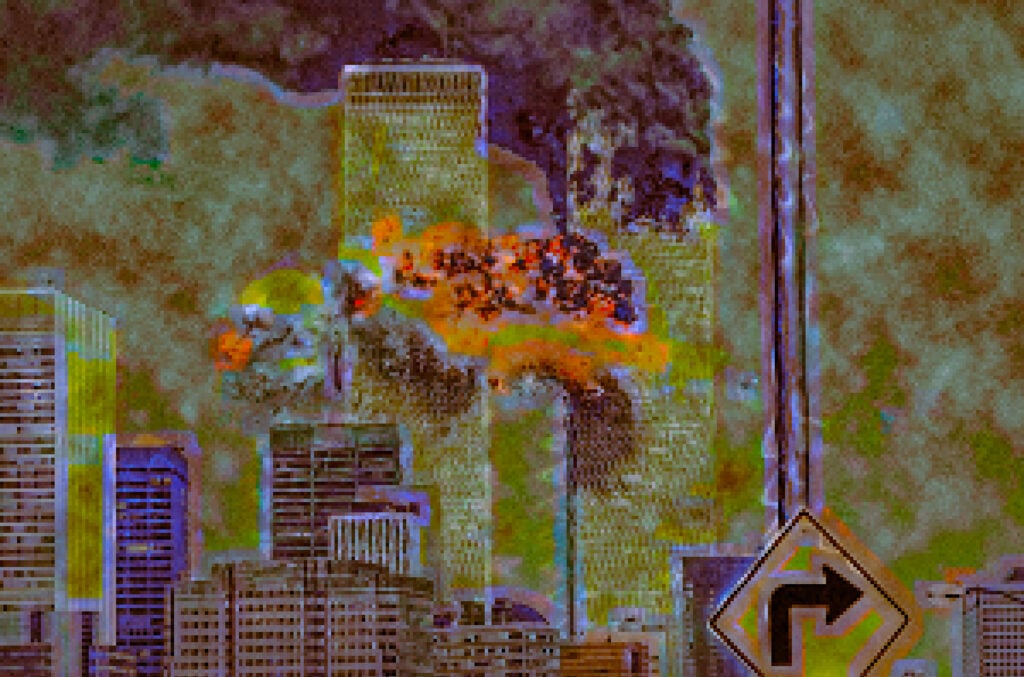
Jan Oberg: September 11 Twenty Years Later. What The US Should Have Done

September 11, 2021

Can be read together with this article which contains all the documentation

When people ask me what I think of “9/11” my answer has always been: “I have not done any research on it myself but to me the official explanation leaves too many questions unanswered, such as:

1 • Why was the discussion only about who did it and how did they do it but never about why did someone do this? If you look at the fact that the objects of the attacks were the centers of the US/world’s financial, military and political power – and not just a train station or some infrastructure – you’d have a diagnostic indicator.

2 • Why did no US Airforce plane take off from St. Andrews Air Base? The standing mission of it is to keep the air space over Washington clean and shoot down anything that should not be there within 2-3 minutes?

3 • Why did the World Trade Center Building 7 collapse the way it did, nothing hitting it?

4 • The hole in Pentagon looked more like caused by a missile than a huge passenger plane to me.

5 • Why, according to CBS, was members of Bin Laden’s family the first/only to be evacuated and take off from a US airport on the 12th (or later, sources vary)?

6 • Why was no employee fired in consequence of the fact that no defence measures were taken on 9/11?

7 • Why was 9/11 immediately defined as an act of war and NATO’s “musketeer” paragraph activated when obviously it wasn’t – no military persons were involved, no weapons except box cutters used and no international border trespassed?

8 • Why was a comprehensive motive analysis never applied: Who could have an interest in doing this terrible act when seen in the light of what later transpired: the attack on Afghanistan when no Afghan person was involved in 9/11 and that attack marking the beginning of the Global War On Terror, GWOT – now in its 20th year and no end in sight?

9. It’s hard to believe that a huge operation such as this attack could have been planned and the people trained for it without anybody in intelligence, surveillance and security intercepting it (or the system has been incredibly inefficient).

10 • Why are so many people who have questioned the official story accused of being conspiracy theorists, a clearly derogatory term that serves to stifle further discussion? *)

The consequences

1 • GWOT – history’s most stupid war.
As mentioned, we have had to witness the incredibly counterproductive Global War On Terror that has only increased terrorism by a factor of 40 at the price of the lives and unspeakable suffering of millions of people in one country after the other. (Go to the Cost of War Project at Brown University and consult the Global Terror Index). And the end of that self-defeating war is nowhere to be seen.

2 • Human rights and freedom – “fearology”
In the name of protecting citizens, formally democratic governments have clamped down on human rights and freedoms which they used to be proud of championing vis-a-vis so-called authoritarian governments. When people are getting sufficiently frightened that a terrorist lurks around any corner, they willingly accept giving up their rights and freedoms as a price for such “protection.”

3 • The surveillance society
We have been forced to now live in a surveillance society. Anybody who remembers how easy it was to board a passenger plane before 9/11 and can compare that with today’s departures knows what it means. In the name of fighting terrorism, we citizens are checked, tracked and censored in all kinds of ways – in real life and online. Where do we not have surveillance cameras now? The West has gone down an Orwellian path towards the authoritarian surveillance state as a response to less than 3000 innocent people being killed.

4 • The United States is declining and will fall as the Evil Empire
This trend is caused by an incredibly low level of intellectualism in its foreign policy circles. The idea of starting a war on and occupation of Afghanistan was politically, militarily and morally wrong from Day One – the predictable end result seen on August 15, 2021. And the idea of fighting terrorism by killing terrorists was as anti-intellectual and wrongheaded as it would be to try to eradicate a disease by killing those who suffer from it.
Sadly, NATO members, allies and friends of the United States mindlessly followed suit without asking a single question. Global leadership in the GWOT has been a manifest disaster. And the world sees it.

5 • Trust has disappeared
The immensely important trust between citizens, institutions and government has decreased as markedly as tragically. Each of us is treated as potential terrorists and the open society has closed – codes, pins, face recognition and God knows what types of documentation is now needed to process the simplest everyday transactions such as picking up a parcel at the post office. Before 9/11, it was enough that I was a known face, now personal relations and trust is zero – or rather has been squeezed out. Any stranger, asylum seeker or person in trouble could be a terrorist in disguise, right?
A particularly serious loss of trust is that related to our media. After September 11, 2001, media censorship and self-censorship has increased tremendously. You’re now supposed to frame or cancel, omit aspects and expertise and ask only politically correct questions.

6 • The term terrorism now covers only small-group terrorism, not state terrorism
Before 9/11, the discourse on nuclear weapons contained the concept of “balance of terror”. That was logical because one element in all definitions of terrorism is to harm or kill innocent civilians to achieve a political goal. Nuclear weapons cannot be used without killing thousands or millions of innocent civilians and, therefore, nuclear weapons are terrorist weapons – mega-terrorist weapons.
This means that each and every contemporary nuclear weapons state bases itself on and embraces the essential component of the philosophy of terrorism. However, that term has been disappeared and “terrorism” is now used exclusively about small groups such as Al Quaeda, ISIS, etc. State terrorism has thereby been disappeared too. And this does not relate only to nuclear weapons. When millions of people have been wounded, killed or had their living conditions deliberately destroyed as in Afghanistan, Iraq, Libya, Syria etc. because of US/NATO interventionism, it is evident that we can talk of state terrorist policies. So too when it comes to the long-term effects of tight economic sanctions. More people have been killed by 13 years of the sanctions on Iraq than by military violence.

There are surely other phenomena – all negative, destructive – that can be perceived as consequences of 9/11 and the response to it. But these will do here.

What should have been done?

The question hardly a handful have asked over 20 years! What should – and could – the US have done instead in the wake of the 9/11 attacks?

All you need to have is a little imagination: Imagine that the US had not had the military capacity to bomb and occupy thousands of kilometres away? Imagine a similar attack had taken place in Sweden, in proportion to the population size, it would mean 81 Swedes killed. What would a country like Sweden – or any other country lacking a global military capacity – have done in response to a 9/11?

1 • Asked the reasonable question: “Why us?” Researchers including experts on global affairs and terrorism would have been mobilised, domestically as well as globally (and of curse also analysed who did it and how).

2 • Asked the United Nations, the Security Council and various UN organisations to condemn the attack and deliberate on how all member states could help prevent attacks like this in the future.

3 • Such a country would have asked why its intelligence and defence system had not seen it coming and why those it cooperated with had conveyed no early warnings.

4 • It would have set up a state commission to investigate what happened and decided on what must be improved in its own policies, likely leading to expanding and upgrading its embassies, intelligence and police activity, border controls etc.

5 • It would have sought global cooperation about intelligence, early warning and research.

6 • If the perpetrators were identified, this country would seek cooperation with others in arresting them and bring them to justice – domestically or internationally. Depending on the circumstances, the arrest would likely be the only instance of the use of military force.

7 • Starting a global war on terror, in general, would never even have been discussed among its alternatives or policy choices.

Enough as an illustration! The US could have done something like that but didn’t.

In summary…

The US chose to handle 9/11 the militarist way it did because it could. Where boots go in, brains go out.

The degree to which the GWOT is out of proportion as a “response” to 9/11 – and thereby one serial violation of international law – is hardly ever mentioned.

There is of course no way you can meet such a challenge and succeed by employing a predominantly militarist approach and ignore every diagnosis. And there is no way you can avoid persistently to investigate causes if you want solutions: Why do some people become terrorists? – that is, try to understand terrorism as a social-psychological, cultural and political, albeit criminal, phonomenon.

The United States chose the overwhelmingly wrong “re-sponse” ignoring deliberately all the “Whys?” – including the possibility that 9/11 itself could be a re-action to US global policies. It chose not to understand where in a deeper social science sense terrorism may come from and chose to mis-use the terrible even – and the world’s sympathy – as a pretext to start a series of wars from which only one little but stunningly powerful group benefited namely the Military-Industrial-Media-Academic Complex, MIMAC, while the rest of h world have lost.

This MIMAC is, beyond doubt, the largest single reason the US is declining and will fall, sooner rather than later.

The US response to 9/11 has created much more harm to the US itself and the world than anything that happened – whatever it was – on 9/11. Millions have come to suffer and died as a revenge for less than 3000 indeed tragic deaths. But how much have we cared to lots of other 3000 people perishing here and the around the world?

But if there were terrorists who wanted to destroy the United States on 9/11, the US itself certainly became their best helper.

Why has the world stood by so mindlessly and tragically when the Bush Administration chose such a disastrous policy when other policies would have been more moral and effective?

Perhaps one answer is that they did not have the intellectual capacity and the needed civil courage to oppose the false, immoral but very Western dichotomisation he promoted: You are either with us – US – or with the terrorists?

They should have been with the world.

Can be read together with this article which contains all the documentation

*) After this article was published, I came across an article by Ray McGovern – 27 years at CIA – “Plenty of Intelligence To Prevent 9/11”. I could add that and its shocking facts as point 11 above.



Peace & future researcher + ‌Art Photographer

Related Posts

Below are TFF-related media mentions, comments, videos and social media posts published elsewhere but not on this homepage. We happen to catch and list only a fraction. Regarding video comments and debates, we recommend that you go to the TFF Video Channel on Substack where many of them are reproduced. Jan Oberg is a contributor to China Daily – 52 million daily clicks – and Global Times, CGTN and CCTV (the national television), China Investment, Xinhua News Agency and several others. Articles and videos on these media very often multiply into countless Chinese (and Western media) that re-post them from these main media. Thanks to The China Academy, his analyses, interviews and comments are frequently posted on YouTube channels such as Thinkers Forum and Wave Media. These videos are often re-posted on Bilibili (China’s YouTube), the China Content Center on TikTok, and on the Chinese edition of TikTok, Douyin.com. This means reaching hundreds of millions of viewers worldwide over a year. While there are too many to catch on all these...
Jan Oberg TFF director October 13, 2026 According to Alfred Nobel’s will, the Nobel Peace Prize shall be awarded: ”to the person who has done the most or best to advance fellowship among nations, the abolition or reduction of standing armies, and the establishment and promotion of peace congresses.” Further down, he also expresses how the prize for the “champions of peace” shall be decided: “that for champions of peace by a committee of five persons to be selected by the Norwegian Storting. Alfred Nobel’s will is remarkably short and clear. But few seem to have read it. Nobel did not say that the committee itself should consist of members of parliament. He entrusted the Storting with appointing five persons. In principle, it could have selected diplomats, mediators, peace researchers, conflict-resolution specialists, or other individuals with recognised expertise in matters of peace from around the world. Instead, the Storting gradually...
The Quest for Humane Survival Richard Falk Professor emeritus, Princeton UniversityTFF Associate since 1986October 12, 2026 After decades of teaching and writing about international law in academic frameworks that were not institutionally situated within law school environments—at Princeton and the University of California, Santa Barbara—I found myself most receptive to the TWAIL outlook. It has been especially illuminating in clarifying the extent to which international law evolved as a dialogical critique of Europe’s efforts to legitimize its colonial undertakings. In particular, TWAIL has exposed how international law has functioned to legalize the subjugation of Third World peoples, securing conditions for exploitative investment and trade relations, the coercive enforcement of public debts, and an ideology of cultural superiority. TWAIL’s exposure of these economic legacies of colonialism has influenced my understanding of the history and development of international law, broadly conceived, as an ideological project of the Western sub-system of the world...

Recent Articles

Below are TFF-related media mentions, comments, videos and social media posts published elsewhere but not on this homepage. We happen to catch and list only a fraction. Regarding video comments and debates, we recommend that you go to the TFF Video Channel on Substack where many of them are reproduced. Jan Oberg is a contributor to China Daily – 52 million daily clicks – and Global Times, CGTN and CCTV (the national television), China Investment, Xinhua News Agency and several others. Articles and videos on these media very often multiply into countless Chinese (and Western media) that re-post them from these main media. Thanks to The China Academy, his analyses, interviews and comments are frequently posted on YouTube channels such as Thinkers Forum and Wave Media. These videos are often re-posted on Bilibili (China’s YouTube), the China Content Center on TikTok, and on the Chinese edition of TikTok, Douyin.com. This means reaching hundreds of millions of viewers worldwide over a year. While there are too many to catch on all these...
Jan Oberg TFF director October 13, 2026 According to Alfred Nobel’s will, the Nobel Peace Prize shall be awarded: ”to the person who has done the most or best to advance fellowship among nations, the abolition or reduction of standing armies, and the establishment and promotion of peace congresses.” Further down, he also expresses how the prize for the “champions of peace” shall be decided: “that for champions of peace by a committee of five persons to be selected by the Norwegian Storting. Alfred Nobel’s will is remarkably short and clear. But few seem to have read it. Nobel did not say that the committee itself should consist of members of parliament. He entrusted the Storting with appointing five persons. In principle, it could have selected diplomats, mediators, peace researchers, conflict-resolution specialists, or other individuals with recognised expertise in matters of peace from around the world. Instead, the Storting gradually...
The Quest for Humane Survival Richard Falk Professor emeritus, Princeton UniversityTFF Associate since 1986October 12, 2026 After decades of teaching and writing about international law in academic frameworks that were not institutionally situated within law school environments—at Princeton and the University of California, Santa Barbara—I found myself most receptive to the TWAIL outlook. It has been especially illuminating in clarifying the extent to which international law evolved as a dialogical critique of Europe’s efforts to legitimize its colonial undertakings. In particular, TWAIL has exposed how international law has functioned to legalize the subjugation of Third World peoples, securing conditions for exploitative investment and trade relations, the coercive enforcement of public debts, and an ideology of cultural superiority. TWAIL’s exposure of these economic legacies of colonialism has influenced my understanding of the history and development of international law, broadly conceived, as an ideological project of the Western sub-system of the world...

TFF on Substack

Discover and subscribe to more peace materials on TFF Substack

Most Popular

Below are TFF-related media mentions, comments, videos and social media posts published elsewhere but not on this homepage. We happen to catch and list only a fraction. Regarding video comments and debates, we recommend that you go to the TFF Video Channel on Substack where many of them are reproduced. Jan Oberg is a contributor to China Daily – 52 million daily clicks – and Global Times, CGTN and CCTV (the national television), China Investment, Xinhua News Agency and several others. Articles and videos on these media very often multiply into countless Chinese (and Western media) that re-post them from these main media. Thanks to The China Academy, his analyses, interviews and comments are frequently posted on YouTube channels such as Thinkers Forum and Wave Media. These videos are often re-posted on Bilibili (China’s YouTube), the China Content Center on TikTok, and on the Chinese edition of TikTok, Douyin.com. This means reaching hundreds of millions of viewers worldwide over a year. While there are too many to catch on all these...
Jan Oberg TFF director October 13, 2026 According to Alfred Nobel’s will, the Nobel Peace Prize shall be awarded: ”to the person who has done the most or best to advance fellowship among nations, the abolition or reduction of standing armies, and the establishment and promotion of peace congresses.” Further down, he also expresses how the prize for the “champions of peace” shall be decided: “that for champions of peace by a committee of five persons to be selected by the Norwegian Storting. Alfred Nobel’s will is remarkably short and clear. But few seem to have read it. Nobel did not say that the committee itself should consist of members of parliament. He entrusted the Storting with appointing five persons. In principle, it could have selected diplomats, mediators, peace researchers, conflict-resolution specialists, or other individuals with recognised expertise in matters of peace from around the world. Instead, the Storting gradually...
The Quest for Humane Survival Richard Falk Professor emeritus, Princeton UniversityTFF Associate since 1986October 12, 2026 After decades of teaching and writing about international law in academic frameworks that were not institutionally situated within law school environments—at Princeton and the University of California, Santa Barbara—I found myself most receptive to the TWAIL outlook. It has been especially illuminating in clarifying the extent to which international law evolved as a dialogical critique of Europe’s efforts to legitimize its colonial undertakings. In particular, TWAIL has exposed how international law has functioned to legalize the subjugation of Third World peoples, securing conditions for exploitative investment and trade relations, the coercive enforcement of public debts, and an ideology of cultural superiority. TWAIL’s exposure of these economic legacies of colonialism has influenced my understanding of the history and development of international law, broadly conceived, as an ideological project of the Western sub-system of the world...
Read More
girl-5894831_1280
Below are TFF-related media mentions, comments, videos and social media posts published elsewhere but not on this homepage. We happen to catch and list only a fraction. Regarding video comments and debates, we recommend that you go to the TFF Video Channel on Substack where many of them are reproduced. Jan Oberg is a contributor to China Daily – 52 million daily clicks – and Global Times, CGTN and CCTV (the national television), China Investment, Xinhua News Agency and several others. Articles and videos on these media very often multiply into countless Chinese (and Western media) that re-post them from these main media. Thanks to The China Academy, his analyses, interviews and comments are frequently posted on YouTube channels such as Thinkers Forum and Wave Media. These videos are often re-posted on Bilibili (China’s YouTube), the China Content Center on TikTok, and on the Chinese edition of TikTok, Douyin.com. This means reaching hundreds of millions of viewers worldwide over a year. While there are too many to catch on all these...
Nobel-Prize-Plaque
Jan Oberg TFF director October 13, 2026 According to Alfred Nobel’s will, the Nobel Peace Prize shall be awarded: ”to the person who has done the most or best to advance fellowship among nations, the abolition or reduction of standing armies, and the establishment and promotion of peace congresses.” Further down, he also expresses how the prize for the “champions of peace” shall be decided: “that for champions of peace by a committee of five persons to be selected by the Norwegian Storting. Alfred Nobel’s will is remarkably short and clear. But few seem to have read it. Nobel did not say that the committee itself should consist of members of parliament. He entrusted the Storting with appointing five persons. In principle, it could have selected diplomats, mediators, peace researchers, conflict-resolution specialists, or other individuals with recognised expertise in matters of peace from around the world. Instead, the Storting gradually...
law-419057_1280
The Quest for Humane Survival Richard Falk Professor emeritus, Princeton UniversityTFF Associate since 1986October 12, 2026 After decades of teaching and writing about international law in academic frameworks that were not institutionally situated within law school environments—at Princeton and the University of California, Santa Barbara—I found myself most receptive to the TWAIL outlook. It has been especially illuminating in clarifying the extent to which international law evolved as a dialogical critique of Europe’s efforts to legitimize its colonial undertakings. In particular, TWAIL has exposed how international law has functioned to legalize the subjugation of Third World peoples, securing conditions for exploitative investment and trade relations, the coercive enforcement of public debts, and an ideology of cultural superiority. TWAIL’s exposure of these economic legacies of colonialism has influenced my understanding of the history and development of international law, broadly conceived, as an ideological project of the Western sub-system of the world...
images-2
Advocates of nuclear disarmament are regularly dismissed by the champions of nuclear deterrence as naïve and unrealistic, utopian or even irresponsible. Yet this ‘doctrine’ of deterrence, regarded by France as the ‘cornerstone’ of its national security, is based on quasi-religious beliefs, a theory that cannot be proven, risky gambles and fragile assumptions. So much so that one might legitimately ask which side the ‘Care Bears’ are on. Marc FinaudVice-President of Initiatives for Nuclear Disarmament (IDN) October 9, 2026 This article was originally published on Pressenza When it comes to these things being treated as religious concepts, look here. Idealists and realists It was Hubert Védrine, François Mitterrand’s former Foreign Minister, who repeatedly coined the phrase: ‘Europeans are a sort of Care Bears who don’t realise they’re living in Jurassic Park’. He applies this reference to the cartoon for well-behaved children not only to what he regards as weakness or idealism...
8824b09f-33a5-43f9-9fd0-550f28cda24d_1536x1024
What the West Borrowed from Asia and What It Left Behind Jan Krikke October 8, 2026 The article was originally published here In the late 1960s, the musical Hair announced that the Age of Aquarius was dawning. Its opening anthem promised a transformation of human consciousness: an era of peace, harmony and understanding. Half a century later, a familiar echo of that promise is a meditation app offered by your employer. You can find it in the same list of benefits as the pension plan and the gym discount. How did a spiritual revolution become an employee benefit? The answer lies in the history of the movement known as New Age: where it came from, what it borrowed from Asia, and why the meaning of what it borrowed changed in the process. Two definitions will help. New Age is a loose label for a wide range of spiritual practices and...
Screenshot 2026-10-04 210142
Small and different + among the 10% most active + 9,000 texts + 150 Associates + 60 000 a day — and a stubborn belief that peace is smarter and must be secured by peaceful means. In 2026, the Transnational Foundation for Peace and Future Research (TFF) turns 40. On Monday, October 5, 2026, a new TFF homepage will go live — a new gateway to more than 9,000 articles, analyses, research papers and other contributions produced over four decades of independent peace research. But this is not simply a new website. For four decades, TFF has worked from a simple conviction: peace is smarter than militarism and can be brought about by peaceful means. This is not merely an aspiration. It is the principle expressed in the UN Charter and the Gandhian tradition that has guided our work from the beginning. TFF is a research-based, independent and people-financed foundation....



