
Iran, the EU and what we should have learned by now*

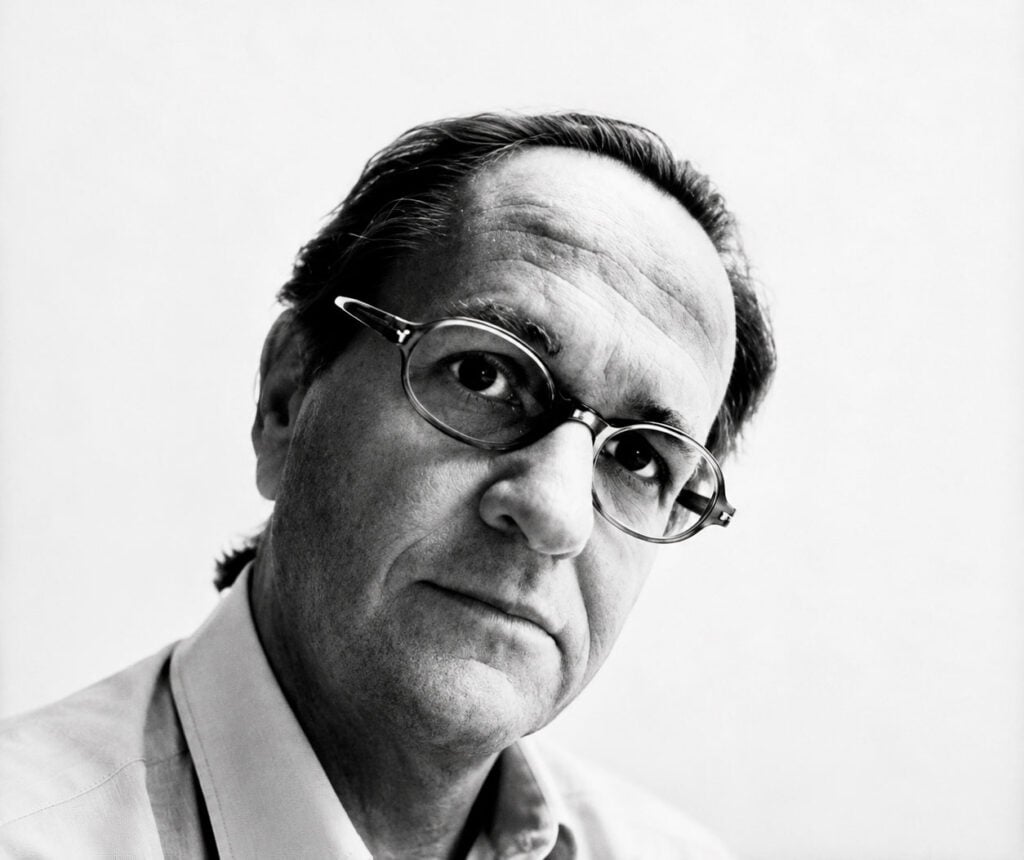
/10/janoberg.jpg”>

On Monday the 23rd of January 2012, the EU’s 27 members unanimously decided to stop their oil import from Iran on July 1 this year. That sort of policy is considered benign in comparison with warfare. It won’t be when seen in the long run.

Sanctions usually have the opposite consequences of those “intended”. Secondly, as we know from the Iraq case, they are part and parcel of a build-up to war and will have, in the longer run, devastating, cruel consequences for innocent civilians whose lives are already hard.

How come EU leaders seem not to see the counterproductivity of their decisions? Do they not know that they contribute to a build up to a war that will be much more catastrophic than that on Iraq both for the region, for themselves and for the economy they otherwise try to keep from even deeper crisis?

Virtually everyone speaking on behalf of their country or the EU as a whole point out the risks of escalating the conflict; it may eventually lead to a spiral, one or more counter measures by Iran and a tit-for-tat dynamics that could – could – go out of hand. The next they therefore say, as if to soothe their own fears, is that war must be avoided and that, rather, sanctions and other types of pressures serve only one purpose: to get the Iranians to the negotiation table.

Don’t they know the basics of psychology?

This is pathetic and militates against everything one knows about psychology.
There is no research that proves that my opponent becomes more co-operative if I humiliate him, threaten to destroy him, makes life intolerable for him or speak bad about him all the time. Either the leaders of the EU don’t know much about psychology, Iranians and conflict resolution methods or they are perfectly aware and operate on the assumption, or goal, that there shall be war with Iran sooner or later. It could be that they adapt to what is whispered in their ears by Washington or accepting implicit threats from Tel Aviv.

The latter is not unlikely. In the case of the US, it is well documented that, when it comes to Middle Eastern affairs, it is the tail (Israel and it US-based lobby) that wags the dog (the US). There are co-operation agreements between Israel and the EU too giving Israel, a non-member substantial influence on EU foreign policy.

In summary, whatever drives EU leaders, it simply isn’t intelligent to escalate an already dangerous conflict further and – in the longer run – probably suffocate some 70 million people and maintain piously that they certainly don’t want war.

Empathy as a guardian against self-defeating policies

In addition, how do they think the Iranians will perceive this move by the EU? The important psychological ability to empathize, to put yourself into the shoes of the other side, is almost totally lacking in international affairs. Without it, decision-makers will repeatedly take steps that are not only making everything worse for the ‘other’ side but will also prove counterproductive in terms of their own best interests. A US/Israeli/NATO war on Iran will not be in anybody’s interest except the 1% here and there who make up the MIMAC – the Military-Industrial-Media-Academic Complex (that the Occupy movement still has not addressed).

What’s wrong with EU foreign policy?

A final point: The Lisbon Treaty on which the EU is operating clearly states that it is the goal to have the Union speak with one voice in foreign and security political matters. That in itself is a recipe for going for the lowest common denominator, for reducing diversity in thinking and approaches, for uniformity in policies (all of which we don’t need in this world) and – worse: That smaller countries stop having their own policies because foreign policies becomes reduced to one thing, namely positioning yourself vis-à-vis the bigger ones such as Germany and France. Sweden is a good example; it used to be an inventive, dynamic and globally-oriented player. That was about 25 years ago now.

But it is difficult to get 27 countries with 500 million people on track. So most of the time the EU is split. It has been on most important foreign policy matters such as Yugoslavia, Iraq and Libya. At one crucial moment in the history of contemporary Europe, in December 1991, it made a decision and spoke with one voice: it recognized Slovenia and Croatia prematurely and against the criteria for recognizing new states. Worse, it didn’t have the slightest idea of what to do with, or what could happen in, the rest of Yugoslavia. Predictably – several connoisseurs around the world and all TFF experts, including myself predicted it at the time – that decision made the war in Bosnia-Herzegovina unavoidable.

So unanimous EU decisions can be dangerous and release war impulses. Let’s remember this EU decision if, in the future, the West attacks Iran.

Lessons to be learned – once again

There are some lessons the international “community” should have learned by now:

1) Sanctions will, over time, become a weapon of mass destruction.

2) Sanctions and foreign threats of war will not make the object more co-operative.

3) On the contrary, that sort of thing unites citizens behind their leaders even if they don’t like them because they like foreign war-mongers threatening their very existence even less.

4) The world needs conflict-resolution capacity, knowledge and training. Those who run these matters drive their policies the way car drivers would who have don’t have a driving license. Accidents will happen and people will be hit and die.

Mistakes due to lack of competence or the making of cruel politics?

All this said, perhaps it is not a matter of accident? I have a nasty mind when it comes to power politics and with a change of lenses, it could be about something else. Could it be about “orientalism” in a new key: That rapidly rising Asia and China in particular begins not in the East but already in the Middle East?

Could it be that Iran – like Afghanistan and Iraq – is only the stage and we miss the much bigger theatre and the drama unfolding when that theatre takes fire:

a) The struggle for control of the last drops of oil;

b) The ongoing Cold War with Russia;

c) The competition for power positions in the emerging post-US Empire world and

d) A West clinging at the end of its era as world leader to the only thing it is really good at compared with its former glory: militarism?

Whatever it is, I do not for a moment believe that the build up to war against Iran has to do mainly with its potential acquisition of nuclear weapons or being a threat to anyone – if we leave it alone. Iran has not been at war outside its border for more than 200 years. NATO members have been outside their most of that time.

And if it were about nuclear proliferation, be sure that the present Western war-mongering only makes it more likely that Iran will feel intimidated and threatened to such an extent that it decides to go nuclear. The MIMAC, like anybody else in power, is dependent on certain resources. The 1% of the world that belongs to it needs images – whether of reality or invented – of enemies and PR about their own noble motives.

As Pogo allegedly once said: I have seen the enemy and he is – us.

Recommended reading

Antoaneta Becker
China looks both ways on Iran’s oil

Michael Klare
No exit in the Persian Gulf?

Blog posts here – search “Iran” in the right-hand column

* Note
My next post here will consist of a series of pro-peace proposals: What can be done to avoid war with Iran now and build good relations in the future?
As I said above, I do not believe that this issue is really about nuclear weapons but I should anyhow offer some constructive ideas within that framework. Firstly, that is good if it turns out that I am wrong. Secondly, one must be able to speak within the main(stream) discourse to dialogue with those who believe it is about nuclear weapons. Then, having done so, there is a chance to open their minds for interesting other dimensions, including that they themselves are taken for a ride by propaganda and its presumably noble motives only.
In addition, I hope to illustrate what it means to be pro-peace – solution-oriented without dropping diagnosis and prognosis, factual and critical without ignoring constructive thinking.
I still refuse to be repressed by the TINA syndrome seemingly gripping everyone today: There Is No Alternative. Of course there are alternatives to war!


Peace & future researcher + ‌Art Photographer

Related Posts

The agreement is catastrophic both because of what it says and what it doesn’t mention. It reduces further the major asset of security policies: Freedom of action. Jan Oberg TFF director September 25, 2026 A couple of hours before the agreement was signed on September 22, 2026, I published the following 13 hypotheses about what it would most likely contain on TFF Substack (in English). I was wrong on only the first point. Contrary to what Trump had written on his Truth Social platform, it does not appear to come into force immediately. In fact, it turned out to be worse than even I had anticipated. After these hypotheses now come a number of reflections in light of what the agreement actually contains, and does not contain, as well as the way in which it has generally been presented by major media outlets and by the public-service broadcaster DR. My...
Below are TFF-related media mentions, comments, videos and social media posts published elsewhere but not on this homepage. We happen to catch and list only a fraction. Regarding video comments and debates, we recommend that you go to the TFF Video Channel on Substack where many of them are reproduced. Jan Oberg is a contributor to China Daily – 52 million daily clicks – and Global Times, CGTN and CCTV (the national television), China Investment, Xinhua News Agency and several others. Articles and videos on these media very often multiply into countless Chinese (and Western media) that re-post them from these main media. Thanks to The China Academy, his analyses, interviews and comments are frequently posted on YouTube channels such as Thinkers Forum and Wave Media. These videos are often re-posted on Bilibili (China’s YouTube), the China Content Center on TikTok, and on the Chinese edition of TikTok, Douyin.com. This means reaching hundreds of millions of viewers worldwide over a year. While there are too many to catch on all these...
Jan Oberg May 15, 2026 Go to this Fox News page and scroll the whole way down: President Donald Trump tells the world that his meeting with President Xi Jinping yielded a lot of very concrete political and economic results – of course, only where the Chinese side, according to him, agreed with him. He does not mention the Taiwan issue, but Secretary of State, Marco Rubio, says that it did not feature prominently in their talks and that the US policy on Taiwan has not changed. Then go to China Daily – or Global Times – and you will see that for the Chinese it is framework, principles, structure of cooperation etc. that matters – all embedded in the overall idea of “constructive bilateral relationship of strategic stability.” Nowhere is any concrete agreement or deal – all that Trump refers to – mentioned. At the general level, this gives you insights into the very different social...

Recent Articles

Tony Robinson October 4, 2026 Violence is easy to recognise when someone is being beaten, shot or killed. It becomes more difficult when nobody is holding a weapon. Poverty, discrimination, exploitation and repression can restrict a human life just as effectively, although they do so in very different ways and with very different consequences. Simply adding more categories to an ever-growing list of forms of violence does not really solve the problem. The more interesting question is what all these different situations have in common and why it makes sense to describe them using the same word. Human beings do not simply react to what happens around them. They remember the past, imagine things that do not yet exist, make plans and undertake projects. Workers organise because they imagine different working conditions; people migrate because they imagine another life somewhere else; social movements emerge because people refuse to accept the...
It’s a matter of principles, courage, vision and pulling together – while the militarist world is falling apart… Peter Langille October 3, 2026 “Here, then, is the problem which we present to you, stark and dreadful and inescapable: Shall we put an end to the human race; or shall mankind renounce war?”The Bertrand Russell—Albert Einstein Manifesto, July 9, 1955 ⁕ The forecast for what’s ahead is worrisome. The sharp rise in armed conflicts over the past three years is adding to what was already the highest level in over seventy years. Genocides, which should be prevented are supported. A shared climate emergency that jeopardises survival is ignored. Diverse polls now suggest that people are war-weary, worried and interested in a more effective United Nations. And, there are viable policy options for a more secure world! Yet governments are doubling-down, betting on more war and investing heavily. If current trends persist,...
Johan Galtung 1930-2024October 2015 Published here on October 3, 2026 Let us focus on Civilization for conflict analysis and remedies. Major forms of disorder use violence; war is state organized violence. The most belligerent states are the United States of America and Israel, both with civilization roots. National Evangelism, the US Protestant Christian civilization– more national than evangelical–justifies US warfare as exceptionalism of a people chosen by God, with a manifest destiny to run the world. Orthodox Judaism justifies Israeli warfare to conquer and expand from Nile to Euphrates as a religious right and duty to the Eternal One. The third most belligerent country, the UK, no longer believes it is God-chosen but chosen by the USA; not quite the same but something. But the root cause of global disorder lies in the Occident–with Islam–seeing itself as the single, universal civilization valid for all at all times, all others being...

TFF on Substack

Discover and subscribe to more peace materials on TFF Substack

Most Popular

Tony Robinson October 4, 2026 Violence is easy to recognise when someone is being beaten, shot or killed. It becomes more difficult when nobody is holding a weapon. Poverty, discrimination, exploitation and repression can restrict a human life just as effectively, although they do so in very different ways and with very different consequences. Simply adding more categories to an ever-growing list of forms of violence does not really solve the problem. The more interesting question is what all these different situations have in common and why it makes sense to describe them using the same word. Human beings do not simply react to what happens around them. They remember the past, imagine things that do not yet exist, make plans and undertake projects. Workers organise because they imagine different working conditions; people migrate because they imagine another life somewhere else; social movements emerge because people refuse to accept the...
It’s a matter of principles, courage, vision and pulling together – while the militarist world is falling apart… Peter Langille October 3, 2026 “Here, then, is the problem which we present to you, stark and dreadful and inescapable: Shall we put an end to the human race; or shall mankind renounce war?”The Bertrand Russell—Albert Einstein Manifesto, July 9, 1955 ⁕ The forecast for what’s ahead is worrisome. The sharp rise in armed conflicts over the past three years is adding to what was already the highest level in over seventy years. Genocides, which should be prevented are supported. A shared climate emergency that jeopardises survival is ignored. Diverse polls now suggest that people are war-weary, worried and interested in a more effective United Nations. And, there are viable policy options for a more secure world! Yet governments are doubling-down, betting on more war and investing heavily. If current trends persist,...
Johan Galtung 1930-2024October 2015 Published here on October 3, 2026 Let us focus on Civilization for conflict analysis and remedies. Major forms of disorder use violence; war is state organized violence. The most belligerent states are the United States of America and Israel, both with civilization roots. National Evangelism, the US Protestant Christian civilization– more national than evangelical–justifies US warfare as exceptionalism of a people chosen by God, with a manifest destiny to run the world. Orthodox Judaism justifies Israeli warfare to conquer and expand from Nile to Euphrates as a religious right and duty to the Eternal One. The third most belligerent country, the UK, no longer believes it is God-chosen but chosen by the USA; not quite the same but something. But the root cause of global disorder lies in the Occident–with Islam–seeing itself as the single, universal civilization valid for all at all times, all others being...
Read More
Living-Peace-Sign-Budapest-copy
Tony Robinson October 4, 2026 Violence is easy to recognise when someone is being beaten, shot or killed. It becomes more difficult when nobody is holding a weapon. Poverty, discrimination, exploitation and repression can restrict a human life just as effectively, although they do so in very different ways and with very different consequences. Simply adding more categories to an ever-growing list of forms of violence does not really solve the problem. The more interesting question is what all these different situations have in common and why it makes sense to describe them using the same word. Human beings do not simply react to what happens around them. They remember the past, imagine things that do not yet exist, make plans and undertake projects. Workers organise because they imagine different working conditions; people migrate because they imagine another life somewhere else; social movements emerge because people refuse to accept the...
b54a1f10-8c65-4f0b-9dd5-4abc0a7d04cc_2659x2659
It’s a matter of principles, courage, vision and pulling together – while the militarist world is falling apart… Peter Langille October 3, 2026 “Here, then, is the problem which we present to you, stark and dreadful and inescapable: Shall we put an end to the human race; or shall mankind renounce war?”The Bertrand Russell—Albert Einstein Manifesto, July 9, 1955 ⁕ The forecast for what’s ahead is worrisome. The sharp rise in armed conflicts over the past three years is adding to what was already the highest level in over seventy years. Genocides, which should be prevented are supported. A shared climate emergency that jeopardises survival is ignored. Diverse polls now suggest that people are war-weary, worried and interested in a more effective United Nations. And, there are viable policy options for a more secure world! Yet governments are doubling-down, betting on more war and investing heavily. If current trends persist,...
010
Johan Galtung 1930-2024October 2015 Published here on October 3, 2026 Let us focus on Civilization for conflict analysis and remedies. Major forms of disorder use violence; war is state organized violence. The most belligerent states are the United States of America and Israel, both with civilization roots. National Evangelism, the US Protestant Christian civilization– more national than evangelical–justifies US warfare as exceptionalism of a people chosen by God, with a manifest destiny to run the world. Orthodox Judaism justifies Israeli warfare to conquer and expand from Nile to Euphrates as a religious right and duty to the Eternal One. The third most belligerent country, the UK, no longer believes it is God-chosen but chosen by the USA; not quite the same but something. But the root cause of global disorder lies in the Occident–with Islam–seeing itself as the single, universal civilization valid for all at all times, all others being...
Screenshot 2026-10-02 011738
Jan ObergPhD, director, The Transnational Foundation for Peace and Future Research, TFFLund, Sweden October 2, 2026 This is my full original manuscript. The Chinese Academy of Social Science, CASS, makes two publications out if it. 1. China’s Five-year plan emphasized the capabilities of basic research and original innovation. It is regarded as the goal of the future social development, which, as required, should be significantly enhanced. Can you comment on the importance of original innovation in research and academic study? I believe it is easier to define “original innovation” in the natural sciences than in social sciences. The breaking points of what constitutes something new, or innovative, are not quite as sharp in the latter. But in both fields it is about opening up something that was closed, unseen, unexplored before – making manifest what was earlier latent. Innovations come in many forms and shapes – naming something that was not...
arctic-circle-map
The agreement is catastrophic both because of what it says and what it doesn’t mention. It reduces further the major asset of security policies: Freedom of action. Jan Oberg TFF director September 25, 2026 A couple of hours before the agreement was signed on September 22, 2026, I published the following 13 hypotheses about what it would most likely contain on TFF Substack (in English). I was wrong on only the first point. Contrary to what Trump had written on his Truth Social platform, it does not appear to come into force immediately. In fact, it turned out to be worse than even I had anticipated. After these hypotheses now come a number of reflections in light of what the agreement actually contains, and does not contain, as well as the way in which it has generally been presented by major media outlets and by the public-service broadcaster DR. My...
girl-5894831_1280
Below are TFF-related media mentions, comments, videos and social media posts published elsewhere but not on this homepage. We happen to catch and list only a fraction. Regarding video comments and debates, we recommend that you go to the TFF Video Channel on Substack where many of them are reproduced. Jan Oberg is a contributor to China Daily – 52 million daily clicks – and Global Times, CGTN and CCTV (the national television), China Investment, Xinhua News Agency and several others. Articles and videos on these media very often multiply into countless Chinese (and Western media) that re-post them from these main media. Thanks to The China Academy, his analyses, interviews and comments are frequently posted on YouTube channels such as Thinkers Forum and Wave Media. These videos are often re-posted on Bilibili (China’s YouTube), the China Content Center on TikTok, and on the Chinese edition of TikTok, Douyin.com. This means reaching hundreds of millions of viewers worldwide over a year. While there are too many to catch on all these...