I Gandhis fotspår 5 – I Birla House hos Gandhi

Affärsdynastin Birla’s palatsliknande vita hus ligger några kilometer från turisternas Connaught Place, i det grönaste området av Delhi. Här levde Gandhi sina 144 sista dramatiska dagar. Byggnadens museum speglar hans liv och död.

Utomhus kan besökaren följa hans sista vandring. Från dörren i det enkla vita rum med glasveranda där han levde finns cementavtryck av fötter genom parken till platsen där han mördades. Dit går man utan skor, i stillhet.
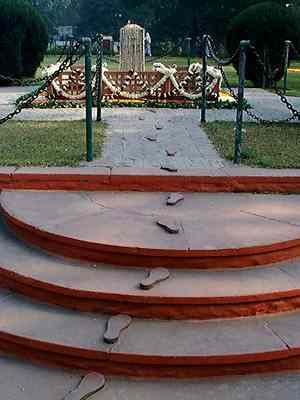
Gandhis sista steg – Birla House, Delhi – Photo Jan Öberg, © TFF 2001

I parken finns enorma gamla träd, ett rikt fågelliv, porlande vatten, ett hav av blommor, stora gräsmattor och skulpturer och en murrelief som speglar Indiens historia och Gandhis gärning.

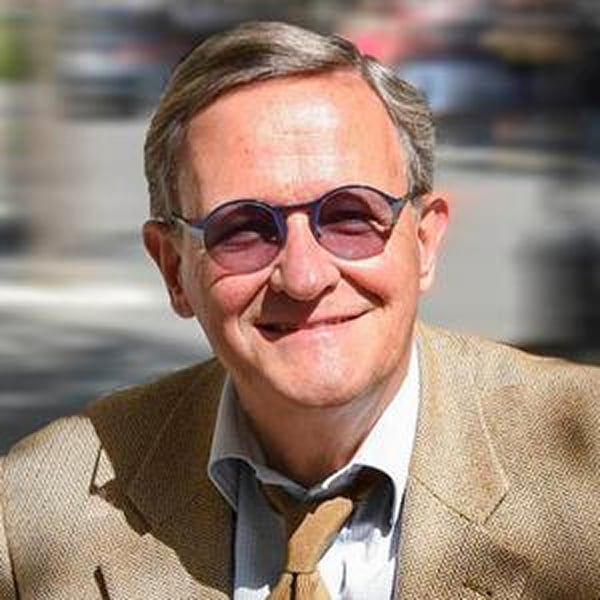
Birla House eller “Gandhi Smriti” är en oas kärleksfullt driven i Gandhis anda. Dess direktör, dr Neelakanta Radhakrishnan, är en av Indiens få riktiga Gandhianer. Som direktör är han regeringsämbetsman, men han är dessutom forskare, aktivist, skribent och ledare för den japanska lekmanna-buddhistiska fredsorganisationen Soka Gakkai. Med sin hustru leder han ett institut för ickevåld i Kerala. Han har skrivit handböcker om Satyagraha, om ickevåldsaktioner och ickevåldskämpar runt om i världen. Han har varma ögon, är lärd, ödmjuk, politisk, humoristisk. Denna khadi-klädda nomad är alltid på resa, alltid på väg, trots svag hälsa.
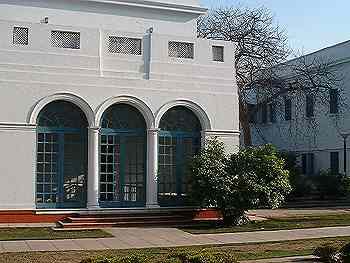
Birla House, Gandhis rum bakom de blåa fönstren – här levde han och här
dog han efter skottdramat i trädgården
– Photo Jan Öberg, © TFF 2001

Under sina år som chef har han kartlagt Gandhis sista 144 dagar timme för timme, vilket ingen kommit på förut.

– Jag tillhör inte mainstream-Gandhianerna i landet vars olika sekter bevakar sin egen “enda sanna” tolkning av Gandhi och gärna bekämpar andras. En människa som var så medveten om sina egna fel och ständigt experimenterade och motsade sig själv, hur kan han monopoliseras av någon? Eliten i det här landet respekterar mig säkert som chef för Birla. Statsministern är faktisk min styrelseordförande, men eftersom jag tar Gandhi på allvar och propagerar hans tankar varhelst jag kan, är jag nog lite farlig, säger han och skrattar.

– Kongresspartiet har bara en vulgärtolkning av Gandhi. Kom ihåg att Gandhis sista skrift handlade om Kongresspartiets upplösning. Han visste att korruptionen skulle sprida sig om man gav en liten grupp hela makten att styra Indien. Han ville ha ett slags Peoples’ Front. De som kom efter honom arbetade visserligen i hans anda, men de var egentligen bara anti allting. De glömde Gandhis konstruktiva program. Så det blev aldrig en ‘buffert’ eller ett samhälleligt dialogforum mellan eliten och folket i Indien.”
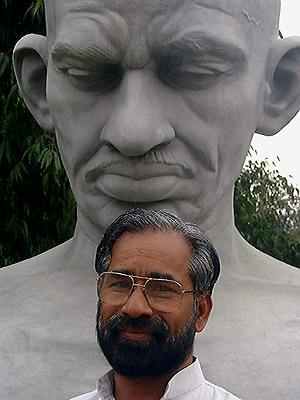
Neelakanta Radhaskrishnan, Delhi 2001 – Photo Jan Öberg, © TFF 2001

Neelakanta Radhakrishnan fortsätter:

– Indien hade körts i botten vid självständigheten 1947. Vi borde ha fattat att detta var början på Indiens egna problem. Nehru var en visionär. Han ville sammanföra rysk-inspirerad socialism med inslag från Indiens egen kultur och verklighet samt med gandhiansk filosofi. Egentligen var det strålande, riktigt under den tidens omständigheter.

– Idag, däremot, är allting underställt MARKNADEN. Det enda positiva som hänt är panchayat-systemet införd i vissa delstater 1995. Det innebär att alla byar har sina egna medborgarråd, som också samlas på kommun- och högra nivåer. En tredjedel ska vara kvinnor. Detta är helt i Gandhis anda: behovsorienterad gräsrotsdemokrati, bygg Indien underifrån, på dess 700.000 byar! Men hur länge kommer det att fungera i ett land med så mycket korruption och korporativism på toppen?

– Men, frågar jag, vad tror du om globaliseringen?

– Jag ser filosofiskt på den. Under tusentals år har Indien fått besök, eller rättare blivit invaderat, av greker, hunner, araber, mongoler, portugiser, fransmän, andra kristna, islam, av britterna. De flesta andra länder hade väl låtit sig förtryckas av teknologin och militärmakten. Men inte Indien, det är som en klippa i världen. Vi har en kulturell mångfald som tillåter oss att absorbera en viss penetration och vi går aldrig omkull. Därför är dagens globalisering ingen större utmaning för Indien som helhet, men visst finns det faror. Men kom ihåg: Gandhi själv var en produkt av globalisering. Han utbildades i London, levde i Sydafrika och inspirerades av alla möjliga religioner och av västerlänningar som Jesus, Tolstoj, Thoreau, Ruskin.
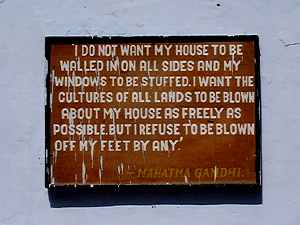
Skylt på väggen i Sabarmati ashramet, Ahmedabad 2001 – Photo Jan Öberg, © TFF 2001

Jag kommer att tänka på Gandhis formulering om just detta, skrivit på väggen av hans ashram i Ahmedabad:

“Mitt hus ska inte ha tjocka murar eller igenbommade fönster. Jag vill att alla länders kulturer skall blåsa runt och igenom mitt öppna hus så fritt de vill. Men ingen enskild ska få blåsa mig omkull.”

Enhet i mångfald är ett indiskt ideal. Gandhis formuleringen är mitt i prick i dagens invandrardebatt. Jag skulle önska att den var uppslagen överallt i det forna Jugoslavien där EU och NATO blåser omkull alla de kan.

Jag talar om för Radhakrishnan att jag ska resa i Indien i Gandhis fotspår. Han blir riktigt glad.

– När Du kommer tillbaka vill jag inbjuda dig att bo några dagar i gästrummet på Birla House. Kom och gå, sitt där tidigt på morgonen, sent på natten. Du kommer att känna att det finns en alldeles speciell atmosfär här.

Sagt och gjort. Han hade helt rätt. Jag tänker på mina tre dagar och på nätterna i månskenet där med stor tacksamhet. Nära Gandhis liv och död.
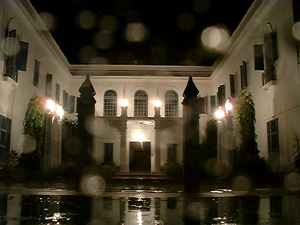
Birla House regnig natt, Delhi – Photo Jan Öberg, © TFF 2001
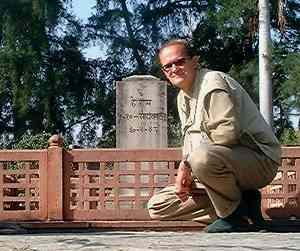
Författaren vid Gandhis minnesplats i Birla Garden – Photo Jan Öberg, © TFF 2001


Peace & future researcher + ‌Art Photographer

Related Posts

LONDON – So far so good, at least on the wider level. While internally Iraq seems on the edge of chaos, the much heralded clash of civilizations between the Muslim and Judaeo-Christian worlds has yet to become apparent. We have anger and despair aplenty in the Arab and Muslim worlds. But very little rushing to the standard and there was no great pilgrimage of warriors to join the fight, as happened when the Soviet Union invaded Afghanistan twenty years ago, and then, having driven the Red Army out, were left to ferment in that mountainous redoubt. With the armaments supplied by the CIA the mujahidin were transformed into Al Qaeda that became, for a relatively brief moment as these things go, ‘the greatest threat to the homeland that America has ever known.’ Nevertheless a ‘Cold War’ between much of the Muslim world and the West is certainly in full swing. Winston...
The Challenge of Nuclear Weaponsin the Twenty-first CenturyA Path Forward The peoples and governments of the world face an urgent challenge relating to weaponry of mass destruction and particularly to nuclear weaponry.  At the crossroads of technology, terrorism, geopolitical ambition, and policies of preemption are new and potent dangers for humanity. Despite ending the nuclear standoff of the Cold War era, nuclear weaponry is again menacing the peoples of the world with catastrophic possibilities.  We recognize the need for any government to pursue its security interests in accordance with international law; and further, we recognize that distinctive threats to these interests now exist as a result of an active international terrorist network having declared war on the United States and its allies. Nonetheless, we reject the assessment of the current US administration that upgrading a reliance on nuclear weapons is in any sense justified as a response. We find it...
By Karin Wegestal MP, the Social Democratic Partyon behalf of the Swedish Committee for Solidarity with the Yugoslav People During the last decade, the Federal Republic of Yugoslavia has received more than 500,000 refugees from Croatia and Bosnia, and another 300,000 internally displaced persons, mainly from the province Kosovo and Metohia. For a country with about ten million inhabitants, such an influx of homeless people is obviously a very heavy burden – even under peaceful conditions. But in addition to that, the Federal Republic of Yugoslavia has been the subject to sanctions from the western powers for close to ten years and its infrastructure was badly hurt through Nato’s intense bombardment during 78 days in 1999. The result of all this is that Yugoslavia, once the most developed industrial country in Eastern Europe, is today the poorest country in Europe. In Serbia excluding Kosovo, with about ten million inhabitants and...

Recent Articles

Tony Robinson October 4, 2026 Violence is easy to recognise when someone is being beaten, shot or killed. It becomes more difficult when nobody is holding a weapon. Poverty, discrimination, exploitation and repression can restrict a human life just as effectively, although they do so in very different ways and with very different consequences. Simply adding more categories to an ever-growing list of forms of violence does not really solve the problem. The more interesting question is what all these different situations have in common and why it makes sense to describe them using the same word. Human beings do not simply react to what happens around them. They remember the past, imagine things that do not yet exist, make plans and undertake projects. Workers organise because they imagine different working conditions; people migrate because they imagine another life somewhere else; social movements emerge because people refuse to accept the...
It’s a matter of principles, courage, vision and pulling together – while the militarist world is falling apart… Peter Langille October 3, 2026 “Here, then, is the problem which we present to you, stark and dreadful and inescapable: Shall we put an end to the human race; or shall mankind renounce war?”The Bertrand Russell—Albert Einstein Manifesto, July 9, 1955 ⁕ The forecast for what’s ahead is worrisome. The sharp rise in armed conflicts over the past three years is adding to what was already the highest level in over seventy years. Genocides, which should be prevented are supported. A shared climate emergency that jeopardises survival is ignored. Diverse polls now suggest that people are war-weary, worried and interested in a more effective United Nations. And, there are viable policy options for a more secure world! Yet governments are doubling-down, betting on more war and investing heavily. If current trends persist,...
Johan Galtung 1930-2024October 2015 Published here on October 3, 2026 Let us focus on Civilization for conflict analysis and remedies. Major forms of disorder use violence; war is state organized violence. The most belligerent states are the United States of America and Israel, both with civilization roots. National Evangelism, the US Protestant Christian civilization– more national than evangelical–justifies US warfare as exceptionalism of a people chosen by God, with a manifest destiny to run the world. Orthodox Judaism justifies Israeli warfare to conquer and expand from Nile to Euphrates as a religious right and duty to the Eternal One. The third most belligerent country, the UK, no longer believes it is God-chosen but chosen by the USA; not quite the same but something. But the root cause of global disorder lies in the Occident–with Islam–seeing itself as the single, universal civilization valid for all at all times, all others being...

TFF on Substack

Discover and subscribe to more peace materials on TFF Substack

Most Popular

Tony Robinson October 4, 2026 Violence is easy to recognise when someone is being beaten, shot or killed. It becomes more difficult when nobody is holding a weapon. Poverty, discrimination, exploitation and repression can restrict a human life just as effectively, although they do so in very different ways and with very different consequences. Simply adding more categories to an ever-growing list of forms of violence does not really solve the problem. The more interesting question is what all these different situations have in common and why it makes sense to describe them using the same word. Human beings do not simply react to what happens around them. They remember the past, imagine things that do not yet exist, make plans and undertake projects. Workers organise because they imagine different working conditions; people migrate because they imagine another life somewhere else; social movements emerge because people refuse to accept the...
It’s a matter of principles, courage, vision and pulling together – while the militarist world is falling apart… Peter Langille October 3, 2026 “Here, then, is the problem which we present to you, stark and dreadful and inescapable: Shall we put an end to the human race; or shall mankind renounce war?”The Bertrand Russell—Albert Einstein Manifesto, July 9, 1955 ⁕ The forecast for what’s ahead is worrisome. The sharp rise in armed conflicts over the past three years is adding to what was already the highest level in over seventy years. Genocides, which should be prevented are supported. A shared climate emergency that jeopardises survival is ignored. Diverse polls now suggest that people are war-weary, worried and interested in a more effective United Nations. And, there are viable policy options for a more secure world! Yet governments are doubling-down, betting on more war and investing heavily. If current trends persist,...
Johan Galtung 1930-2024October 2015 Published here on October 3, 2026 Let us focus on Civilization for conflict analysis and remedies. Major forms of disorder use violence; war is state organized violence. The most belligerent states are the United States of America and Israel, both with civilization roots. National Evangelism, the US Protestant Christian civilization– more national than evangelical–justifies US warfare as exceptionalism of a people chosen by God, with a manifest destiny to run the world. Orthodox Judaism justifies Israeli warfare to conquer and expand from Nile to Euphrates as a religious right and duty to the Eternal One. The third most belligerent country, the UK, no longer believes it is God-chosen but chosen by the USA; not quite the same but something. But the root cause of global disorder lies in the Occident–with Islam–seeing itself as the single, universal civilization valid for all at all times, all others being...
Read More
Living-Peace-Sign-Budapest-copy
Tony Robinson October 4, 2026 Violence is easy to recognise when someone is being beaten, shot or killed. It becomes more difficult when nobody is holding a weapon. Poverty, discrimination, exploitation and repression can restrict a human life just as effectively, although they do so in very different ways and with very different consequences. Simply adding more categories to an ever-growing list of forms of violence does not really solve the problem. The more interesting question is what all these different situations have in common and why it makes sense to describe them using the same word. Human beings do not simply react to what happens around them. They remember the past, imagine things that do not yet exist, make plans and undertake projects. Workers organise because they imagine different working conditions; people migrate because they imagine another life somewhere else; social movements emerge because people refuse to accept the...
b54a1f10-8c65-4f0b-9dd5-4abc0a7d04cc_2659x2659
It’s a matter of principles, courage, vision and pulling together – while the militarist world is falling apart… Peter Langille October 3, 2026 “Here, then, is the problem which we present to you, stark and dreadful and inescapable: Shall we put an end to the human race; or shall mankind renounce war?”The Bertrand Russell—Albert Einstein Manifesto, July 9, 1955 ⁕ The forecast for what’s ahead is worrisome. The sharp rise in armed conflicts over the past three years is adding to what was already the highest level in over seventy years. Genocides, which should be prevented are supported. A shared climate emergency that jeopardises survival is ignored. Diverse polls now suggest that people are war-weary, worried and interested in a more effective United Nations. And, there are viable policy options for a more secure world! Yet governments are doubling-down, betting on more war and investing heavily. If current trends persist,...
010
Johan Galtung 1930-2024October 2015 Published here on October 3, 2026 Let us focus on Civilization for conflict analysis and remedies. Major forms of disorder use violence; war is state organized violence. The most belligerent states are the United States of America and Israel, both with civilization roots. National Evangelism, the US Protestant Christian civilization– more national than evangelical–justifies US warfare as exceptionalism of a people chosen by God, with a manifest destiny to run the world. Orthodox Judaism justifies Israeli warfare to conquer and expand from Nile to Euphrates as a religious right and duty to the Eternal One. The third most belligerent country, the UK, no longer believes it is God-chosen but chosen by the USA; not quite the same but something. But the root cause of global disorder lies in the Occident–with Islam–seeing itself as the single, universal civilization valid for all at all times, all others being...
Screenshot 2026-10-02 011738
Jan ObergPhD, director, The Transnational Foundation for Peace and Future Research, TFFLund, Sweden October 2, 2026 This is my full original manuscript. The Chinese Academy of Social Science, CASS, makes two publications out if it. 1. China’s Five-year plan emphasized the capabilities of basic research and original innovation. It is regarded as the goal of the future social development, which, as required, should be significantly enhanced. Can you comment on the importance of original innovation in research and academic study? I believe it is easier to define “original innovation” in the natural sciences than in social sciences. The breaking points of what constitutes something new, or innovative, are not quite as sharp in the latter. But in both fields it is about opening up something that was closed, unseen, unexplored before – making manifest what was earlier latent. Innovations come in many forms and shapes – naming something that was not...
arctic-circle-map
The agreement is catastrophic both because of what it says and what it doesn’t mention. It reduces further the major asset of security policies: Freedom of action. Jan Oberg TFF director September 25, 2026 A couple of hours before the agreement was signed on September 22, 2026, I published the following 13 hypotheses about what it would most likely contain on TFF Substack (in English). I was wrong on only the first point. Contrary to what Trump had written on his Truth Social platform, it does not appear to come into force immediately. In fact, it turned out to be worse than even I had anticipated. After these hypotheses now come a number of reflections in light of what the agreement actually contains, and does not contain, as well as the way in which it has generally been presented by major media outlets and by the public-service broadcaster DR. My...
girl-5894831_1280
Below are TFF-related media mentions, comments, videos and social media posts published elsewhere but not on this homepage. We happen to catch and list only a fraction. Regarding video comments and debates, we recommend that you go to the TFF Video Channel on Substack where many of them are reproduced. Jan Oberg is a contributor to China Daily – 52 million daily clicks – and Global Times, CGTN and CCTV (the national television), China Investment, Xinhua News Agency and several others. Articles and videos on these media very often multiply into countless Chinese (and Western media) that re-post them from these main media. Thanks to The China Academy, his analyses, interviews and comments are frequently posted on YouTube channels such as Thinkers Forum and Wave Media. These videos are often re-posted on Bilibili (China’s YouTube), the China Content Center on TikTok, and on the Chinese edition of TikTok, Douyin.com. This means reaching hundreds of millions of viewers worldwide over a year. While there are too many to catch on all these...