
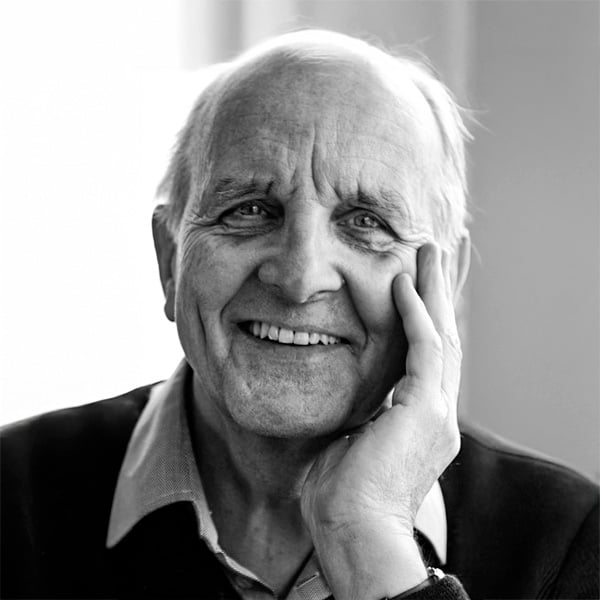
Fredrik Heffermehl

18. februar, 2021

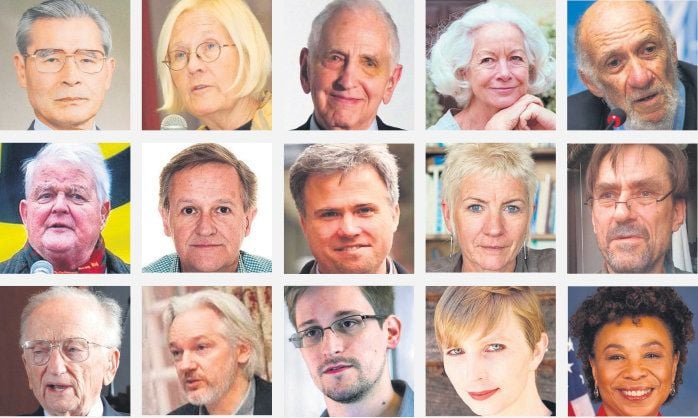
TFF er stolt over at være den institution i verden, som flest Nobelpris-nominerede (7) er knyttet til: Scilla Ellworthy, Richard Falk, Johan Galtung, David Krieger, Evelin Lindner, Jan Oberg og David Swanson.

Den norske Nobelkomite har mottatt nær 400 nominasjoner for 2021. Å velge den beste er selvsagt en krevende oppgave. Men den ville bli mye enklere om det kunne bli slutt på den uryddige blandingen av juss og politikk som i alle år har preget den norske forvaltningen av prisen.

Som forklart i min nyeste bok Medaljens Bakside er oppgaven å drive fredspolitikk med den retning og ramme som Nobel beskrev i sitt testament.
Det første og viktigste grepet – som også ville gjøre avgjørelsen mye enklere – er å tolke testamentet, stille det selvsagt nødvendige og grunnleggende spørsmålet: Hva ville Nobel med den “prisen for fredsforkjempere” som han beskrev i sitt testamente i 1895?

Oprindeligt publiceret i Klassekampen i Norge den 18. februar 2021

Komiteens oppdrag er å fremme Alfred Nobels intensjon; for å gjøre det må, ja plikter, den å sette seg inn i Nobels intensjon. Og sørge for at den blir godt kjent. Da ville også de som nominerer måtte legge seg i selen for å forklare hva og hvorfor, by på argumenter som er relevante i forhold til Nobels intensjon.

Som jeg påviser, blant annet ut fra Nobelkomiteens egne arkiver, har Nobelinstituttet vært Nobelfritt område. Komiteene og sekretærene og konsulentene har ikke hatt anelse om hva Nobel ville med prisen. Nominasjonene fra Stortinget har i alle år vist at heller ikke de som oppnevner komiteen har noe forhold til hva Nobel ville med prisen. Slik er det fortsatt, det ser man av nominasjonene for 2021.

Dette har skapt stor forvirring, folk over hele verden tror at prisen er en allmenn godhetspris, for ethvert formål, ja enda til Donald Trump. En pris for alt blir en pris med liten effekt. Uten en retning og en underliggende idé kan den årlige prisen ikke bli noe vesentlig bidrag til hvordan freden skal se ut og skapes. Norske politikere har i alle år valgt å følge norsk utenrikspolitikk og sine egne ideer og slått vrak på Nobels – som handlet om det stikk motsatte. Norge samarbeider militært med et trettitall land om militær styrkeoppbygging, Nobels ønsket et globalt samarbeid om å legge ned våpnene.

Han var inspirert av den østerrikske forfatteren og fredsforkjemperen Bertha von Suttner og hennes roman «Ned med våpnene» (1889). Å gjøre prisens formål kjent er også det beste redskap for å realisere det. Min antagelse er at maksimalt 80, 20%, av de nominerte er kvalifiserte, altså tilstrekkelig innenfor Nobels intensjon.

Nobelkomiteen har tatt seg full frihet til å utvikle en allmenn fredspris helt etter egne hoder. Jeg har ikke bare kritisert dette, men også undersøkt hva man skulle ha gjort i stedet. Min nye bok gir svaret på et spørsmål mange stiller: «Hvem skulle da ha fått prisen, finnes det i dag noen som står for Nobels intensjon om fred gjennom samarbeid og nedrustning?»

For årene 1901 til 2020 peker jeg på nær hundre som ikke skulle ha blitt tildelt prisen, men samtidig på 115 som burde ha vunnet i stedet. Det blir tydelig at Nobelkomiteen systematisk har undertrykket de ideene Nobel ønsket å stimulere. Hvert år har vi også, i nettverket Nobel Peace Prize Watch (NPPW), både selv nominert og lett etter andre holdbare nominasjoner. Alle er lagt ut på nettstedet nobelwill.org i en liste som også sendes over til Nobelkomiteen.

Etter reglene skal nominasjonene holdes hemmelig i 50 år, men det kravet gjelder bare for komiteen selv. Vi i NPPW tror på innsyn og demokratisk debatt, det vil både forebygge misbruk og styrke prisen og dens effekt vesentlig.

Potensielle mottakere for 2021

For 2021 har NPPW listet opp og publisert 54 prismottakere som er kjent for oss og som er egnet, sendt til komiteen innen tidsfristen, av en som er berettiget til å nominere. NPPW foretar en profesjonell screening, basert på gjeldende lov og nominasjoner som vi har fått kopi av.

Alle de 54 kandidatene på NPPWs liste for 2021 er mer i tråd med Nobels fredsvisjon, enn nesten alle de som har mottatt Nobels fredspris de siste tiårene. En liste fra lederen av fredsforskningsinstituttet PRIO er mye brukt i media, men er ikke basert på en vurdering av Nobels vilje og peker sjelden på kvalifiserte kandidater. PRIOs liste for 2021 tar inga hensyn til Nobels fredsvisjon. For 2021 inneholder listen, så vidt jeg kan se, ikke en eneste relevant og kvalifisert kandidat.

Istedet for å by på en akademisk og sannhetssøkende vurdering, deltar PRIO hvert år i norske politikeres krenkelse av Nobels testament. PRIO-listen fremstår som en servil gest til Stortinget som bevilgende myndighet.

Når NPPW oppfordrer til å nominere anbefaler vi å innlede med å vise til prisens formål, globalt samarbeid om demilitarisering av internasjonale relasjoner. Dette vil gi relevans og retning til nominasjonene. Dessverre er det bare få av årets 54 nominasjoner som avklarer kandidatenes syn på dette kjernespørsmålet for å kunne komme i betraktning. Blant de mange som foreslås av stortingsrepresentanter i år er få relevante.

Kampanjen for å stoppe intelligente krigsroboter og Barbara Lee, ensom krigsmotstander i USAs kongress, er klart relevante. All ære til de som jobber for delvis nedrustning eller bidrar indirekte med slående informasjon om hvor presserende Nobels paradigmeskifte er, men det må likevel være riktig å gi prioritet til de som forfølger Nobels nedrustningssvisjon direkte.

Vi antar likevel at i hvert fall 13 kandidater oppfyller Nobels intensjoner helt ut:
1) Den globale kampanjen for fredsundervisning (GCPE),
2) fredsjuristen Kenji Urata, Japan,
3) oberst og diplomat Ann Wright, USA,
4) varsler og krigsmotstander Daniel Ellsberg, USA,
5) forsker og grasrotdiplomat Scilla Elworthy, UK,
6) juristen Richard Falk, USA,
7) krigsmotstander og FN-forsvarer Bruce Kent, UK,
8) fredsforsker, formidler, nettverksbygger Jan Oberg, Sverige,
9) Internasjonale kvinneliga for fred og frihet, WILPF, stiftet
1915,
10) WILPFs leder Madeleine Rees, UK,
11) tysk FN-ekspert og forkjemper for å gjøre krigsforbudet i artikkel 9 i den japanske grunnloven universell Klaus Schlichtmann, Japan,
12) den amerikanske forfatter, formidler og nedrustningsforkjemper David Swanson, USA,
13) internasjonalist og jurist Ben Ferencz, USA.

DE NOMINERTE ER: Fra øverst til venstre Kenji Urata, Ann Wright, Daniel Ellsberg, Scilla Elworthy, Richard Falk, Bruce Kent, Jan Oberg, Internasjonale kvinneliga for fred og frihet, : Den globale kampanjen for fredsundervisning, WILPF, Madeleine Rees, Klaus Schlichtmann, David Swanson, Ben Ferencz, Julian Assange, Edward Snowden og Chelsea Manning, og Barbara Lee.

Illustrerende er forskjellen mellom to betydelige programmer, den globale kampanjen for fredsundervisning (GCPE) og fredsforskningsinstituttet i Stockholm (SIPRI). Den første har avskaffelse av krig som mål, den siste dokumenterer farten på opprustningen, men prøver ikke å stanse den. Forslaget om SIPRI, fra stortingsrepresentant Arne Nævra, nevner at Alva Myrdals mål med SIPRI var aktiv forskning på avskaffelse av krig, men underveis er dette målet tapt av syne – som alle tiltak for å drastisk redusere eller avskaffe militarismen.

Av mangel på surstoff ender de opp med å tilpasse seg «virkeligheten», enten det gjelder SV, PRIO, SIPRI – eller Nobels fredspris.

Om forfatteren, Fredrik Heffermehl

Her artiklen i PDF format

Listen med alle 54 nominerede på Nobel Peace Prize Watch

TFF er stolt over at være den institution i verden, som flest nominerede til Nobels pris (7) er knyttet til: Scilla Ellworthy, Richard Falk, Johan Galtung, David Krieger, Evelin Lindner, Jan Oberg og David Swanson.

One Response

  1. I wote for mr. Jan Oberg. Mostly because I know most. But get a lot lot good solid information all the time.

Related Posts

Below are TFF-related media mentions, comments, videos and social media posts published elsewhere but not on this homepage. We happen to catch and list only a fraction. Regarding video comments and debates, we recommend that you go to the TFF Video Channel on Substack where many of them are reproduced. Jan Oberg is a contributor to China Daily – 52 million daily clicks – and Global Times, CGTN and CCTV (the national television), China Investment, Xinhua News Agency and several others. Articles and videos on these media very often multiply into countless Chinese (and Western media) that re-post them from these main media. Thanks to The China Academy, his analyses, interviews and comments are frequently posted on YouTube channels such as Thinkers Forum and Wave Media. These videos are often re-posted on Bilibili (China’s YouTube), the China Content Center on TikTok, and on the Chinese edition of TikTok, Douyin.com. This means reaching hundreds of millions of viewers worldwide over a year. While there are too many to catch on all these...
Jan Oberg TFF director October 13, 2026 According to Alfred Nobel’s will, the Nobel Peace Prize shall be awarded: ”to the person who has done the most or best to advance fellowship among nations, the abolition or reduction of standing armies, and the establishment and promotion of peace congresses.” Further down, he also expresses how the prize for the “champions of peace” shall be decided: “that for champions of peace by a committee of five persons to be selected by the Norwegian Storting. Alfred Nobel’s will is remarkably short and clear. But few seem to have read it. Nobel did not say that the committee itself should consist of members of parliament. He entrusted the Storting with appointing five persons. In principle, it could have selected diplomats, mediators, peace researchers, conflict-resolution specialists, or other individuals with recognised expertise in matters of peace from around the world. Instead, the Storting gradually...
The Quest for Humane Survival Richard Falk Professor emeritus, Princeton UniversityTFF Associate since 1986October 12, 2026 After decades of teaching and writing about international law in academic frameworks that were not institutionally situated within law school environments—at Princeton and the University of California, Santa Barbara—I found myself most receptive to the TWAIL outlook. It has been especially illuminating in clarifying the extent to which international law evolved as a dialogical critique of Europe’s efforts to legitimize its colonial undertakings. In particular, TWAIL has exposed how international law has functioned to legalize the subjugation of Third World peoples, securing conditions for exploitative investment and trade relations, the coercive enforcement of public debts, and an ideology of cultural superiority. TWAIL’s exposure of these economic legacies of colonialism has influenced my understanding of the history and development of international law, broadly conceived, as an ideological project of the Western sub-system of the world...

Recent Articles

Below are TFF-related media mentions, comments, videos and social media posts published elsewhere but not on this homepage. We happen to catch and list only a fraction. Regarding video comments and debates, we recommend that you go to the TFF Video Channel on Substack where many of them are reproduced. Jan Oberg is a contributor to China Daily – 52 million daily clicks – and Global Times, CGTN and CCTV (the national television), China Investment, Xinhua News Agency and several others. Articles and videos on these media very often multiply into countless Chinese (and Western media) that re-post them from these main media. Thanks to The China Academy, his analyses, interviews and comments are frequently posted on YouTube channels such as Thinkers Forum and Wave Media. These videos are often re-posted on Bilibili (China’s YouTube), the China Content Center on TikTok, and on the Chinese edition of TikTok, Douyin.com. This means reaching hundreds of millions of viewers worldwide over a year. While there are too many to catch on all these...
Jan Oberg TFF director October 13, 2026 According to Alfred Nobel’s will, the Nobel Peace Prize shall be awarded: ”to the person who has done the most or best to advance fellowship among nations, the abolition or reduction of standing armies, and the establishment and promotion of peace congresses.” Further down, he also expresses how the prize for the “champions of peace” shall be decided: “that for champions of peace by a committee of five persons to be selected by the Norwegian Storting. Alfred Nobel’s will is remarkably short and clear. But few seem to have read it. Nobel did not say that the committee itself should consist of members of parliament. He entrusted the Storting with appointing five persons. In principle, it could have selected diplomats, mediators, peace researchers, conflict-resolution specialists, or other individuals with recognised expertise in matters of peace from around the world. Instead, the Storting gradually...
The Quest for Humane Survival Richard Falk Professor emeritus, Princeton UniversityTFF Associate since 1986October 12, 2026 After decades of teaching and writing about international law in academic frameworks that were not institutionally situated within law school environments—at Princeton and the University of California, Santa Barbara—I found myself most receptive to the TWAIL outlook. It has been especially illuminating in clarifying the extent to which international law evolved as a dialogical critique of Europe’s efforts to legitimize its colonial undertakings. In particular, TWAIL has exposed how international law has functioned to legalize the subjugation of Third World peoples, securing conditions for exploitative investment and trade relations, the coercive enforcement of public debts, and an ideology of cultural superiority. TWAIL’s exposure of these economic legacies of colonialism has influenced my understanding of the history and development of international law, broadly conceived, as an ideological project of the Western sub-system of the world...

TFF on Substack

Discover and subscribe to more peace materials on TFF Substack

Most Popular

Below are TFF-related media mentions, comments, videos and social media posts published elsewhere but not on this homepage. We happen to catch and list only a fraction. Regarding video comments and debates, we recommend that you go to the TFF Video Channel on Substack where many of them are reproduced. Jan Oberg is a contributor to China Daily – 52 million daily clicks – and Global Times, CGTN and CCTV (the national television), China Investment, Xinhua News Agency and several others. Articles and videos on these media very often multiply into countless Chinese (and Western media) that re-post them from these main media. Thanks to The China Academy, his analyses, interviews and comments are frequently posted on YouTube channels such as Thinkers Forum and Wave Media. These videos are often re-posted on Bilibili (China’s YouTube), the China Content Center on TikTok, and on the Chinese edition of TikTok, Douyin.com. This means reaching hundreds of millions of viewers worldwide over a year. While there are too many to catch on all these...
Jan Oberg TFF director October 13, 2026 According to Alfred Nobel’s will, the Nobel Peace Prize shall be awarded: ”to the person who has done the most or best to advance fellowship among nations, the abolition or reduction of standing armies, and the establishment and promotion of peace congresses.” Further down, he also expresses how the prize for the “champions of peace” shall be decided: “that for champions of peace by a committee of five persons to be selected by the Norwegian Storting. Alfred Nobel’s will is remarkably short and clear. But few seem to have read it. Nobel did not say that the committee itself should consist of members of parliament. He entrusted the Storting with appointing five persons. In principle, it could have selected diplomats, mediators, peace researchers, conflict-resolution specialists, or other individuals with recognised expertise in matters of peace from around the world. Instead, the Storting gradually...
The Quest for Humane Survival Richard Falk Professor emeritus, Princeton UniversityTFF Associate since 1986October 12, 2026 After decades of teaching and writing about international law in academic frameworks that were not institutionally situated within law school environments—at Princeton and the University of California, Santa Barbara—I found myself most receptive to the TWAIL outlook. It has been especially illuminating in clarifying the extent to which international law evolved as a dialogical critique of Europe’s efforts to legitimize its colonial undertakings. In particular, TWAIL has exposed how international law has functioned to legalize the subjugation of Third World peoples, securing conditions for exploitative investment and trade relations, the coercive enforcement of public debts, and an ideology of cultural superiority. TWAIL’s exposure of these economic legacies of colonialism has influenced my understanding of the history and development of international law, broadly conceived, as an ideological project of the Western sub-system of the world...
Read More
girl-5894831_1280
Below are TFF-related media mentions, comments, videos and social media posts published elsewhere but not on this homepage. We happen to catch and list only a fraction. Regarding video comments and debates, we recommend that you go to the TFF Video Channel on Substack where many of them are reproduced. Jan Oberg is a contributor to China Daily – 52 million daily clicks – and Global Times, CGTN and CCTV (the national television), China Investment, Xinhua News Agency and several others. Articles and videos on these media very often multiply into countless Chinese (and Western media) that re-post them from these main media. Thanks to The China Academy, his analyses, interviews and comments are frequently posted on YouTube channels such as Thinkers Forum and Wave Media. These videos are often re-posted on Bilibili (China’s YouTube), the China Content Center on TikTok, and on the Chinese edition of TikTok, Douyin.com. This means reaching hundreds of millions of viewers worldwide over a year. While there are too many to catch on all these...
Nobel-Prize-Plaque
Jan Oberg TFF director October 13, 2026 According to Alfred Nobel’s will, the Nobel Peace Prize shall be awarded: ”to the person who has done the most or best to advance fellowship among nations, the abolition or reduction of standing armies, and the establishment and promotion of peace congresses.” Further down, he also expresses how the prize for the “champions of peace” shall be decided: “that for champions of peace by a committee of five persons to be selected by the Norwegian Storting. Alfred Nobel’s will is remarkably short and clear. But few seem to have read it. Nobel did not say that the committee itself should consist of members of parliament. He entrusted the Storting with appointing five persons. In principle, it could have selected diplomats, mediators, peace researchers, conflict-resolution specialists, or other individuals with recognised expertise in matters of peace from around the world. Instead, the Storting gradually...
law-419057_1280
The Quest for Humane Survival Richard Falk Professor emeritus, Princeton UniversityTFF Associate since 1986October 12, 2026 After decades of teaching and writing about international law in academic frameworks that were not institutionally situated within law school environments—at Princeton and the University of California, Santa Barbara—I found myself most receptive to the TWAIL outlook. It has been especially illuminating in clarifying the extent to which international law evolved as a dialogical critique of Europe’s efforts to legitimize its colonial undertakings. In particular, TWAIL has exposed how international law has functioned to legalize the subjugation of Third World peoples, securing conditions for exploitative investment and trade relations, the coercive enforcement of public debts, and an ideology of cultural superiority. TWAIL’s exposure of these economic legacies of colonialism has influenced my understanding of the history and development of international law, broadly conceived, as an ideological project of the Western sub-system of the world...
images-2
Advocates of nuclear disarmament are regularly dismissed by the champions of nuclear deterrence as naïve and unrealistic, utopian or even irresponsible. Yet this ‘doctrine’ of deterrence, regarded by France as the ‘cornerstone’ of its national security, is based on quasi-religious beliefs, a theory that cannot be proven, risky gambles and fragile assumptions. So much so that one might legitimately ask which side the ‘Care Bears’ are on. Marc FinaudVice-President of Initiatives for Nuclear Disarmament (IDN) October 9, 2026 This article was originally published on Pressenza When it comes to these things being treated as religious concepts, look here. Idealists and realists It was Hubert Védrine, François Mitterrand’s former Foreign Minister, who repeatedly coined the phrase: ‘Europeans are a sort of Care Bears who don’t realise they’re living in Jurassic Park’. He applies this reference to the cartoon for well-behaved children not only to what he regards as weakness or idealism...
8824b09f-33a5-43f9-9fd0-550f28cda24d_1536x1024
What the West Borrowed from Asia and What It Left Behind Jan Krikke October 8, 2026 The article was originally published here In the late 1960s, the musical Hair announced that the Age of Aquarius was dawning. Its opening anthem promised a transformation of human consciousness: an era of peace, harmony and understanding. Half a century later, a familiar echo of that promise is a meditation app offered by your employer. You can find it in the same list of benefits as the pension plan and the gym discount. How did a spiritual revolution become an employee benefit? The answer lies in the history of the movement known as New Age: where it came from, what it borrowed from Asia, and why the meaning of what it borrowed changed in the process. Two definitions will help. New Age is a loose label for a wide range of spiritual practices and...
Screenshot 2026-10-04 210142
Small and different + among the 10% most active + 9,000 texts + 150 Associates + 60 000 a day — and a stubborn belief that peace is smarter and must be secured by peaceful means. In 2026, the Transnational Foundation for Peace and Future Research (TFF) turns 40. On Monday, October 5, 2026, a new TFF homepage will go live — a new gateway to more than 9,000 articles, analyses, research papers and other contributions produced over four decades of independent peace research. But this is not simply a new website. For four decades, TFF has worked from a simple conviction: peace is smarter than militarism and can be brought about by peaceful means. This is not merely an aspiration. It is the principle expressed in the UN Charter and the Gandhian tradition that has guided our work from the beginning. TFF is a research-based, independent and people-financed foundation....




