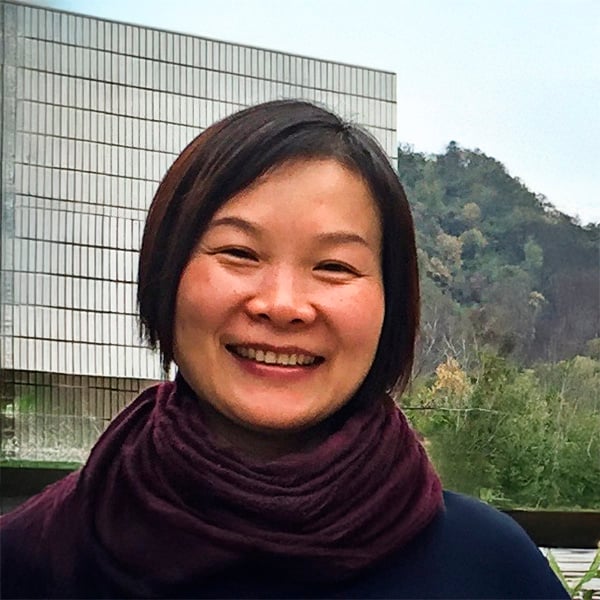
By Liu Jian, TFF Associate in Beijing

Read the author’s first article here

March 30, 2020

On January 18, after attending a meeting in Hangzhou, I planned to return to my home in Beijing. At that time, the Spring Festival in China was approaching. Although I had started buying tickets one week in advance, I still did not get a high-speed train ticket from Hangzhou to Beijing so I had to go from Hangzhou to Shanghai and wait for several hours before changing to a later train to return to Beijing.

There are high-speed trains between Beijing and Hangzhou and Shanghai every five to ten minutes. Even so, it can’t meet people’s travel needs during the Spring Festival. High-speed railway stations and airports in all major cities were overcrowded and at security checkpoints, people lined up in long queues.

China’s transportation sector is doing its best to ensure the world’s largest population’s mobility and transport needs. Everyone was looking forward to the long holiday in the New Year and the reunion with their families.

There and then, nobody knew that after four days all this would change completely. Like no one expected that the whole world would change fundamentally in a couple of months.

The whole country was beaming with joy and peace.

The TV news stations were constantly showing people’s happy programs in preparation for the New Year holiday. A flash of news that reported a few cases of new pneumonia in Wuhan wouldn’t have attracted much attention.

So, people continue their preparations for the New Year.

Suddenly, however, a group of experts who have visited Wuhan appears on the TV program my family and I usually see and they suggest that people should not go to Wuhan if they could avoid it and that people in Wuhan should not go out at all.

Things are now getting quite serious and reports follow with rapidly increasing numbers of patients.

On January 23, the government suddenly announced the closure of Wuhan, a megacity with a population of 11 million. The next day, it was announced that all public transportation in the city would be stopped, private cars would be banned, and everyone would stay at home.

On January 24, on Chinese New Year’s Eve, medical staff in some provinces outside Hubei were suddenly notified that they must stop their routine work, pack their luggage within an hour and assemble for their travel to Wuhan. It’s now a huge medical rescue operation.

At this point, everyone is shrouded in anxiety.

At 8 pm, the most important TV program of the year, the New Year’s Gala, is performed as usual and broadcast live across the country. My family still sit around the TV and watch the New Year performances and celebrations. But we feel increasingly uneasy.

We keep updating news apps on our mobile phones to understand better the situation. A few hours later, the first medical teams from other provinces arrive in Wuhan.

Next, we learn that other parts of the country are also beginning to experience new cases of the virus; restrictions on travel are getting stricter.

My family originally planned to go to Hunan province which is 1300 kilometres away from Beijing to visit my parents during the new year.

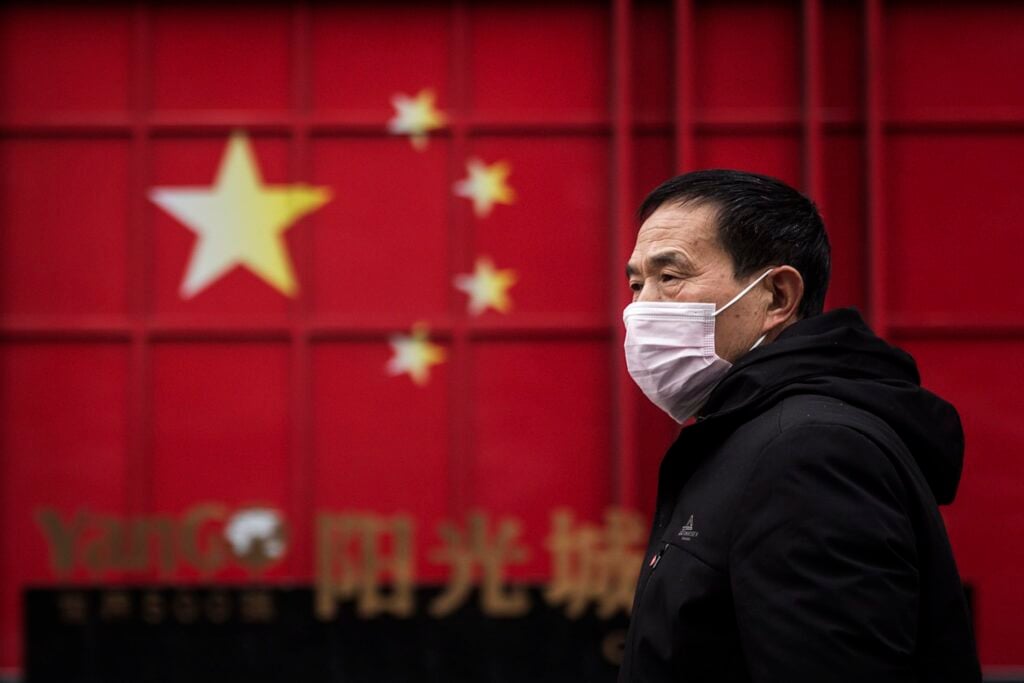
But we finally recognise that the situation is such that we must cancel that trip. The next thing that happens is that the government calls on all the country’s citizens to live in isolation for two weeks. And if and when they have to go out to buy daily necessities, they must wear masks.

Over the next few days, the reports tell of ever-increasing numbers of new cases. The death rate was also soaring. The feeling of fear and anxiety is now manifest, going up and down with the reports we hear and see.

It all goes very fast…

At the same time, the country is moving quickly. One medical team after the other gathers in Wuhan from all over the country. Within ten days, two hospitals have sprung up and dozens of temporary hospitals are being built.

Seeing all this, our anxiety begins to ease and our confidence increases. I pull out a book on ancient Chinese philosophy from the shelf, intending to force myself to calm down, read it and turn my thoughts on something else but this catastrophe. I had tried to get into this book several times before but every time I had given up because it was too difficult for me. Was this the right good opportunity?

The week-long New Year holiday passed quickly, and the government decided to extend the holiday nationwide and postpone the opening date of all the schools.

My children cheered when they heard the news, but I had to think about how to deal with this unexpected situation.

Everyone is now looking for creative new solutions. How do you operate when you and your family is suddenly isolated physically in your home without any prior planning?

The demand for online office work and online education suddenly explodes and – predictably – some websites as well as many companies collapse.

The situation gradually improves after a week or two. We are learning to live with this as the new normal. My elder daughter faces her college entrance examination in her final year of high school. Her school had quickly begun to organize online teaching. Teachers and children tried their best to adapt to the new way of teaching and learning.

On social media, the learning of new skills has become popular, and people’s ability to adapt to new situations is beyond imagination – so impressive.

Eventually, the good news was that there were fewer and fewer new cases in Wuhan; more and more people were cured and discharged from hospitals. Temporary hospitals were gradually emptied and closed one by one.

Epidemic prevention and control measures are still being strictly implemented, masks are worn in public places, and special personnel deployed at all open buildings are equipped to check the body temperature of people entering.

142 medical workers dispatched from Xinjiang returned home while 158 other medics from Xinjiang are currently in Wuhan and awaiting departure. They have treated 528 COVID-19 patients since Jan 28, of whom 321 have recovered.

It is predicted and expected that this will be our new ‘normal’ life for quite some time to come.

The epidemic situation in China is now basically over but – sadly, indeed – the virus has begun to spread to many other parts of the world. The number of infected and diseased are growing.

A heavy haze is now covering our global village. I believe it is just the beginning of a great change, and no one knows exactly what the world will look like during and after COVID-19.

The word “crisis” in Chinese includes the words “crisis” and “opportunity”, which means that out of a crisis new opportunities can also emerge.

We must hope that we shall all learn something constructive from the Corona pandemic and that a new and better world will emerge after it.

If you found this enlightening, please…


Related Posts

Johan Galtung 1930-2024October 2015 Published here on October 3, 2026 Let us focus on Civilization for conflict analysis and remedies. Major forms of disorder use violence; war is state organized violence. The most belligerent states are the United States of America and Israel, both with civilization roots. National Evangelism, the US Protestant Christian civilization– more national than evangelical–justifies US warfare as exceptionalism of a people chosen by God, with a manifest destiny to run the world. Orthodox Judaism justifies Israeli warfare to conquer and expand from Nile to Euphrates as a religious right and duty to the Eternal One. The third most belligerent country, the UK, no longer believes it is God-chosen but chosen by the USA; not quite the same but something. But the root cause of global disorder lies in the Occident–with Islam–seeing itself as the single, universal civilization valid for all at all times, all others being...
Jan ObergPhD, director, The Transnational Foundation for Peace and Future Research, TFFLund, Sweden October 2, 2026 This is my full original manuscript. The Chinese Academy of Social Science, CASS, makes two publications out if it. 1. China’s Five-year plan emphasized the capabilities of basic research and original innovation. It is regarded as the goal of the future social development, which, as required, should be significantly enhanced. Can you comment on the importance of original innovation in research and academic study? I believe it is easier to define “original innovation” in the natural sciences than in social sciences. The breaking points of what constitutes something new, or innovative, are not quite as sharp in the latter. But in both fields it is about opening up something that was closed, unseen, unexplored before – making manifest what was earlier latent. Innovations come in many forms and shapes – naming something that was not...
The agreement is catastrophic both because of what it says and what it doesn’t mention. It reduces further the major asset of security policies: Freedom of action. Jan Oberg TFF director September 25, 2026 A couple of hours before the agreement was signed on September 22, 2026, I published the following 13 hypotheses about what it would most likely contain on TFF Substack (in English). I was wrong on only the first point. Contrary to what Trump had written on his Truth Social platform, it does not appear to come into force immediately. In fact, it turned out to be worse than even I had anticipated. After these hypotheses now come a number of reflections in light of what the agreement actually contains, and does not contain, as well as the way in which it has generally been presented by major media outlets and by the public-service broadcaster DR. My...

Recent Articles

Tony Robinson October 4, 2026 Violence is easy to recognise when someone is being beaten, shot or killed. It becomes more difficult when nobody is holding a weapon. Poverty, discrimination, exploitation and repression can restrict a human life just as effectively, although they do so in very different ways and with very different consequences. Simply adding more categories to an ever-growing list of forms of violence does not really solve the problem. The more interesting question is what all these different situations have in common and why it makes sense to describe them using the same word. Human beings do not simply react to what happens around them. They remember the past, imagine things that do not yet exist, make plans and undertake projects. Workers organise because they imagine different working conditions; people migrate because they imagine another life somewhere else; social movements emerge because people refuse to accept the...
It’s a matter of principles, courage, vision and pulling together – while the militarist world is falling apart… Peter Langille October 3, 2026 “Here, then, is the problem which we present to you, stark and dreadful and inescapable: Shall we put an end to the human race; or shall mankind renounce war?”The Bertrand Russell—Albert Einstein Manifesto, July 9, 1955 ⁕ The forecast for what’s ahead is worrisome. The sharp rise in armed conflicts over the past three years is adding to what was already the highest level in over seventy years. Genocides, which should be prevented are supported. A shared climate emergency that jeopardises survival is ignored. Diverse polls now suggest that people are war-weary, worried and interested in a more effective United Nations. And, there are viable policy options for a more secure world! Yet governments are doubling-down, betting on more war and investing heavily. If current trends persist,...
Johan Galtung 1930-2024October 2015 Published here on October 3, 2026 Let us focus on Civilization for conflict analysis and remedies. Major forms of disorder use violence; war is state organized violence. The most belligerent states are the United States of America and Israel, both with civilization roots. National Evangelism, the US Protestant Christian civilization– more national than evangelical–justifies US warfare as exceptionalism of a people chosen by God, with a manifest destiny to run the world. Orthodox Judaism justifies Israeli warfare to conquer and expand from Nile to Euphrates as a religious right and duty to the Eternal One. The third most belligerent country, the UK, no longer believes it is God-chosen but chosen by the USA; not quite the same but something. But the root cause of global disorder lies in the Occident–with Islam–seeing itself as the single, universal civilization valid for all at all times, all others being...

TFF on Substack

Discover and subscribe to more peace materials on TFF Substack

Most Popular

Tony Robinson October 4, 2026 Violence is easy to recognise when someone is being beaten, shot or killed. It becomes more difficult when nobody is holding a weapon. Poverty, discrimination, exploitation and repression can restrict a human life just as effectively, although they do so in very different ways and with very different consequences. Simply adding more categories to an ever-growing list of forms of violence does not really solve the problem. The more interesting question is what all these different situations have in common and why it makes sense to describe them using the same word. Human beings do not simply react to what happens around them. They remember the past, imagine things that do not yet exist, make plans and undertake projects. Workers organise because they imagine different working conditions; people migrate because they imagine another life somewhere else; social movements emerge because people refuse to accept the...
It’s a matter of principles, courage, vision and pulling together – while the militarist world is falling apart… Peter Langille October 3, 2026 “Here, then, is the problem which we present to you, stark and dreadful and inescapable: Shall we put an end to the human race; or shall mankind renounce war?”The Bertrand Russell—Albert Einstein Manifesto, July 9, 1955 ⁕ The forecast for what’s ahead is worrisome. The sharp rise in armed conflicts over the past three years is adding to what was already the highest level in over seventy years. Genocides, which should be prevented are supported. A shared climate emergency that jeopardises survival is ignored. Diverse polls now suggest that people are war-weary, worried and interested in a more effective United Nations. And, there are viable policy options for a more secure world! Yet governments are doubling-down, betting on more war and investing heavily. If current trends persist,...
Johan Galtung 1930-2024October 2015 Published here on October 3, 2026 Let us focus on Civilization for conflict analysis and remedies. Major forms of disorder use violence; war is state organized violence. The most belligerent states are the United States of America and Israel, both with civilization roots. National Evangelism, the US Protestant Christian civilization– more national than evangelical–justifies US warfare as exceptionalism of a people chosen by God, with a manifest destiny to run the world. Orthodox Judaism justifies Israeli warfare to conquer and expand from Nile to Euphrates as a religious right and duty to the Eternal One. The third most belligerent country, the UK, no longer believes it is God-chosen but chosen by the USA; not quite the same but something. But the root cause of global disorder lies in the Occident–with Islam–seeing itself as the single, universal civilization valid for all at all times, all others being...
Read More
Living-Peace-Sign-Budapest-copy
Tony Robinson October 4, 2026 Violence is easy to recognise when someone is being beaten, shot or killed. It becomes more difficult when nobody is holding a weapon. Poverty, discrimination, exploitation and repression can restrict a human life just as effectively, although they do so in very different ways and with very different consequences. Simply adding more categories to an ever-growing list of forms of violence does not really solve the problem. The more interesting question is what all these different situations have in common and why it makes sense to describe them using the same word. Human beings do not simply react to what happens around them. They remember the past, imagine things that do not yet exist, make plans and undertake projects. Workers organise because they imagine different working conditions; people migrate because they imagine another life somewhere else; social movements emerge because people refuse to accept the...
b54a1f10-8c65-4f0b-9dd5-4abc0a7d04cc_2659x2659
It’s a matter of principles, courage, vision and pulling together – while the militarist world is falling apart… Peter Langille October 3, 2026 “Here, then, is the problem which we present to you, stark and dreadful and inescapable: Shall we put an end to the human race; or shall mankind renounce war?”The Bertrand Russell—Albert Einstein Manifesto, July 9, 1955 ⁕ The forecast for what’s ahead is worrisome. The sharp rise in armed conflicts over the past three years is adding to what was already the highest level in over seventy years. Genocides, which should be prevented are supported. A shared climate emergency that jeopardises survival is ignored. Diverse polls now suggest that people are war-weary, worried and interested in a more effective United Nations. And, there are viable policy options for a more secure world! Yet governments are doubling-down, betting on more war and investing heavily. If current trends persist,...
010
Johan Galtung 1930-2024October 2015 Published here on October 3, 2026 Let us focus on Civilization for conflict analysis and remedies. Major forms of disorder use violence; war is state organized violence. The most belligerent states are the United States of America and Israel, both with civilization roots. National Evangelism, the US Protestant Christian civilization– more national than evangelical–justifies US warfare as exceptionalism of a people chosen by God, with a manifest destiny to run the world. Orthodox Judaism justifies Israeli warfare to conquer and expand from Nile to Euphrates as a religious right and duty to the Eternal One. The third most belligerent country, the UK, no longer believes it is God-chosen but chosen by the USA; not quite the same but something. But the root cause of global disorder lies in the Occident–with Islam–seeing itself as the single, universal civilization valid for all at all times, all others being...
Screenshot 2026-10-02 011738
Jan ObergPhD, director, The Transnational Foundation for Peace and Future Research, TFFLund, Sweden October 2, 2026 This is my full original manuscript. The Chinese Academy of Social Science, CASS, makes two publications out if it. 1. China’s Five-year plan emphasized the capabilities of basic research and original innovation. It is regarded as the goal of the future social development, which, as required, should be significantly enhanced. Can you comment on the importance of original innovation in research and academic study? I believe it is easier to define “original innovation” in the natural sciences than in social sciences. The breaking points of what constitutes something new, or innovative, are not quite as sharp in the latter. But in both fields it is about opening up something that was closed, unseen, unexplored before – making manifest what was earlier latent. Innovations come in many forms and shapes – naming something that was not...
arctic-circle-map
The agreement is catastrophic both because of what it says and what it doesn’t mention. It reduces further the major asset of security policies: Freedom of action. Jan Oberg TFF director September 25, 2026 A couple of hours before the agreement was signed on September 22, 2026, I published the following 13 hypotheses about what it would most likely contain on TFF Substack (in English). I was wrong on only the first point. Contrary to what Trump had written on his Truth Social platform, it does not appear to come into force immediately. In fact, it turned out to be worse than even I had anticipated. After these hypotheses now come a number of reflections in light of what the agreement actually contains, and does not contain, as well as the way in which it has generally been presented by major media outlets and by the public-service broadcaster DR. My...
girl-5894831_1280
Below are TFF-related media mentions, comments, videos and social media posts published elsewhere but not on this homepage. We happen to catch and list only a fraction. Regarding video comments and debates, we recommend that you go to the TFF Video Channel on Substack where many of them are reproduced. Jan Oberg is a contributor to China Daily – 52 million daily clicks – and Global Times, CGTN and CCTV (the national television), China Investment, Xinhua News Agency and several others. Articles and videos on these media very often multiply into countless Chinese (and Western media) that re-post them from these main media. Thanks to The China Academy, his analyses, interviews and comments are frequently posted on YouTube channels such as Thinkers Forum and Wave Media. These videos are often re-posted on Bilibili (China’s YouTube), the China Content Center on TikTok, and on the Chinese edition of TikTok, Douyin.com. This means reaching hundreds of millions of viewers worldwide over a year. While there are too many to catch on all these...