
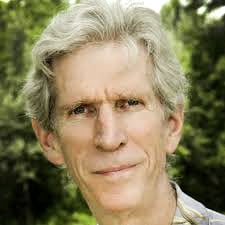

Gareth Porter

By Gareth Power

As the Saudi bombing campaign against Houthi targets in Yemen continues, notwithstanding a temporary pause, the corporate media narrative about the conflict in Yemen is organised decisively around the idea that it is a proxy war between Iran on one side and the Saudis and United States on the other.

USA Today responded like Pavlov’s dog this week to a leak by Pentagon officials that it was sending the aircraft carrier USS Theodore Roosevelt to the waters off Yemen, supposedly to intercept Iranian vessels carrying weapons to the Houthis. It turned out that the warship was being sent primarily to symbolise US support for the Saudis, and the Pentagon made no mention of Iranian arms when it announced the move. But the story of the US navy intercepting Iranian arms was irresistible, because it fit so neatly into the larger theme of Iran arming and training the Houthis as its proxy military force in Yemen.

News stories on Yemen in recent months have increasingly incorporated a sentence or even a paragraph invoking the accusation that Iran has been arming the Houthis and using them to gain power in the Gulf. The State Department’s principal Deputy Assistant Secretary Gerald Feierstein nourished that narrative in Congressional testimony last week depicting Iran as having provided “financial support, weapons, training and intelligence” to the Houthis. Feierstein acknowledged that the Houthi movement is “not controlled directly by Iran”, but claimed a “significant growth in Iranian engagement” with the Houthis in the past year.

Like most popular myths the dominant narrative of the Houthi movement as Iranian proxy in Yemen is based on a kernel of truth: the Houthis share the Iranians’ dim views of American intentions in the Middle East and have sought to take advantage of the Hezbollah model to enhance their political-military effectiveness.

Houthis rise – myth and reality
But the assumption that the Houthis have been looking to Iran to train their troops or supply their need for weapons ignores the most basic facts of their ascendance. The Houthis built up their military forces from virtually nothing to as many 100,000 troops today through a series of six wars with Yemeni government troops. In the process they have not only become much better trained, but have acquired a vast pool of arms from Yemen’s black market.

A United Nations Experts’ report earlier this year cites estimates that Yemen is awash with 40 to 60 million weapons. The Houthis were also getting a continuing stream of modern arms directly from corrupt Yemeni military commanders from 2004 through 2010.

And in their eagerness to conform to the general theme of an Iran vs US-Saudi proxy war in Yemen, the media’s treatment of alleged Iranian arms to the Houthis has ignored the fact that the Houthis had forged an alliance by early 2014 with a far larger source of arms: former President Ali Abdullah Saleh. It was that alliance that propelled the Houthis into power last September, not their ties with Iran.

After Saleh was forced to step down as president in 2012, the government supposedly reorganised the military and Saleh’s son Ahmed Ali Saleh was ousted as commander of the Republican Guard. But in fact Saleh continued to control the military through his allies in most of the command positions. When the Houthi advanced on Sanaa last September, it was all carefully choreographed by Saleh. The Houthis were able to take one Yemeni military facility after another without a fight and enter the capital easily.

Houthi weapon bonanza – a gift from America
In the process, the Houthis acquired a new bonanza of weapons that had been provided by the United States over the previous eight years. According to Pentagon documents acquired under the Freedom of Information Act by Joseph Trevithick, the Defence Department had delivered about $500 million in military hardware to the Yemeni military from 2006 on. The gusher of new US arms included Russian-made helicopters, more than 100 Humvees with the latest armor packages, 100s of pickup trucks, rocket propelled grenades, advanced radios, night vision goggles and millions of rounds of ammunition.

A significant part of that weaponry and equipment was scooped up by Houthi fighters on their way into Sanaa and has been visible in the months since then. When the Houthis advanced into Aden 1 April, residents reported seeing four tanks and three armored vehicles as well as Rocket propelled grenades. On 29 March, after the Saudi bombing campaign had begun, the Houthis were reported to have had control of the Yemeni Air Force’s 16 fighter planes, of which eleven had been destroyed by the bombing.

In light of the reality that the Houthis are already flush with American arms that may be worth as much as hundreds of millions of dollars, the flurry of media excitement over the US Navy sending another warship to intercept an Iranian flotilla of arms is an odd bit of burlesque that ought to be in an embarrassment.

The one concrete allegation that has been invoked by media stories in recent months is the case of a ship called Jihan 1, said to have been laden with Iranian arms, that was intercepted in early 2013. A Reuters story last December cited a list a list of all the items on board provided by a “senior Yemeni security official,” which included Katyusha rifles, RPGs-7s, tons of RDX explosives and surface-to-air missiles.

Jihan 1 – murky claims
But the Hadi government never provided any evidence that the ship was sent by Iran or was intended for the Houthis. And most of the items mentioned were not even Iranian-manufactured weapons. The one odd exception was a reference to “Iranian-made night vision goggles”. That fact suggests that the ship was intended to provide arms to al-Qaeda in the Arabian Peninsula, which carries out large numbers of terrorist bombings and would have needed the large supplies of RDX.

The Houthis, on the other hand, are not known to have used that explosive. The UN expert panel formed to support the UN Security Council sanctions against Houthi commanders and Saleh reported that it had been “unable to independently confirm the allegation” about the Jihan 1.

The Reuters story, published months after the Houthis had acquired a large portion of the Yemeni army’s American arms, quoted a second Yemeni security official as still claiming that Iranian weapons “are still coming in by sea and there’s money coming in through transfers”.

Reuters further claimed that a “senior Iranian official,” contradicting official Iranian denials, had told the news agency that “the pace of money and arms getting to the Houthis had increased since their seizure of Sanaa.” The official allegedly said there were hundreds of IRGC personnel training the Houthis and six Iranian military advisers in Yemen. That part of the story appears suspicious to say the least.

The politically convenient story line that the Houthis are proxies of Iran is hardly new.

As a US diplomatic cable from Sanaa in 2009 reveals, the Yemeni government had waged a continuing campaign for years during its wars with the Houthis to persuade the United States that Iran and Hezbollah were arming and training the Houthis, but had never produced any real evidence to support the claim.

Ties between the Houthis and Iran undoubtedly exist, driven by a common distrust of American and Saudi roles in Yemen and the Houthis’ need for an ideology that would enhance their power. But the slack-jawed media approach to the story – starting with its refusal to put the allegations of continuing Iran arms smuggling to the Houthis in the context of the Houthis bonanza of US arms – has produced the usual fog of misinformation and confusion.

– TFF Associate Gareth Porter is an independent investigative journalist and winner of the 2012 Gellhorn Prize for journalism. He is the author of the newly published Manufactured Crisis: The Untold Story of the Iran Nuclear Scare.

Related Posts

This is not another geopolitical commentary on the Arctic. It is a visionary peace proposal that can save the region from militarised rivalry and ecological ruin. A blueprint for shared security, sustainable development, and human dignity — benefitting Greenland, the Arctic, and the rest of us. Jan Oberg TFF director Lund, Sweden, February 17, 2026 I. Four Principles for a New Arctic Vision The Arctic is often framed as a cold arena of rivalry — a place where great powers test each other’s resolve. But this worldview is outdated, unimaginative, and ultimately self‑defeating. The Arctic is not a vacuum waiting to be militarised; it is a living region, a climate stabiliser, and a cultural homeland whose future will shape the future of humanity. If we begin from that understanding, a far more rational Arctic order becomes possible — one that is peaceful, cooperative, and centred on the people who actually live there. This vision rests...
Photos © TFF 2000 Read PressInfo 90 “Lift the Sanctions and Bring More Aid to Yugoslavia” See Pictures from Belgrade © TFF 2000 Please reprint, copy, archive, quote or re-post this item, but please retain the source.
PART 2 — Diplomacy, Law and Nonviolent Power By Jan ObergTFF co-founder and director January 26, 2026 This is the second of four TFF-created idea portfolios designed to curb the global reach of the United States and, in both the short and long term, help catalyse a worldwide nonviolent resistance to what many observers describe as the Trump administration’s uniquely confrontational, destructive and world-threatening policies. These portfolios outline what governments and citizens across the world can do through dynamic diplomacy, creative initiatives, and strictly nonviolent means. They are typical TFF works in that we do not only tell what the problem is and how bad it will go – as 90+% of all commentators, experts and scholars do – we tell what we think can be done, inviting you to think of what you think you can do. It seems painfully clear to me that the current political dynamics in Washington increasingly resemble the most dangerous...

Recent Articles

Tony Robinson October 4, 2026 Violence is easy to recognise when someone is being beaten, shot or killed. It becomes more difficult when nobody is holding a weapon. Poverty, discrimination, exploitation and repression can restrict a human life just as effectively, although they do so in very different ways and with very different consequences. Simply adding more categories to an ever-growing list of forms of violence does not really solve the problem. The more interesting question is what all these different situations have in common and why it makes sense to describe them using the same word. Human beings do not simply react to what happens around them. They remember the past, imagine things that do not yet exist, make plans and undertake projects. Workers organise because they imagine different working conditions; people migrate because they imagine another life somewhere else; social movements emerge because people refuse to accept the...
It’s a matter of principles, courage, vision and pulling together – while the militarist world is falling apart… Peter Langille October 3, 2026 “Here, then, is the problem which we present to you, stark and dreadful and inescapable: Shall we put an end to the human race; or shall mankind renounce war?”The Bertrand Russell—Albert Einstein Manifesto, July 9, 1955 ⁕ The forecast for what’s ahead is worrisome. The sharp rise in armed conflicts over the past three years is adding to what was already the highest level in over seventy years. Genocides, which should be prevented are supported. A shared climate emergency that jeopardises survival is ignored. Diverse polls now suggest that people are war-weary, worried and interested in a more effective United Nations. And, there are viable policy options for a more secure world! Yet governments are doubling-down, betting on more war and investing heavily. If current trends persist,...
Johan Galtung 1930-2024October 2015 Published here on October 3, 2026 Let us focus on Civilization for conflict analysis and remedies. Major forms of disorder use violence; war is state organized violence. The most belligerent states are the United States of America and Israel, both with civilization roots. National Evangelism, the US Protestant Christian civilization– more national than evangelical–justifies US warfare as exceptionalism of a people chosen by God, with a manifest destiny to run the world. Orthodox Judaism justifies Israeli warfare to conquer and expand from Nile to Euphrates as a religious right and duty to the Eternal One. The third most belligerent country, the UK, no longer believes it is God-chosen but chosen by the USA; not quite the same but something. But the root cause of global disorder lies in the Occident–with Islam–seeing itself as the single, universal civilization valid for all at all times, all others being...

TFF on Substack

Discover and subscribe to more peace materials on TFF Substack

Most Popular

Tony Robinson October 4, 2026 Violence is easy to recognise when someone is being beaten, shot or killed. It becomes more difficult when nobody is holding a weapon. Poverty, discrimination, exploitation and repression can restrict a human life just as effectively, although they do so in very different ways and with very different consequences. Simply adding more categories to an ever-growing list of forms of violence does not really solve the problem. The more interesting question is what all these different situations have in common and why it makes sense to describe them using the same word. Human beings do not simply react to what happens around them. They remember the past, imagine things that do not yet exist, make plans and undertake projects. Workers organise because they imagine different working conditions; people migrate because they imagine another life somewhere else; social movements emerge because people refuse to accept the...
It’s a matter of principles, courage, vision and pulling together – while the militarist world is falling apart… Peter Langille October 3, 2026 “Here, then, is the problem which we present to you, stark and dreadful and inescapable: Shall we put an end to the human race; or shall mankind renounce war?”The Bertrand Russell—Albert Einstein Manifesto, July 9, 1955 ⁕ The forecast for what’s ahead is worrisome. The sharp rise in armed conflicts over the past three years is adding to what was already the highest level in over seventy years. Genocides, which should be prevented are supported. A shared climate emergency that jeopardises survival is ignored. Diverse polls now suggest that people are war-weary, worried and interested in a more effective United Nations. And, there are viable policy options for a more secure world! Yet governments are doubling-down, betting on more war and investing heavily. If current trends persist,...
Johan Galtung 1930-2024October 2015 Published here on October 3, 2026 Let us focus on Civilization for conflict analysis and remedies. Major forms of disorder use violence; war is state organized violence. The most belligerent states are the United States of America and Israel, both with civilization roots. National Evangelism, the US Protestant Christian civilization– more national than evangelical–justifies US warfare as exceptionalism of a people chosen by God, with a manifest destiny to run the world. Orthodox Judaism justifies Israeli warfare to conquer and expand from Nile to Euphrates as a religious right and duty to the Eternal One. The third most belligerent country, the UK, no longer believes it is God-chosen but chosen by the USA; not quite the same but something. But the root cause of global disorder lies in the Occident–with Islam–seeing itself as the single, universal civilization valid for all at all times, all others being...
Read More
Living-Peace-Sign-Budapest-copy
Tony Robinson October 4, 2026 Violence is easy to recognise when someone is being beaten, shot or killed. It becomes more difficult when nobody is holding a weapon. Poverty, discrimination, exploitation and repression can restrict a human life just as effectively, although they do so in very different ways and with very different consequences. Simply adding more categories to an ever-growing list of forms of violence does not really solve the problem. The more interesting question is what all these different situations have in common and why it makes sense to describe them using the same word. Human beings do not simply react to what happens around them. They remember the past, imagine things that do not yet exist, make plans and undertake projects. Workers organise because they imagine different working conditions; people migrate because they imagine another life somewhere else; social movements emerge because people refuse to accept the...
b54a1f10-8c65-4f0b-9dd5-4abc0a7d04cc_2659x2659
It’s a matter of principles, courage, vision and pulling together – while the militarist world is falling apart… Peter Langille October 3, 2026 “Here, then, is the problem which we present to you, stark and dreadful and inescapable: Shall we put an end to the human race; or shall mankind renounce war?”The Bertrand Russell—Albert Einstein Manifesto, July 9, 1955 ⁕ The forecast for what’s ahead is worrisome. The sharp rise in armed conflicts over the past three years is adding to what was already the highest level in over seventy years. Genocides, which should be prevented are supported. A shared climate emergency that jeopardises survival is ignored. Diverse polls now suggest that people are war-weary, worried and interested in a more effective United Nations. And, there are viable policy options for a more secure world! Yet governments are doubling-down, betting on more war and investing heavily. If current trends persist,...
010
Johan Galtung 1930-2024October 2015 Published here on October 3, 2026 Let us focus on Civilization for conflict analysis and remedies. Major forms of disorder use violence; war is state organized violence. The most belligerent states are the United States of America and Israel, both with civilization roots. National Evangelism, the US Protestant Christian civilization– more national than evangelical–justifies US warfare as exceptionalism of a people chosen by God, with a manifest destiny to run the world. Orthodox Judaism justifies Israeli warfare to conquer and expand from Nile to Euphrates as a religious right and duty to the Eternal One. The third most belligerent country, the UK, no longer believes it is God-chosen but chosen by the USA; not quite the same but something. But the root cause of global disorder lies in the Occident–with Islam–seeing itself as the single, universal civilization valid for all at all times, all others being...
Screenshot 2026-10-02 011738
Jan ObergPhD, director, The Transnational Foundation for Peace and Future Research, TFFLund, Sweden October 2, 2026 This is my full original manuscript. The Chinese Academy of Social Science, CASS, makes two publications out if it. 1. China’s Five-year plan emphasized the capabilities of basic research and original innovation. It is regarded as the goal of the future social development, which, as required, should be significantly enhanced. Can you comment on the importance of original innovation in research and academic study? I believe it is easier to define “original innovation” in the natural sciences than in social sciences. The breaking points of what constitutes something new, or innovative, are not quite as sharp in the latter. But in both fields it is about opening up something that was closed, unseen, unexplored before – making manifest what was earlier latent. Innovations come in many forms and shapes – naming something that was not...
arctic-circle-map
The agreement is catastrophic both because of what it says and what it doesn’t mention. It reduces further the major asset of security policies: Freedom of action. Jan Oberg TFF director September 25, 2026 A couple of hours before the agreement was signed on September 22, 2026, I published the following 13 hypotheses about what it would most likely contain on TFF Substack (in English). I was wrong on only the first point. Contrary to what Trump had written on his Truth Social platform, it does not appear to come into force immediately. In fact, it turned out to be worse than even I had anticipated. After these hypotheses now come a number of reflections in light of what the agreement actually contains, and does not contain, as well as the way in which it has generally been presented by major media outlets and by the public-service broadcaster DR. My...
girl-5894831_1280
Below are TFF-related media mentions, comments, videos and social media posts published elsewhere but not on this homepage. We happen to catch and list only a fraction. Regarding video comments and debates, we recommend that you go to the TFF Video Channel on Substack where many of them are reproduced. Jan Oberg is a contributor to China Daily – 52 million daily clicks – and Global Times, CGTN and CCTV (the national television), China Investment, Xinhua News Agency and several others. Articles and videos on these media very often multiply into countless Chinese (and Western media) that re-post them from these main media. Thanks to The China Academy, his analyses, interviews and comments are frequently posted on YouTube channels such as Thinkers Forum and Wave Media. These videos are often re-posted on Bilibili (China’s YouTube), the China Content Center on TikTok, and on the Chinese edition of TikTok, Douyin.com. This means reaching hundreds of millions of viewers worldwide over a year. While there are too many to catch on all these...




