
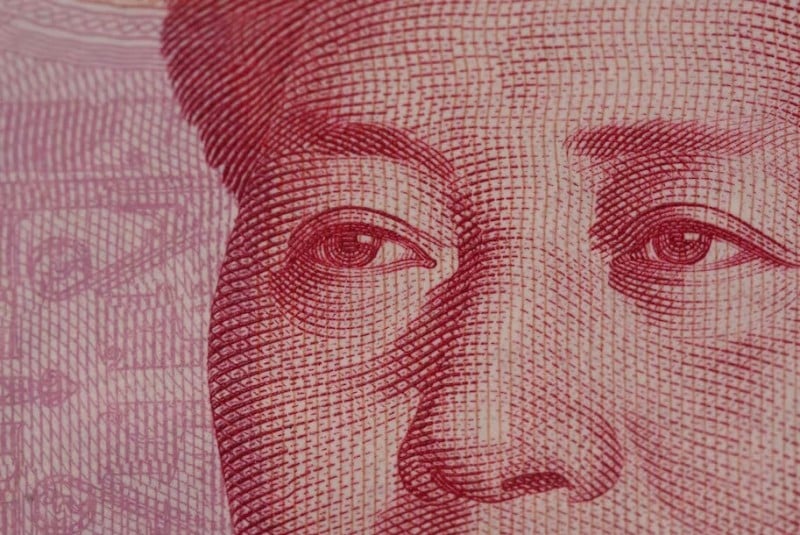
Henry Heller: The rise of China and the decline of the West

Photo by David Dennis/Flickr

Henry Heller

April 19, 2023

The focal point of the world’s economy is shifting to Asia and Eurasia

China’s place on the world stage advances year by year. It is arguably already the world’s largest economy. Its Belt and Road Initiative and its other international links like the BRICS have helped to magnify its economic but also its political and cultural influence worldwide.

More and more countries in the Global South are benefiting from these connections and are looking to China for leadership on the basis of mutual benefit. There is every reason to believe these trends will continue. Moreover, we can see that the focal point of the world’s economy is shifting to Asia and Eurasia.

Originally published at Canadian Dimension on March 27, 2023

At the same time, geopolitically, we are headed for a multipolar world with no country able to impose itself as a hegemon. Notably, the Ukraine-Russia war is accelerating these changes.

All of this is becoming possible because of the growing importance of China. In my eyes, the success of these policies is rooted in its economic system. The re-emergence of China on the world stage has been made possible by the maturation of its distinctive brand of socialism.

As we know, capitalism plays a big role in the Chinese economy and links it with the rest of the world. But in my view, this has to be understood in terms of the overall dominance of the Chinese state over the economy and the direction of its development by the Chinese Communist Party.

I am sure that there are ongoing political and other problems with this mode of development. It is a work in progress. But up to now and looking ahead, I think we are looking at a model which is brilliantly successful and notably is outpacing the West. Moreover, there is reason to believe that its success will become more apparent in future years as China becomes still more important on the global stage.

For China, this achievement is an enormous vindication. One can only imagine the meaning of these developments for the Chinese people, especially in light of the 1949 revolution, which liberated China from more than a century of humiliation at the hands of imperialism and brought about the modernization of the country.

The immense Belt and Road Initiative, which is expected to cost more than $1 trillion, represents nothing less than a historic reversal of a Western current which began with the entry of the Portuguese Vasco de Gama into the Indian Ocean over 500 years ago.

Rather than emphasizing this astonishing turn of events, I want to focus on the hostile reaction of the West to the re-emergence of China and Eurasia on the world stage. This refusal is itself a fact of utmost political and historical significance, fraught with danger as it is.

Led by the United States, the reaction of the West is one of denial and rejection. The West so far has been unable or unwilling to accept these momentous transformations presently underway. Since the Obama administration, we have seen this hostility reflected in terms of a rising crescendo of sanctions, military threats and media attacks against China’s supposed human rights record and interference in the political life of other states designed somehow to bring China back to heel under the West.

The centre of this campaign has been the reassertion of the idea of Taiwanese separatism – a pure relic of the Cold War. Taiwan is once more seen as the keystone of the American military containment of China.

Indeed, the posture of the United States conforms to the whole history of modern imperialism.

We know how bitterly the imperialist countries fought with one another for hegemonic control of the world. But in turn, these powers, England, France but also Germany and Japan, had to bow to American primacy by 1945. But American hegemony should be seen as the heir to the legacy of overall Western domination of the world, which began as early as the eighteenth century.

Intrinsic to this domination is a mindset which presumes the dominance of the West or even the white race over the rest of the world as intrinsic to the ‘rules-based’ and natural order of the world. Faced with the threat of China, the West denounces the lack of democracy in China while refusing to acknowledge that its own representative democracy has transformed itself into an oligarchy and a kind of liberal totalitarianism.

The ruling class in the United States and the other Western states are infected with these ideas. The reason for this is that it accords with the material interests of these classes. Faced with the emergence of China and the growing current towards multipolarity, their reaction has been a crude attempt to somehow intimidate China into accepting continued Western dominance.

The primary weapons they have for doing so are military, financial and media.

As a result, we are seeing a global conflict initiated by the West against the rise of Eurasia, the focal points being the South China Sea but also Ukraine. Russia has seen itself as the source of endless riches and as the backdoor to China.

In a certain sense, this conflict reflects a continuation of the imperialist struggles of the past. But the West’s hostility is not simply based on the threat of China as a new world power. It is China’s socialism which, above all, is seen as a menace.

The power of the ruling class in the West rests on the private accumulation of wealth through the exploitation of people and resources. The idea of a state which ultimately bases itself on the predominance of workers and the primacy of use values over exchange values is anathema.

That China is that kind of state and that it is performing at a higher level than world capitalism is terrifying to them.

Given these circumstances, China and the peoples of the world are faced with a complex and difficult situation.

The politics of the West is characterized by a sense of desperation and bravado strikingly reminiscent of the fascists during the Second World War. The logic of the so-called political realism it is pursuing is exposed as a deeply irrational form of Neitzschean will to power.

The potential for war even more destructive than that last great world conflict is indeed real.

On the other hand, it should be emphasized that the peoples of the Global South are resisting attempts to continue to subordinate themselves to Western imperialism.

They realize that the conflict between the exploitive West and the rest of the world is a struggle over their own future.

Moreover, while they have been quiescent up to now, the working class in the West has yet to be heard from.

For how long will it put up with the deterioration in its economic circumstances, ecological irresponsibility and reckless pro-war policies pursued by the ruling classes? Furthermore, there is every sign that the capitalist system that this class controls is weakening or has entered a state of permanent crisis. The growing recklessness of their imperialism is a sign of this.

China with its strong state and party has the possibility of rationally responding and adjusting to this situation which is not true of the West. Time is on the side of China and the Global South.

It is impossible to say how far the crackpot realists in the West are prepared to go in defending their system. Hopefully they will bow to the force of circumstances which are not in their favour. But short of all-out war, we are looking at the emergence of new world system in which China has provided a key model of independent development for other states.

Originally published at Canadian Dimension on March 27, 2023

About the author

Henry Heller is a Professor of History at the University of Manitoba. He is the author of The Birth of Capitalism: A 21st Century Perspective (Pluto Press, 2011), The Cold War and the New Imperialism: A Global History, 1945-2005 (Monthly Review Press, 2006) and The Bourgeois Revolution in France (Berghahn Books, 2006).

Please help TFF remain truly independent by contributing if you benefited from this article

2 Responses

  1. The West denounces the lack of democracy in China which is quite funny considering how effective Chinese democracy is. Here are some numbers… Latana’s Democracy Perception Index 2022 shows that 83 percent of Chinese believe their country is democratic making it the most democratic nation on earth! Edelman Trust Barometer 2023 shows that 89 percent of Chinese trust their government. Ash Center at Harvard Kennedy School in 2020 reported that 95.5 percent of Chinese are satisfied with their government. A 2019 UC San Diego study shows a high level of satisfaction among the Chinese across a range of aspects up to 95 percent. A November 2019 Ipsos survey shows that 95 percent of Chinese believe their country is on the right track. The Global Happiness 2023 survey from Ipsos shows that China is the happiest country in the world at 91 percent. The statistical evidence is overwhelming. Western countries, especially the United States, can only dream of having such numbers.

Related Posts

Jan Oberg May 15, 2026 Go to this Fox News page and scroll the whole way down: President Donald Trump tells the world that his meeting with President Xi Jinping yielded a lot of very concrete political and economic results – of course, only where the Chinese side, according to him, agreed with him. He does not mention the Taiwan issue, but Secretary of State, Marco Rubio, says that it did not feature prominently in their talks and that the US policy on Taiwan has not changed. Then go to China Daily – or Global Times – and you will see that for the Chinese it is framework, principles, structure of cooperation etc. that matters – all embedded in the overall idea of “constructive bilateral relationship of strategic stability.” Nowhere is any concrete agreement or deal – all that Trump refers to – mentioned. At the general level, this gives you insights into the very different social...
Jan Oberg, TFF director April 9, 2026 I was recently invited to have a good, long talk about the world – and, of course, about peace too – with Boris Malagurski on his Weight of Chains Channel on YouTube. It was a real joy and seems to have been greatly appreciated by the viewers too. Mr Malagurski and I shall of course be grateful if you share this conversation in your circles – of course, only if you like what you see and hear 😉☮️ And remember that this one – like hundreds of others with TFF Associates – can be enjoyed at our TFF Video Collection.
A friendly quarrel while we agree that the US sanctions are a weapon of mass destruction and kill more people than wars do. And that we must talk much more about sanctions than we have so far. Jan Oberg, TFF director March 16, 2026 John Mearsheimer recently stated that U.S. sanctions murdered around 38 million people between 1971 and 2021 – see the video below. It is a dramatic figure, and it has spread quickly because it captures, in one sentence, the enormous human cost of modern sanctions. I share his concern about the destructive effects of economic coercion. But the specific number he cites — and the way he attributes it — deserves a friendly academic clarification. The figure comes from a 2023 Lancet Global Health article estimating the mortality effects of unilateral U.S. and EU sanctions over the past half‑century. This is the first point where Mearsheimer’s shorthand diverges from the text: the study...

Recent Articles

Tony Robinson October 4, 2026 Violence is easy to recognise when someone is being beaten, shot or killed. It becomes more difficult when nobody is holding a weapon. Poverty, discrimination, exploitation and repression can restrict a human life just as effectively, although they do so in very different ways and with very different consequences. Simply adding more categories to an ever-growing list of forms of violence does not really solve the problem. The more interesting question is what all these different situations have in common and why it makes sense to describe them using the same word. Human beings do not simply react to what happens around them. They remember the past, imagine things that do not yet exist, make plans and undertake projects. Workers organise because they imagine different working conditions; people migrate because they imagine another life somewhere else; social movements emerge because people refuse to accept the...
It’s a matter of principles, courage, vision and pulling together – while the militarist world is falling apart… Peter Langille October 3, 2026 “Here, then, is the problem which we present to you, stark and dreadful and inescapable: Shall we put an end to the human race; or shall mankind renounce war?”The Bertrand Russell—Albert Einstein Manifesto, July 9, 1955 ⁕ The forecast for what’s ahead is worrisome. The sharp rise in armed conflicts over the past three years is adding to what was already the highest level in over seventy years. Genocides, which should be prevented are supported. A shared climate emergency that jeopardises survival is ignored. Diverse polls now suggest that people are war-weary, worried and interested in a more effective United Nations. And, there are viable policy options for a more secure world! Yet governments are doubling-down, betting on more war and investing heavily. If current trends persist,...
Johan Galtung 1930-2024October 2015 Published here on October 3, 2026 Let us focus on Civilization for conflict analysis and remedies. Major forms of disorder use violence; war is state organized violence. The most belligerent states are the United States of America and Israel, both with civilization roots. National Evangelism, the US Protestant Christian civilization– more national than evangelical–justifies US warfare as exceptionalism of a people chosen by God, with a manifest destiny to run the world. Orthodox Judaism justifies Israeli warfare to conquer and expand from Nile to Euphrates as a religious right and duty to the Eternal One. The third most belligerent country, the UK, no longer believes it is God-chosen but chosen by the USA; not quite the same but something. But the root cause of global disorder lies in the Occident–with Islam–seeing itself as the single, universal civilization valid for all at all times, all others being...

TFF on Substack

Discover and subscribe to more peace materials on TFF Substack

Most Popular

Tony Robinson October 4, 2026 Violence is easy to recognise when someone is being beaten, shot or killed. It becomes more difficult when nobody is holding a weapon. Poverty, discrimination, exploitation and repression can restrict a human life just as effectively, although they do so in very different ways and with very different consequences. Simply adding more categories to an ever-growing list of forms of violence does not really solve the problem. The more interesting question is what all these different situations have in common and why it makes sense to describe them using the same word. Human beings do not simply react to what happens around them. They remember the past, imagine things that do not yet exist, make plans and undertake projects. Workers organise because they imagine different working conditions; people migrate because they imagine another life somewhere else; social movements emerge because people refuse to accept the...
It’s a matter of principles, courage, vision and pulling together – while the militarist world is falling apart… Peter Langille October 3, 2026 “Here, then, is the problem which we present to you, stark and dreadful and inescapable: Shall we put an end to the human race; or shall mankind renounce war?”The Bertrand Russell—Albert Einstein Manifesto, July 9, 1955 ⁕ The forecast for what’s ahead is worrisome. The sharp rise in armed conflicts over the past three years is adding to what was already the highest level in over seventy years. Genocides, which should be prevented are supported. A shared climate emergency that jeopardises survival is ignored. Diverse polls now suggest that people are war-weary, worried and interested in a more effective United Nations. And, there are viable policy options for a more secure world! Yet governments are doubling-down, betting on more war and investing heavily. If current trends persist,...
Johan Galtung 1930-2024October 2015 Published here on October 3, 2026 Let us focus on Civilization for conflict analysis and remedies. Major forms of disorder use violence; war is state organized violence. The most belligerent states are the United States of America and Israel, both with civilization roots. National Evangelism, the US Protestant Christian civilization– more national than evangelical–justifies US warfare as exceptionalism of a people chosen by God, with a manifest destiny to run the world. Orthodox Judaism justifies Israeli warfare to conquer and expand from Nile to Euphrates as a religious right and duty to the Eternal One. The third most belligerent country, the UK, no longer believes it is God-chosen but chosen by the USA; not quite the same but something. But the root cause of global disorder lies in the Occident–with Islam–seeing itself as the single, universal civilization valid for all at all times, all others being...
Read More
Living-Peace-Sign-Budapest-copy
Tony Robinson October 4, 2026 Violence is easy to recognise when someone is being beaten, shot or killed. It becomes more difficult when nobody is holding a weapon. Poverty, discrimination, exploitation and repression can restrict a human life just as effectively, although they do so in very different ways and with very different consequences. Simply adding more categories to an ever-growing list of forms of violence does not really solve the problem. The more interesting question is what all these different situations have in common and why it makes sense to describe them using the same word. Human beings do not simply react to what happens around them. They remember the past, imagine things that do not yet exist, make plans and undertake projects. Workers organise because they imagine different working conditions; people migrate because they imagine another life somewhere else; social movements emerge because people refuse to accept the...
b54a1f10-8c65-4f0b-9dd5-4abc0a7d04cc_2659x2659
It’s a matter of principles, courage, vision and pulling together – while the militarist world is falling apart… Peter Langille October 3, 2026 “Here, then, is the problem which we present to you, stark and dreadful and inescapable: Shall we put an end to the human race; or shall mankind renounce war?”The Bertrand Russell—Albert Einstein Manifesto, July 9, 1955 ⁕ The forecast for what’s ahead is worrisome. The sharp rise in armed conflicts over the past three years is adding to what was already the highest level in over seventy years. Genocides, which should be prevented are supported. A shared climate emergency that jeopardises survival is ignored. Diverse polls now suggest that people are war-weary, worried and interested in a more effective United Nations. And, there are viable policy options for a more secure world! Yet governments are doubling-down, betting on more war and investing heavily. If current trends persist,...
010
Johan Galtung 1930-2024October 2015 Published here on October 3, 2026 Let us focus on Civilization for conflict analysis and remedies. Major forms of disorder use violence; war is state organized violence. The most belligerent states are the United States of America and Israel, both with civilization roots. National Evangelism, the US Protestant Christian civilization– more national than evangelical–justifies US warfare as exceptionalism of a people chosen by God, with a manifest destiny to run the world. Orthodox Judaism justifies Israeli warfare to conquer and expand from Nile to Euphrates as a religious right and duty to the Eternal One. The third most belligerent country, the UK, no longer believes it is God-chosen but chosen by the USA; not quite the same but something. But the root cause of global disorder lies in the Occident–with Islam–seeing itself as the single, universal civilization valid for all at all times, all others being...
Screenshot 2026-10-02 011738
Jan ObergPhD, director, The Transnational Foundation for Peace and Future Research, TFFLund, Sweden October 2, 2026 This is my full original manuscript. The Chinese Academy of Social Science, CASS, makes two publications out if it. 1. China’s Five-year plan emphasized the capabilities of basic research and original innovation. It is regarded as the goal of the future social development, which, as required, should be significantly enhanced. Can you comment on the importance of original innovation in research and academic study? I believe it is easier to define “original innovation” in the natural sciences than in social sciences. The breaking points of what constitutes something new, or innovative, are not quite as sharp in the latter. But in both fields it is about opening up something that was closed, unseen, unexplored before – making manifest what was earlier latent. Innovations come in many forms and shapes – naming something that was not...
arctic-circle-map
The agreement is catastrophic both because of what it says and what it doesn’t mention. It reduces further the major asset of security policies: Freedom of action. Jan Oberg TFF director September 25, 2026 A couple of hours before the agreement was signed on September 22, 2026, I published the following 13 hypotheses about what it would most likely contain on TFF Substack (in English). I was wrong on only the first point. Contrary to what Trump had written on his Truth Social platform, it does not appear to come into force immediately. In fact, it turned out to be worse than even I had anticipated. After these hypotheses now come a number of reflections in light of what the agreement actually contains, and does not contain, as well as the way in which it has generally been presented by major media outlets and by the public-service broadcaster DR. My...
girl-5894831_1280
Below are TFF-related media mentions, comments, videos and social media posts published elsewhere but not on this homepage. We happen to catch and list only a fraction. Regarding video comments and debates, we recommend that you go to the TFF Video Channel on Substack where many of them are reproduced. Jan Oberg is a contributor to China Daily – 52 million daily clicks – and Global Times, CGTN and CCTV (the national television), China Investment, Xinhua News Agency and several others. Articles and videos on these media very often multiply into countless Chinese (and Western media) that re-post them from these main media. Thanks to The China Academy, his analyses, interviews and comments are frequently posted on YouTube channels such as Thinkers Forum and Wave Media. These videos are often re-posted on Bilibili (China’s YouTube), the China Content Center on TikTok, and on the Chinese edition of TikTok, Douyin.com. This means reaching hundreds of millions of viewers worldwide over a year. While there are too many to catch on all these...




