
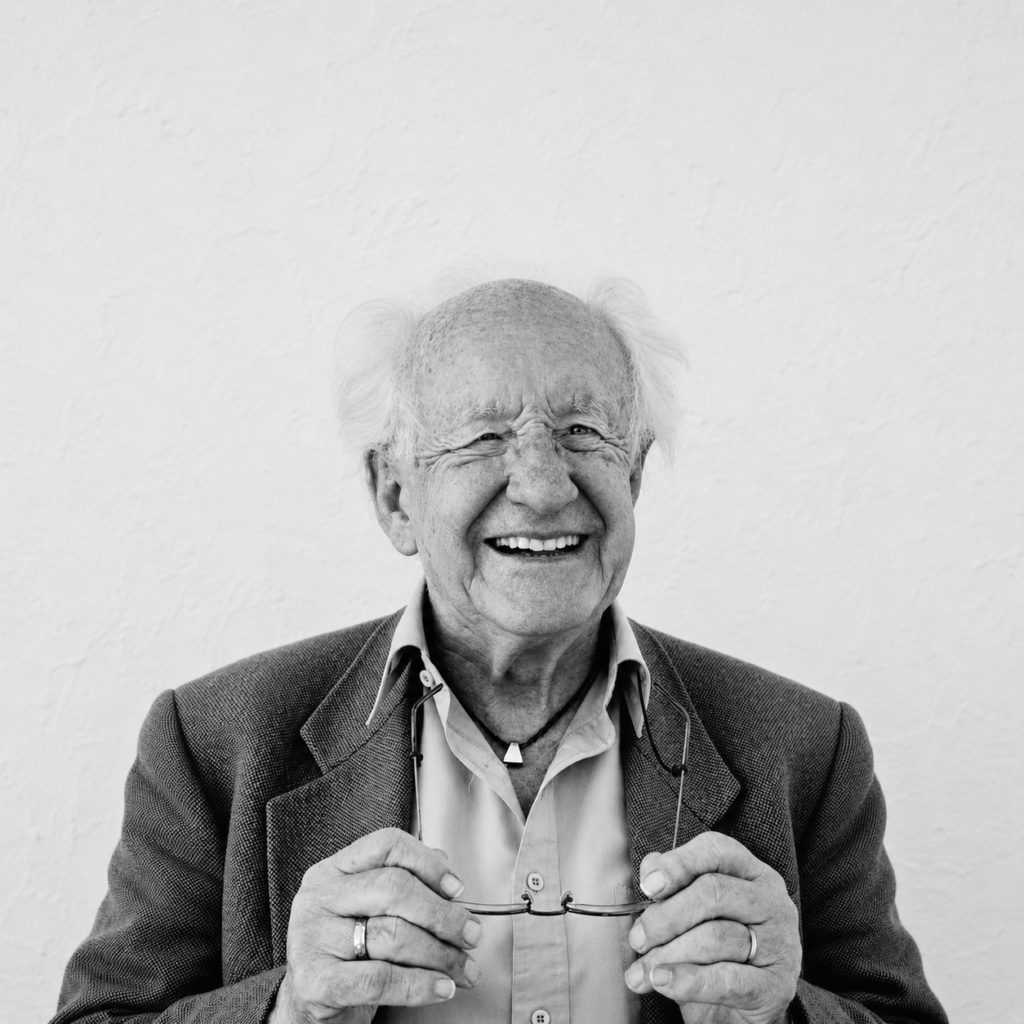
Gandhi and the struggle against imperialism Five points at the UN on October 2, 2007

johangaltung

Mr Chairperson, Foreign Ministers, Excellencies, Panelists!

Gandhi was fighting the UK Empire, meaning UK invasion and occupation.  One invasion, Viceroy Richard Wellesley in 1798 against the Sultan of Mysore, was also clearly anti-Muslim. The same year Napoleon’s mission civilisatrice invaded Egypt to make himself Sultan el-kebir, Great Ruler, but were thrown out in 1801. The English came in 1807 and Egypt was a colony till 1922.

Gandhi fought an evil empire as seen by how they reacted to the Sepoy mutiny 150 years ago or to the 1919 Amritsar massacre. Churchill not only referred to him as a semi-naked fakir, but sincerely hoped he would fast himself to death. But in 1947 it was all over: first went India, then the rest of the empire, mainly due to Gandhi’s nonviolence. Today they are both, India and England, blossoming, India with a brilliant linguistic federalism and phenomenal economic growth, England heading the same way but still with some residual imperialism. And Gordon Brown sounds much like Tony Blair without the flare; in the “special relationship” with the senior partner.

The US global Empire – broader, deeper, and more evil – was the successor to the UK global Empire, with Israel being the successor in the Middle East and Australia in the Pacific. They all have settler colonialism in common. That spells invasion and occupation; today by the USA in Iraq, Afghanistan and partly Saudi-Arabia, and by Israel in Palestine. But people hate being invaded and occupied, regardless of invader-occupier creativity in legitimizing the exercise. So there is massive resistance in all four, like there was in Norway under Germany.

How did Gandhi resist? By brilliantly transcending the conflict between the kshatriyah varnadharma of violent heroic struggle, and his own swadharma of nonviolence into nonviolent heroic struggle, known as satyagraha. Born 9/11 1906; with no readiness to kill but to be killed, the ultimate sacrifice.

To many satyagraha above all means nonviolent struggle resisting direct and/or structural violence. But there is much more to satyagraha, particularly five points that go beyond such terms as “struggle”, “resistance”, “heroic” and “sacrifice”, way into deeper and wiser politics than victorious invasions.

All five points apply to the four anti-imperial struggles today. The struggles spell an end to fundamentalist Christian US and hard Zionist Israeli imperialism. But the gandhian points would raise USA and Israel to conviviality with others. They cut both ways: these are gandhian messages not only to the invaders-occupiers in Washington-Jerusalem but, also to the invaded-occupied in Iraq-Afghanistan-Palestine-Saudia. The more they are practiced the better for both sides, and for us all.

Point 1:  Never fear dialogue

Gandhi dialogued with everybody in his many struggles, including with the Viceroy of an Empire he had come to loathe. And it bore fruits.  It is pathetic to watch a US Secretary of State travel in and out of Israel assuring them that she will meet with neither Hamas, nor Hizbollah, nor Damascus, nor Tehran when that is exactly what she has to do to make her points and maybe learn some new ones.  She may feel it is too much an honor for those evil parties. But they [1] may not see an encounter with the USA as that much an honor, nor [2] will this approach make them more amenable. They will not go away anyhow.

But this also applies to a Mullah Omar and a Hektamayar, representing the religious and the national resistance, on top of which comes the resistance from the overwhelming majority of Afghans one way or another who simply want neither invasion nor occupation.  USA/NATO fight three wars. Thou shalt dialogue. The conditionality approach, first NATO out, then talks, is highly understandable, but that point can be much better communicated in a dialogue covering all issues.


Point 2: Never fear conflict: more opportunity than danger

For Gandhi conflict was a challenge to know each other, having something in common, not being irrelevant to each other. Let us talk it over!  He preferred violence to cowardice and conflict, disharmony to no relation at all; the best being, of course, the nonviolence of the brave and relations of harmony.

Conflict can be understood the Anglo-American way as violent clashes of actors-parties, or as an incompatibility of the goals of those actors-parties. The former perspective leads to control of one or more party, usually of Other, even to incapacitation-expulsion-extermination. The latter may lead to problem-solving. Thus, how can legitimate goals of all parties be accommodated? Could it be that even Other has legitimate goals?  And–horribile dictu–that I, Self, fall short?

A conflict can be seen by the less mature and very self-righteous as a chance to impose oneself, prevail, to “win”. Or, by the more mature, as an occasion for Self-examination rather than Other-censure, and a search for that possibly new reality where legitimate goals of all parties can be accommodated. Like the Muslim world’s goals of Respect for Islam and the Western world’s goals of Democracy and Free markets. Not easy, that one.

Maybe West could learn from Islamic economics deep respect for economic transactions as human transactions?  And Islam from the West deep respect for more diversity of views and opinions?  Welcome conflict, welcome challenge!

Points 3 and 4 introduce a major medium in which all conflicts unfold: time. Diplomats in general, not only Anglo-Americans, negotiate ratifiable agreements in the game of goals, values, interests as they present themselves synchronically, at present.  But in real life the past throws long shadows into the present. Conflicts are often asynchronic, the parties live in different time zones; years, decades, centuries apart. They all have their own Greenwich Mean Time, and often very mean, indeed.

And in real life the future is like a light-house with red, yellow and green sectors: Danger, stay out! – Proceed with care! – This is the road!  Some lights are strong, even blinding, others are perceived only by the most sensitive.  You neglect them at your own considerable risk.  As the advisor to Serbian president Cosic, Professor Stojanovic, said of the US approach before the 1999 illegal NATO attack on Serbia: USA suffers from excessive presentism, aware neither of history, nor of what the future may hold in store of good, bad and worse.

Point 3: Know History or you are doomed to repeat it (Burke)

Gandhi knew the history of the English and their Empire often better than they themselves while at the same time being at home in his own, the facts and the equally important fiction (like the Mahabharata). He came to the conclusion that the UK imperial inclination to glory and ruling the waves (with some land thrown in) had to be fought at its root, by spinning chains of nonviolence into the very heart of England. So he did.

But history sediments layers of trauma, not only glory, in the collective memory. How can we ever understand the resistance of the four without understanding the traumas suffered by

Iraq: 1258, the Baghdad massacre by the Ilkhan and the Pope and 1916, UK carving out Iraq; province 19, Kuwait in 1898;
Afghanistan: the UK invasions 1838-1878 and the Soviet 1979;
Palestine: 1916 Sykes-Picot treason, 1948 nakhba for 711,000;
Saudi Arabia: the 1945 treaty killing the wahhab vision of life.

Suffer such unreconciled traumas, and, rightly or not, next time the perpetrator comes uninvited the response is “there they go again”.  Anglo-America is so self-righteous that they do not even fear confirming predictions flowing from history.  Like most perpetrators their memory is short.  Victims never forget. Acknowledgment of the traumas and conciliation are much overdue.

Point 4: Image the future or you will never get there

“Be today the future you want to see tomorrow” was Gandhi’s way of translating this point into positive non-cooperation and civil disobedience, emptying the oppressive structures while at the same time shedding light on the future and training the satyagrahi for positive peace, conviviality, not only for the repertory of meetings, resolutions and demonstrations.

The unifying vision in the struggle is Invaders Go Home!, saying that loud and clear. But Gandhi’s vision went beyond independence, swaraj, to a world that included the occupier: more English than today, but as friends, on a basis of equality!

Very compelling, very disarming.  Maybe there is a message here for all six parties to think, speak and act in terms of a future together?  Here is an example: a Middle East Community – modeled on the European Community that accommodated former Nazi Germany – of Israel’s five border countries Lebanon, Syria, Jordan, Palestine fully recognized and Egypt, with a formerly hard zionist Israel?

Point 5: While fighting occupation clean up your own house!

Gandhi was certainly resisting the English Empire and fighting for swaraj. But that did not prevent him from attending to such ills of his own Mother India as untouchability, discrimination of women, misery, and the increasing gap between Hindus and Muslims. The latter ultimately led to the partition which, with the disastrous change of the proposed borderline by the last Viceroy, Lord Mountbatten, led to a blood-bath and a trauma exacerbating for generations the protracted Kashmir conflict.

That the colonizers also critiqued untouchability and women discrimination, outlawing its extreme expression in the suttee, did not prevent Gandhi from attacking these social ills. His was not the cheap logic of denying any truth also held by the chief antagonist.  Many at a lower level of maturity become victims of polarization. 

Nor did he attack caste because the colonizers often used it as one of their levers in their divide et impera tactic to dominate India. He fought it as evil in its own right.

Now back to occupiers and occupied: what could they learn from Gandhi in addition to turning from violence to nonviolence?

– The USA: to struggle energetically to lift the bottom 50% of society where basic needs are concerned; to decrease the gap between rich and poor; to restore to dignity the First Nations, the Inuits, the Hawaiians; to lift discrimination; to reduce the alienation and fear underlying the violence and drug abuse in spite of the fact that many who hate the US Empire say so –

– Israel: to lift Arab Israelis into first class citizenship, to reduce the increasing gap between rich and poor and between Ashkenazim and Sephardim and other groups; to reduce the corruption and normless hedonism tearing at the society in spite of the fact that many who hate hard zionism say so –

– Iraq: for the Sunnis to give up their goal of running Iraq from Baghdad, for Kurds and Shias to fight nonviolently for their inalienable right to open borders to other Kurds and Shia Arabs, for them all to find a unity in diversity somewhere between federation and confederation; to preserve such Hussein gains as literacy, welfare state, freedom of choice for women to wear the hijab or not in spite of the fact that Saddam said so –

– Afghanistan: will be managed by Afghans, but enter a compact with drug-consuming countries: we reduce the supply, you reduce the demand by creating more humane societies and we monitor each other in spite of the fact that invaders and Taliban say so – ;

– Palestine:  to continue the Hamas struggle against corruption, renewing the society, to lift non-Muslim Palestinians into first class citizenship; to pursue energetically the struggle on the basis of the Qur’an for more gender equality.

– Saudi Arabia:  to try to bridge the gap between wahhabism and Western materialism, to be up front searching for alternative non-polluting and non-depleting ways of converting energy; to pursue energetically the struggle on the basis of the Qur’an for more gender equality; to explore non-Western form of democracy.

There is so much work to do! 

The problem is how to channel the energies produced by a conflict so that the parties blossom. The three (and a half) occupations have to be lifted, invaders have to go home and dismantle their imperial structures. Both sides must be liberated from the disastrous tie of imperialism. By fighting according to the gandhian way both sides can blossom because these energies are used positively.

Nonviolent resistance would have served Iraqis against both Hussein and Bush, Afghans against their invaders, Palestinians inside and outside Israel against hard zionism, and Saudis much better than the violent 9/11 (an extra-judicial execution of two buildings for their sins against Alla’h?).

To repeat, Gandhi also used these five approaches in his constructive handling of conflict:
     
Point 1: Never fear dialogue
Point 2: Never fear conflict: more opportunity than danger
Point 3: Know History or you are doomed to repeat it(Burke)
Point 4: Image the future or you will never get there
Point 5: While fighting occupation clean up your own house!

As Sonia Gandhi said in her concluding address this morning of the first International Day of Nonviolence: Let us embrace nonviolence, and become truly human. 

A vote of thanks to India for putting Gandhi and his nonviolence on the political agenda!

*  The United Nations General Assembly unanimously adopted a resolution on 15 June 2007 to observe and celebrate annually Mahatma Gandhi’s birthday, October 2, as the International Day of Nonviolence.  The resolution was piloted by India and was co-sponsored by 142 countries.  Among those not cosponsoring were the United States and Norway.

      On 2 October 2007 there was an informal meeting of the UN General Assembly Plenary.  Among the speakers were the UN Secretary General Ban Ki Moon, and Sonia Gandhi who also expressed her gratitude to the co-sponsors of the resolution.  Following that there was a Round Table Meeting in Conference Room 5, UN Building. The panelists were Dr Ahmed Kathrada, Prof. Amartya Sen, Dr Ela Gandhi, Dr Gene Sharp, Rev Jesse Jackson Sr, Prof. Johan Galtung, Prof. John Nash and Dr Lia Diskin.

Related Posts

Photos © TFF 2000 Read PressInfo 90 “Lift the Sanctions and Bring More Aid to Yugoslavia” See Pictures from Belgrade © TFF 2000 Please reprint, copy, archive, quote or re-post this item, but please retain the source.
By Jan ObergTFF co-founder and director February 11, 2026 PART 3 — ECONOMICS, TRADE & FINANCIAL SOVEREIGNTY A. Trade Measures & Market Signaling Economic pressure can be applied instantly and scaled without violence. Immediate Measures (within a week) Government boycott US goods and services  A very powerful signal which over time will be felt. Targeted tariffs on selected U.S. goods Symbolic but high-visibility sectors send a clear message. Suspend trade facilitation talks A peaceful pause that signals deep concern. Freeze U.S. participation in public procurement – military procurement in particular A nonviolent way to reduce influence. Competition law review of U.S. corporations A legal tool to scrutinise market dominance. Longer-Term Measures EU–Asia–Africa trade corridors Reducing reliance on U.S. markets. European supply chains for critical minerals Strategic autonomy in resource access. European Strategic Trade Authority Monitoring coercive practices globally. Euro-denominated commodity markets Weakening the dollar’s pricing monopoly. The EU must resume contacts and negotiations with Russia, focusing on energy cooperation To...
PART 2 — Diplomacy, Law and Nonviolent Power By Jan ObergTFF co-founder and director January 26, 2026 This is the second of four TFF-created idea portfolios designed to curb the global reach of the United States and, in both the short and long term, help catalyse a worldwide nonviolent resistance to what many observers describe as the Trump administration’s uniquely confrontational, destructive and world-threatening policies. These portfolios outline what governments and citizens across the world can do through dynamic diplomacy, creative initiatives, and strictly nonviolent means. They are typical TFF works in that we do not only tell what the problem is and how bad it will go – as 90+% of all commentators, experts and scholars do – we tell what we think can be done, inviting you to think of what you think you can do. It seems painfully clear to me that the current political dynamics in Washington increasingly resemble the most dangerous...

Recent Articles

Tony Robinson October 4, 2026 Violence is easy to recognise when someone is being beaten, shot or killed. It becomes more difficult when nobody is holding a weapon. Poverty, discrimination, exploitation and repression can restrict a human life just as effectively, although they do so in very different ways and with very different consequences. Simply adding more categories to an ever-growing list of forms of violence does not really solve the problem. The more interesting question is what all these different situations have in common and why it makes sense to describe them using the same word. Human beings do not simply react to what happens around them. They remember the past, imagine things that do not yet exist, make plans and undertake projects. Workers organise because they imagine different working conditions; people migrate because they imagine another life somewhere else; social movements emerge because people refuse to accept the...
It’s a matter of principles, courage, vision and pulling together – while the militarist world is falling apart… Peter Langille October 3, 2026 “Here, then, is the problem which we present to you, stark and dreadful and inescapable: Shall we put an end to the human race; or shall mankind renounce war?”The Bertrand Russell—Albert Einstein Manifesto, July 9, 1955 ⁕ The forecast for what’s ahead is worrisome. The sharp rise in armed conflicts over the past three years is adding to what was already the highest level in over seventy years. Genocides, which should be prevented are supported. A shared climate emergency that jeopardises survival is ignored. Diverse polls now suggest that people are war-weary, worried and interested in a more effective United Nations. And, there are viable policy options for a more secure world! Yet governments are doubling-down, betting on more war and investing heavily. If current trends persist,...
Johan Galtung 1930-2024October 2015 Published here on October 3, 2026 Let us focus on Civilization for conflict analysis and remedies. Major forms of disorder use violence; war is state organized violence. The most belligerent states are the United States of America and Israel, both with civilization roots. National Evangelism, the US Protestant Christian civilization– more national than evangelical–justifies US warfare as exceptionalism of a people chosen by God, with a manifest destiny to run the world. Orthodox Judaism justifies Israeli warfare to conquer and expand from Nile to Euphrates as a religious right and duty to the Eternal One. The third most belligerent country, the UK, no longer believes it is God-chosen but chosen by the USA; not quite the same but something. But the root cause of global disorder lies in the Occident–with Islam–seeing itself as the single, universal civilization valid for all at all times, all others being...

TFF on Substack

Discover and subscribe to more peace materials on TFF Substack

Most Popular

Tony Robinson October 4, 2026 Violence is easy to recognise when someone is being beaten, shot or killed. It becomes more difficult when nobody is holding a weapon. Poverty, discrimination, exploitation and repression can restrict a human life just as effectively, although they do so in very different ways and with very different consequences. Simply adding more categories to an ever-growing list of forms of violence does not really solve the problem. The more interesting question is what all these different situations have in common and why it makes sense to describe them using the same word. Human beings do not simply react to what happens around them. They remember the past, imagine things that do not yet exist, make plans and undertake projects. Workers organise because they imagine different working conditions; people migrate because they imagine another life somewhere else; social movements emerge because people refuse to accept the...
It’s a matter of principles, courage, vision and pulling together – while the militarist world is falling apart… Peter Langille October 3, 2026 “Here, then, is the problem which we present to you, stark and dreadful and inescapable: Shall we put an end to the human race; or shall mankind renounce war?”The Bertrand Russell—Albert Einstein Manifesto, July 9, 1955 ⁕ The forecast for what’s ahead is worrisome. The sharp rise in armed conflicts over the past three years is adding to what was already the highest level in over seventy years. Genocides, which should be prevented are supported. A shared climate emergency that jeopardises survival is ignored. Diverse polls now suggest that people are war-weary, worried and interested in a more effective United Nations. And, there are viable policy options for a more secure world! Yet governments are doubling-down, betting on more war and investing heavily. If current trends persist,...
Johan Galtung 1930-2024October 2015 Published here on October 3, 2026 Let us focus on Civilization for conflict analysis and remedies. Major forms of disorder use violence; war is state organized violence. The most belligerent states are the United States of America and Israel, both with civilization roots. National Evangelism, the US Protestant Christian civilization– more national than evangelical–justifies US warfare as exceptionalism of a people chosen by God, with a manifest destiny to run the world. Orthodox Judaism justifies Israeli warfare to conquer and expand from Nile to Euphrates as a religious right and duty to the Eternal One. The third most belligerent country, the UK, no longer believes it is God-chosen but chosen by the USA; not quite the same but something. But the root cause of global disorder lies in the Occident–with Islam–seeing itself as the single, universal civilization valid for all at all times, all others being...
Read More
Living-Peace-Sign-Budapest-copy
Tony Robinson October 4, 2026 Violence is easy to recognise when someone is being beaten, shot or killed. It becomes more difficult when nobody is holding a weapon. Poverty, discrimination, exploitation and repression can restrict a human life just as effectively, although they do so in very different ways and with very different consequences. Simply adding more categories to an ever-growing list of forms of violence does not really solve the problem. The more interesting question is what all these different situations have in common and why it makes sense to describe them using the same word. Human beings do not simply react to what happens around them. They remember the past, imagine things that do not yet exist, make plans and undertake projects. Workers organise because they imagine different working conditions; people migrate because they imagine another life somewhere else; social movements emerge because people refuse to accept the...
b54a1f10-8c65-4f0b-9dd5-4abc0a7d04cc_2659x2659
It’s a matter of principles, courage, vision and pulling together – while the militarist world is falling apart… Peter Langille October 3, 2026 “Here, then, is the problem which we present to you, stark and dreadful and inescapable: Shall we put an end to the human race; or shall mankind renounce war?”The Bertrand Russell—Albert Einstein Manifesto, July 9, 1955 ⁕ The forecast for what’s ahead is worrisome. The sharp rise in armed conflicts over the past three years is adding to what was already the highest level in over seventy years. Genocides, which should be prevented are supported. A shared climate emergency that jeopardises survival is ignored. Diverse polls now suggest that people are war-weary, worried and interested in a more effective United Nations. And, there are viable policy options for a more secure world! Yet governments are doubling-down, betting on more war and investing heavily. If current trends persist,...
010
Johan Galtung 1930-2024October 2015 Published here on October 3, 2026 Let us focus on Civilization for conflict analysis and remedies. Major forms of disorder use violence; war is state organized violence. The most belligerent states are the United States of America and Israel, both with civilization roots. National Evangelism, the US Protestant Christian civilization– more national than evangelical–justifies US warfare as exceptionalism of a people chosen by God, with a manifest destiny to run the world. Orthodox Judaism justifies Israeli warfare to conquer and expand from Nile to Euphrates as a religious right and duty to the Eternal One. The third most belligerent country, the UK, no longer believes it is God-chosen but chosen by the USA; not quite the same but something. But the root cause of global disorder lies in the Occident–with Islam–seeing itself as the single, universal civilization valid for all at all times, all others being...
Screenshot 2026-10-02 011738
Jan ObergPhD, director, The Transnational Foundation for Peace and Future Research, TFFLund, Sweden October 2, 2026 This is my full original manuscript. The Chinese Academy of Social Science, CASS, makes two publications out if it. 1. China’s Five-year plan emphasized the capabilities of basic research and original innovation. It is regarded as the goal of the future social development, which, as required, should be significantly enhanced. Can you comment on the importance of original innovation in research and academic study? I believe it is easier to define “original innovation” in the natural sciences than in social sciences. The breaking points of what constitutes something new, or innovative, are not quite as sharp in the latter. But in both fields it is about opening up something that was closed, unseen, unexplored before – making manifest what was earlier latent. Innovations come in many forms and shapes – naming something that was not...
arctic-circle-map
The agreement is catastrophic both because of what it says and what it doesn’t mention. It reduces further the major asset of security policies: Freedom of action. Jan Oberg TFF director September 25, 2026 A couple of hours before the agreement was signed on September 22, 2026, I published the following 13 hypotheses about what it would most likely contain on TFF Substack (in English). I was wrong on only the first point. Contrary to what Trump had written on his Truth Social platform, it does not appear to come into force immediately. In fact, it turned out to be worse than even I had anticipated. After these hypotheses now come a number of reflections in light of what the agreement actually contains, and does not contain, as well as the way in which it has generally been presented by major media outlets and by the public-service broadcaster DR. My...
girl-5894831_1280
Below are TFF-related media mentions, comments, videos and social media posts published elsewhere but not on this homepage. We happen to catch and list only a fraction. Regarding video comments and debates, we recommend that you go to the TFF Video Channel on Substack where many of them are reproduced. Jan Oberg is a contributor to China Daily – 52 million daily clicks – and Global Times, CGTN and CCTV (the national television), China Investment, Xinhua News Agency and several others. Articles and videos on these media very often multiply into countless Chinese (and Western media) that re-post them from these main media. Thanks to The China Academy, his analyses, interviews and comments are frequently posted on YouTube channels such as Thinkers Forum and Wave Media. These videos are often re-posted on Bilibili (China’s YouTube), the China Content Center on TikTok, and on the Chinese edition of TikTok, Douyin.com. This means reaching hundreds of millions of viewers worldwide over a year. While there are too many to catch on all these...




