
Escaping the abusive state: the Snowden and Lynne Stewart cases

The more contact one has with the modern state, even in those societies that have long constitutional traditions entrenching civil liberties, the more grounds there are for deep and growing concern. I suppose that the most dramatic exhibition of the dangers being posed as 2014 approaches, and we are reminded that this will be 30 years after 1984, are associated with Edward Snowden’s extraordinary disclosures of the global network of surveillance being operated by the National Security Agency in the United States (NSA).

Such a network presupposes that we are all, that is, every inhabitant on the planet to be regarded as worth investigating as potential terrorist threats, and along the way establishing a huge data bank of information that can be used for nefarious purposes at any point to disempower and subvert protest movements or even blackmail anyone seen to be obstructing projects dear to the government or any special interest group that has the government’s ear on matters it cares about.

In important respects more disturbing than the Snowden revelations was the rabid response of the supposedly liberal government presided over by Barack Obama. No stone was left unturned, other than assassination or kidnapping, in the effort to gain physical custody over Snowden evidently with the intention of prosecuting him to the full extent of the law as an odious criminal offender. Foreign governments were badgered to cooperate in the pursuit, a plane carrying the Bolivian president was improperly denied access to the airspace of several European countries and forced to land in Vienna, because it was suspected of carrying Snowden.

Such an enforcement dynamic completely overlooked the political nature of Snowden’s crimes, which have been uniformly regarded as placing an accused individual beyond the reach of extradition if outside of sovereign territory, which was definitely the case here, making Snowden legally unreachable even in the event that countries involved had extradition treaty arrangements for cooperative criminal law enforcement. Such treaties did not exist in relation to China and Russia, the countries where Snowden was physically present, and yet the United States persisted in its demands, and treated the Chinese and Russian governments as behaving in a hostile fashion of diplomatic relevance when they rejected the demands of the U.S. State Department to treat Snowden as a routine fugitive from criminal justice. Not so incidentally, the United States government has long shielded those accused of even violent crimes by foreign governments through reliance on this exception to extradition based on the political nature of the crime.

Perhaps, the most troubling aspect of this still festering situation is the energy devoted to Snowden as the whistleblower, more derisively referred to as ‘a leaker,’ while ignoring implications for a humane and democratic future by treating everyone, everywhere as a potential enemy who would be spied upon to the extent technology allowed. There was some mild pushback by Congress, seeking clearer guidelines on the mandate of the NSA, and searching for the outer limits of the permissible encroachment on the privacy of individuals, governments, and economic entities. In the background is a well-grounded suspicion that part of the motivation for global surveillance is to assure a competitive edge for American property, trade, and investment interests, and to gain dirt on foreign diplomats and political leaders.

Overlapping with the official fury directed at Snowden was the broader anger directed at whistleblowers whose disclosures sought to set off alarm bells. Those who had the temerity to disclose governmental criminal wrongdoing were themselves criminalized by a focus on their breach of excessive classification restrictions. It should be clear, as highlighted by Daniel Ellsberg’s notable reflections on the release of the Pentagon Papers gathered in his book appropriately titled Secrets, that the excesses of governmental secrecy are joined at the hip to extravagant surveillance in what amounts to a perverse twinning relationship. The very government that refuses to accept restrictions on its invasions of the privacy of its citizens and people around the world, mounts unprecedented and simultaneous claims that it needs to operate without any accountability behind several high walls of secrecy.

The experiences of Julian Assange and Chelsea Manning are of a piece with that of Edward Snowden: vindictive backlash, exaggerated security claims, and an arrogant refusal to gaze in the mirror. The Wikileaks/Manning disclosures revealed serious war crimes and governmental cover ups, the existence of which make a strong case for violating pledges of secrecy that are relied upon to hide the ugly dimensions of what is involved in foreign policy, especially in relation military interventions carried out in such distant countries as Afghanistan and Iraq. Should not the American people have a write to know about state crimes committed in their name? Should not the peoples living in foreign countries have the right to know about such crimes that produce suffering and victimization in their supposedly sovereign countries? And when such disclosures do occur, should not the government have the decency to acknowledge its own wrongdoing, and thank the whistleblower and apologize to those who were victimized?

My motivation in writing this piece was prompted by seemingly different more personal outrages associated with the behavior of the liberal state. In the first instance, I have been deeply moved by the continuing tragic saga of Lynne Stewart, a courageous American lawyer who has a long record of defending unpopular political and indigent clients, who has been allowed to languish for months in a Texas jail despite suffering from an acute form of terminal cancer.

Her apparent crime that landed her in prison was to pass on information and private messages to the family of ‘the blind Sheik’ (Omar Abdel-Rahman) whom she was representing (alongside Ramsey Clark, the former U.S. Attorney General) in the terrorist conspiracy trial arising out of the earlier 1993 attack on the World Trade Center. What has been most shocking is that despite numerous recommendations from medical and prison officials to the effect that Stewart easily qualifies for ‘compassionate release’ from prison, a position even endorsed by judicial officials, she remains to this day cruelly confined because Charles Samuels, Director of the Federal Bureau of Prisons, has refused to sign off on her plea.

This incarceration of Lynne Stewart is such an extreme instance of vicious and sadistic state behavior toward an honorable citizen that its full horror cannot be fully comprehended by a mere description of her experience. For Lynne Stewart’s story to be credibly portrayed will likely depend on some future artistic enactment as by film or fiction. As so often is true, such a descent into the domain of unspeakable evil can only be grasped if expressed through film or fiction.

My immediate reason for writing in this manner has been an unfolding tale of apparently well-intentioned cruelty by the state that occurred recently in Great Britain. A 35 year old pregnant Italian woman, whose name cannot be disclosed under British criminal law, was visiting the UK a few months ago for the sake of job training course at Stansted Airport in Essex, not far from London. While there she apparently stopped taking medication for a preexisting bipolar condition, resulting in what has been described in the media as ‘a panic attack.’

Only then did a perfect storm engulf her life. Her disturbed condition was reported to British authorities under the Mental Health Act whose personnel stepped in and took over the case. In disputed testimony the woman was alleged to need to be constrained. Accordingly, she was transferred to a mental hospital where she was heavily sedated, during which time her baby was delivered by C-Section surgery without her consent, and even her knowledge as she was unconscious. Her lawyer contends that she at all times, including when suffering from mental distress, retained the capacity to give or withhold her consent from the procedure undertaken. If correct, a state-ordered invasive approach to her pregnancy was certainly improper, a violation of the most basic of reproductive rights. Even if she was not sufficiently stable to make an informed decision, it seemed at least necessary to refer such a question to a responsible process of assessment, which was not done as far as is known, or consult with a family member.

But the abusive behavior did not stop after the child was born. Quite incredibly, some reports contend that she was not even allowed to see her own baby, while others say she was allowed for two days to have her baby in the hospital room, but it was then summarily removed with the intent to sever her connection permanently. She returned to Italy where her health and mental stability were fully restored by resuming medication at which point she appealed to British courts to acquire custody of the child who had by this time been turned over to foster care.

Her appeal was denied despite her Italian nationality, place of residence, and the evidence that she was a competent mother to children growing up under her parental supervision. She didn’t owe the slightest allegiance to Britain and yet her desire and capacity to handle the upbringing of her biological child was rejected by judicial fiat. In a secondary development, her former husband, the father of the child, who was living in America appealed to a British court to have the child brought up by his sister, the aunt of the child, who was certified to be a highly responsible person with excellent parental qualifications and a readiness to undertake the task.

The request was denied by the British judge on the ground that there was no ‘blood’ link with the American relative, and that kinship was not sufficient. The result, to date, is the assignment of the baby to a foster home that has no familial connection whatsoever, denying the mother even visitation rights. I doubt that even the most absolutist monarchy would be as contemptuous of humane treatment as has been the behavior of this British welfare/judicial bureaucratic nightmare, an unfolding post-Kafka horror story.

Even granting the well-intentioned innocence of government in relation to these problematic undertakings affecting this mother and child, it is one more distressing example of what happens to people when the government insists that it knows best what to do in situations of admitted social and ethical complexity. In this instance, it is not acting beyond the law or above the law, but within the law.

What took the place was decreed from start to finish by official institutions and administered by bureaucrats probably thinking that they were doing their job in a responsible fashion. As has been observed in some critical writing in the British print media, this story has come to light in part because the victim mother had the resources and composure to seek help from lawyers and friends, as well as the Italian government, and was perceived as a ‘European.’

If instead she was an unlawful immigrant or, worse, a Roma, it is likely that the public would never even have heard of these events, and the whole episode would have been kept within the black box of standard operating procedures when it came to handling the grievances of those among us who are unwanted and marginalized.

In my view, these seemingly disparate occurrences are all expressions of the moral arrogance of the modern liberal state, and its failure to strike a decent balance between freedom and security. There is no doubt that the recent challenges posed by extremist non-state actors do require adjustments in how government protects those resident within its borders, but the tendency to exaggerate the threat so as to instill sufficient fear in the population to justify the wide spectrum of responses that feature high defense spending, Guantanamo and Abu Ghraib at one end and Snowden and Manning at the other end is what should be an occasion for an entirely rational collective panic attack in democratic societies, showing healthy signs of deep attachment to the values and practices of freedom. When there is instead relative quiet, it adds to concerns about a general mood of passivity, resignation, and even acquiescence in ‘the new authoritarianism,’ encouraging more of the same.

Such patterns in the domain of national security is reinforced by such gratuitous abuses as when harmless prisoners are deprived of contact with their loved ones when at death’s doorstep and a newborn child is removed forever from the love and care of a desiring mother for the sake of some misguided ideas of petty bureaucrats engaged in ‘social services’ and ‘welfare.’

We can and must do better, above all as citizens engaged in the protection of the sort of society we wish to live in; without civic activism of a militant character we can wave goodbye to the promise of genuine democracy.
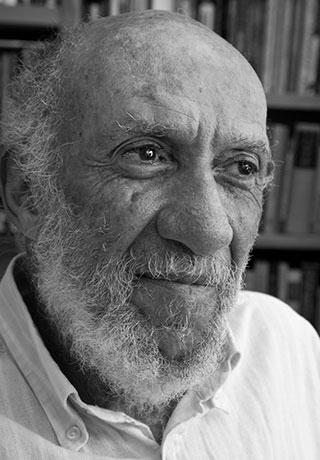

Professor Falk became an adviser to TFF when it was established in 1985.

Related Posts

Lena Petrova of “World Affairs In Context” with more than half a million subscribers on YouTube wanted to explore what a peace researcher like me has to say about, among other things, the First and the Second Cold War and why eethics has disappeared from politics. I am particularly happy about this conversation that also yielded an amazing number of very appreciative comments on YouTube. No doubt, people are longing for alternatives, including peace perspectives.
Photos © TFF 2000 Read PressInfo 90 “Lift the Sanctions and Bring More Aid to Yugoslavia” See Pictures from Belgrade © TFF 2000 Please reprint, copy, archive, quote or re-post this item, but please retain the source.
PART 2 — Diplomacy, Law and Nonviolent Power By Jan ObergTFF co-founder and director January 26, 2026 This is the second of four TFF-created idea portfolios designed to curb the global reach of the United States and, in both the short and long term, help catalyse a worldwide nonviolent resistance to what many observers describe as the Trump administration’s uniquely confrontational, destructive and world-threatening policies. These portfolios outline what governments and citizens across the world can do through dynamic diplomacy, creative initiatives, and strictly nonviolent means. They are typical TFF works in that we do not only tell what the problem is and how bad it will go – as 90+% of all commentators, experts and scholars do – we tell what we think can be done, inviting you to think of what you think you can do. It seems painfully clear to me that the current political dynamics in Washington increasingly resemble the most dangerous...

Recent Articles

Tony Robinson October 4, 2026 Violence is easy to recognise when someone is being beaten, shot or killed. It becomes more difficult when nobody is holding a weapon. Poverty, discrimination, exploitation and repression can restrict a human life just as effectively, although they do so in very different ways and with very different consequences. Simply adding more categories to an ever-growing list of forms of violence does not really solve the problem. The more interesting question is what all these different situations have in common and why it makes sense to describe them using the same word. Human beings do not simply react to what happens around them. They remember the past, imagine things that do not yet exist, make plans and undertake projects. Workers organise because they imagine different working conditions; people migrate because they imagine another life somewhere else; social movements emerge because people refuse to accept the...
It’s a matter of principles, courage, vision and pulling together – while the militarist world is falling apart… Peter Langille October 3, 2026 “Here, then, is the problem which we present to you, stark and dreadful and inescapable: Shall we put an end to the human race; or shall mankind renounce war?”The Bertrand Russell—Albert Einstein Manifesto, July 9, 1955 ⁕ The forecast for what’s ahead is worrisome. The sharp rise in armed conflicts over the past three years is adding to what was already the highest level in over seventy years. Genocides, which should be prevented are supported. A shared climate emergency that jeopardises survival is ignored. Diverse polls now suggest that people are war-weary, worried and interested in a more effective United Nations. And, there are viable policy options for a more secure world! Yet governments are doubling-down, betting on more war and investing heavily. If current trends persist,...
Johan Galtung 1930-2024October 2015 Published here on October 3, 2026 Let us focus on Civilization for conflict analysis and remedies. Major forms of disorder use violence; war is state organized violence. The most belligerent states are the United States of America and Israel, both with civilization roots. National Evangelism, the US Protestant Christian civilization– more national than evangelical–justifies US warfare as exceptionalism of a people chosen by God, with a manifest destiny to run the world. Orthodox Judaism justifies Israeli warfare to conquer and expand from Nile to Euphrates as a religious right and duty to the Eternal One. The third most belligerent country, the UK, no longer believes it is God-chosen but chosen by the USA; not quite the same but something. But the root cause of global disorder lies in the Occident–with Islam–seeing itself as the single, universal civilization valid for all at all times, all others being...

TFF on Substack

Discover and subscribe to more peace materials on TFF Substack

Most Popular

Tony Robinson October 4, 2026 Violence is easy to recognise when someone is being beaten, shot or killed. It becomes more difficult when nobody is holding a weapon. Poverty, discrimination, exploitation and repression can restrict a human life just as effectively, although they do so in very different ways and with very different consequences. Simply adding more categories to an ever-growing list of forms of violence does not really solve the problem. The more interesting question is what all these different situations have in common and why it makes sense to describe them using the same word. Human beings do not simply react to what happens around them. They remember the past, imagine things that do not yet exist, make plans and undertake projects. Workers organise because they imagine different working conditions; people migrate because they imagine another life somewhere else; social movements emerge because people refuse to accept the...
It’s a matter of principles, courage, vision and pulling together – while the militarist world is falling apart… Peter Langille October 3, 2026 “Here, then, is the problem which we present to you, stark and dreadful and inescapable: Shall we put an end to the human race; or shall mankind renounce war?”The Bertrand Russell—Albert Einstein Manifesto, July 9, 1955 ⁕ The forecast for what’s ahead is worrisome. The sharp rise in armed conflicts over the past three years is adding to what was already the highest level in over seventy years. Genocides, which should be prevented are supported. A shared climate emergency that jeopardises survival is ignored. Diverse polls now suggest that people are war-weary, worried and interested in a more effective United Nations. And, there are viable policy options for a more secure world! Yet governments are doubling-down, betting on more war and investing heavily. If current trends persist,...
Johan Galtung 1930-2024October 2015 Published here on October 3, 2026 Let us focus on Civilization for conflict analysis and remedies. Major forms of disorder use violence; war is state organized violence. The most belligerent states are the United States of America and Israel, both with civilization roots. National Evangelism, the US Protestant Christian civilization– more national than evangelical–justifies US warfare as exceptionalism of a people chosen by God, with a manifest destiny to run the world. Orthodox Judaism justifies Israeli warfare to conquer and expand from Nile to Euphrates as a religious right and duty to the Eternal One. The third most belligerent country, the UK, no longer believes it is God-chosen but chosen by the USA; not quite the same but something. But the root cause of global disorder lies in the Occident–with Islam–seeing itself as the single, universal civilization valid for all at all times, all others being...
Read More
Living-Peace-Sign-Budapest-copy
Tony Robinson October 4, 2026 Violence is easy to recognise when someone is being beaten, shot or killed. It becomes more difficult when nobody is holding a weapon. Poverty, discrimination, exploitation and repression can restrict a human life just as effectively, although they do so in very different ways and with very different consequences. Simply adding more categories to an ever-growing list of forms of violence does not really solve the problem. The more interesting question is what all these different situations have in common and why it makes sense to describe them using the same word. Human beings do not simply react to what happens around them. They remember the past, imagine things that do not yet exist, make plans and undertake projects. Workers organise because they imagine different working conditions; people migrate because they imagine another life somewhere else; social movements emerge because people refuse to accept the...
b54a1f10-8c65-4f0b-9dd5-4abc0a7d04cc_2659x2659
It’s a matter of principles, courage, vision and pulling together – while the militarist world is falling apart… Peter Langille October 3, 2026 “Here, then, is the problem which we present to you, stark and dreadful and inescapable: Shall we put an end to the human race; or shall mankind renounce war?”The Bertrand Russell—Albert Einstein Manifesto, July 9, 1955 ⁕ The forecast for what’s ahead is worrisome. The sharp rise in armed conflicts over the past three years is adding to what was already the highest level in over seventy years. Genocides, which should be prevented are supported. A shared climate emergency that jeopardises survival is ignored. Diverse polls now suggest that people are war-weary, worried and interested in a more effective United Nations. And, there are viable policy options for a more secure world! Yet governments are doubling-down, betting on more war and investing heavily. If current trends persist,...
010
Johan Galtung 1930-2024October 2015 Published here on October 3, 2026 Let us focus on Civilization for conflict analysis and remedies. Major forms of disorder use violence; war is state organized violence. The most belligerent states are the United States of America and Israel, both with civilization roots. National Evangelism, the US Protestant Christian civilization– more national than evangelical–justifies US warfare as exceptionalism of a people chosen by God, with a manifest destiny to run the world. Orthodox Judaism justifies Israeli warfare to conquer and expand from Nile to Euphrates as a religious right and duty to the Eternal One. The third most belligerent country, the UK, no longer believes it is God-chosen but chosen by the USA; not quite the same but something. But the root cause of global disorder lies in the Occident–with Islam–seeing itself as the single, universal civilization valid for all at all times, all others being...
Screenshot 2026-10-02 011738
Jan ObergPhD, director, The Transnational Foundation for Peace and Future Research, TFFLund, Sweden October 2, 2026 This is my full original manuscript. The Chinese Academy of Social Science, CASS, makes two publications out if it. 1. China’s Five-year plan emphasized the capabilities of basic research and original innovation. It is regarded as the goal of the future social development, which, as required, should be significantly enhanced. Can you comment on the importance of original innovation in research and academic study? I believe it is easier to define “original innovation” in the natural sciences than in social sciences. The breaking points of what constitutes something new, or innovative, are not quite as sharp in the latter. But in both fields it is about opening up something that was closed, unseen, unexplored before – making manifest what was earlier latent. Innovations come in many forms and shapes – naming something that was not...
arctic-circle-map
The agreement is catastrophic both because of what it says and what it doesn’t mention. It reduces further the major asset of security policies: Freedom of action. Jan Oberg TFF director September 25, 2026 A couple of hours before the agreement was signed on September 22, 2026, I published the following 13 hypotheses about what it would most likely contain on TFF Substack (in English). I was wrong on only the first point. Contrary to what Trump had written on his Truth Social platform, it does not appear to come into force immediately. In fact, it turned out to be worse than even I had anticipated. After these hypotheses now come a number of reflections in light of what the agreement actually contains, and does not contain, as well as the way in which it has generally been presented by major media outlets and by the public-service broadcaster DR. My...
girl-5894831_1280
Below are TFF-related media mentions, comments, videos and social media posts published elsewhere but not on this homepage. We happen to catch and list only a fraction. Regarding video comments and debates, we recommend that you go to the TFF Video Channel on Substack where many of them are reproduced. Jan Oberg is a contributor to China Daily – 52 million daily clicks – and Global Times, CGTN and CCTV (the national television), China Investment, Xinhua News Agency and several others. Articles and videos on these media very often multiply into countless Chinese (and Western media) that re-post them from these main media. Thanks to The China Academy, his analyses, interviews and comments are frequently posted on YouTube channels such as Thinkers Forum and Wave Media. These videos are often re-posted on Bilibili (China’s YouTube), the China Content Center on TikTok, and on the Chinese edition of TikTok, Douyin.com. This means reaching hundreds of millions of viewers worldwide over a year. While there are too many to catch on all these...




