
Eisenhower rejected military chiefs’ demand for nuclear war on China, a classified account of ’58 Taiwan Strait crisis reveals

Gareth Porter
TFF Associate

June 1, 2021

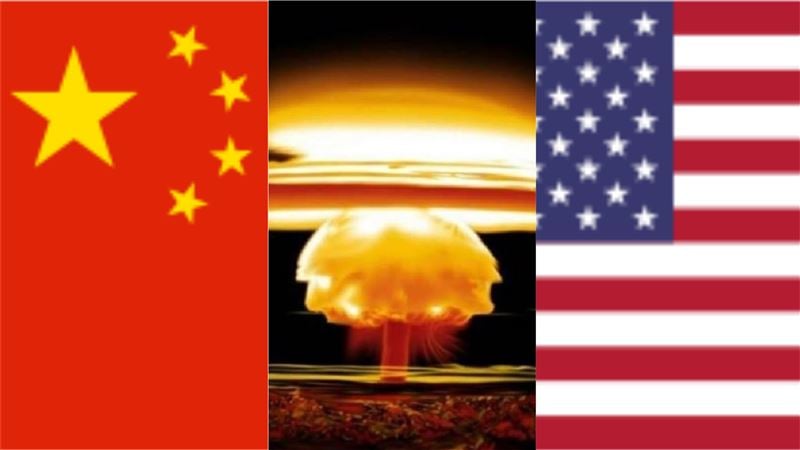
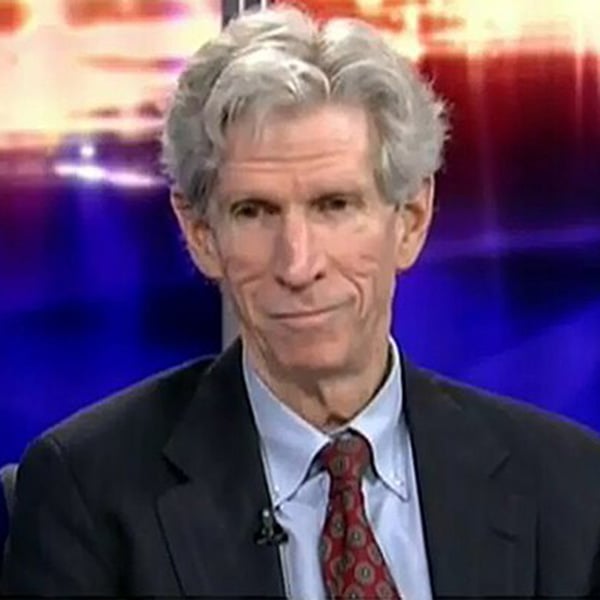
A previously censored account of the 1958 Taiwan Strait crisis that was sponsored by the Pentagon has been published in full by the leaker of the Pentagon Papers, Daniel Ellsberg. The report provides a hair-raising portrait of a reckless US military leadership relentlessly pressing President Dwight Eisenhower for the authority to carry out nuclear attacks on communist China.

After holding the still-classified version of the account in his possession for fifty years, Ellsberg said he decided to release it because of the growing threat of US war with China over Taiwan, and the danger that such a conflict could escalate into a nuclear exchange.

A May 22 New York Times report on the account offered only general details of the role the US Joint Chiefs of Staff played in the run-up to the 1958 Taiwan crisis. However, it is now clear from the original highly classified documents as well as other evidence now available that from the beginning, the Joint Chiefs aimed first and foremost to exploit the tensions to carry out nuclear strikes against Chinese nuclear military targets deep in highly-populated areas.

Originally published on The Grayzone on May 27, 2021

Chiang Kai-shek’s nationalist Kuomintang regime and the Joint Chiefs were allies in wanting to embroil the United States in a war with China.

Deputy Secretary of State Christian Herter feared that the Nationalist regime was determined to drag the US into conflict, according to the Pentagon-sponsored account. The reason, according to the author of the account, Morton Halperin, was that involving the United States in a war with the Chinese Communists “was clearly their only hope for a return to the mainland.”

Quemoy and Matsu, the two main offshore islands occupied by Nationalist troops, were less than five miles from the mainland and had been used by Chiang’s forces as bases to mount unsuccessful commando raids inside the mainland. And Chiang, who was still committed to reconquering the mainland China with the ostensible support of the United States, had stationed a third of his 350,000-man army on those two islands.

In May 1958, the Joint Chiefs adopted a new plan (OPS PLAN 25-58), ostensibly for the defense of the offshore islands. In fact, the plan provided a basis for attacking China with atomic weapons.

It was to begin with a brief preliminary “Phase I”, which it called “patrol and reconnaissance” and was said to be already underway. “Phase II”, which would have been triggered by a Chinese attack on the offshore islands, would involve US air forces wiping out the attacking forces.

But the new plan envisioned a possible third phase, in which the Strategic Air Command and forces under the command of the US Pacific Command would carry out strategic attacks with 10 to 15 kiloton tactical nuclear weapons “to destroy the war-making capability” of China.

According to the account authored by Halperin, the Chairman of the Joint Chiefs, Air Force Gen. Nathan Twining, told State Department officials in an August meeting that the third phase would require nuclear strikes on Chinese bases as far north as Shanghai.

The Joint Chiefs played down the threat to civilian casualties from such tactical atomic weapons, emphasizing that an airburst of tactical atomic explosions would generate little radioactive fallout. But the account indicates that they provided no concrete information on expected civilian casualties.

Given the fact that both the Chinese gun emplacements across the Taiwan Strait and a key airbase serving the Chinese military forces in any conflict over the offshore islands would have been located close to significant population centers, such atomic explosions would have certainly caused civilian casualties on a massive scale.

The Joint Chiefs did not acknowledge that the bombs they planned to detonate with airbursts would have had the same potential lethality as the bomb dropped on Hiroshima. Nor would they concede that the targets of such bombings were located in the immediate vicinity of Chinese cities that were roughly the same population as Hiroshima.

The city of Xiamen, for example, was close to military targets in the Amoy area, while Ningbo was close to the main Chinese airbase in Zhejiang province that would have been attacked by US forces. Like the Hiroshima bomb, the nuclear explosions would have been triggered in the air, where blast damage is greatest, destroying or damaging nearly everything within a radius of three miles from the blast, killing much of the population.

The Joint Chiefs also assumed that China would respond to the US use of atomic weapons by retaliating with atomic weapons, which the Joint Chiefs presumed would be made available to the Chinese government by the Soviet Union.

The Halperin report recounts that Twining told State Department officials that the bombing of the intended targets with tactical nuclear weapons “almost certainly would involve nuclear retaliation against Taiwan and possibly against Okinawa….” That assumption was based on a Special National Intelligence Estimate that had been issued on July 22, 1958. The estimate had concluded that, if the U.S. “launched nuclear strikes deep into Communist China,” the Chinese would “almost certainly” respond with nuclear weapons.

Despite the acceptance of the likelihood that it would lead to nuclear retaliation by China, JCS Chairman Twining expressed no hesitation about the plan, asserting that in order to defend the offshore islands, “the consequences had to be accepted”.

The Joint Chiefs seek to appropriate war powers

The Joint Chiefs’ plan betrayed the military chiefs’ hope of removing the power of decision over nuclear war from the hands of the president. It said the plan would be put into operation when “dictated by appropriate U.S. authority” – implying that it would not necessarily be decided by the president. 

In his own memoirs, Eisenhower recalled with some bitterness how, during the 1958 crisis, he was “continuously pressured — almost hounded — by Chiang [Chinese nationalist Generalissimo Chiang Kai-shek] on one side and by our own military on other requesting delegation of authority for immediate action on Formosa [Taiwan] or the offshore islands….” He did not refer, however, to the efforts by the Joint Chiefs efforts to gain advance authorization for the use nuclear weapons on the Chinese mainland.

The wording of the JCS plan was changed to read “when authorized by the President” at Eisenhower’s insistence to provide that only conventional means could be used at least initially for defense of the islands, while leaving open the possibility of using tactical nuclear weapons if that failed.

But the Joint Chiefs were not finished. In a paper presented to Eisenhower on September 6, the chiefs proposed that they be authorized to “oppose any major attack on Taiwan and attack mainland bases with all CINPAC force that can be brought to bear” in the event of “an emergency arising from an attack on Taiwan and the offshore islands moving so rapidly that it would not permit consultations with the President…”

Further, they asked for the authority to respond to a “major landing attack on offshore islands,” by “[u]se of atomic weapons and U.S. air attack in support of [Chinese Nationalist] Air Force…as necessary, only as approved by the President.” Eisenhower approved the paper with those qualifiers.

When Secretary of State John Foster Dulles warned that Japan would object strongly to using nuclear weapons against the Chinese mainland, and forbid the launching of nuclear weapons from their territory, Chief of Naval Operations Admiral Arleigh Burke suggested that the opposition to nuclear weapons in Japan was “inspired by the Communists,” and that foreign leaders would soon recognize that the use of nuclear weapons by the US “was in their interests”.

Burke closed his argument by claiming that if the US did not maintain the threat of tactical nuclear weapons in conflicts,  it would “lose the entire world within three years.” That obviously absurd argument suggests that the intense desire among the Joint Chiefs to use nuclear weapons against China was less motivated by any threat from Communist Chinese than by their own institutional interests.

In pre-Cold War Washington, the US Navy served as the primary bureaucratic ally of the Kuomintang regime. The relationship was forged when Chiang provided the Navy with the home base for its 7th Fleet at Tsingtao in Northern China.

Navy brass in the Pacific had urged unconditional support for Chiang’s regime during the civil war with the Communists and derided as “pinkies” those State Department officials – beginning with Secretary George C. Marshall – who entertained any doubts about the Kuomintang leader.

By 1958, the Air Force was so strongly committed to its role as an exclusively nuclear-weapons delivery organization that it insisted on being able to able to using nuclear weapons in any war it fought in the Pacific region.

The account of the crisis reveals that, when the Air Force Commander in the Pacific, Gen. Lawrence S. Kuter, learned of Eisenhower’s decision to defend the offshore islands with conventional weapons, he relayed the message to Gen. John Gerhart, the Air Force Deputy Chief of Staff. Shockingly, Gerhart responded that the Air Force “could not agree in principle” to the use of SAC forces for such non-nuclear operations.

Beyond the desire of the Navy and Air Force chiefs to ensure their long-term presence and reinforce the importance of their respective roles in the Pacific, the Joint Chiefs of Staff have always aspired to maximize their influence over US policy in any conflict where U.S might use military force.

It turned out that the Chinese never intended full-scale war over the offshore islands. Instead they sought to mount a blockade of resupply to the islands through artillery barrages, and when the US military provided armed escorts for the ships carrying out the resupply, they were careful to avoid hitting American ships.

As the Halperin report observed, once the Chinese recognized that a blockade could not prevent the resupply, they settled for symbolic artillery attacks on Quemoy, which were limited to every other day.

It was the eagerness of the Joint Chiefs for a nuclear war against China, rather than the policy of communist China, that presented the most serious threat to American security.

Although the circumstances surrounding the U.S.-China conflict over Taiwan have changed dramatically since that stage of the Cold War, the 1958 Taiwan crisis provides a sobering lesson as the US military gears up for a new military confrontation with China.

If you found this interesting – even shocking – and relevant for understanding China today, please let us see it here. Thanks!

Must-read and must-watch by Daniel Ellsberg

New York Times, May 23, 2021
Risk of Nuclear War Over Taiwan in 1958 Said to Be Greater Than Publicly Known

CBS Morning News with Ellsberg – video and text
U.S. considered nuclear strike on China in 1958 over Taiwan crisis, classified documents show

Daniel Ellsberg’s released documentation of the US military’s argument for bombing mainland China with nukes in 1958:

Daily Mail Online
US considered nuclear strike on China to protect Taiwan from Communist forces in 1958, leaked documents reveal – as tensions rise in the region

New York Times Magazine
Daniel Ellsberg Thinks We’re in Denial About Nuclear War
Daniel Ellsberg’s homepage

Related Posts

Johan Galtung 1930-2024October 2015 Published here on October 3, 2026 Let us focus on Civilization for conflict analysis and remedies. Major forms of disorder use violence; war is state organized violence. The most belligerent states are the United States of America and Israel, both with civilization roots. National Evangelism, the US Protestant Christian civilization– more national than evangelical–justifies US warfare as exceptionalism of a people chosen by God, with a manifest destiny to run the world. Orthodox Judaism justifies Israeli warfare to conquer and expand from Nile to Euphrates as a religious right and duty to the Eternal One. The third most belligerent country, the UK, no longer believes it is God-chosen but chosen by the USA; not quite the same but something. But the root cause of global disorder lies in the Occident–with Islam–seeing itself as the single, universal civilization valid for all at all times, all others being...
Jan ObergPhD, director, The Transnational Foundation for Peace and Future Research, TFFLund, Sweden October 2, 2026 This is my full original manuscript. The Chinese Academy of Social Science, CASS, makes two publications out if it. 1. China’s Five-year plan emphasized the capabilities of basic research and original innovation. It is regarded as the goal of the future social development, which, as required, should be significantly enhanced. Can you comment on the importance of original innovation in research and academic study? I believe it is easier to define “original innovation” in the natural sciences than in social sciences. The breaking points of what constitutes something new, or innovative, are not quite as sharp in the latter. But in both fields it is about opening up something that was closed, unseen, unexplored before – making manifest what was earlier latent. Innovations come in many forms and shapes – naming something that was not...
The agreement is catastrophic both because of what it says and what it doesn’t mention. It reduces further the major asset of security policies: Freedom of action. Jan Oberg TFF director September 25, 2026 A couple of hours before the agreement was signed on September 22, 2026, I published the following 13 hypotheses about what it would most likely contain on TFF Substack (in English). I was wrong on only the first point. Contrary to what Trump had written on his Truth Social platform, it does not appear to come into force immediately. In fact, it turned out to be worse than even I had anticipated. After these hypotheses now come a number of reflections in light of what the agreement actually contains, and does not contain, as well as the way in which it has generally been presented by major media outlets and by the public-service broadcaster DR. My...

Recent Articles

Tony Robinson October 4, 2026 Violence is easy to recognise when someone is being beaten, shot or killed. It becomes more difficult when nobody is holding a weapon. Poverty, discrimination, exploitation and repression can restrict a human life just as effectively, although they do so in very different ways and with very different consequences. Simply adding more categories to an ever-growing list of forms of violence does not really solve the problem. The more interesting question is what all these different situations have in common and why it makes sense to describe them using the same word. Human beings do not simply react to what happens around them. They remember the past, imagine things that do not yet exist, make plans and undertake projects. Workers organise because they imagine different working conditions; people migrate because they imagine another life somewhere else; social movements emerge because people refuse to accept the...
It’s a matter of principles, courage, vision and pulling together – while the militarist world is falling apart… Peter Langille October 3, 2026 “Here, then, is the problem which we present to you, stark and dreadful and inescapable: Shall we put an end to the human race; or shall mankind renounce war?”The Bertrand Russell—Albert Einstein Manifesto, July 9, 1955 ⁕ The forecast for what’s ahead is worrisome. The sharp rise in armed conflicts over the past three years is adding to what was already the highest level in over seventy years. Genocides, which should be prevented are supported. A shared climate emergency that jeopardises survival is ignored. Diverse polls now suggest that people are war-weary, worried and interested in a more effective United Nations. And, there are viable policy options for a more secure world! Yet governments are doubling-down, betting on more war and investing heavily. If current trends persist,...
Johan Galtung 1930-2024October 2015 Published here on October 3, 2026 Let us focus on Civilization for conflict analysis and remedies. Major forms of disorder use violence; war is state organized violence. The most belligerent states are the United States of America and Israel, both with civilization roots. National Evangelism, the US Protestant Christian civilization– more national than evangelical–justifies US warfare as exceptionalism of a people chosen by God, with a manifest destiny to run the world. Orthodox Judaism justifies Israeli warfare to conquer and expand from Nile to Euphrates as a religious right and duty to the Eternal One. The third most belligerent country, the UK, no longer believes it is God-chosen but chosen by the USA; not quite the same but something. But the root cause of global disorder lies in the Occident–with Islam–seeing itself as the single, universal civilization valid for all at all times, all others being...

TFF on Substack

Discover and subscribe to more peace materials on TFF Substack

Most Popular

Tony Robinson October 4, 2026 Violence is easy to recognise when someone is being beaten, shot or killed. It becomes more difficult when nobody is holding a weapon. Poverty, discrimination, exploitation and repression can restrict a human life just as effectively, although they do so in very different ways and with very different consequences. Simply adding more categories to an ever-growing list of forms of violence does not really solve the problem. The more interesting question is what all these different situations have in common and why it makes sense to describe them using the same word. Human beings do not simply react to what happens around them. They remember the past, imagine things that do not yet exist, make plans and undertake projects. Workers organise because they imagine different working conditions; people migrate because they imagine another life somewhere else; social movements emerge because people refuse to accept the...
It’s a matter of principles, courage, vision and pulling together – while the militarist world is falling apart… Peter Langille October 3, 2026 “Here, then, is the problem which we present to you, stark and dreadful and inescapable: Shall we put an end to the human race; or shall mankind renounce war?”The Bertrand Russell—Albert Einstein Manifesto, July 9, 1955 ⁕ The forecast for what’s ahead is worrisome. The sharp rise in armed conflicts over the past three years is adding to what was already the highest level in over seventy years. Genocides, which should be prevented are supported. A shared climate emergency that jeopardises survival is ignored. Diverse polls now suggest that people are war-weary, worried and interested in a more effective United Nations. And, there are viable policy options for a more secure world! Yet governments are doubling-down, betting on more war and investing heavily. If current trends persist,...
Johan Galtung 1930-2024October 2015 Published here on October 3, 2026 Let us focus on Civilization for conflict analysis and remedies. Major forms of disorder use violence; war is state organized violence. The most belligerent states are the United States of America and Israel, both with civilization roots. National Evangelism, the US Protestant Christian civilization– more national than evangelical–justifies US warfare as exceptionalism of a people chosen by God, with a manifest destiny to run the world. Orthodox Judaism justifies Israeli warfare to conquer and expand from Nile to Euphrates as a religious right and duty to the Eternal One. The third most belligerent country, the UK, no longer believes it is God-chosen but chosen by the USA; not quite the same but something. But the root cause of global disorder lies in the Occident–with Islam–seeing itself as the single, universal civilization valid for all at all times, all others being...
Read More
Living-Peace-Sign-Budapest-copy
Tony Robinson October 4, 2026 Violence is easy to recognise when someone is being beaten, shot or killed. It becomes more difficult when nobody is holding a weapon. Poverty, discrimination, exploitation and repression can restrict a human life just as effectively, although they do so in very different ways and with very different consequences. Simply adding more categories to an ever-growing list of forms of violence does not really solve the problem. The more interesting question is what all these different situations have in common and why it makes sense to describe them using the same word. Human beings do not simply react to what happens around them. They remember the past, imagine things that do not yet exist, make plans and undertake projects. Workers organise because they imagine different working conditions; people migrate because they imagine another life somewhere else; social movements emerge because people refuse to accept the...
b54a1f10-8c65-4f0b-9dd5-4abc0a7d04cc_2659x2659
It’s a matter of principles, courage, vision and pulling together – while the militarist world is falling apart… Peter Langille October 3, 2026 “Here, then, is the problem which we present to you, stark and dreadful and inescapable: Shall we put an end to the human race; or shall mankind renounce war?”The Bertrand Russell—Albert Einstein Manifesto, July 9, 1955 ⁕ The forecast for what’s ahead is worrisome. The sharp rise in armed conflicts over the past three years is adding to what was already the highest level in over seventy years. Genocides, which should be prevented are supported. A shared climate emergency that jeopardises survival is ignored. Diverse polls now suggest that people are war-weary, worried and interested in a more effective United Nations. And, there are viable policy options for a more secure world! Yet governments are doubling-down, betting on more war and investing heavily. If current trends persist,...
010
Johan Galtung 1930-2024October 2015 Published here on October 3, 2026 Let us focus on Civilization for conflict analysis and remedies. Major forms of disorder use violence; war is state organized violence. The most belligerent states are the United States of America and Israel, both with civilization roots. National Evangelism, the US Protestant Christian civilization– more national than evangelical–justifies US warfare as exceptionalism of a people chosen by God, with a manifest destiny to run the world. Orthodox Judaism justifies Israeli warfare to conquer and expand from Nile to Euphrates as a religious right and duty to the Eternal One. The third most belligerent country, the UK, no longer believes it is God-chosen but chosen by the USA; not quite the same but something. But the root cause of global disorder lies in the Occident–with Islam–seeing itself as the single, universal civilization valid for all at all times, all others being...
Screenshot 2026-10-02 011738
Jan ObergPhD, director, The Transnational Foundation for Peace and Future Research, TFFLund, Sweden October 2, 2026 This is my full original manuscript. The Chinese Academy of Social Science, CASS, makes two publications out if it. 1. China’s Five-year plan emphasized the capabilities of basic research and original innovation. It is regarded as the goal of the future social development, which, as required, should be significantly enhanced. Can you comment on the importance of original innovation in research and academic study? I believe it is easier to define “original innovation” in the natural sciences than in social sciences. The breaking points of what constitutes something new, or innovative, are not quite as sharp in the latter. But in both fields it is about opening up something that was closed, unseen, unexplored before – making manifest what was earlier latent. Innovations come in many forms and shapes – naming something that was not...
arctic-circle-map
The agreement is catastrophic both because of what it says and what it doesn’t mention. It reduces further the major asset of security policies: Freedom of action. Jan Oberg TFF director September 25, 2026 A couple of hours before the agreement was signed on September 22, 2026, I published the following 13 hypotheses about what it would most likely contain on TFF Substack (in English). I was wrong on only the first point. Contrary to what Trump had written on his Truth Social platform, it does not appear to come into force immediately. In fact, it turned out to be worse than even I had anticipated. After these hypotheses now come a number of reflections in light of what the agreement actually contains, and does not contain, as well as the way in which it has generally been presented by major media outlets and by the public-service broadcaster DR. My...
girl-5894831_1280
Below are TFF-related media mentions, comments, videos and social media posts published elsewhere but not on this homepage. We happen to catch and list only a fraction. Regarding video comments and debates, we recommend that you go to the TFF Video Channel on Substack where many of them are reproduced. Jan Oberg is a contributor to China Daily – 52 million daily clicks – and Global Times, CGTN and CCTV (the national television), China Investment, Xinhua News Agency and several others. Articles and videos on these media very often multiply into countless Chinese (and Western media) that re-post them from these main media. Thanks to The China Academy, his analyses, interviews and comments are frequently posted on YouTube channels such as Thinkers Forum and Wave Media. These videos are often re-posted on Bilibili (China’s YouTube), the China Content Center on TikTok, and on the Chinese edition of TikTok, Douyin.com. This means reaching hundreds of millions of viewers worldwide over a year. While there are too many to catch on all these...