
Risk of Nuclear War Over Taiwan in 1958 Said to Be Greater Than Publicly Known

The famed source of the Pentagon Papers, Daniel Ellsberg, has made
another unauthorized disclosure — and wants to be prosecuted for it.

Charlie Savage

By Charlie Savage
Published May 22, 2021 • Updated May 23, 2021 • 阅读简体中文版閱讀繁體中文版

Soldiers in 1958 on Kinmen Island, also called Quemoy. According to an apparently still-classified document, American officials doubted they could defend Taiwan with only conventional weapons. 
Soldiers in 1958 on Kinmen Island, also called Quemoy. According to an apparently still-classified document, American officials doubted they could defend Taiwan with only conventional weapons. Credit…John Dominis/The LIFE Picture Collection, via Getty Images

WASHINGTON — When Communist Chinese forces began shelling islands controlled by Taiwan in 1958, the United States rushed to back up its ally with military force — including drawing up plans to carry out nuclear strikes on mainland China, according to an apparently still-classified document that sheds new light on how dangerous that crisis was.

American military leaders pushed for a first-use nuclear strike on China, accepting the risk that the Soviet Union would retaliate in kind on behalf of its ally and millions of people would die, dozens of pages from a classified 1966 study of the confrontation show. The government censored those pages when it declassified the study for public release.

The document was disclosed by Daniel Ellsberg, who leaked a classified history of the Vietnam War, known as the Pentagon Papers, 50 years ago. Mr. Ellsberg said he had copied the top secret study about the Taiwan Strait crisis at the same time but did not disclose it then. He is now highlighting it amid new tensions between the United States and China over Taiwan.CRISIS OVER TAIWAN STRAITRead the full version of an apparently still-classified document or just its previously censored pages.

While it has been known in broader strokes that United States officials considered using atomic weapons against mainland China if the crisis escalated, the pages reveal in new detail how aggressive military leaders were in pushing for authority to do so if Communist forces, which had started shelling the so-called offshore islands, intensified their attacks.

The crisis in 1958 instead ebbed when Mao Zedong’s Communist forces broke off the attacks on the islands, leaving them in the control of Chiang Kai-shek’s nationalist Republic of China forces based on Taiwan. More than six decades later, strategic ambiguity about Taiwan’s status — and about American willingness to use nuclear weapons to defend it — persists.

The previously censored information is significant both historically and now, said Odd Arne Westad, a Yale University historian who specializes in the Cold War and China and who reviewed the pages for The New York Times.

“This confirms, to me at least, that we came closer to the United States using nuclear weapons” during the 1958 crisis “than what I thought before,” he said. “In terms of how the decision-making actually took place, this is a much more illustrative level than what we have seen.”

Drawing parallels to today’s tensions — when China’s own conventional military might has grown far beyond its 1958 ability, and when it has its own nuclear weapons — Mr. Westad said the documents provided fodder to warn of the dangers of an escalating confrontation over Taiwan.

Even in 1958, officials doubted the United States could successfully defend Taiwan using only conventional weapons, the documents show. If China invaded today, Mr. Westad said, “it would put tremendous pressure on U.S. policymakers, in the case of such a confrontation, to think about how they might deploy nuclear weapons.”

“That should be sobering for everyone involved,” he added.

In exposing a historical antecedent for the present tensions, Mr. Ellsberg said that was exactly the takeaway he wanted the public to debate. He argued that inside the Pentagon, contingency planning was likely underway for the possibility of an armed conflict over Taiwan — including what to do if any defense using conventional weapons appeared to be falling short.

“As the possibility of another nuclear crisis over Taiwan is being bandied about this very year, it seems very timely to me to encourage the public, Congress and the executive branch to pay attention to what I make available to them,” he said about what he characterized as “shallow” and “reckless” high-level discussions during the 1958 Taiwan Strait crisis.

He added, “I do not believe the participants were more stupid or thoughtless than those in between or in the current cabinet.”

Among other details, the pages that the government censored in the official release of the study describe the attitude of Gen. Laurence S. Kuter, the top Air Force commander for the Pacific. He wanted authorization for a first-use nuclear attack on mainland China at the start of any armed conflict. To that end, he praised a plan that would start by dropping atomic bombs on Chinese airfields but not other targets, arguing that its relative restraint would make it harder for skeptics of nuclear warfare in the American government to block the plan.

“There would be merit in a proposal from the military to limit the war geographically” to the air bases, “if that proposal would forestall some misguided humanitarian’s intention to limit a war to obsolete iron bombs and hot lead,” General Kuter said at one meeting.

At the same time, officials considered it very likely that the Soviet Union would respond to an atomic attack on China with retaliatory nuclear strikes. (In retrospect, it is not clear whether this premise was accurate. Historians say American leaders, who saw Communism as a monolithic global conspiracy, did not appreciate or understand an emerging Sino-Soviet split.)

But American military officials preferred that risk to the possibility of losing the islands. The study paraphrased Gen. Nathan F. Twining, the chairman of the Joint Chiefs of Staff, as saying that if atomic bombings of air bases did not force China to break off the conflict, there would be “no alternative but to conduct nuclear strikes deep into China as far north as Shanghai.”

He suggested that such strikes would “almost certainly involve nuclear retaliation against Taiwan and possibly against Okinawa,” the Japanese island where American military forces were based, “but he stressed that if national policy is to defend the offshore islands then the consequences had to be accepted.”

The study also paraphrased the secretary of state, John Foster Dulles, as observing to the Joint Chiefs of Staff that “nobody would mind very much the loss of the offshore islands but that loss would mean further Communist aggression. Nothing seems worth a world war until you looked at the effect of not standing up to each challenge posed.”

Ultimately, President Dwight D. Eisenhower pushed back against the generals and decided to rely on conventional weapons at first. But nobody wanted to enter another protracted conventional conflict like the Korean War, so there was “unanimous belief that this would have to be quickly followed by nuclear strikes unless the Chinese Communists called off this operation.”

A wounded soldier being transported to Taiwan from Kinmen Island in 1958 during a cease-fire.
A wounded soldier being transported to Taiwan from Kinmen Island in 1958 during a cease-fire. Credit…Getty Images

Mr. Ellsberg said he copied the full version of the study when he copied the Pentagon Papers. But he did not share the Taiwan study with reporters who wrote about the Vietnam War study in 1971, like Neil Sheehan of The Times.

Mr. Ellsberg quietly posted the full study online in 2017, when he published a book, “Doomsday Machine: Confessions of a Nuclear War Planner.” One of its footnotes mentions in passing that passages and pages omitted from the study are available on his website.

But he did not quote the study’s material in his book, he said, because lawyers for his publisher worried about potential legal liability. He also did little else to draw attention to the fact that its redacted pages are visible in the version he posted. As a result, few noticed it.

One of the few who did was William Burr, a senior analyst at George Washington University’s National Security Archive, who mentioned it in a footnote in a March blog post about threats to use nuclear weapons in the Cold War.

Mr. Burr said he had tried about two decades ago to use the Freedom of Information Act to obtain a new declassification review of the study — which was written by Morton H. Halperin for the RAND Corporation — but the Pentagon was unable to locate an unabridged copy in its files. (RAND, a nongovernmental think tank, is not itself subject to information act requests.)

Mr. Ellsberg said tensions over Taiwan did not seem as urgent in 2017. But the uptick in saber-rattling — he pointed to a recent cover of The Economist magazinethat labeled Taiwan “the most dangerous place on Earth” and a recent opinion column by The Times’s Thomas L. Friedman titled, “Is There a War Coming Between China and the U.S.?” — prompted him to conclude it was important to get the information into greater public view.

Michael Szonyi, a Harvard University historian and author of a book about one of the offshore islands at the heart of the crisis, “Cold War Island: Quemoy on the Front Line,” called the material’s availability “hugely interesting.”

Any new confrontation over Taiwan could escalate and officials today would be “asking themselves the same questions that these folks were asking in 1958,” he said, linking the risks created by “dramatic” miscalculations and misunderstandings during serious planning for the use of nuclear weapons in 1958 and today’s tensions.

Mr. Ellsberg said he also had another reason for highlighting his exposure of that material. Now 90, he said he wanted to take on the risk of becoming a defendant in a test case challenging the Justice Department’s growing practice of using the Espionage Act to prosecute officials who leak information.

Enacted during World War I, the Espionage Act makes it a crime to retain or disclose, without authorization, defense-related information that could harm the United States or aid a foreign adversary. Its wording covers everyone — not only spies — and it does not allow defendants to urge juries to acquit on the basis that disclosures were in the public interest.

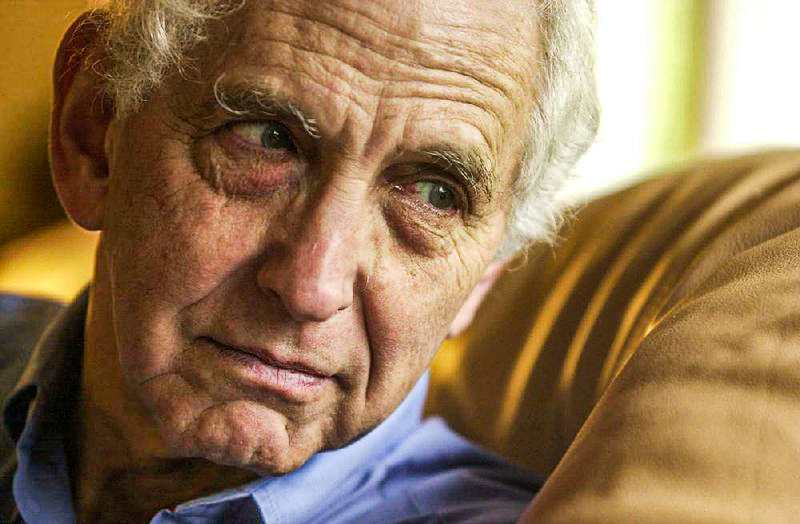
Mr. Ellsberg said he wanted to take on the risk of becoming a defendant in a test case challenging the Justice Department’s growing practice of using the Espionage Act to prosecute officials who leak information.
Mr Ellsberg said he wanted to take on the risk of becoming a defendant in a test case challenging the Justice Department’s growing practice of using the Espionage Act to prosecute officials who leak information. Credit…Britta Pedersen/Picture-Alliance/DPA, via Associated Press

Using the Espionage Act to prosecute leakers was once rare. Mr. Ellsberg himself was charged under it, before a judge threw out the charges in 1973 because of government misconduct. The first successful such conviction was in 1985. But it has now become routine for the Justice Department to bring such charges.

Most of the time, defendants strike plea deals to avoid long sentences, so there is no appeal. The Supreme Court has not confronted questions about whether the law’s wording or application trammels First Amendment rights.

Saying the Justice Department should charge him for his open admission that he disclosed the classified study about the Taiwan crisis without authorization, Mr. Ellsberg said he would handle his defense in a way that would tee the First Amendment issues up for the Supreme Court.

“I will, if indicted, be asserting my belief that what I am doing — like what I’ve done in the past — is not criminal,” he said, arguing that using the Espionage Act “to criminalize classified truth-telling in the public interest” is unconstitutional.


Related Posts

Below are TFF-related media mentions, comments, videos and social media posts published elsewhere but not on this homepage. We happen to catch and list only a fraction. Regarding video comments and debates, we recommend that you go to the TFF Video Channel on Substack where many of them are reproduced. Jan Oberg is a contributor to China Daily – 52 million daily clicks – and Global Times, CGTN and CCTV (the national television), China Investment, Xinhua News Agency and several others. Articles and videos on these media very often multiply into countless Chinese (and Western media) that re-post them from these main media. Thanks to The China Academy, his analyses, interviews and comments are frequently posted on YouTube channels such as Thinkers Forum and Wave Media. These videos are often re-posted on Bilibili (China’s YouTube), the China Content Center on TikTok, and on the Chinese edition of TikTok, Douyin.com. This means reaching hundreds of millions of viewers worldwide over a year. While there are too many to catch on all these...
Advocates of nuclear disarmament are regularly dismissed by the champions of nuclear deterrence as naïve and unrealistic, utopian or even irresponsible. Yet this ‘doctrine’ of deterrence, regarded by France as the ‘cornerstone’ of its national security, is based on quasi-religious beliefs, a theory that cannot be proven, risky gambles and fragile assumptions. So much so that one might legitimately ask which side the ‘Care Bears’ are on. Marc FinaudVice-President of Initiatives for Nuclear Disarmament (IDN) October 9, 2026 This article was originally published on Pressenza When it comes to these things being treated as religious concepts, look here. Idealists and realists It was Hubert Védrine, François Mitterrand’s former Foreign Minister, who repeatedly coined the phrase: ‘Europeans are a sort of Care Bears who don’t realise they’re living in Jurassic Park’. He applies this reference to the cartoon for well-behaved children not only to what he regards as weakness or idealism...
Small and different + among the 10% most active + 9,000 texts + 150 Associates + 60 000 a day — and a stubborn belief that peace is smarter and must be secured by peaceful means. In 2026, the Transnational Foundation for Peace and Future Research (TFF) turns 40. On Monday, October 5, 2026, a new TFF homepage will go live — a new gateway to more than 9,000 articles, analyses, research papers and other contributions produced over four decades of independent peace research. But this is not simply a new website. For four decades, TFF has worked from a simple conviction: peace is smarter than militarism and can be brought about by peaceful means. This is not merely an aspiration. It is the principle expressed in the UN Charter and the Gandhian tradition that has guided our work from the beginning. TFF is a research-based, independent and people-financed foundation....

Recent Articles

Photo above: Carl Fredrik Reuterswärd’s Non-Violence outside UN Headquarters in New York. Kirill Levin, CC BY-NC-SA 2. Jan Oberg November 3, 2026 I am happy to be published in Horizons which is produced by the Center for International Relations and Sustainable Development, CIRSD, in Belgrade. My contribution brings out a radical re-thinking of what concepts such as defence, security, deterrence – and peace – may mean if we want to create a more peaceful world. It also summarises a few things I have been working with the last few decades. Please read it here Og her er den på dansk, takket være Johnny Baltzersens lynhurtige oversættelse
UNITE-tillid, DREAM-velstand og andre konstruktive komponenter Normally we publish articles in English here. But this is a translation of a very important TFF document that should reach as many as possible in Denmark since this country’s government has been one of the most hardline in Europe and, up till now at least, has refused to use diplomacy and, instead, spent tremendous sums on arming Ukraine with the express goal of defeating Russia. Thus this – unique – article is in Danish. Vi er Johnny Baltzersen og hans Fælles Sikkerhed – Fælles Fremtid på Substack overmåde taknemmelige for at have oversat og publiceret TFF’s 2025-portfølje for fredsidéer med henblik på Ukraines fremtid. Vi håber den nu kan nå mange flere danskere – som også vil sprede den og skabe debat – nu den danske regerings og folketingspartiernes politik på dette område siden 2022 står nu – forudsigeligt – ved vejs ende....
Jan Oberg TFF director October 28, 2026 Exactly one month has now passed since I published my criticism of the introduction to the special issue on Johan Galtung published by the Journal of Global Security Studies, JoGSS, and of Tor Egil Førland’s chapter about Galtung which serves as a preview to his forthcoming biography of Galtung to be published by PRIO. See the original on The Transnational here and the same article on TFF Substack with many general and critical comments and, in particular, the people who decided to withdraw from the biography project in protest. The special issue itself was extraordinary. It was devoted to the intellectual legacy of one of the founders of peace research and contained a number of strong assessments of his personality, scholarship, intellectual trajectory, and public role. Such assessments are, of course, entirely legitimate. No scholar is beyond criticism, and neither was Johan Galtung....

TFF on Substack

Discover and subscribe to more peace materials on TFF Substack

Most Popular

Photo above: Carl Fredrik Reuterswärd’s Non-Violence outside UN Headquarters in New York. Kirill Levin, CC BY-NC-SA 2. Jan Oberg November 3, 2026 I am happy to be published in Horizons which is produced by the Center for International Relations and Sustainable Development, CIRSD, in Belgrade. My contribution brings out a radical re-thinking of what concepts such as defence, security, deterrence – and peace – may mean if we want to create a more peaceful world. It also summarises a few things I have been working with the last few decades. Please read it here Og her er den på dansk, takket være Johnny Baltzersens lynhurtige oversættelse
UNITE-tillid, DREAM-velstand og andre konstruktive komponenter Normally we publish articles in English here. But this is a translation of a very important TFF document that should reach as many as possible in Denmark since this country’s government has been one of the most hardline in Europe and, up till now at least, has refused to use diplomacy and, instead, spent tremendous sums on arming Ukraine with the express goal of defeating Russia. Thus this – unique – article is in Danish. Vi er Johnny Baltzersen og hans Fælles Sikkerhed – Fælles Fremtid på Substack overmåde taknemmelige for at have oversat og publiceret TFF’s 2025-portfølje for fredsidéer med henblik på Ukraines fremtid. Vi håber den nu kan nå mange flere danskere – som også vil sprede den og skabe debat – nu den danske regerings og folketingspartiernes politik på dette område siden 2022 står nu – forudsigeligt – ved vejs ende....
Jan Oberg TFF director October 28, 2026 Exactly one month has now passed since I published my criticism of the introduction to the special issue on Johan Galtung published by the Journal of Global Security Studies, JoGSS, and of Tor Egil Førland’s chapter about Galtung which serves as a preview to his forthcoming biography of Galtung to be published by PRIO. See the original on The Transnational here and the same article on TFF Substack with many general and critical comments and, in particular, the people who decided to withdraw from the biography project in protest. The special issue itself was extraordinary. It was devoted to the intellectual legacy of one of the founders of peace research and contained a number of strong assessments of his personality, scholarship, intellectual trajectory, and public role. Such assessments are, of course, entirely legitimate. No scholar is beyond criticism, and neither was Johan Galtung....
Read More
knotted gun
Photo above: Carl Fredrik Reuterswärd’s Non-Violence outside UN Headquarters in New York. Kirill Levin, CC BY-NC-SA 2. Jan Oberg November 3, 2026 I am happy to be published in Horizons which is produced by the Center for International Relations and Sustainable Development, CIRSD, in Belgrade. My contribution brings out a radical re-thinking of what concepts such as defence, security, deterrence – and peace – may mean if we want to create a more peaceful world. It also summarises a few things I have been working with the last few decades. Please read it here Og her er den på dansk, takket være Johnny Baltzersens lynhurtige oversættelse
TFFPortfolioVign
UNITE-tillid, DREAM-velstand og andre konstruktive komponenter Normally we publish articles in English here. But this is a translation of a very important TFF document that should reach as many as possible in Denmark since this country’s government has been one of the most hardline in Europe and, up till now at least, has refused to use diplomacy and, instead, spent tremendous sums on arming Ukraine with the express goal of defeating Russia. Thus this – unique – article is in Danish. Vi er Johnny Baltzersen og hans Fælles Sikkerhed – Fælles Fremtid på Substack overmåde taknemmelige for at have oversat og publiceret TFF’s 2025-portfølje for fredsidéer med henblik på Ukraines fremtid. Vi håber den nu kan nå mange flere danskere – som også vil sprede den og skabe debat – nu den danske regerings og folketingspartiernes politik på dette område siden 2022 står nu – forudsigeligt – ved vejs ende....
JoGSS-Silent
Jan Oberg TFF director October 28, 2026 Exactly one month has now passed since I published my criticism of the introduction to the special issue on Johan Galtung published by the Journal of Global Security Studies, JoGSS, and of Tor Egil Førland’s chapter about Galtung which serves as a preview to his forthcoming biography of Galtung to be published by PRIO. See the original on The Transnational here and the same article on TFF Substack with many general and critical comments and, in particular, the people who decided to withdraw from the biography project in protest. The special issue itself was extraordinary. It was devoted to the intellectual legacy of one of the founders of peace research and contained a number of strong assessments of his personality, scholarship, intellectual trajectory, and public role. Such assessments are, of course, entirely legitimate. No scholar is beyond criticism, and neither was Johan Galtung....
Screenshot 2026-10-26 115647
An aspect of Iran’s culture and civilisation you’ve probably never heard about. Don’t be surprised if the US and Israel also try to bomb them. Jan ObergTFF director October 26, 2026 Today – under the “USraeli” threat of new “annihilating” bombings – opens the 7th International Conference on Peace and Conflict Resolution at Tehran’s University. As far as I can tell, this is the only permanent, advanced peace research institution in West Asia/the Middle East. Perhaps more countries in that region could be inspired? I mean, how many military “security” institutes and military academies do they have? Many peace research institutes and university departments have been established since the 1950s in the West. They are now all under attack; some have closed down, some have gone mainstream, yet others kept the name but do nothing to research peace and disseminate results or advice; instead, they cooperate with militarism’s platforms such...
Screenshot 2026-10-15 141837
Let’s discuss using AI to create peace – in contrast to boring geopolitics devoid of creative healing and visions. Jan Oberg TFF director October 15, 2026 I asked VEED to create a short video exemplifying how peace is preferable to war, then chose the lady as a template. Simple as that. In less than a minute, it produced this video, which any peace-loving person would appreciate. The only problem is that human intelligence (HI), at least the one that exists among Western decision-makers, isn’t half as moral or smart as AI. I have used AI to dialogue about peace and peace plans, creative conflict resolution and visions of a better future for humankind. It so happens that I am having more stimulating, intelligent, creative and moral discussions with AI than I could possibly have with any EU or NATO leader today. Yes, AI has very problematic and dangerous aspects; used...
girl-5894831_1280
Below are TFF-related media mentions, comments, videos and social media posts published elsewhere but not on this homepage. We happen to catch and list only a fraction. Regarding video comments and debates, we recommend that you go to the TFF Video Channel on Substack where many of them are reproduced. Jan Oberg is a contributor to China Daily – 52 million daily clicks – and Global Times, CGTN and CCTV (the national television), China Investment, Xinhua News Agency and several others. Articles and videos on these media very often multiply into countless Chinese (and Western media) that re-post them from these main media. Thanks to The China Academy, his analyses, interviews and comments are frequently posted on YouTube channels such as Thinkers Forum and Wave Media. These videos are often re-posted on Bilibili (China’s YouTube), the China Content Center on TikTok, and on the Chinese edition of TikTok, Douyin.com. This means reaching hundreds of millions of viewers worldwide over a year. While there are too many to catch on all these...



