
June 24, 2023
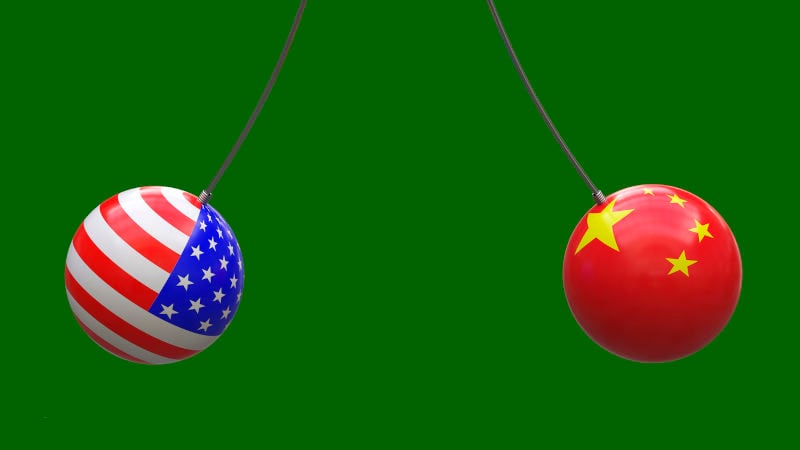
“It’s quite clear from recent policies that the US aims to curb China’s economic development and encircle the country with military bases in unfriendly (from China’s viewpoint) countries. Such demonisation only reinforces repressive trends in China and benefits security-obsessed hardliners in China’s political system. That’s why “de-demonisation” can help those in China who favour a more open and humane social and political system. I have yet to meet a single academic, for example, who favours more rather than less censorship and “de-demonisation” can help to strengthen such forces”, says Daniel Bell in a recent interview with Alex Lo.
Published at johnmenadue.com on May 11, 2023
On the Confucian Communist Comeback in Contemporary China
Once denounced as a fossilised ideology holding back China’s development, an updated Confucianism may be a guide to its future, according to Daniel Bell of the University of Hong Kong in an interview with My Take.
In modern China, communism began as one of the Western-imported ideologies and then the sole ideology by which society was organised and state power legitimised. More recently, as a state-sanctioned philosophy, Confucianism has staged a comeback. Confucius’ teachings are put back on the pedestal as they were for centuries.
Will studying Confucius and Confucianism help people understand China today and its relationships with the rest of the world? Or is Confucianism in danger of being discredited in the West not for any intrinsic flaws but because of its association with the Chinese communist state?
Helping us untangle these and other related intricate issues is the world-renowned scholar Daniel Bell, one of the foremost authorities on Confucianism writing in English today. He has sometimes been denounced, perhaps unfairly, as “a China apologist”, something that I myself am familiar with.
Having spent many years as a researcher and teacher in China, Professor Bell, a Canadian, eventually rose to become the dean of the school of political science and public administration at Shandong University, the first such appointment of a foreign-born academic on the mainland. He has this year published a whimsical account of that experience in The Dean of Shandong: Confessions of a Minor Bureaucrat at a Chinese University.
He is also the co-author, with Wang Pei, of Just Hierarchy: Why Social Hierarchies Matter in China and the Rest of the World, which was first published in 2020 and reissued as a paperback with a new preface last year.
Bell has recently moved to our very own city and is working as chair professor of political theory at the law faculty of the University of Hong Kong.
1. In his famous book, The End of Ideology, your namesake Daniel Bell, the late American sociologist, argued that 19th century liberalism and 20th century communism were exhausted as ideologies and became, if you like, intellectual fossils. But in your new book, you argue both communism and Confucianism have returned to China with a vengeance and will shape its future. Can you explain how they have been reanimated like the dinosaurs in Jurassic Park?
In the case of communism, it did indeed seem dead as a motivating value system two decades ago. As I explain in a chapter titled “The Communist Comeback”, however, the Marxist tradition mounted its comeback in China starting with the 2007-2008 financial crisis, when Chinese scholars began to look to Marx’s critique of capitalism to understand what went wrong with market societies.
Since 2012, President Xi [Jinping] has reaffirmed the Marxist essence of the CCP and used harsh means to rein in the excesses of capitalism. Under the banner of “common prosperity” (gongtong fuyu), the government has mounted efforts to eliminate absolute poverty and reduce the polarisation between rich and poor. It has been more successful at the former than the latter.
China puts scientist in charge of Communist Party’s HR department
Another interesting new development is that artificial intelligence has given new life to the ideal of higher communism, with the possibility that advanced machinery can do the socially necessary labour so that humans are free to develop their creative talents. Of course, Marx didn’t anticipate the possibility that AI can surpass human capabilities, which is one reason why the state should not “wither away” (Marx thought the state would wither away in higher communism because everyone would have their basic needs met and there would not be any classes or social conflict): we will need a strong state to ensure that AI serves humans rather than the other way around.
Regarding Confucianism, the comeback started in the 1990s. The CCP decided that it needed to supplement Marxism as a guiding value system with Confucianism and other political traditions from China’s past. But the “Confucian comeback” is not just driven from the top: Chinese intellectuals have rediscovered this rich and fascinating tradition and ordinary people have revived Confucian rituals such as ancestor worship (in the case of the Qing Ming Festival, it was made into a national holiday in response to popular demand).
That said, the Confucian comeback has stalled of late, with the possible exception of Shandong province (the home ground of Confucianism), where many people take great pride in the Confucian tradition.
2. The Western press is always talking about corruption and censorship in China. You once wrote that one of the goals of your scholarship is to de-demonise China. How do you explain or account for official corruption and censorship as a Confucian?
Corruption is nothing new in China. It helps to explain the collapse of the Ming and Qing dynasties, and also why the CCP won the civil war with the Kuomintang. The KMT was far more corrupt than the CCP. About 10 years ago, the CCP leaders realised that corruption posed an existential threat to the political system which helps to explain why President Xi launched the most systematic and long-lasting anti-corruption campaign since the CCP assumed power.
In my book, I try to show that this campaign was relatively effective at curbing corrupt practices, including at lower levels of the bureaucracy such as my university. However, there may have been too much reliance on harsh “Legalist” measures, which led to excess caution on the part of public officials (including myself when I served as dean) and reduced opportunities for innovative and creative public officials who had helped to propel China’s development in the past.
Another side effect of the anti-corruption drive is that it created many political enemies, which made the leaders more paranoid. Such paranoia also helps to explain why there has been increased repression (including censorship) the past few years, and my hope is that with more reliance on Confucian “soft power” rather than “Legalist-style” harsh punishment to deal with corruption, the leaders can relax a little and ease up on the repression.
Ex-Communist Party boss pleads guilty in China’s iconic anti-corruption case
That said, the increased repression is also due to the demonisation of China in the United States and other Western countries. It’s quite clear from recent policies that the US aims to curb China’s economic development and encircle the country with military bases in unfriendly (from China’s viewpoint) countries. Such demonisation only reinforces repressive trends in China and benefits security-obsessed hardliners in China’s political system.
That’s why “de-demonisation” can help those in China who favour a more open and humane social and political system. I have yet to meet a single academic, for example, who favours more rather than less censorship and “de-demonisation” can help to strengthen such forces.
3. As a long-time professor and later a university administrator on the mainland, did you always teach as a philosopher or sometimes as an ideologue for the state as well? Did being a foreigner give you more freedom to teach the way you wanted than a typical mainland-born academic?
I teach as a philosopher, meaning that I encourage my students to discuss and argue about controversies in political theory such as what matters more, freedom or harmony, equality or hierarchy, democracy or political meritocracy? For more advanced courses, we discuss and argue about the ideas in great works, such as the Xunzi, in detail. In my writings, I say exactly what I think.
I can publish in English without any restriction, but my works are censored when they are translated into Chinese. Unfortunately, even the English version of my new book has yet to be approved for sale in China (ironically, the China uber-hawks such as Gordon Chang accuse me of being an “apologist” for the CCP, as you note).
Regarding my interventions in public affairs, I keep my head down of late because the space for balanced analysis of Chinese politics has shrunk dramatically in both China and the West (the longest chapter in my book is the chapter on censorship, where I discuss both formal censorship in China and informal censorship in the West).
That said, I’m happy to talk to public officials off the record in China when asked to do so. For example, a relatively high-ranking public official asked me what I thought of the 12 “core socialist values” being promulgated by the state and I said it was too many values and we need to rank them. He asked me which ones I thought were most important and I said “the rule of law” (fazhi) and “diversity in harmony” (hexie). I doubt such interventions make any difference but who knows?
China’s Politburo meeting to offer traders policy clues as they eye new bets
Regarding being a foreigner in China, I don’t think it affects what I can teach, but perhaps it does mean I can be more adventurous when it comes to publishing compared to most mainland-born academics. That said, there are mainland-born academics who publish works (in English) that are far more critical of the Chinese political system than anything I’d write (not because I’m afraid to write such things, but because I’m not anti-communist and I favour reform of the political system rather than any radical alternative).
4. There is the classical notion of tianxia – everything under the heavens – that places China at the top of a hierarchy of nations or the centre of an international system. That has led some Western writers to argue China under Xi is trying to take over the world. Do you think that’s true, and if not, why not?
The ideal of tianxia was formulated at the time Chinese thinkers did not know about alternative sources of state power: it was assumed that the country that came to be known as China was the centre of human civilisation. Nobody believes that today. In China, there is a widely shared view that we should aspire to a multipolar world rather than a unipolar world characterised by one major superpower that polices other countries as it sees fit.
That said, it is also widely recognised that the international system is likely to be hierarchical, with large and powerful countries such as the United States and China exercising a disproportionate share of power compared to countries such as, say, Canada (where I’m from).
As Wang Pei and I argue in our book Just Hierarchy, such hierarchies in international relations can be justified if the hierarchies serve the interests of both powerful and weaker countries. Although it hurts me to say this, I recognise that Canada benefits from its subordinate relationship with the United States because the US provides security guarantees with the consequence that Canada can spend more on social welfare and less on the military.
In the East Asian region, China’s task is to persuade smaller and weaker countries that they can benefit from China’s power: for example, China can provide security guarantees and economic benefits to North Korea and in exchange that country could give up its nuclear arsenal. Of course, the US would need to agree not to intervene and there would no longer be any case for US military bases in South Korea. Such arrangements, unfortunately, seem utopian at the moment, but at least we can be clear about what ought to be guiding ideals for the future.
Seoul comes under US nuclear umbrella to ‘restrain adventurism’ by North Korea
Regarding Xi’s efforts to “take over the world”: such thoughts are entirely the product of the imagination of China uber-hawks. There is not a single official statement of China’s leaders that expresses such sentiments and I’ve never heard any serious Chinese intellectual or leading political official expressing such thoughts. Is there a shred of evidence that China intends to spread US-style military bases around the world? China’s hope is to develop peacefully and it has neither the ability nor the desire to “take over the world”.
5. How can you square the equality or egalitarianism of communism with the strict or what you call “just hierarchies” of Confucianism? Isn’t that what scares the West the most – once China is rich and powerful enough, it will try to dominate everyone within a hierarchy or multiple hierarchies?
Both Confucians and communists favour a relatively egalitarian distribution of wealth. But it doesn’t mean that other forms of hierarchy can or should disappear. As mentioned, the communist ideal of an egalitarian society with no state is neither feasible nor desirable. Some form of hierarchy is necessary in any modern, complex society and we need to differentiate between unjust forms of hierarchies such as racism and sexism and morally desirable forms of social hierarchies that benefit those with less power.
Confucianism has rich resources to help us think about which forms of social hierarchies may be desirable in the modern world. Perhaps some people in the West fear that China will dominate the world with unjust forms of hierarchies once it is rich and powerful enough, but such fears are way overblown.
I think what surprises many in the West is that China has modernised without being committed to the priority of civil and political rights as the “end of history”. But it doesn’t follow that China seeks to export its model.
Perhaps people in Western countries think that China will act like the West in the post-World War II era: exporting its political system to the rest of the world, by force if necessary. But such fears, to say the least, are overblown and reflect mainly the fears of intellectuals and government officials in the West.
Republished from The South China Morning Post May 4, 2023
Published at johnmenadue.com on May 11, 2023
About the authors
Alex Lo has been a Post columnist since 2012, covering major issues affecting Hong Kong and the rest of China. A journalist for 25 years, he has worked for various publications in Hong Kong and Toronto as a news reporter and editor. He has also lectured in journalism at the University of Hong Kong.
Daniel A. Bell (貝淡寧) is Professor, Chair of Political Theory with the Faculty of Law at the University of Hong Kong. He served as Dean of the School of Political Science and Public Administration at Shandong University (Qingdao) from 2017 to 2022. His books include The Dean of Shandong (2023), Just Hierarchy (co-authored with Wang Pei, 2020), The China Model (2015), The Spirit of Cities (co-authored with Avner de-Shalit, 2012), China’s New Confucianism (2008), Beyond Liberal Democracy (2007), and East Meets West (2000), all published by Princeton University Press. He is also the author of Communitarianism and Its Critics (Oxford University Press, 1993). He is founding editor of the Princeton-China series (Princeton University Press) which translates and publishes original and influential academic works from China. His works have been translated in 23 languages. He has been interviewed in English, Chinese, and French. In 2018, he was awarded the Huilin Prize and was honored as a “Cultural Leader” by the World Economic Forum.”
Please help TFF remain truly independent if you liked this article





