There is a clock ticking – towards July 20th. That is when the International Criminal Court for War Crimes goes into its summer recess. The question is will it be able in the six weeks that remain start proceedings against the US for alleged war crimes committed in Afghanistan?

The court originally held a preliminary investigation in 2006. It ruled that evidence of war crimes existed, but with fewer than 20 allegations it decided to proceed no further. But later that year fresh evidence came to light and it reopened the case.

Afghanistan joined the ICC in 2003.  The US never did although President Bill Clinton tried hard to win approval.

At the moment the ICC has seven cases, beside the US one, that remain under on-going examination: Colombia, the UK in Iraq and Afghanistan, Palestine, Nigeria, Ukraine and Gabon.

On November 3rd last year the ICC’s chief prosecutor, Ms Fatou Bensouda, requested that the judges of the pre-trial chamber authorize an investigation into alleged perpetrators of war crimes in Afghanistan and three other countries which had a “nexus” with the Afghan conflict: Poland, Romania and Lithuania.

The CIA had so-called “Black Sites” in these countries where the CIA could torture at will without any legal supervision or responsibility. The Taliban were also included in the request. A UN Senate report said the allegations were true.

Since the alleged crimes – torture, cruel treatment and outrages upon personal dignity – were committed on Afghani soil, the US cannot veto the proceedings. The European Union is a member of the ICC but, sadly, has not expressed support for the court in this case.

The US could escape these accusations if it could prove to the court it had adequately investigated abuses by its own forces. President Barack Obama was against that, believing that the US should not look back, it should go forward. However, on his first day in office he abolished torture.

According to a New York Times article of November 3rd last year “Lawyers and international justice experts who have followed the court expressed little doubt that Ms Bensouda has evidence that could implicate Americans”.

If American soldiers and CIA personnel are found guilty, the US will probably not accept the verdict. Under federal statute cooperation with the ICC in prosecuting Americans is prohibited.

President George W. Bush was so seized with this that he sought immunity agreements from member states. He threatened to cut off aid. He blocked UN peacekeeping resolutions at the Security Council. He got Congress to pass a law authorizing the use of military force to rescue Americans from The Hague should one ever be detained by the court.

After a while this anti ICC campaign fizzled out.

In fact Bush started to cooperate with the court. It began when the secretary of state, Condoleezza Rice, travelled to the UN to cast a vote in favour of referring the near-genocidal situation in Darfur, Sudan, to the ICC. The Obama Administration voted for two further referrals. Bipartisan-supported legislation allowed the state department to offer multi-million dollar rewards for information helping to bring fugitives to ICC justice.

Washington has had plenty of time to see the Afghanistan prosecutions coming. They could, if the somewhat lethargic court gets a move on, be approved next month.

Stephen Pomper, a former White House adviser on ICC policy, has written that the US could argue that the Afghani crimes are not grave enough for ICC consideration compared with say Cambodia or Rwanda.

Another thought is that the ICC could be persuaded to conclude that the combination of the US military justice mechanisms and a department of justice investigation of the CIA would be sufficient to persuade the prosecutor to step back. But that hasn’t happened.

The US has tried these tacks, feeling out the prosecutor’s office, but to no avail. There were too many pressures going the other way.

African countries had been complaining, threatening to leave, because they were convinced the ICC only focused on Africa. Human Rights organisations have built a convincing case that the US has not adequately investigated the allegations of torture. As for the “gravity” question it doesn’t stand up – it would look like nothing more than smokescreen.

Moreover, ICC judges have signaled that they prefer to see the prosecutor err on the side of inclusion when seeking permission to proceed with an investigation.

Is there anything the US can do now? It can’t return to the Bush tactics of bullying member states to close down the investigation – they couldn’t.

Another alternative would be to come out “swinging against the fundamental legitimacy of the court. This is what Israel did when the prosecutor initiated her preliminary examination of the situation in Palestine three years ago”, says Stephen Pomper. The Israeli government later backed off.

Is the US prepared to stand alone, a de facto ally of the regimes it most detests, or will it submit to the court?


Copyright: Jonathan Power
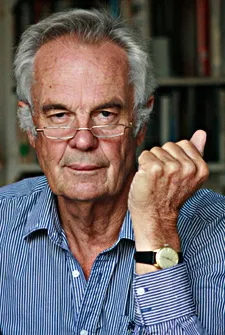
jonatpower@aol.com

Foreign affairs columnist, film-maker and author

2 Responses

  1. Unless the ICC can go after the big fish and can prosecute those who have committed horrendous war crimes, such as killing hundreds of thousands of innocent people, without a Security Council resolution, its claims of impartiality would ring hollow. Recently, Amnesty International has accused the United States and members of its coalition of war crimes in the assault against Raqqa. On the one hand, they attack the position of Syrian and Iranian forces that are fighting against the terrorists. On the other hand, they go to Syria uninvited and kill thousands of people in Raqqa in the name of fighting against terrorism. The future of the rule of law and international order depends on whether the ICC is able to prosecute all war criminals. Otherwise, selective justice is no justice at all.

  2. Couldn’t agree more. And, sadly, it’s been selective since the days of the dissolution wars in/on Yugoslavia – one of the two countries (the other was Rwanda) where special “Tribunals” were set up in the Hague. And then we can ask: Who are the real war criminals? Those who hold a gun and use it? Those who sold the gun? Or those who masterminded the killing that often undereducated, underprivileged young men are sent out to fight. These are no easy questions…

Related Posts

Johan Galtung 1930-2024October 2015 Published here on October 3, 2026 Let us focus on Civilization for conflict analysis and remedies. Major forms of disorder use violence; war is state organized violence. The most belligerent states are the United States of America and Israel, both with civilization roots. National Evangelism, the US Protestant Christian civilization– more national than evangelical–justifies US warfare as exceptionalism of a people chosen by God, with a manifest destiny to run the world. Orthodox Judaism justifies Israeli warfare to conquer and expand from Nile to Euphrates as a religious right and duty to the Eternal One. The third most belligerent country, the UK, no longer believes it is God-chosen but chosen by the USA; not quite the same but something. But the root cause of global disorder lies in the Occident–with Islam–seeing itself as the single, universal civilization valid for all at all times, all others being...
Jan ObergPhD, director, The Transnational Foundation for Peace and Future Research, TFFLund, Sweden October 2, 2026 This is my full original manuscript. The Chinese Academy of Social Science, CASS, makes two publications out if it. 1. China’s Five-year plan emphasized the capabilities of basic research and original innovation. It is regarded as the goal of the future social development, which, as required, should be significantly enhanced. Can you comment on the importance of original innovation in research and academic study? I believe it is easier to define “original innovation” in the natural sciences than in social sciences. The breaking points of what constitutes something new, or innovative, are not quite as sharp in the latter. But in both fields it is about opening up something that was closed, unseen, unexplored before – making manifest what was earlier latent. Innovations come in many forms and shapes – naming something that was not...
The agreement is catastrophic both because of what it says and what it doesn’t mention. It reduces further the major asset of security policies: Freedom of action. Jan Oberg TFF director September 25, 2026 A couple of hours before the agreement was signed on September 22, 2026, I published the following 13 hypotheses about what it would most likely contain on TFF Substack (in English). I was wrong on only the first point. Contrary to what Trump had written on his Truth Social platform, it does not appear to come into force immediately. In fact, it turned out to be worse than even I had anticipated. After these hypotheses now come a number of reflections in light of what the agreement actually contains, and does not contain, as well as the way in which it has generally been presented by major media outlets and by the public-service broadcaster DR. My...

Recent Articles

Tony Robinson October 4, 2026 Violence is easy to recognise when someone is being beaten, shot or killed. It becomes more difficult when nobody is holding a weapon. Poverty, discrimination, exploitation and repression can restrict a human life just as effectively, although they do so in very different ways and with very different consequences. Simply adding more categories to an ever-growing list of forms of violence does not really solve the problem. The more interesting question is what all these different situations have in common and why it makes sense to describe them using the same word. Human beings do not simply react to what happens around them. They remember the past, imagine things that do not yet exist, make plans and undertake projects. Workers organise because they imagine different working conditions; people migrate because they imagine another life somewhere else; social movements emerge because people refuse to accept the...
It’s a matter of principles, courage, vision and pulling together – while the militarist world is falling apart… Peter Langille October 3, 2026 “Here, then, is the problem which we present to you, stark and dreadful and inescapable: Shall we put an end to the human race; or shall mankind renounce war?”The Bertrand Russell—Albert Einstein Manifesto, July 9, 1955 ⁕ The forecast for what’s ahead is worrisome. The sharp rise in armed conflicts over the past three years is adding to what was already the highest level in over seventy years. Genocides, which should be prevented are supported. A shared climate emergency that jeopardises survival is ignored. Diverse polls now suggest that people are war-weary, worried and interested in a more effective United Nations. And, there are viable policy options for a more secure world! Yet governments are doubling-down, betting on more war and investing heavily. If current trends persist,...
Johan Galtung 1930-2024October 2015 Published here on October 3, 2026 Let us focus on Civilization for conflict analysis and remedies. Major forms of disorder use violence; war is state organized violence. The most belligerent states are the United States of America and Israel, both with civilization roots. National Evangelism, the US Protestant Christian civilization– more national than evangelical–justifies US warfare as exceptionalism of a people chosen by God, with a manifest destiny to run the world. Orthodox Judaism justifies Israeli warfare to conquer and expand from Nile to Euphrates as a religious right and duty to the Eternal One. The third most belligerent country, the UK, no longer believes it is God-chosen but chosen by the USA; not quite the same but something. But the root cause of global disorder lies in the Occident–with Islam–seeing itself as the single, universal civilization valid for all at all times, all others being...

TFF on Substack

Discover and subscribe to more peace materials on TFF Substack

Most Popular

Tony Robinson October 4, 2026 Violence is easy to recognise when someone is being beaten, shot or killed. It becomes more difficult when nobody is holding a weapon. Poverty, discrimination, exploitation and repression can restrict a human life just as effectively, although they do so in very different ways and with very different consequences. Simply adding more categories to an ever-growing list of forms of violence does not really solve the problem. The more interesting question is what all these different situations have in common and why it makes sense to describe them using the same word. Human beings do not simply react to what happens around them. They remember the past, imagine things that do not yet exist, make plans and undertake projects. Workers organise because they imagine different working conditions; people migrate because they imagine another life somewhere else; social movements emerge because people refuse to accept the...
It’s a matter of principles, courage, vision and pulling together – while the militarist world is falling apart… Peter Langille October 3, 2026 “Here, then, is the problem which we present to you, stark and dreadful and inescapable: Shall we put an end to the human race; or shall mankind renounce war?”The Bertrand Russell—Albert Einstein Manifesto, July 9, 1955 ⁕ The forecast for what’s ahead is worrisome. The sharp rise in armed conflicts over the past three years is adding to what was already the highest level in over seventy years. Genocides, which should be prevented are supported. A shared climate emergency that jeopardises survival is ignored. Diverse polls now suggest that people are war-weary, worried and interested in a more effective United Nations. And, there are viable policy options for a more secure world! Yet governments are doubling-down, betting on more war and investing heavily. If current trends persist,...
Johan Galtung 1930-2024October 2015 Published here on October 3, 2026 Let us focus on Civilization for conflict analysis and remedies. Major forms of disorder use violence; war is state organized violence. The most belligerent states are the United States of America and Israel, both with civilization roots. National Evangelism, the US Protestant Christian civilization– more national than evangelical–justifies US warfare as exceptionalism of a people chosen by God, with a manifest destiny to run the world. Orthodox Judaism justifies Israeli warfare to conquer and expand from Nile to Euphrates as a religious right and duty to the Eternal One. The third most belligerent country, the UK, no longer believes it is God-chosen but chosen by the USA; not quite the same but something. But the root cause of global disorder lies in the Occident–with Islam–seeing itself as the single, universal civilization valid for all at all times, all others being...
Read More
Living-Peace-Sign-Budapest-copy
Tony Robinson October 4, 2026 Violence is easy to recognise when someone is being beaten, shot or killed. It becomes more difficult when nobody is holding a weapon. Poverty, discrimination, exploitation and repression can restrict a human life just as effectively, although they do so in very different ways and with very different consequences. Simply adding more categories to an ever-growing list of forms of violence does not really solve the problem. The more interesting question is what all these different situations have in common and why it makes sense to describe them using the same word. Human beings do not simply react to what happens around them. They remember the past, imagine things that do not yet exist, make plans and undertake projects. Workers organise because they imagine different working conditions; people migrate because they imagine another life somewhere else; social movements emerge because people refuse to accept the...
b54a1f10-8c65-4f0b-9dd5-4abc0a7d04cc_2659x2659
It’s a matter of principles, courage, vision and pulling together – while the militarist world is falling apart… Peter Langille October 3, 2026 “Here, then, is the problem which we present to you, stark and dreadful and inescapable: Shall we put an end to the human race; or shall mankind renounce war?”The Bertrand Russell—Albert Einstein Manifesto, July 9, 1955 ⁕ The forecast for what’s ahead is worrisome. The sharp rise in armed conflicts over the past three years is adding to what was already the highest level in over seventy years. Genocides, which should be prevented are supported. A shared climate emergency that jeopardises survival is ignored. Diverse polls now suggest that people are war-weary, worried and interested in a more effective United Nations. And, there are viable policy options for a more secure world! Yet governments are doubling-down, betting on more war and investing heavily. If current trends persist,...
010
Johan Galtung 1930-2024October 2015 Published here on October 3, 2026 Let us focus on Civilization for conflict analysis and remedies. Major forms of disorder use violence; war is state organized violence. The most belligerent states are the United States of America and Israel, both with civilization roots. National Evangelism, the US Protestant Christian civilization– more national than evangelical–justifies US warfare as exceptionalism of a people chosen by God, with a manifest destiny to run the world. Orthodox Judaism justifies Israeli warfare to conquer and expand from Nile to Euphrates as a religious right and duty to the Eternal One. The third most belligerent country, the UK, no longer believes it is God-chosen but chosen by the USA; not quite the same but something. But the root cause of global disorder lies in the Occident–with Islam–seeing itself as the single, universal civilization valid for all at all times, all others being...
Screenshot 2026-10-02 011738
Jan ObergPhD, director, The Transnational Foundation for Peace and Future Research, TFFLund, Sweden October 2, 2026 This is my full original manuscript. The Chinese Academy of Social Science, CASS, makes two publications out if it. 1. China’s Five-year plan emphasized the capabilities of basic research and original innovation. It is regarded as the goal of the future social development, which, as required, should be significantly enhanced. Can you comment on the importance of original innovation in research and academic study? I believe it is easier to define “original innovation” in the natural sciences than in social sciences. The breaking points of what constitutes something new, or innovative, are not quite as sharp in the latter. But in both fields it is about opening up something that was closed, unseen, unexplored before – making manifest what was earlier latent. Innovations come in many forms and shapes – naming something that was not...
arctic-circle-map
The agreement is catastrophic both because of what it says and what it doesn’t mention. It reduces further the major asset of security policies: Freedom of action. Jan Oberg TFF director September 25, 2026 A couple of hours before the agreement was signed on September 22, 2026, I published the following 13 hypotheses about what it would most likely contain on TFF Substack (in English). I was wrong on only the first point. Contrary to what Trump had written on his Truth Social platform, it does not appear to come into force immediately. In fact, it turned out to be worse than even I had anticipated. After these hypotheses now come a number of reflections in light of what the agreement actually contains, and does not contain, as well as the way in which it has generally been presented by major media outlets and by the public-service broadcaster DR. My...
girl-5894831_1280
Below are TFF-related media mentions, comments, videos and social media posts published elsewhere but not on this homepage. We happen to catch and list only a fraction. Regarding video comments and debates, we recommend that you go to the TFF Video Channel on Substack where many of them are reproduced. Jan Oberg is a contributor to China Daily – 52 million daily clicks – and Global Times, CGTN and CCTV (the national television), China Investment, Xinhua News Agency and several others. Articles and videos on these media very often multiply into countless Chinese (and Western media) that re-post them from these main media. Thanks to The China Academy, his analyses, interviews and comments are frequently posted on YouTube channels such as Thinkers Forum and Wave Media. These videos are often re-posted on Bilibili (China’s YouTube), the China Content Center on TikTok, and on the Chinese edition of TikTok, Douyin.com. This means reaching hundreds of millions of viewers worldwide over a year. While there are too many to catch on all these...