September 23, 2005

The World Tribunal on Iraq (WTI) held its final session betweenJune 24-27. This session was the last and most elaborate of sixteen condemnations of the Iraq War held all over the world in the last two years in Barcelona, Tokyo, Brussels, Seoul, New York, London, Mumbai and other cities. The Istanbul proceedings invoked the verdicts and relied on some of the testimony from the earlier sessions; this cumulative nature of the sessions built interest among peace activists around the world, resulting in this final session having by far the strongest international flavor with respect to scope and national identity of the participants.

This cumulative process, described by organizers as “the tribunal movement,” is unique in history: Never before has a particular war produced this level of protest on a global scale – first to prevent it (the huge February 15, 2003 demonstrations, eleven million, 600 cities, eighty countries) and then to condemn its inception and conduct.

The WTI is one expression of the opposition of global civil society to the Iraq War, an initiative best understood as a contribution to “moral globalization.”

The WTI generated intense interest in Turkey, the Arab world, and on the Internet but was ignored by most of the mainstream media in Europe and the United States. In Istanbul, the WTI was treated for several days as a prominent news story. There are several explanations for this, starting with near-unanimous opposition to the Iraq War in Turkey. More relevant were the vivid connections between Turkey and the war: physical proximity, an array of adverse effects associated with events in Iraq and, more dramatically, a contradictory government posture: the refusal of the Turkish Parliament in 2003 to give in to US pressure to authorize an invasion of Iraq from Turkish territory, while the Prime Minister allowed the continuing use of the huge US air base at Incirlik for strategic operations during and after the war.

The Istanbul session was organized by an independent group of Turkish citizens, mainly women with professional careers, who somehow managed the funding, organizing, and presentation more successfully than could have been imagined. The occurrence of such an event touching on sensitive strategic relations of the Turkish government also gave concrete reality to a new confidence on the part of the Turkish citizenry in the deepening reality of democracy in the country.

The WTI was generally inspired by the Bertrand Russell tribunal held in Copenhagen and Stockholm in 1967 to protest the Vietnam War, which documented with extensive testimony the allegations of criminality associated with the American role in Vietnam. The Russell tribunal featured the participation of Jean-Paul Sartre, Simone de Beauvoir and other notable European left intellectuals. It relied on international law and morality to condemn the war but made no pretension of being a legal body, and its jury contained no international law experts. This same orientation toward law was present in the WTI, which deliberately avoidedany pretension of being a body of trained jurists reaching a legal conclusion after listening to the two sides of a contested issue.

Of course, a tribunal of this sort, when not altogether ignored, is widely criticized on one hand as a kangaroo court that ignores the other sides of the legal and political argument and, on the other, is treated as a meaningless use of a courtroom format since there is no adversary process, no enforcement powers, and no political leverage to bring to bear on the indicted governments and their leaders.

The WTI is not an organ of the state and cannot count on its judgments being implemented by such state institutions as police or prisons. And, of course, the leaders whose behavior is being described as criminal have every incentive to deny the legitimacy of the proceedings by ignoring or condemning the conclusions. But all this criticism misses the point.

The WTI is self-consciously an organ of civil society, with its own potential enforcement by way of economic boycotts, civil disobedience and political campaigns. And on the substantive issues of legality, the undertaking is designed to confirm the truth and add to the persuasiveness of the widely held allegations about the Iraq War. The WTI was not trying to discover the truth by way of political, legal and moral inquiry and debate. Its activity is based on the widely endorsed presumption that the allegations of illegality and criminality are valid with respect to the Iraq War. This makes the job of the tribunal to reinforce that conclusion as persuasively and vividly as possible.

The motivations of citizens to organize such a tribunal do not arise from uncertainty about issues of legality and morality but from a conviction that the official institutions of the state, including the United Nations, have failed to act to protect a vulnerable people against such Nuremberg crimes as aggression, violations of the laws of war and crimes against humanity. It is only because of such institutional failures in the face of ongoing suffering and abuse like that in Iraq that individuals and institutions made the immense organizational effort to put together this kind of transnational civic tribunal. We should also recall that the Nuremberg Tribunal’s enduring contribution was not finding out whether the Nazi regime had committed the crimes alleged but documenting its criminality.

The decision of the WTI was rendered by a fifteen-member Jury of Conscience, chaired by Indian novelist Arundhati Roy, and composed of prominent activists from around the world. Two Americans, David Krieger, president of the Nuclear Age Peace Foundation and Eve Ensler of Vagina Monologues fame, were jury members. The jury also included Chandra Muzaffar, Malaysia’s leading human rights advocate and noted author, as well as two internationally respected Turkish intellectual personalities, Murat Belge and Ayse Erzan.

A Panel of Advocates – coordinated by Turgut Tarhanli, dean of the Bilgi Law School in Istanbul, and myself – organized the fifty-four presentations offered to the jury. The advocates came from dvierse backgrounds.

The presentations included some incisive analyses of international law issues by such respected world experts as Christine Chinkin of the London School of Economics, and Amy Bartholomew of Carleton University, Ottawa; Barbara Olshansky, Assistant Legal Deirector of the Center for Constitutional Rights, made a gripping presentation of the gruesome record of abuse of detainees and prisoners held by the US Government since 9/11; two former assistant secretary generals of the UN (Denis Halliday & Hans von Sponeck) both of whom had resigned in the 1990s to protest the genocidal effects of UN sanctions in Iraq; accounts of the devastation and cruelty of the occupation by several seemingly credible eye-witnesses who had held important nongovernment jobs in pre-invasion Iraq; a moving presentation of why he turned against the Iraq War by Tim Goodrich, a former American soldier and co-founder of Iraq Veterans Against the War; and overall assessments of how the Iraq War fits into American ambitions for global empire by such renowned intellectuals as Samir Amin , Johan Galtung, and Walden Bello.

Their presentations combined an acute explanation of the strains on world order arising from predatory forms of economic globalization with the view that the US response to 9/11 was mainly motivated by regional and global strategic aims and only incidentally, if at all, by antiterrorism.

After compromise and debate, the jury reached a unanimous verdict that combined findings with recommendations for action. Its core conclusion condemned the Iraq War as a war of aggression in violation of the UN Charter and international law, and determined that those responsible for planning and waging it should be held criminally responsible. George W. Bush, Tony Blair, Donald Rumsfeld, Dick Cheney, Colin Powell and Paul Wolfowitz were listed in the jury verdict by name.

Less predictably, the UN was severely blamed for failing to fulfill its responsibilities to protect member states against aggression. The most controversial recommendation of the WTI supported the rights of the Iraqi people to resist an illegal occupation in forms authorized by international law.

Further recommendations specified that US/UK media be held responsible for contributing to the war of aggression, that American and British products associated with corporations doing business in Iraq, like Halliburton, British Pertroleum, and Bechtel be boycotted and that peace movement activists around the world urge the withdrawal of all foreign forces from Iraq.

The verdict – see the full text here – was framed from start to finish as a moral and political assessment of the Iraq War, and relied on the guidelines of international law to lend legal weight to what were essentially political and moral conclusions. The jury’s view of international law accords with a nearly unanimous consensus of international law experts outside the United States and Britain. In this sense, the conclusions of the WTI resemblethe expected and proper outcome in any normal criminal tribunal functioning under the authority of the state or the United Nations.

There would never have been a WTI if these procedures were able to function free of the constraints of geopolitics. Because they are unable to do so, the WTI in effect is telling the world what it should know about the moral, political, and legal character of the Iraq War, and it is telling this vital story honestly, comprehensively, and in a manner designed to motivate citizens and government to take action to end the foreign occupation of Iraq.

Arundhati Roy imparted the prevailing spirit of civic dedication and moral leadership in a press statement at the end of the final session. Her words summarize the experience for many of us: the WTI “places its faith in the consciences of millions of people across the world who do not wish to stand by and watch while the people of Iraq are being slaughtered, subjugated and humiliated.”
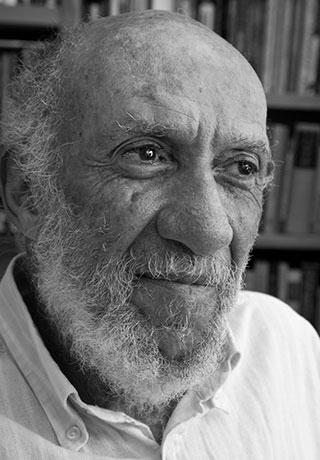

Professor Falk became an adviser to TFF when it was established in 1985.

Related Posts

LONDON – So far so good, at least on the wider level. While internally Iraq seems on the edge of chaos, the much heralded clash of civilizations between the Muslim and Judaeo-Christian worlds has yet to become apparent. We have anger and despair aplenty in the Arab and Muslim worlds. But very little rushing to the standard and there was no great pilgrimage of warriors to join the fight, as happened when the Soviet Union invaded Afghanistan twenty years ago, and then, having driven the Red Army out, were left to ferment in that mountainous redoubt. With the armaments supplied by the CIA the mujahidin were transformed into Al Qaeda that became, for a relatively brief moment as these things go, ‘the greatest threat to the homeland that America has ever known.’ Nevertheless a ‘Cold War’ between much of the Muslim world and the West is certainly in full swing. Winston...
The Challenge of Nuclear Weaponsin the Twenty-first CenturyA Path Forward The peoples and governments of the world face an urgent challenge relating to weaponry of mass destruction and particularly to nuclear weaponry.  At the crossroads of technology, terrorism, geopolitical ambition, and policies of preemption are new and potent dangers for humanity. Despite ending the nuclear standoff of the Cold War era, nuclear weaponry is again menacing the peoples of the world with catastrophic possibilities.  We recognize the need for any government to pursue its security interests in accordance with international law; and further, we recognize that distinctive threats to these interests now exist as a result of an active international terrorist network having declared war on the United States and its allies. Nonetheless, we reject the assessment of the current US administration that upgrading a reliance on nuclear weapons is in any sense justified as a response. We find it...
By Karin Wegestal MP, the Social Democratic Partyon behalf of the Swedish Committee for Solidarity with the Yugoslav People During the last decade, the Federal Republic of Yugoslavia has received more than 500,000 refugees from Croatia and Bosnia, and another 300,000 internally displaced persons, mainly from the province Kosovo and Metohia. For a country with about ten million inhabitants, such an influx of homeless people is obviously a very heavy burden – even under peaceful conditions. But in addition to that, the Federal Republic of Yugoslavia has been the subject to sanctions from the western powers for close to ten years and its infrastructure was badly hurt through Nato’s intense bombardment during 78 days in 1999. The result of all this is that Yugoslavia, once the most developed industrial country in Eastern Europe, is today the poorest country in Europe. In Serbia excluding Kosovo, with about ten million inhabitants and...

Recent Articles

Tony Robinson October 4, 2026 Violence is easy to recognise when someone is being beaten, shot or killed. It becomes more difficult when nobody is holding a weapon. Poverty, discrimination, exploitation and repression can restrict a human life just as effectively, although they do so in very different ways and with very different consequences. Simply adding more categories to an ever-growing list of forms of violence does not really solve the problem. The more interesting question is what all these different situations have in common and why it makes sense to describe them using the same word. Human beings do not simply react to what happens around them. They remember the past, imagine things that do not yet exist, make plans and undertake projects. Workers organise because they imagine different working conditions; people migrate because they imagine another life somewhere else; social movements emerge because people refuse to accept the...
It’s a matter of principles, courage, vision and pulling together – while the militarist world is falling apart… Peter Langille October 3, 2026 “Here, then, is the problem which we present to you, stark and dreadful and inescapable: Shall we put an end to the human race; or shall mankind renounce war?”The Bertrand Russell—Albert Einstein Manifesto, July 9, 1955 ⁕ The forecast for what’s ahead is worrisome. The sharp rise in armed conflicts over the past three years is adding to what was already the highest level in over seventy years. Genocides, which should be prevented are supported. A shared climate emergency that jeopardises survival is ignored. Diverse polls now suggest that people are war-weary, worried and interested in a more effective United Nations. And, there are viable policy options for a more secure world! Yet governments are doubling-down, betting on more war and investing heavily. If current trends persist,...
Johan Galtung 1930-2024October 2015 Published here on October 3, 2026 Let us focus on Civilization for conflict analysis and remedies. Major forms of disorder use violence; war is state organized violence. The most belligerent states are the United States of America and Israel, both with civilization roots. National Evangelism, the US Protestant Christian civilization– more national than evangelical–justifies US warfare as exceptionalism of a people chosen by God, with a manifest destiny to run the world. Orthodox Judaism justifies Israeli warfare to conquer and expand from Nile to Euphrates as a religious right and duty to the Eternal One. The third most belligerent country, the UK, no longer believes it is God-chosen but chosen by the USA; not quite the same but something. But the root cause of global disorder lies in the Occident–with Islam–seeing itself as the single, universal civilization valid for all at all times, all others being...

TFF on Substack

Discover and subscribe to more peace materials on TFF Substack

Most Popular

Tony Robinson October 4, 2026 Violence is easy to recognise when someone is being beaten, shot or killed. It becomes more difficult when nobody is holding a weapon. Poverty, discrimination, exploitation and repression can restrict a human life just as effectively, although they do so in very different ways and with very different consequences. Simply adding more categories to an ever-growing list of forms of violence does not really solve the problem. The more interesting question is what all these different situations have in common and why it makes sense to describe them using the same word. Human beings do not simply react to what happens around them. They remember the past, imagine things that do not yet exist, make plans and undertake projects. Workers organise because they imagine different working conditions; people migrate because they imagine another life somewhere else; social movements emerge because people refuse to accept the...
It’s a matter of principles, courage, vision and pulling together – while the militarist world is falling apart… Peter Langille October 3, 2026 “Here, then, is the problem which we present to you, stark and dreadful and inescapable: Shall we put an end to the human race; or shall mankind renounce war?”The Bertrand Russell—Albert Einstein Manifesto, July 9, 1955 ⁕ The forecast for what’s ahead is worrisome. The sharp rise in armed conflicts over the past three years is adding to what was already the highest level in over seventy years. Genocides, which should be prevented are supported. A shared climate emergency that jeopardises survival is ignored. Diverse polls now suggest that people are war-weary, worried and interested in a more effective United Nations. And, there are viable policy options for a more secure world! Yet governments are doubling-down, betting on more war and investing heavily. If current trends persist,...
Johan Galtung 1930-2024October 2015 Published here on October 3, 2026 Let us focus on Civilization for conflict analysis and remedies. Major forms of disorder use violence; war is state organized violence. The most belligerent states are the United States of America and Israel, both with civilization roots. National Evangelism, the US Protestant Christian civilization– more national than evangelical–justifies US warfare as exceptionalism of a people chosen by God, with a manifest destiny to run the world. Orthodox Judaism justifies Israeli warfare to conquer and expand from Nile to Euphrates as a religious right and duty to the Eternal One. The third most belligerent country, the UK, no longer believes it is God-chosen but chosen by the USA; not quite the same but something. But the root cause of global disorder lies in the Occident–with Islam–seeing itself as the single, universal civilization valid for all at all times, all others being...
Read More
Living-Peace-Sign-Budapest-copy
Tony Robinson October 4, 2026 Violence is easy to recognise when someone is being beaten, shot or killed. It becomes more difficult when nobody is holding a weapon. Poverty, discrimination, exploitation and repression can restrict a human life just as effectively, although they do so in very different ways and with very different consequences. Simply adding more categories to an ever-growing list of forms of violence does not really solve the problem. The more interesting question is what all these different situations have in common and why it makes sense to describe them using the same word. Human beings do not simply react to what happens around them. They remember the past, imagine things that do not yet exist, make plans and undertake projects. Workers organise because they imagine different working conditions; people migrate because they imagine another life somewhere else; social movements emerge because people refuse to accept the...
b54a1f10-8c65-4f0b-9dd5-4abc0a7d04cc_2659x2659
It’s a matter of principles, courage, vision and pulling together – while the militarist world is falling apart… Peter Langille October 3, 2026 “Here, then, is the problem which we present to you, stark and dreadful and inescapable: Shall we put an end to the human race; or shall mankind renounce war?”The Bertrand Russell—Albert Einstein Manifesto, July 9, 1955 ⁕ The forecast for what’s ahead is worrisome. The sharp rise in armed conflicts over the past three years is adding to what was already the highest level in over seventy years. Genocides, which should be prevented are supported. A shared climate emergency that jeopardises survival is ignored. Diverse polls now suggest that people are war-weary, worried and interested in a more effective United Nations. And, there are viable policy options for a more secure world! Yet governments are doubling-down, betting on more war and investing heavily. If current trends persist,...
010
Johan Galtung 1930-2024October 2015 Published here on October 3, 2026 Let us focus on Civilization for conflict analysis and remedies. Major forms of disorder use violence; war is state organized violence. The most belligerent states are the United States of America and Israel, both with civilization roots. National Evangelism, the US Protestant Christian civilization– more national than evangelical–justifies US warfare as exceptionalism of a people chosen by God, with a manifest destiny to run the world. Orthodox Judaism justifies Israeli warfare to conquer and expand from Nile to Euphrates as a religious right and duty to the Eternal One. The third most belligerent country, the UK, no longer believes it is God-chosen but chosen by the USA; not quite the same but something. But the root cause of global disorder lies in the Occident–with Islam–seeing itself as the single, universal civilization valid for all at all times, all others being...
Screenshot 2026-10-02 011738
Jan ObergPhD, director, The Transnational Foundation for Peace and Future Research, TFFLund, Sweden October 2, 2026 This is my full original manuscript. The Chinese Academy of Social Science, CASS, makes two publications out if it. 1. China’s Five-year plan emphasized the capabilities of basic research and original innovation. It is regarded as the goal of the future social development, which, as required, should be significantly enhanced. Can you comment on the importance of original innovation in research and academic study? I believe it is easier to define “original innovation” in the natural sciences than in social sciences. The breaking points of what constitutes something new, or innovative, are not quite as sharp in the latter. But in both fields it is about opening up something that was closed, unseen, unexplored before – making manifest what was earlier latent. Innovations come in many forms and shapes – naming something that was not...
arctic-circle-map
The agreement is catastrophic both because of what it says and what it doesn’t mention. It reduces further the major asset of security policies: Freedom of action. Jan Oberg TFF director September 25, 2026 A couple of hours before the agreement was signed on September 22, 2026, I published the following 13 hypotheses about what it would most likely contain on TFF Substack (in English). I was wrong on only the first point. Contrary to what Trump had written on his Truth Social platform, it does not appear to come into force immediately. In fact, it turned out to be worse than even I had anticipated. After these hypotheses now come a number of reflections in light of what the agreement actually contains, and does not contain, as well as the way in which it has generally been presented by major media outlets and by the public-service broadcaster DR. My...
girl-5894831_1280
Below are TFF-related media mentions, comments, videos and social media posts published elsewhere but not on this homepage. We happen to catch and list only a fraction. Regarding video comments and debates, we recommend that you go to the TFF Video Channel on Substack where many of them are reproduced. Jan Oberg is a contributor to China Daily – 52 million daily clicks – and Global Times, CGTN and CCTV (the national television), China Investment, Xinhua News Agency and several others. Articles and videos on these media very often multiply into countless Chinese (and Western media) that re-post them from these main media. Thanks to The China Academy, his analyses, interviews and comments are frequently posted on YouTube channels such as Thinkers Forum and Wave Media. These videos are often re-posted on Bilibili (China’s YouTube), the China Content Center on TikTok, and on the Chinese edition of TikTok, Douyin.com. This means reaching hundreds of millions of viewers worldwide over a year. While there are too many to catch on all these...