US Empire decline

Category

Year

Author / Contributor

Region

Sort by

Showing 1-10 of 385 stories

Cindy-Cohn-Featured-2
Cindy Cohn: “We all rely on journalists’ ability to find out what’s going on, especially in ways that governments don’t like, to be an informed populace.” Photo credit: FAIR.org. Janine Jackson October 4, 2021 CounterSpin interview with Cindy Cohn on Pegasus spyware Janine Jackson interviewed Electronic Frontier Foundation’s Cindy Cohn about Pegasus spyware for the July 31, 2021, episode of CounterSpin. This is a lightly edited transcript. Originally published by Fairness And Accuracy In Reporting at FAIR.org Janine Jackson: If you don’t know the story of how a consortium of journalists revealed how countries around the world have bought spyware from an Israeli surveillance firm, supposedly to track terrorists and other criminals, well, that’s understandable. Though it is a journalist-driven effort, and is leading to calls for the resignation of officials in Hungary, for example, the Pegasus Project hasn’t really gotten the pay-attention-to-this treatment from US news media. But that emphatically does not mean that the story doesn’t...
shubham-dhage-MNOPbe4XmxU-unsplash
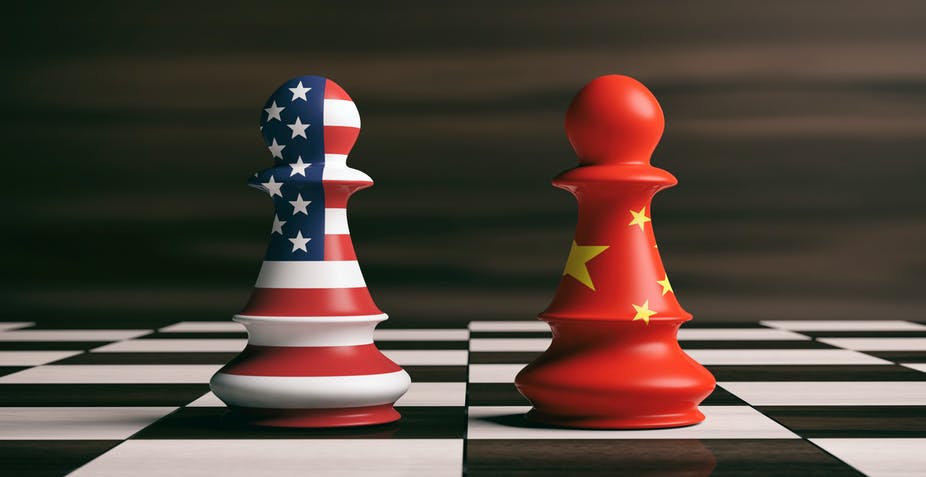
Artwork by Shubham Dhage Jim Lobe October 4, 2021 But there’s a prevailing view that the EU is more aligned with Washington’s military competition with China and Russia. Even as President Joe Biden insisted at the United Nations this week that he seeks cooperation with potential foreign rivals, most Europeans believe that the United States is already engaged in a new “cold war” with China and Russia, they feel their own nations are not involved, according to a new survey of respondents in 12 EU countries released Tuesday by the European Council on Foreign Relations. Originally published at Responsible Statecraft on September 23, 3021 However, they see their own European institutions, notably the European Union, as somewhat more invested in aligning the continent with Washington’s perceived interest in such a conflict, according to the report which warned that there appears to be a growing gap between the EU’s national publics and the EU leadership,...
3b0f695ce7f541c1a1bd31bc1d662d69
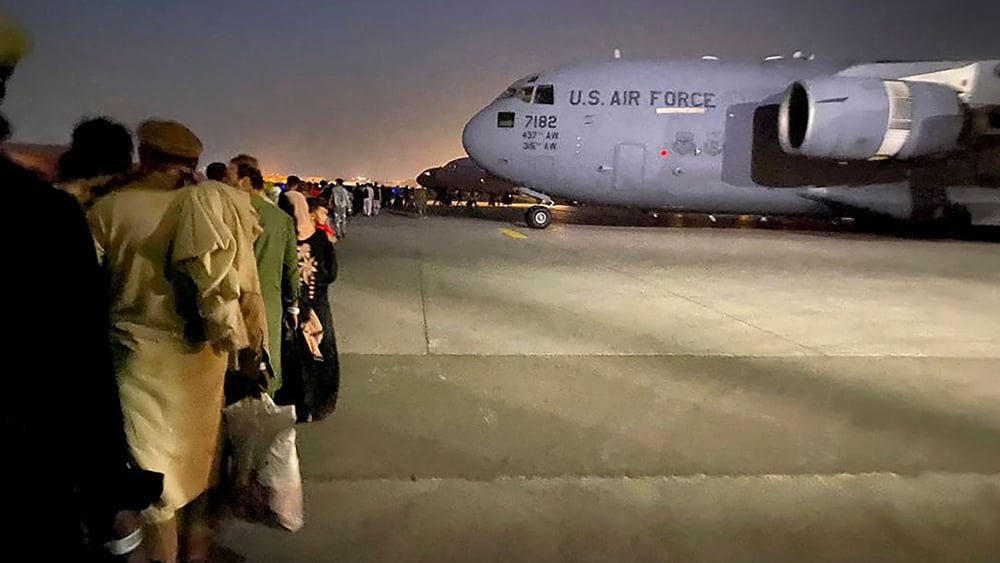
CGTN Think Tank October 3rd, 2021 Images of Afghans chasing a U.S. transport plane at Kabul airport shocked the world after Taliban took over Kabul on August 15. As for the costly and longest-ever war waged by the U.S., 84.6 percent of global poll respondents believe it failed. Originally posted on CGTN on August 27, 2021 here The CGTN Think Tank conducted a global survey in Chinese, English, Spanish, French, Arabic and Russian on social media platforms including Twitter, Facebook, YouTube and Weibo from August 20 to August 26. There have been more than 140,000 responses including liking, sharing and commenting on this online poll consisting of three questions. 80% say U.S. failed Afghanistan War The United States launched the Afghanistan war in the name of counterterrorism in 2001 and made a hasty troop withdrawal in 2021. The first question is, do you think the U.S. war against terrorism in...
2D3CC331-64D5-45DE-B53D-A361772DAC1C
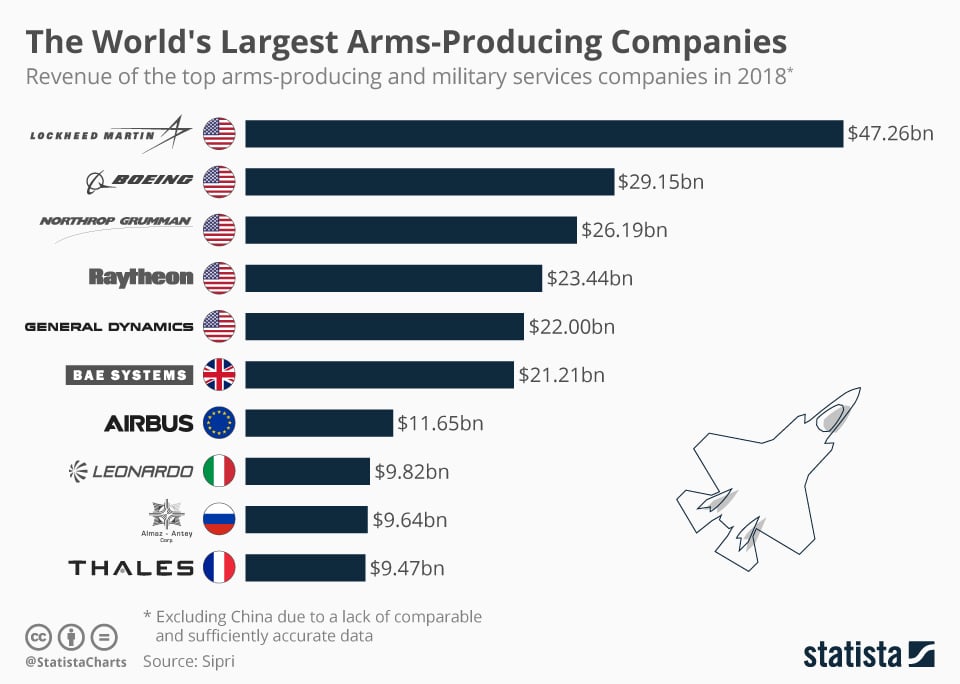
Listen to this article here With the end of the failed ‘forever war’ in Afghanistan, the US military-industrial complex needs to find another struggle to further enrich itself, and China now fits that bill Alex Lo September 24, 2021 “In the councils of government, we must guard against the acquisition of unwarranted influence, whether sought or unsought, by the military-industrial complex. The potential for the disastrous rise of misplaced power exists and will persist.” – President Dwight D. Eisenhower, farewell address, 1961 The “potential” of the military-industrial complex for mischief that Eisenhower warned against in his famous speech is now actual; indeed, it has been for some time now. Much of the “war on terror”, including the occupations of Iraq and Afghanistan, have been a gravy train for private contractors and arms makers. “The Forever War” may not have made America and Americans safer, but it has made the military-industrial complex...
us-china-kopia
Listen to this on Spotify September 22, 2021 Interview by Andrea Turi for the website of Centro Studi Eurasia e Mediterraneo on whose pages the Italian translation has been published: Charles “Chas” Freeman: “Il mondo sta tornando alla situazione in cui era prima che il Rinascimento europeo e l’Illuminismo, insieme alla rivoluzione industriale, consentissero al mondo atlantico di dominare il resto.” The interview was carried out by email. q. Mr Freeman, good morning, by thanking you for your willingness to answer my questions, I ask you the first question: In 1972, you were part of the US delegation following President Nixon who went to Beijing for the first time. How important was that event for your country, for the People’s Republic of China and for the whole world? It changed the world geopolitically at once. In the longer term, it facilitated the restoration of China to wealth and power, helped bring down the...
Mashood
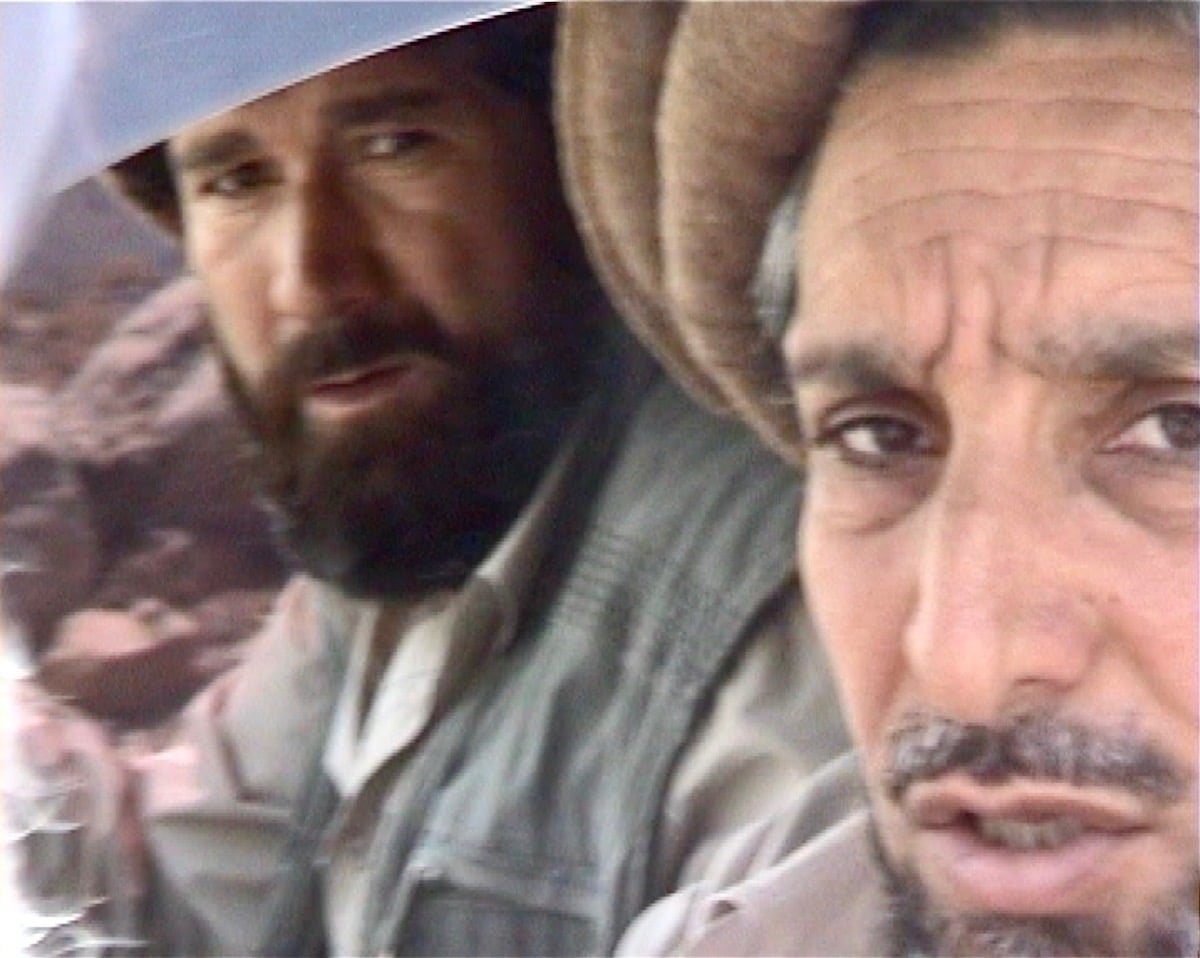
Massoud leaving Bazarak in the Panjshir after our interview in August 2001, roughly three weeks before his assassination. Photo: Pepe Escobar We may never know the full contours of the whole riddle inside an enigma when it comes to 9/11 and related issues Pepe Escobar September 13, 2021 It’s impossible not to start with the latest tremor in a series of stunning geopolitical earthquakes.  Exactly 20 years after 9/11 and the subsequent onset of the Global War on Terror (GWOT), the Taliban will hold a ceremony in Kabul to celebrate their victory in that misguided Forever War. Four key exponents of Eurasia integration – China, Russia, Iran and Pakistan – as well as Turkey and Qatar, will be officially represented, witnessing the official return of the Islamic Emirate of Afghanistan. As blowbacks go, this one is nothing short of intergalactic. Originally published at Asia Times The plot thickens when we...
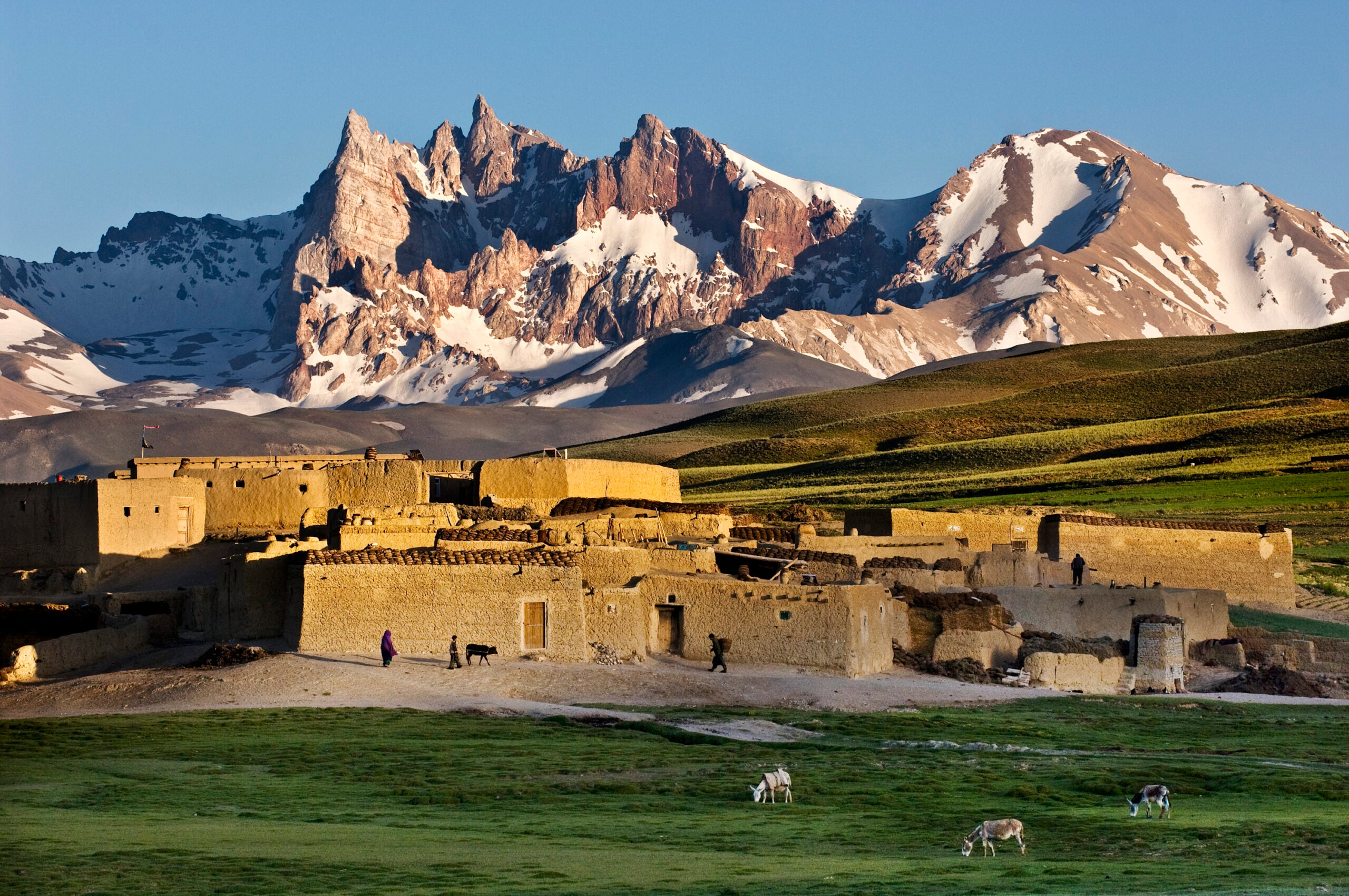
AFGHN-12819, Qala-e-Sabzi, Afghanistan, 2007. Donkeys grazing in fields.
Listen to this article Richard Falk September 14, 2021 Modified responses on Aug. 23rd to questions posed by Zahra Mirzafarjouyan, Mehr News Agency, and originally published on Falk’s homepage. • 1 Why could the Taliban capture Kabul and gain power so rapidly without considerable resistance from people and the army? The U.S. led NATO Afghan intervention and occupation was flawed in mission from its outset in 2001, and indeed in the period before the attack and large-scale, ambitious regime-changing, state-building occupation. In the post-colonial world, the military superiority of Western intervening powers has proved unable to shape the political outcomes of a prolonged struggle for the control of non-Western sovereign spaces, especially if the society is beset by unresolved tribal and ethnic conflicts, as well as by warlordism and drug cartels. In Afghanistan, as elsewhere, this line of observation proved to be once again validated, despite trillions of dollars spent...
911JO
September 11, 2021 Can be read together with this article which contains all the documentation When people ask me what I think of “9/11” my answer has always been: “I have not done any research on it myself but to me the official explanation leaves too many questions unanswered, such as: 1 • Why was the discussion only about who did it and how did they do it but never about why did someone do this? If you look at the fact that the objects of the attacks were the centers of the US/world’s financial, military and political power – and not just a train station or some infrastructure – you’d have a diagnostic indicator. 2 • Why did no US Airforce plane take off from St. Andrews Air Base? The standing mission of it is to keep the air space over Washington clean and shoot down anything that should...
us-army
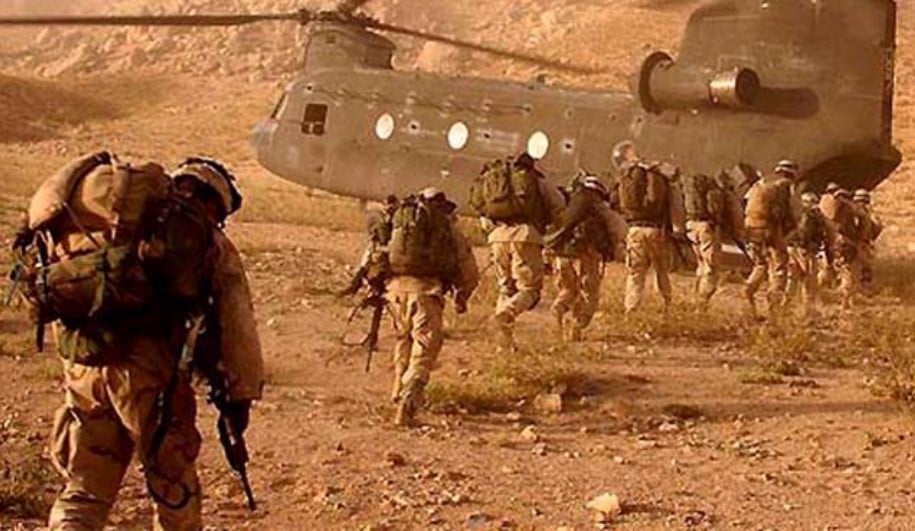
U.S. Army NATO, the United States and its vassal-states in Afghanistan Håkan Wiberg †2010 Former TFF Board member and Associate 9 september, 2021 AS FAR BACK as it is possible to trace the history of what is now Afghanistan, it has alternately been invaded — by among others the Median, Persian, Mongol, British and U.S. empires — and served as the base of expanding regional powers. The history of modern Afghanistan begins in 1747, with the coronation of Ahmed Abdali of the Durrani clan. Re-published online at Nordic News Network British expansion in India soon presented Afghanistan with a new threat — which became a reality in 1839 with the first large-scale British invasion. Shortly thereafter came the Russian expansion into Central Asia, leading to the “Great Game” between the two empires for control of the region. Afghanistan was drawn into minor clashes and some major wars with both of...
taliban-bin-laden
It’s far from the longest U.S. war. There was no peace before or after it. There is no after it until they end it — and bombing has always been most of what it is. It has had nothing to do with opposing terrorism. It has been a one-sided slaughter, a mass killing over two decades by a single invading army and air force dragging along token mascots from dozens of vassal states. After 20 years Afghanistan was one of the worst places to be on Earth, and the Earth as a whole was a worse place to be — the rule of law, the state of nature, the refugee crises, the spread of terrorism, the militarization of governments all worsened. Then the Taliban took over. When the U.S. armed the Afghan military with weapons costing enough to cause panic attacks in U.S. Senators had the expense been for anything...
afghan
Sarah Chayes August 25, 2021 I have been silent for a while. I’ve been silent about Afghanistan for longer. But too many things are going unsaid. I won’t try to evoke the emotions, somehow both swirling and yet leaden: the grief, the anger, the sense of futility. Instead, as so often before, I will use my mind to shield my heart. And in the process, perhaps help you make some sense of what has happened. For those of you who don’t know me, here is my background — the perspective from which I write tonight. I covered the fall of the Taliban for NPR, making my way into their former capital, Kandahar, in December 2001, a few days after the collapse of their regime. Descending the last great hill into the desert city, I saw a dusty ghost town. Pickup trucks with rocket-launchers strapped to the struts patrolled the streets....

ungraph1
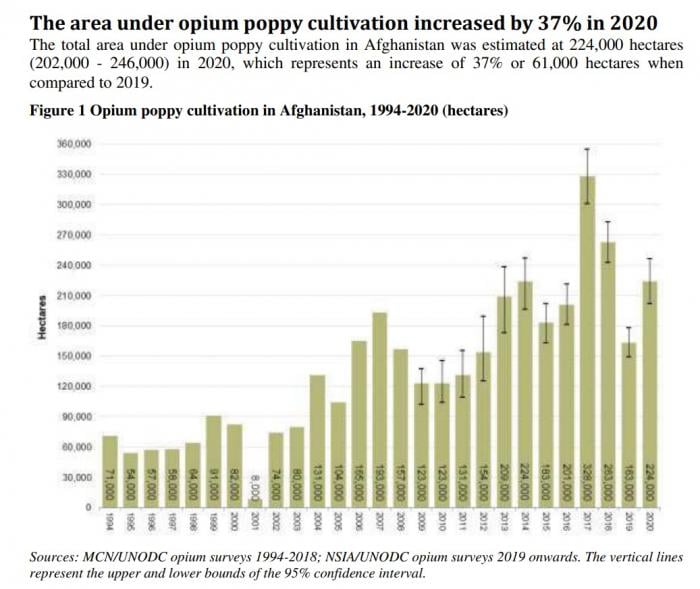
Pepe Escobar August 25, 2021 The Persian Gulf harbors an array of extremely compromising secrets. Near the top is the Afghan heroin ratline – with the United Arab Emirates (UAE) positioned as the golden node of a transnational, trillion dollar heroin money laundering operation. Originally posted on LewRockwell homepage on January 18, 2021 In this 21st century Opium War, crops harvested in Afghanistan are essentially feeding the heroin market not only in Russia and Iran but especially in the US. Up to 93% of the world’s opium comes from Afghanistan. Contrary to predominant Western perception, this is not an Afghan Taliban operation. The key questions — never asked by Atlanticist circles — are who buys the opium harvests; refines them into heroin; controls the export routes; and then sell them for humongous profit compared to what the Taliban have locally imposed in taxes. The hegemonic narrative rules that Washington bombed Afghanistan in 2001 in “self-defense” after 9/11; installed a “democratic” government; and after 16 years never de facto left because this is a key node...
Categories

Year

Author / Contributor

Region