United States – Empire and domestic

Category

Year

Author / Contributor

Region

Sort by

Showing 1-10 of 477 stories

MichelChossudovsky
  • What is now unfolding in both North America and Western Europe is fake social activism, controlled and funded by the corporate establishment. This manipulated process precludes the formation of a real mass movement against war, racism and social injustice.   The anti-war movement is dead. The war on Syria is tagged as “a civil war”. The war on Yemen is also portrayed as a civil war.  While the bombing is by Saudi Arabia, the insidious role of the US is downplayed or casually ignored. “The US is not directly involved so there is no need for us to wage an anti-war campaign”. (paraphrase) In turn, dissent has become compartmentalized. Separate “issue oriented” protest movements (e.g. environment, anti-globalization, peace, women’s rights, LGBT) are encouraged and generously funded as opposed to a cohesive mass movement against global capitalism. This mosaic was already prevalent in the counter G7 summits and People’s Summits of the 1990s...
RichardFalk
  By Richard Falk This post is a modified version of an article published in Middle East Eye on Jan. 1, 2018. It contends that the proper priority for genuine advocates of peace between Israelis and Palestinians should be centered around apartheid rather than be devoted to reviving an Oslo style ‘peace process’ (always a sham) or proclaiming the goal of an independent and sovereign Palestine as attainable without first dismantling the apartheid structures that subjugate the Palestinian people as a whole so as to maintain the Zionist insistence on Israel as the state of the Jewish people (rather than providing a homeland within a normal and legitimate state based on ethnic and religious equality, human rights, and secular principles.   Originally published on the “Global Justice in the 21st Century” blog   Despite all appearances to the contrary, those in the West who do not want to join the premature...
JuanCole
By Juan Cole   Informed Comment, January 7, 2018 Michael Wolff in his new book Fire and Fury makes a number of allegations about Trump’s role in the Gulf crisis that, if true, help explain the mess in that part of the Middle East. Wolff asserts that Trump and his then inner circle – Jared Kushner, Steve Bannon, Gary Cohn, Hope Hicks, etc. – hoped the mid-May foreign policy jaunt would change the conversation in Washington, DC, about Trump’s having fired FBI director James Comey and about the investigation of special counsel Robert Mueller. So the first thing to say is that the whole trip and the announcements around it were for the purpose of hype. Originally published at Juan Cole’s blog, Informed Comment In ancient Greece, Bion of Borysthenes observed that “Boys throw stones at frogs in sport, but the frogs die in earnest.” Trump and his cronies glibly...

1-1
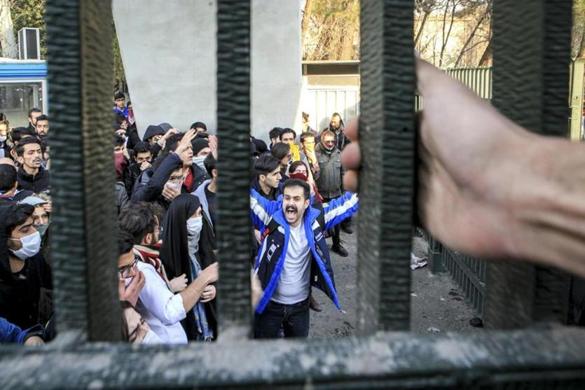
Iranians are protesting conditions worsened by U.S. policies, but Washington’s hawks see only an opportunity for regime change. By John Feffer, January 4, 2018. This article is a joint publication of Foreign Policy In Focus and In These Times. The last time Iranians went out onto the streets in large numbers, they were protesting what they thought was a stolen election. It was 2009, and hardliner Mahmoud Ahmadinejad had convincingly won the presidency with roughly 63 percent to reformer Mir-Hossein Mousavi’s approximately 34 percent. Adopting their campaign’s green color, Mousavi’s supporters thronged the streets in protest. The original is published here. These Green Movement adherents were mostly middle class and concentrated in the major cities. Ahmadinejad, by contrast, attracted the support of the more religious, the less well-off and the rural—a sizable constituency that the Green Movement routinely underestimated. Now it’s their turn to take to the streets: these members...
37b69b2c72ae47d7b0d1a986938250e0-37b69b2c72ae47d7b0d1a986938250e0-0
  By Stephen Kinzer • Whenever trouble breaks out in Iran, adrenaline rushes through Washington. Hearts pound excitedly at the Pentagon, the CIA, the White House, and Congress. In recent weeks, reports of street protests in several Iranian cities have triggered this Pavlovian response. Once again, however, Americans who have spent decades hoping for an explosion in Iran are disappointed. “Regime change” is not imminent. More important, we should not wish for it. A sudden collapse of Iran’s governing system would be bad for us. It would set another Middle Eastern country aflame and feed the instability that breeds terror. Via bostonglobe.com Iran-haters — meaning most of official Washington — cackled in delight at news of the protests. President Trump said they showed that Iranians were “finally getting wise.” His ambassador to the United Nations, Nikki Haley, exulted that “the long-repressed Iranian people are now finding their voice.” Senator John...
1
  By Seyyed Hossein Mousavian A former Iranian diplomat and a senior analyst at Princeton University has weighed in on seven factors that show anti-Iran tendencies have increased more than ever in the White House.  Here is the full text of his Farsi article published in the Shargh daily newspaper on Wednesday, November 29: There have been a few unprecedented changes in the American decision-making system that have a direct or indirect impact on Iran-related decisions in Washington: 1. Over the past few decades, in no US administration as much as the current one, so many high-ranking military officials have occupied key positions. General Mattis is the Pentagon Chief, General McMaster is US National Security Advisor and John Kelley is the White House Chief of Staff. In the past, these three key posts have often been occupied by non-military persons. General Alexander Haig was the White House Chief of Staff...
3333-14
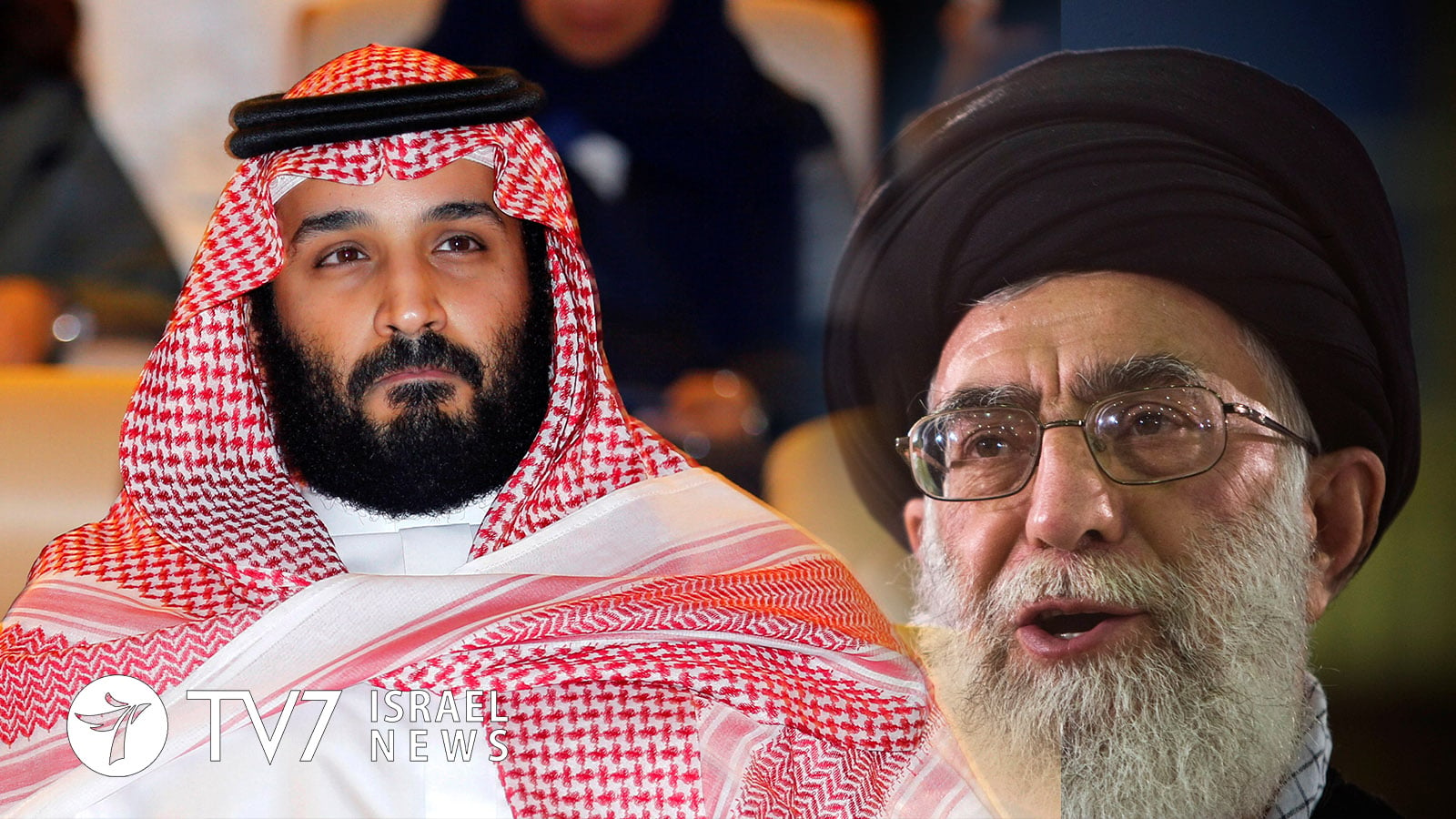
By Seyed Hossein Mousavian • Saudi Crown Prince Mohammad bin Salman (MBS) is steadily consolidating power in Riyadh and positioning himself to become the most powerful ruler in Saudi history. His rise has been accompanied with a ratcheting up of hostilities against Iran and even war rhetoric. As Saudi-Iran tensions increase, the lived experiences and leadership styles of the 78-year-old Iranian Supreme Leader Ayatollah Ali Khamenei and 32-year-old MBS will decide the future of peace and stability in the region. Via LobeLog Before Iran’s 1979 Islamic revolution, Ayatollah Khamenei was a political activist who opposed the dictatorship of the Shah and endured 15 years of prison, torture, and exile. He rose through the revolutionary ranks after the revolution and in 1981, was elected president. During the Iran-Iraq war (1980-1988)—which saw the United States and other global powers as well as regional Arab states support the aggressor Saddam Hussein—Ayatollah Khamenei played a key role in overseeing...
1
By Emile Nakhleh December 29, 2017 • President Trump’s new National Security Strategy and the negative reaction his announcement on Jerusalem has generated in the UN Security Council and General Assembly do not bode well for America’s relations with friendly Arab countries and the wider Islamic world. Arab peoples and media seem bewildered by the president’s recent decision to move the American embassy to Jerusalem, and baffled by the apparent lack of a coherent American policy toward the Arab world generally and the Israeli-Palestinian conflict specifically. Via LobeLog The inconsistency and discontinuity in the president’s varied positions and tweets on complex Middle Eastern issues do not present the region with a clear trajectory for Arab-American relations in the coming years. This risks leaving the region on a precarious path to nowhere. The view from the Middle East is that the lack of coherence in American policy toward critical war and...
872593_2_Scott-Peterson_square
    By Scott Peterson • In the outpouring of anger by thousands of Iranian protesters, people have died and the country’s foreign policy and top leaders have been denounced. But the driving factor is the economy above all, say analysts. January 2, 2018 London—The violent protests in Iran that entered their sixth day Tuesday have brought to the surface several underlying and destabilizing forces in Iranian society, among them anger at the top clerical leadership and a degree of resentment at some of the government’s cherished foreign policy commitments. Via csmonitor.com The protests, which have delivered the worst scenes of unrest witnessed in the Islamic Republic since millions took to the streets over a disputed presidential vote in 2009, have so far left 22 people dead. They have also exposed a political miscalculation by hard-line foes of President Hassan Rouhani, by launching the protests in an effort to discredit...
print-logo
  By Juan Cole, Informed Comment. Trump has tweeted as though he cares about the welfare of the Iranian protesters in small towns across that country who are upset about reduced government subsidies for commodities such as eggs and gasoline. His administration tried to prosecute protesters for laughing at VP Mike Pence. The scattered rallies, mostly consisting of a few hundred people but sometimes swelling to 1,000, continued for a third day. Via juancole.com   Here are the reasons for which these statements are hypocritical. 1. If Trump cared about Iranian dissidents, he would welcome those who want to flee to the United States. The more forthright and well known dissidents are at risk of long jail sentences or even death. Instead, Trump has tried to ban Iranians from coming to the United States at all. If he won’t let a grandmother come for her grandchild’s wedding, how much does...
cropped-david6
By David Swanson • The case against Iraqing Iran includes the following points: Threatening war is a violation of the U.N. Charter. Waging war is a violation of the U.N. Charter and of the Kellogg-Briand Pact. Waging war without Congress is a violation of the U.S. Constitution. Have you seen Iraq lately? Have you seen the entire region? Via davidswanson.org Have you seen Afghanistan? Libya? Syria? Yemen? Pakistan? Somalia? War supporters said the U.S. urgently needed to attack Iran in 2007. It did not attack. The claims turned out to be lies. Even a National Intelligence Estimate in 2007 pushed back and admitted that Iran had no nuclear weapons program. Having a nuclear weapons program is not a justification for war, legally, morally, or practically. The United States has nuclear weapons and no one would be justified in attacking the United States. Dick and Liz Cheney’s book, Exceptional, tell us...
GarethPorter-e1540558470864
By Gareth Porter • The Trump administration has been telling people for months that the crisis with North Korea is the result of North Korea’s relentless pursuit of a nuclear threat to the US homeland and past North Korean cheating on diplomatic agreements. However, North Korea reached agreements with both the Clinton and George W. Bush administrations that could have averted that threat, had they been completed. Instead, a group of Bush administration officials led by then-Vice President Dick Cheney sabotaged both agreements, and Pyongyang went on to make rapid strides on both nuclear and missile development, leading ultimately to the successful late November 2017 North Korean intercontinental ballistic missile (ICBM) test. Via antiwar.com The record shows, moreover, that Cheney and his allies derailed diplomatic efforts to curb North Korean nuclear and missile development, not because they opposed “arms control” (after all, the agreements that were negotiated would have limited only North...
Categories

Year

Author / Contributor

Region