Johan Galtung 1930-2024

A memorial for the world renowned peace and future researcher

United States – Empire and domestic

Category

Year

Author / Contributor

Region

Sort by

Showing 1-10 of 477 stories

FreeComposition_1_1200_100dpi
A Critical Analysis Of A Report By The Newlines Institute And The Raoul Wallenberg Center On March 8, 2021, the Newlines Institute for Strategy and Policy in Washington published a report, The Uyghur Genocide: An Examination of China’s Breaches of the 1948 Genocide Convention in cooperation with the Raoul Wallenberg Centre for Human Rights in Montreal. It states that ”This report is the first independent expert application of the 1948 Genocide Convention to the ongoing treatment of the Uyghurs in China. It was undertaken by the Newlines Institute for Strategy and Policy, in cooperation with the Raoul Wallenberg Centre for Human Rights, in response to emerging accounts of serious and systematic atrocities in Xinjiang province, particularly directed against the Uyghurs, an ethnic minority, to ascertain whether the People’s Republic of China is in breach of the Genocide Convention under international law.” The Report – hereafter The Report – has been produced with the contributions of, and upon...
1_Rle4-AtatA3X2T81EMc5mw
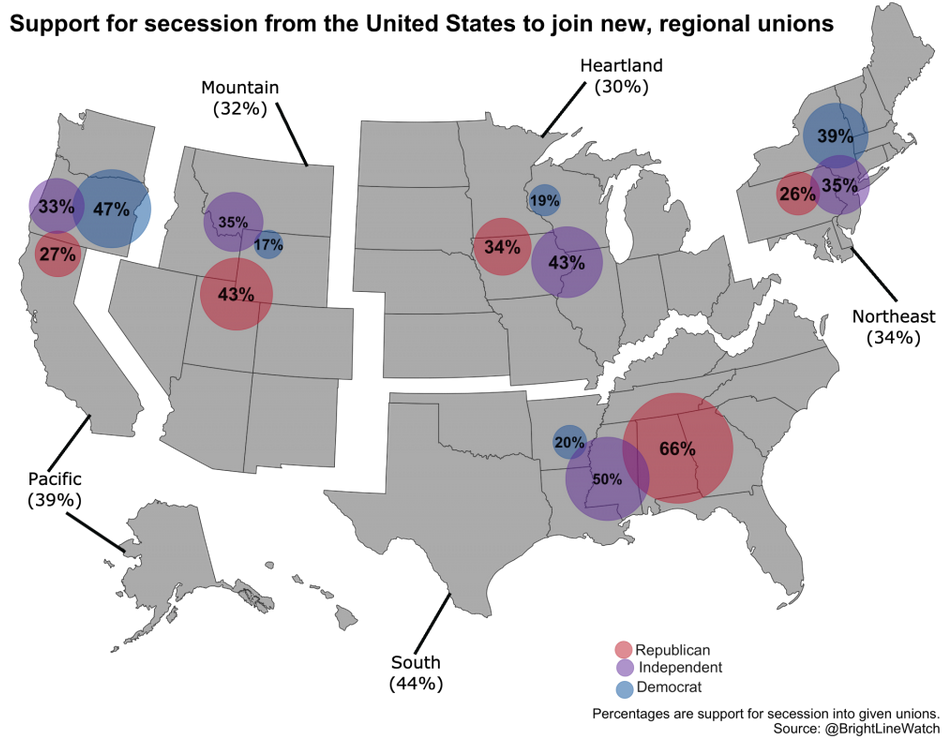
Bright Line Watch polling results by region. Question: “Would you support or oppose [your state] seceding from the United States to join a new union with [list of states in new union]?” This article was originally published on July 16, 2021 Andrew Tanner October 9, 2021 Since 2016, I have watched America’s slow march over a cliff with a mix of fascination and horror. But the results of recent polls by Bright Line Watch have provided the first hard and frighteningly conclusive evidence that Americans are moving fast down the road I predicted—towards a national divorce. I have unfortunately been right about almost every major development in America since Trump won the Republican Party nomination in 2016. Originally published at gen.medium.com Like many observers, I didn’t take Trump’s campaign seriously at first. His first attempt at a campaign in 2012 collapsed before the first primary. The second defied every rule I had learned...
China-US-buildingbridge
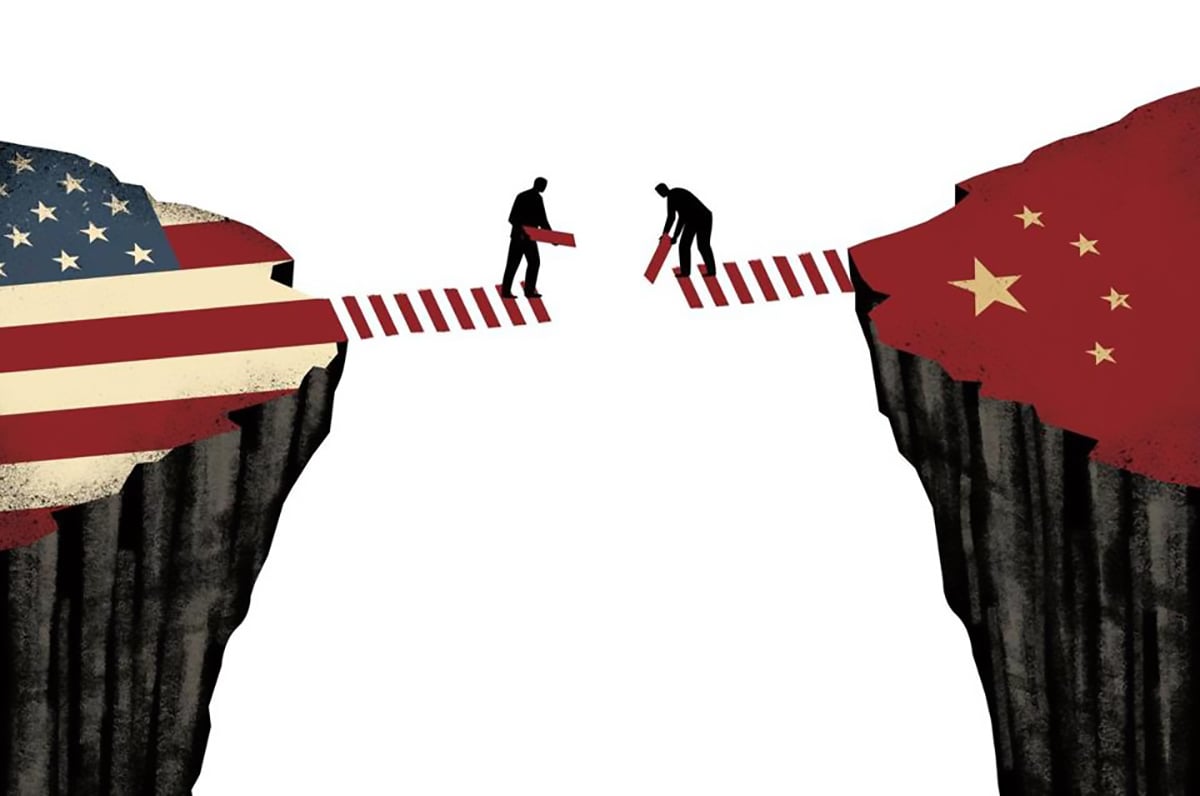
Meryem Betul Kebap October 5, 2021 Following the Cold War, the victorious USA became the hegemony power of the world. Unrivalled in many respects, the United States played a role as a superpower in international politics. As a result of the policies, it put into practice in the 1950s, China gained the power to compete with the USA in many aspects as a rising commercial power against the USA today. Originally posted on Asia Today on August 4th, 2021 This led the two powers to compete in slew parts of the world. Furthermore, relations between the two states have been stretched during the reign of former US President Donald Trump. However, with Joe Biden’s administration assuming power, there was a softening in bilateral relations. Recently, US Deputy Secretary of State visited China and met with the Chinese Foreign Minister. Although this visit was expected to reduce the tension between the...
humanrights
Photo Oscar Keys, Unsplash Peter J. Peverelli October 5, 2021 Given that human rights issues have always been central in the international discourse and in the Cold Wars between NATO and the Soviet Union/Russia and now in the new US/NATO China Cold War Agenda, we believe it is important to discuss how the concept of human rights – and the Universal Declaration – is itself a cultural construct based on certain values and how the implementation of human rights must vary according to history, cultural values and ways of thinking, or social cosmology. Peter Peverelli has worked with and in China for about 45 years and is also a leading expert on human rights at the Cross-Cultural Human Rights Centre at Vrije Universiteit in Amsterdam. We are grateful for his permission to publish this research paper from 2016. Abstract The title of the official document of what is generally known...
Cindy-Cohn-Featured-2
Cindy Cohn: “We all rely on journalists’ ability to find out what’s going on, especially in ways that governments don’t like, to be an informed populace.” Photo credit: FAIR.org. Janine Jackson October 4, 2021 CounterSpin interview with Cindy Cohn on Pegasus spyware Janine Jackson interviewed Electronic Frontier Foundation’s Cindy Cohn about Pegasus spyware for the July 31, 2021, episode of CounterSpin. This is a lightly edited transcript. Originally published by Fairness And Accuracy In Reporting at FAIR.org Janine Jackson: If you don’t know the story of how a consortium of journalists revealed how countries around the world have bought spyware from an Israeli surveillance firm, supposedly to track terrorists and other criminals, well, that’s understandable. Though it is a journalist-driven effort, and is leading to calls for the resignation of officials in Hungary, for example, the Pegasus Project hasn’t really gotten the pay-attention-to-this treatment from US news media. But that emphatically does not mean that the story doesn’t...
shubham-dhage-MNOPbe4XmxU-unsplash
Artwork by Shubham Dhage Jim Lobe October 4, 2021 But there’s a prevailing view that the EU is more aligned with Washington’s military competition with China and Russia. Even as President Joe Biden insisted at the United Nations this week that he seeks cooperation with potential foreign rivals, most Europeans believe that the United States is already engaged in a new “cold war” with China and Russia, they feel their own nations are not involved, according to a new survey of respondents in 12 EU countries released Tuesday by the European Council on Foreign Relations. Originally published at Responsible Statecraft on September 23, 3021 However, they see their own European institutions, notably the European Union, as somewhat more invested in aligning the continent with Washington’s perceived interest in such a conflict, according to the report which warned that there appears to be a growing gap between the EU’s national publics and the EU leadership,...
1a795db03cd9bb5ae20cbcd064053cc5.2-1-super.1-1
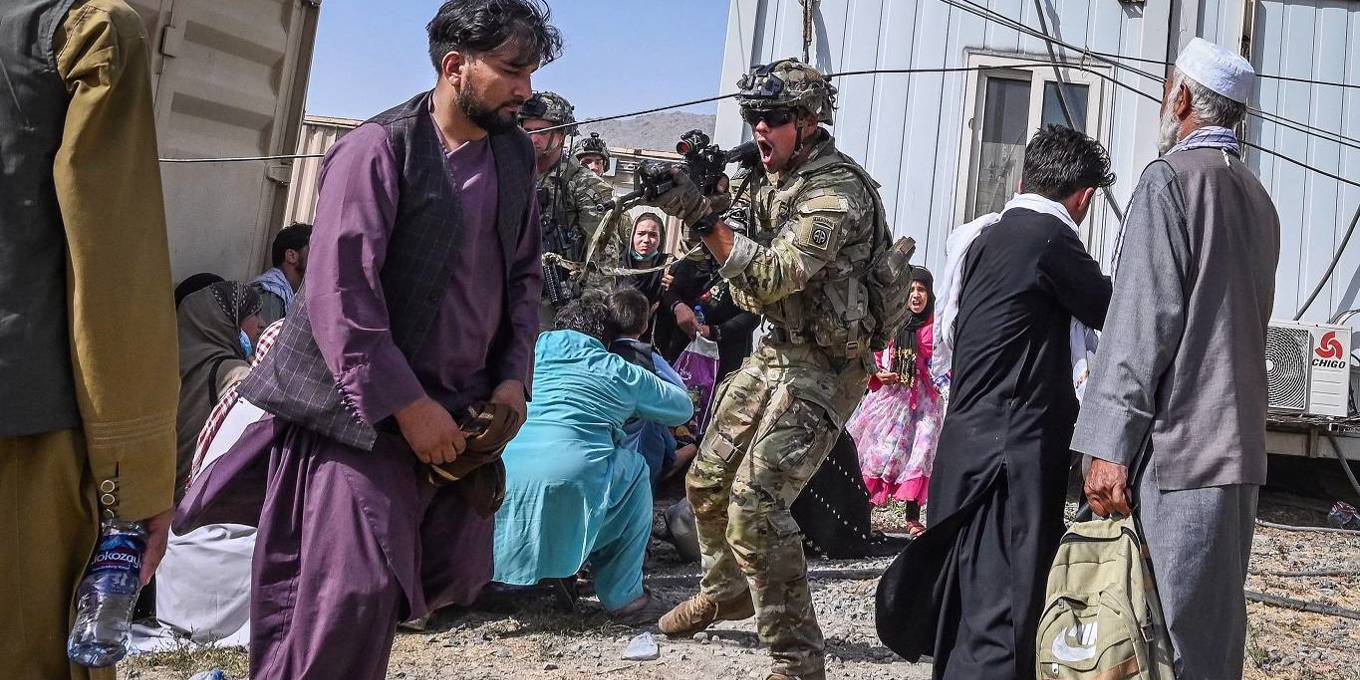
Jeffrey D. Sachs September 29, 2021 For decades, the American political class has intervened relentlessly and recklessly in countries whose people they hold in contempt. And once again they are being aided by America’s credulous mass media, which is uniformly blaming the Taliban victory on Afghanistan’s incorrigible corruption. Originally posted on Project Syndicate on August 17, 2021 NEW YORK – The magnitude of the United States’ failure in Afghanistan is breathtaking. It is not a failure of Democrats or Republicans, but an abiding failure of American political culture, reflected in US policymakers’ lack of interest in understanding different societies. And it is all too typical. Almost every modern US military intervention in the developing world has come to rot. It’s hard to think of an exception since the Korean War. In the 1960s and first half of the 1970s, the US fought in Indochina – Vietnam, Laos, and Cambodia –...
2D3CC331-64D5-45DE-B53D-A361772DAC1C
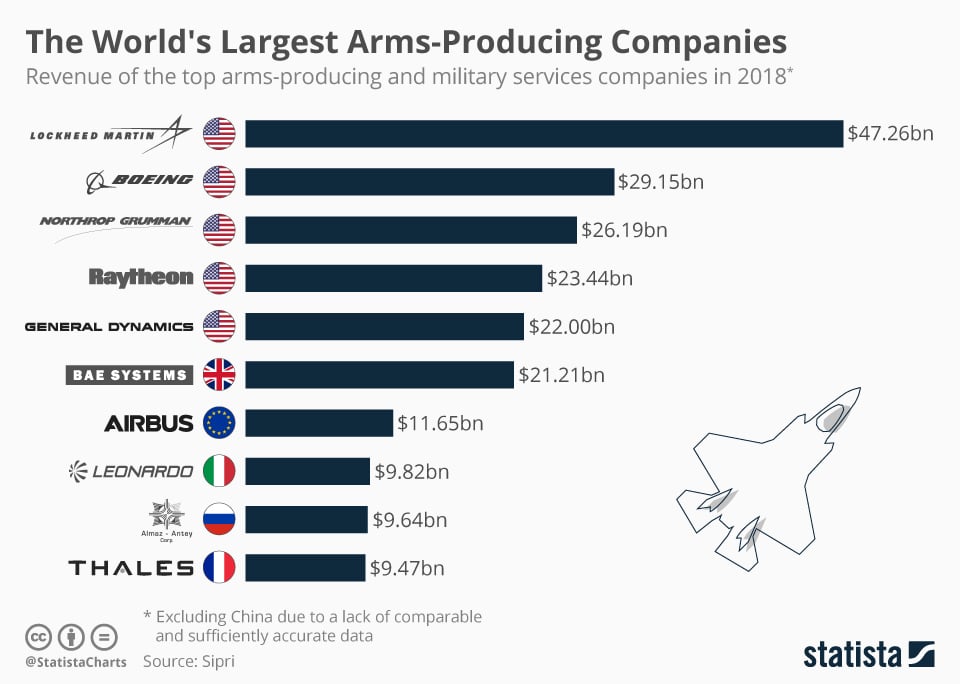
Listen to this article here With the end of the failed ‘forever war’ in Afghanistan, the US military-industrial complex needs to find another struggle to further enrich itself, and China now fits that bill Alex Lo September 24, 2021 “In the councils of government, we must guard against the acquisition of unwarranted influence, whether sought or unsought, by the military-industrial complex. The potential for the disastrous rise of misplaced power exists and will persist.” – President Dwight D. Eisenhower, farewell address, 1961 The “potential” of the military-industrial complex for mischief that Eisenhower warned against in his famous speech is now actual; indeed, it has been for some time now. Much of the “war on terror”, including the occupations of Iraq and Afghanistan, have been a gravy train for private contractors and arms makers. “The Forever War” may not have made America and Americans safer, but it has made the military-industrial complex...
Mashood
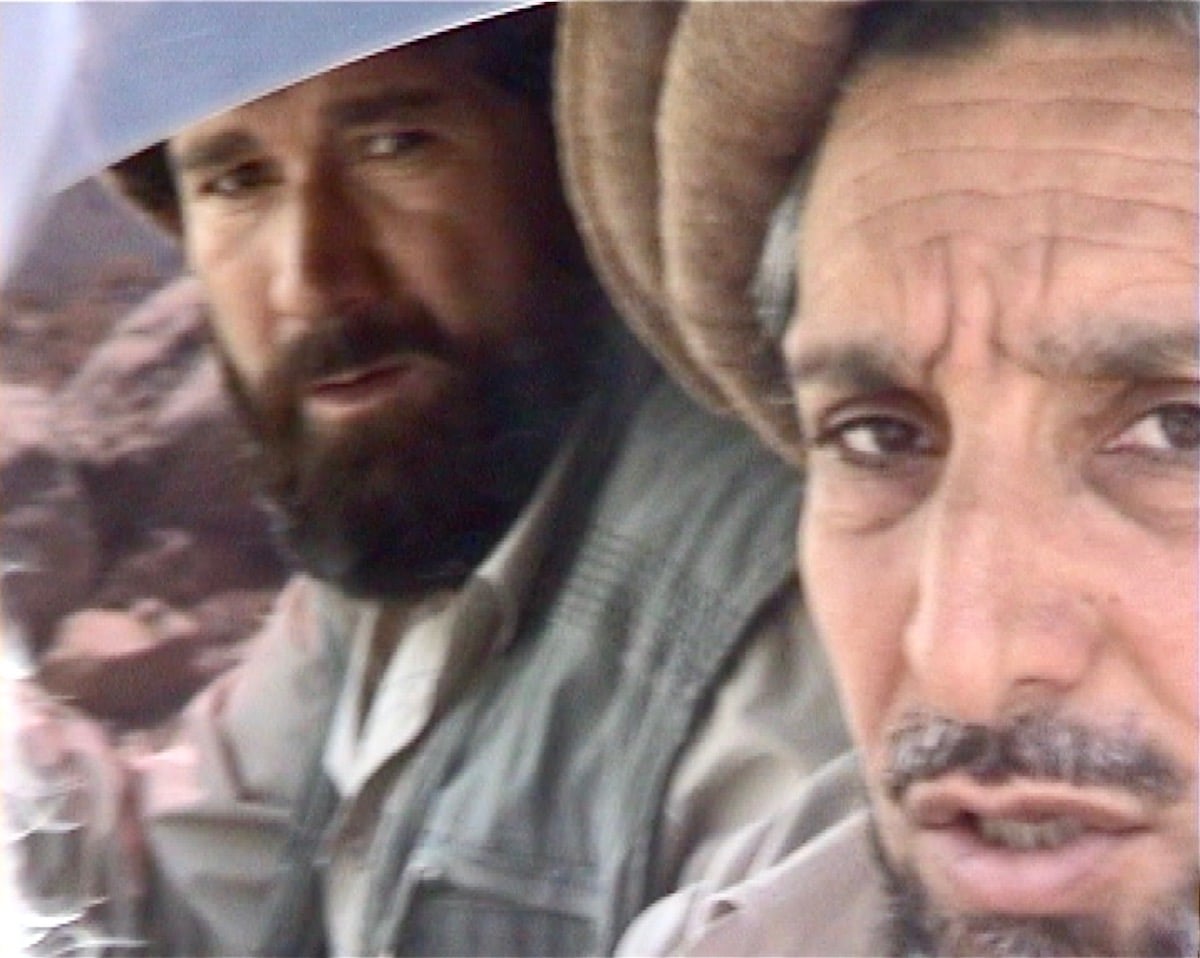
Massoud leaving Bazarak in the Panjshir after our interview in August 2001, roughly three weeks before his assassination. Photo: Pepe Escobar We may never know the full contours of the whole riddle inside an enigma when it comes to 9/11 and related issues Pepe Escobar September 13, 2021 It’s impossible not to start with the latest tremor in a series of stunning geopolitical earthquakes.  Exactly 20 years after 9/11 and the subsequent onset of the Global War on Terror (GWOT), the Taliban will hold a ceremony in Kabul to celebrate their victory in that misguided Forever War. Four key exponents of Eurasia integration – China, Russia, Iran and Pakistan – as well as Turkey and Qatar, will be officially represented, witnessing the official return of the Islamic Emirate of Afghanistan. As blowbacks go, this one is nothing short of intergalactic. Originally published at Asia Times The plot thickens when we...
us-army
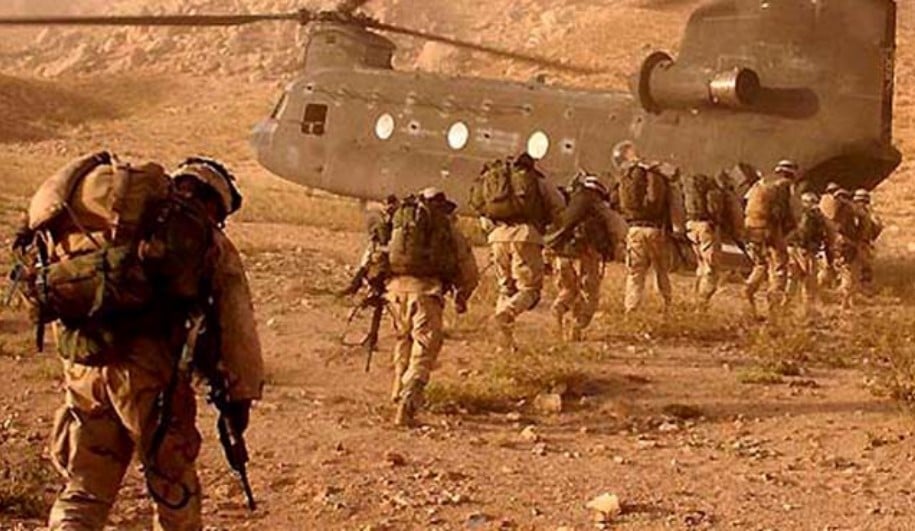
U.S. Army NATO, the United States and its vassal-states in Afghanistan Håkan Wiberg †2010 Former TFF Board member and Associate 9 september, 2021 AS FAR BACK as it is possible to trace the history of what is now Afghanistan, it has alternately been invaded — by among others the Median, Persian, Mongol, British and U.S. empires — and served as the base of expanding regional powers. The history of modern Afghanistan begins in 1747, with the coronation of Ahmed Abdali of the Durrani clan. Re-published online at Nordic News Network British expansion in India soon presented Afghanistan with a new threat — which became a reality in 1839 with the first large-scale British invasion. Shortly thereafter came the Russian expansion into Central Asia, leading to the “Great Game” between the two empires for control of the region. Afghanistan was drawn into minor clashes and some major wars with both of...
taliban-bin-laden
It’s far from the longest U.S. war. There was no peace before or after it. There is no after it until they end it — and bombing has always been most of what it is. It has had nothing to do with opposing terrorism. It has been a one-sided slaughter, a mass killing over two decades by a single invading army and air force dragging along token mascots from dozens of vassal states. After 20 years Afghanistan was one of the worst places to be on Earth, and the Earth as a whole was a worse place to be — the rule of law, the state of nature, the refugee crises, the spread of terrorism, the militarization of governments all worsened. Then the Taliban took over. When the U.S. armed the Afghan military with weapons costing enough to cause panic attacks in U.S. Senators had the expense been for anything...
afghan
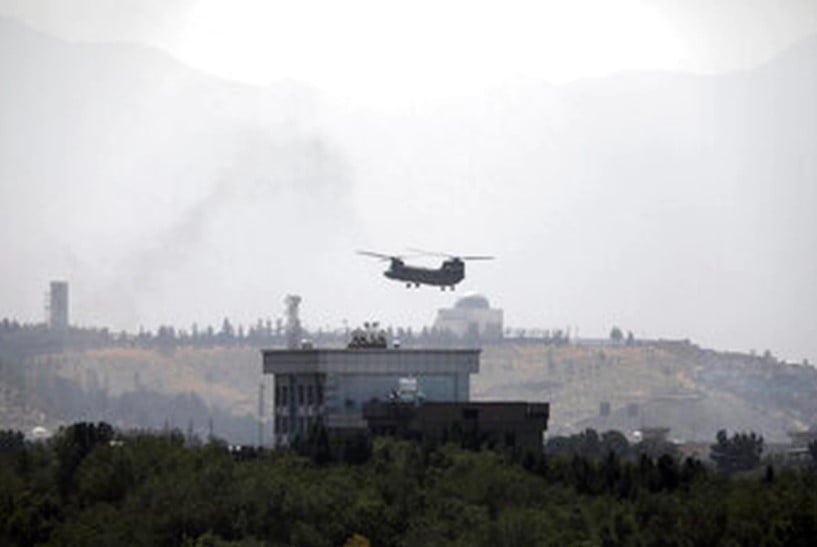
Sarah Chayes August 25, 2021 I have been silent for a while. I’ve been silent about Afghanistan for longer. But too many things are going unsaid. I won’t try to evoke the emotions, somehow both swirling and yet leaden: the grief, the anger, the sense of futility. Instead, as so often before, I will use my mind to shield my heart. And in the process, perhaps help you make some sense of what has happened. For those of you who don’t know me, here is my background — the perspective from which I write tonight. I covered the fall of the Taliban for NPR, making my way into their former capital, Kandahar, in December 2001, a few days after the collapse of their regime. Descending the last great hill into the desert city, I saw a dusty ghost town. Pickup trucks with rocket-launchers strapped to the struts patrolled the streets....

Categories

Year

Author / Contributor

Region