United Nations

Category

Year

Author / Contributor

Region

Sort by

Showing 1-10 of 104 stories

John-Scales-Avery
TFF Associate John Scales Avery presents his latest book on one of the most destructive institutions in modern societies and of our time. I would like to announce the publication of a new book entitled “The Devil’s Dynamo”. It is a collection of articles and book chapters that I have written about the way in which military-industrial complexes throughout the world drive and perpetuate the institution of war. A considerable amount of new material has also been added. The book can be freely downloaded and circulated from the Danish Peace Academy. Why call a book about military-industrial complexes “The Devil’s Dynamo”? A military-industrial complex involves a circular flow of money. The money flows like the electrical current in a dynamo, driving a diabolical machine. Money from immensely rich corporate oligarchs buys the votes of politicians and the propaganda of the mainstream media. Numbed by the propaganda, citizens allow the politicians...
1-1
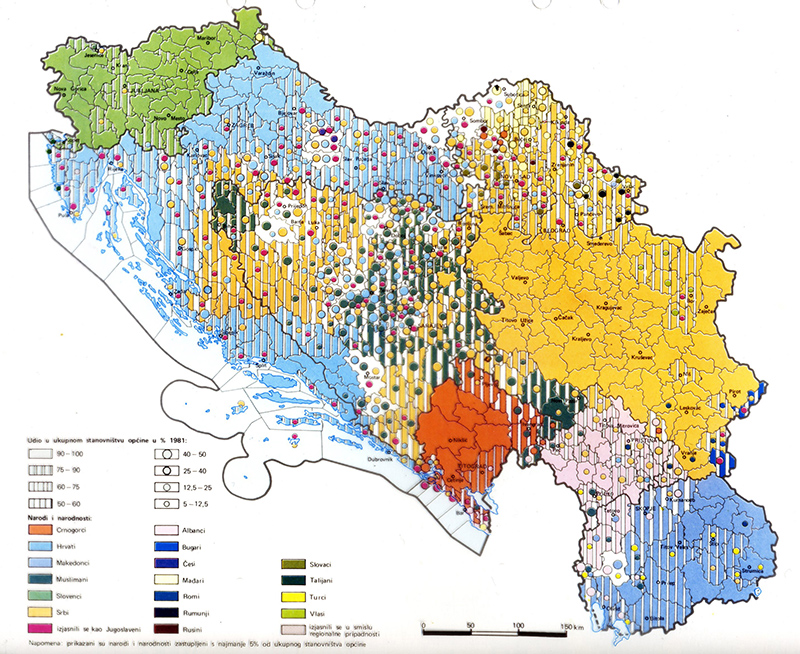
The ethnic map few understood. Should make it clear that cutting up Yugoslavia in independent republics could not be done without bloodshed. (1) Yellow = Serbs, Dark Green = Muslims, Light Blue = Croats,  Light Green = Slovenes, Orange = Montenegrins, Pink = Albanians, Darker Blue = Macedonians   , marks the 19th anniversary of NATO illegal and illegitimate bombing of Yugoslavia, Serbia and its Kosovo, province during 78 days. It has – one is tempted to say: of course – been conveniently forgotten by the West itself. It was masterminded by the United States under Bill Clinton and Secretary of State Madeleine Albright after the so-called negotiations between Serbs and Albanians in Rambouillet outside Paris (the parties never met face-to-face) While Clinton may be best remembered for his relations with Monica Lewinsky and his wife, Hillary Clinton, some of us also remember him (and Albright) for bombing Afghanistan, Sudan,...

johangaltung
* Today marks the 15th Anniversary of the US invasion of Iraq. Neither solid analyses, moral reasoning and decent argument nor history’s probably largest pre-war, anti-war demonstrations worldwide had any discernible impact on the Bush and Blair Administrations’ decision to go to war and do so on a false pretext. Neither could major allies like France and Germany by their opposition to the war on Iraq persuade Washington and London to first try a peaceful resolution in accordance with the UN Charter provisions. TFF was deeply engaged in preventing this war – also by being on the ground in Iraq – and wants to a) document the research we did and how we argued back then and b) contribute to this tragedy never being forgotten. We also want to place our analyses and debate articles at the disposal – in one place – of the students, researchers, concerned citizens and...
richard-falk-cropped-internal
New book by TFF Associate, Richard Falk, on the Vietnam War Revisiting the Vietnam War And International Law: Views and Interpretations of Richard Falk Editor Stefan Andersson Cambridge University Press, 2017 (US $ 157) Paperback UK £ 28 here Why the Legal and Political Debate on the Vietnam War Still Matters Introduction There has been recently a revival of interest in the Vietnam War, perhaps most notably as a result of the quite extraordinary 10-episode Ken Burns & Lynn Novick’s ten-part, eighteen hour documentary film as aired on PBS, which although somewhat ideologically slanted toward an American audience has much illuminating footage, especially bearing on various Vietnamese perceptions of the war experience. I would also call attention to a series of articles by Matthew Stevenson describing his recent visit to Vietnam – “Why Vietnam Still Matters: An American Reckoning” – which combines acute journalistic observation with impressive commentary on the...
ChatGPT Image 9 jun 2026, 11_11_33
  . No other country has seen so many “blue berets”- UN peacekeeping troops- in its short history. The Belgian colonialists may have exploited it and transferred massive amounts of its wealth back to Belgium but one leader after another has continued in its steps, making use of the country’s vast mineral deposits to build an edifice of wealth and unilateral power. Leaders have played on tribal fears and insecurity. War has been the outcome. In the last few years there has been talk of winding down the large contingent. A kind of peace seemed to have arrived. No longer. There are still 16,000 UN troops there. The way the UN peacekeepers work has changed a lot since their first deployment soon after independence. Then the accent was on not using arms. UN soldiers accused of misbehavior were rare. Today force, even killing, is widely used by peacekeepers. So are...
ChatGPT Image 9 jun 2026, 11_11_33
  • We are soon going to have a clash between President Donald Trump and international law. This is predicable when one examines the presidential discourse over what to do about North Korea and its possession of nuclear-tipped rockets. He has threatened “fire and fury” which doesn’t sound like the opening words of the UN’s Charter: “We the peoples of the United Nations determined to save succeeding generations from the scourge of war…..and to establish conditions under which justice and respect for the obligations arising from treaties and other sources of international law can be maintained……and for these ends to practice tolerance and live together in peace with one another as good neighbours.” There should be no question that if the Charter is followed that Trump cannot legally make a pre-emptive strike, either one nuclear or conventional, unless war is imminent because of threatening moves by the antagonist. He could...
Screenshot
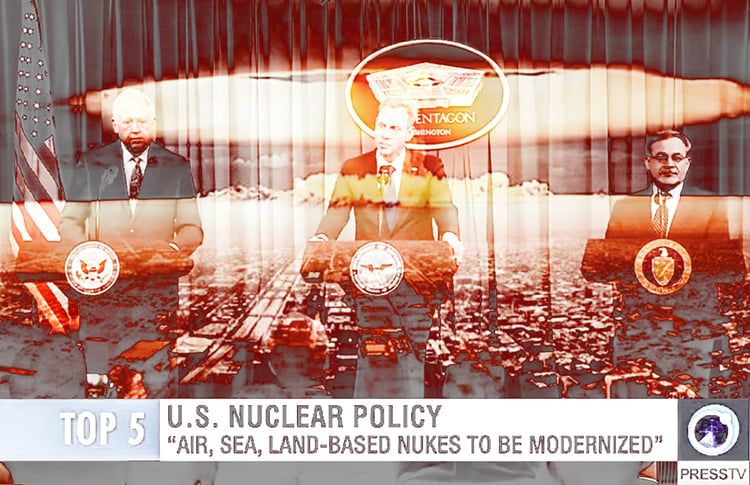
  By Jan Oberg Commenting on PressTV – also on how the Western mainstream press that publishes any piece of hysteria about Russia and China keep virtually silent about this and also the equally dangerous US National Defence Strategy that appeared a few days before this. Photo collage above © Jan Oberg 2018        
famine
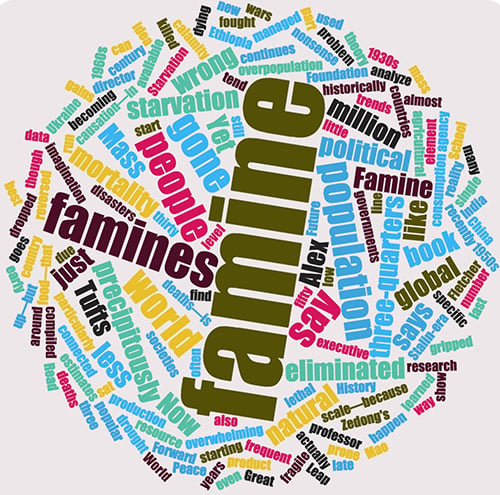
  January 27, 2018 Mass starvation killed more than three million people in Stalin-era Ukraine in the 1930s and more than 18 million in China during Mao Zedong’s Great Leap Forward in the late 1950s and early 1960s. Yet by the start of this century, famines like those were all but eliminated, Alex de Waal says in his new book, Mass Starvation: The History and Future of Famine. The number of people dying in famines around the world has dropped precipitously, particularly over the last thirty to fifty years. Via phys.org Those gains, though, are fragile, and could be starting to be reversed, says de Waal, who is the executive director of the World Peace Foundation and a research professor at the Fletcher School. For his book, he compiled the best available estimates of global famine deaths from 1870 to 2010, and used that data to analyze trends. Tufts Now...
Tillerson
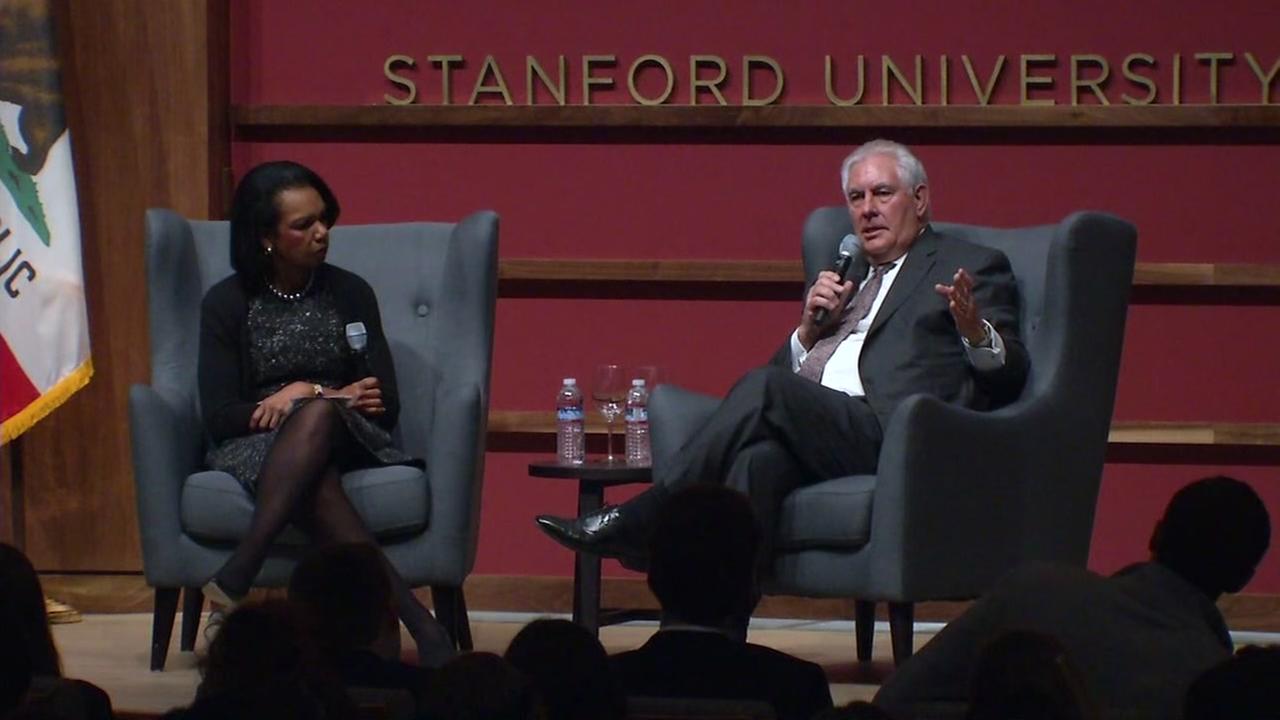
Most media covering the speech that US Secretary of State, Rex Tillerson, gave at the Hoover Institution on January 17, 2018 merely points out that he said that the United States would stay in Syria – open-ended – in the future and until President Bashar al-Assad has left the scene. Read the full speech here. Reuters even twists it all to mean that the US is now more patient about Assad’s removal. Before I continue it is a significant sign of the Western crisis, including moral and legal decay, that it raises few eyebrows – and none in NATO circles – that a top official of the leader of the Western world: a) expresses no regrets about anything done so far in this conflict or in the larger Middle East, b) states clearly that it will continue what must in legal terms be characterized as foreign military aggression and presence...
Burundi
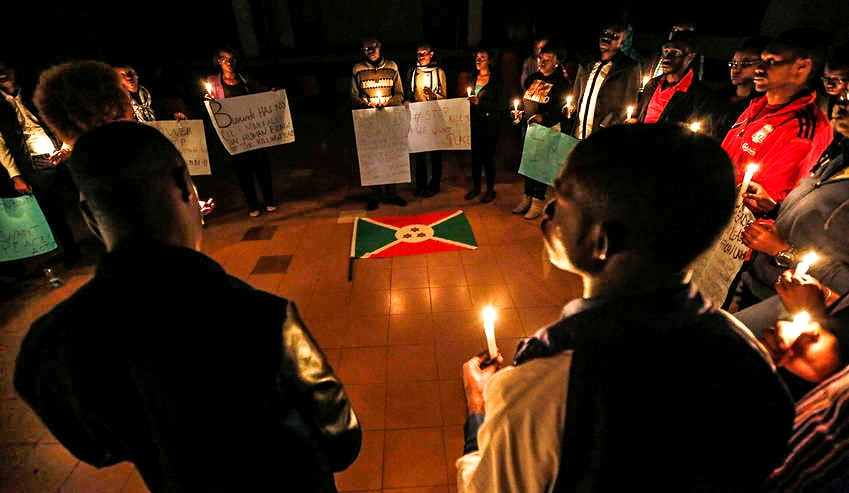
Burundi’s ongoing political instability highlights the stark divide between global conflict prevention rhetoric and practice.   By Priyal Singh for ISS TODAY.  First published by ISS Today • Since Burundian President Pierre Nkurunziza announced that he would run for a third term in early 2015, political instability across the country has tested the limits of global conflict prevention responses. This instability has included a failed coup d’état, violent clashes between government and opposition forces, increasing suppressionof the media and civil society, as well as targeted assassinations. The violence has resulted in more than 400,000 Burundians fleeing to neighbouring states and over 55,000 internally displaced, amid allegations of serious human rights violations in the country. Burundi’s instability, however, appears not to feature the central elements or drivers generally associated with the conflicts of other countries. The presence of transnational organised criminal syndicates has not featured prominently, nor have the influence or...
RichardFalk
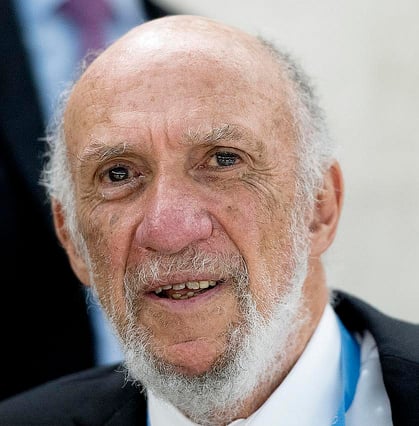
  By Richard Falk This post is a modified version of an article published in Middle East Eye on Jan. 1, 2018. It contends that the proper priority for genuine advocates of peace between Israelis and Palestinians should be centered around apartheid rather than be devoted to reviving an Oslo style ‘peace process’ (always a sham) or proclaiming the goal of an independent and sovereign Palestine as attainable without first dismantling the apartheid structures that subjugate the Palestinian people as a whole so as to maintain the Zionist insistence on Israel as the state of the Jewish people (rather than providing a homeland within a normal and legitimate state based on ethnic and religious equality, human rights, and secular principles.   Originally published on the “Global Justice in the 21st Century” blog   Despite all appearances to the contrary, those in the West who do not want to join the premature...
hqdefault
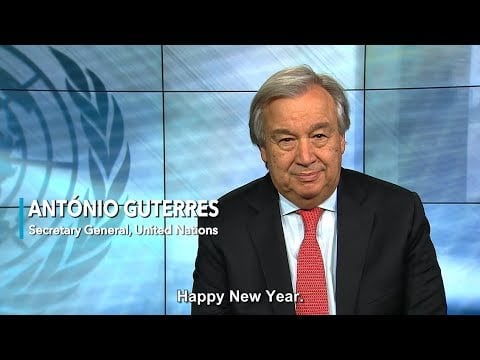
Jan Oberg comments: This is certainly important, although there are limits to what António Guterres can say. I wish he would have said “reduction of all kinds of violence” or emphasised the UN Charter’s Article one that says that peace shall be built by peaceful means. But anyhow – I applaud him for speaking up on December 31, 2017.
Categories

Year

Author / Contributor

Region