TFF Blog

The roll-down menus give you access to (almost) everything TFF Associates have produced since end of 2017 – their writings and videos, their media comment, broadcasts, essays and poetry.

The Treasures of their writings 2006-2012 can be found here.

And all that we published by them 2012-2017 is here.

Time to explore and see how world developments were processed over the years by one of the finest communities of genuine peace intellectuals and practitioners.
 

Category

Year

Author / Contributor

Region

Sort by

Showing 1-10 of 773 stories

ChatGPT Image 9 jun 2026, 11_11_33
Prime Minister Benjamin Netanyahu of Israel has announced that in a month’s time he will start to annex the large-scale Jewish settlements inside Palestinian territory, a step as provocative as one can imagine. Not even President Donald Trump’s administration which has supported Israel with many measures has not gone along with such thinking. Supporting the creation of settlements, Trump appears to think, is one thing, annexing a step too far. On the other hand, he has made it clear how close to Netanyahu he feels. He may well end up supporting the prime minister. Most of the world, including all the European allies of the US, will not go along with annexation. The UN ruling that Jewish settlements are illegal under the Geneva Convention is supported by almost every country except the US. It’s as clear as it’s ever been that a two-state solution can no longer be a viable...
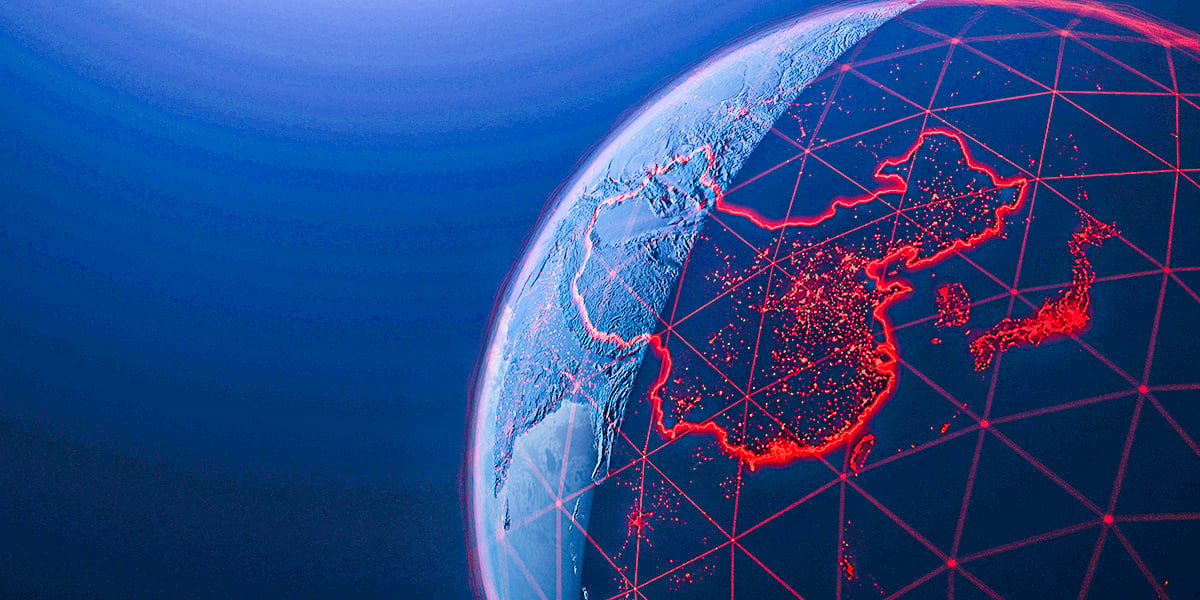
3d iillustration of globe with China corona virus Spreads in Asia
Part 4 Part 1 and 2 were introductory and then made the diagnosis. Part 3 analysed the fraudulent threat analysis that fuels militarism.This 4th part focus on some theories and concepts about human security and how that concept differs fundamentally from the state-anchored, military policies that have dominated so far. Part 1 of this series • Part 2 of this series • Part 3 Jan Oberg May 28, 2020 As pointed out in earlier parts of this series, the obsolete security concept was about national security – national military-first security. A new concept must take its departure elsewhere, namely in individual security, humanity’s security and – thereby, implicitly – the security of the environment. That is, individual and global human security and the security of the environment. It’s a much-needed holistic way of looking at it – also in the sense that human life cannot be secured if the environment...
Buddha-3
May 26, 2020 By David Loy Maybe every modern generation feels confronted by some crisis that will affect the fate of the world, but unless your head is buried in the sand (or some Buddhist equivalent) it’s impossible to be ignorant of the extraordinary planetary emergency that confronts us today. The recent IPCC report states clearly that ecological collapse no longer merely threatens — we are well into it. It’s become apparent that civilization as we know it is about to be transformed in some very uncomfortable ways by climate breakdown, mass extinction of species, resource depletion and various types of pollution — perhaps including some kinds we don’t even know about yet. Originally published at Huffington Post Although our globalizing economic system is a wholly-owned subsidiary of the biosphere, most of the CEOs who supervise it (as much as anyone controls it) can’t seem to plan much further than...
ChatGPT Image 9 jun 2026, 11_11_33
Africa is suffering a double whammy after many years of success. The Coronavirus, while not taking down great numbers of people like in Europe, Asia and the Americas, has had a severe impact by curbing its exports in the face of the formers’ severe economic depression. For example, flowers grown in Kenya and Ethiopia have been particularly hit. Kenya’s flower industry employs up to 70,000 people. Ethiopia’s horticulture provides 180,000 jobs. Kenya’s overnight exports of cut flowers to Europe have been worth almost 770,000 US dollars a year, up from 134 million in 2000. Now sales are on their way to rock-bottom. At the same time parts of East Africa have been hit by plagues of locusts, the likes of which have not been seen for over 70 years. They eat everything that comes their way. For the first time in a decade in Africa, many people are going hungry...
ChatGPT Image 9 jun 2026, 11_11_33
The world is supposed to be pulling together to defeat the Coronavirus and to some extent it is. Earlier on Russia sent special equipment to the US and recently the US has sent some to Russia. China has aided Italy and Africa with doctors and equipment. Tiny Cuba, with its deep pool of doctors, has also helped Africa. Around the world there is a sense of “we are all in this together” and that this is a bigger problem than the ones the world has faced since World War 2. The last two days the World Health Organization has brought all the world’s countries together to discuss how to go forward. Both the US and China, to a degree, have messed things up. President Donald Trump has been vicious in his attacks, suggesting Chinese culpability for spreading the virus. (He’s forgotten how the US incubated AIDS, an even greater killer....
ObergComment_OnSite
On March 21 this year, Bulletin of the Atomic Scientists (BAS) published an article headlined Coronavirus in Russia: How Putin’s disinformation efforts could backfire at home and written by Judy Twigg, professor of political science at Virginia Commonwealth University. Take a look and get a sense of its quality, balance and bias. Having read it, I submitted the following comment underneath: I’m dismayed by this article. While there is no doubt that Russia is (mis)using information, this sort of thing must be seen as a tool, or weapon, in a conflict – a conflict Russia has with the 29-member NATO alliance. It is normal praxis for such high-ranking, respected and reliable media as yours to not talk about “the other” side’s weapons but looking at armament dynamics on both (or all) sides of a conflict formation. Just pointing fingers at one and keep quiet about the other side risks to...
JOAtInstallation_1000_72dpi
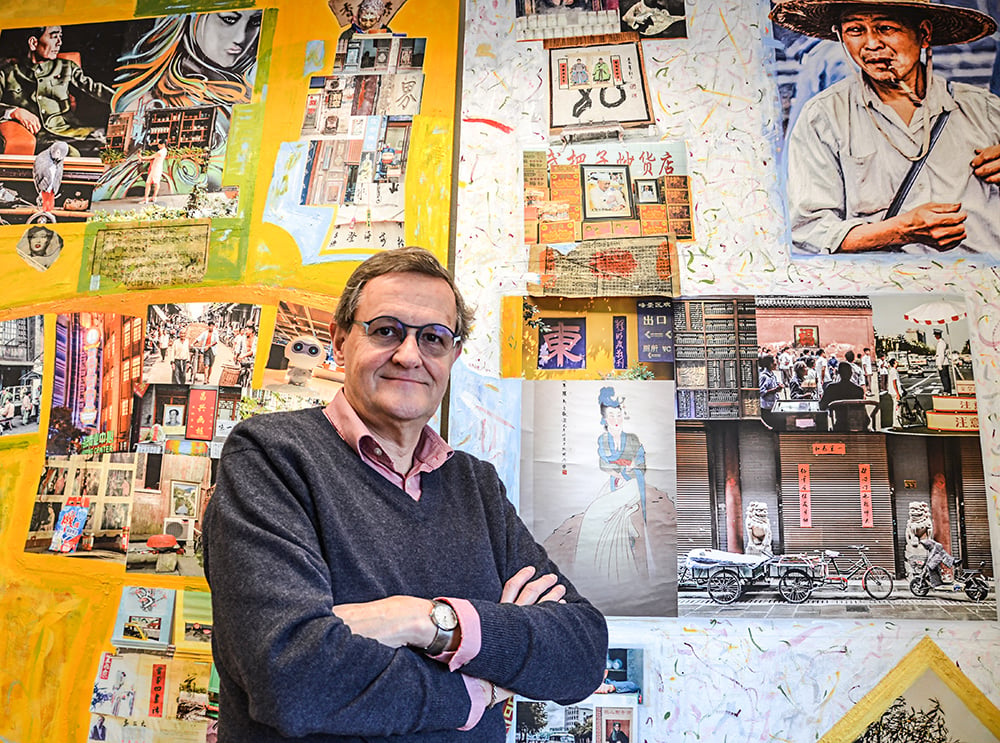
The author in front of a part of his photo-based, multi-media installation, “Silk Peace Art Road – SPAR” which was exhibited at the Venice Biennale 2019 and will be shown in China 2020. Yesterday, The Necessary Teacher Training College, DNS, in Denmark held its annual conference on peace and justice. As a couple of times before, I had the honour of being invited to be the keynote speaker. Because of the Coronavirus, it was online and not onsite – and I had produced the lecture in advance and then there was a Q&A session in the afternoon via Zoom. The two-part lecture is now on TFF’s Vimeo Channel here: Part 1 Part 2 The discussion that followed after group work If you found this lecture interesting or useful, please help us do more in the future. Remember, TFF is 100% people-financed and therefore completely independent of the government and corporate...
urmedium
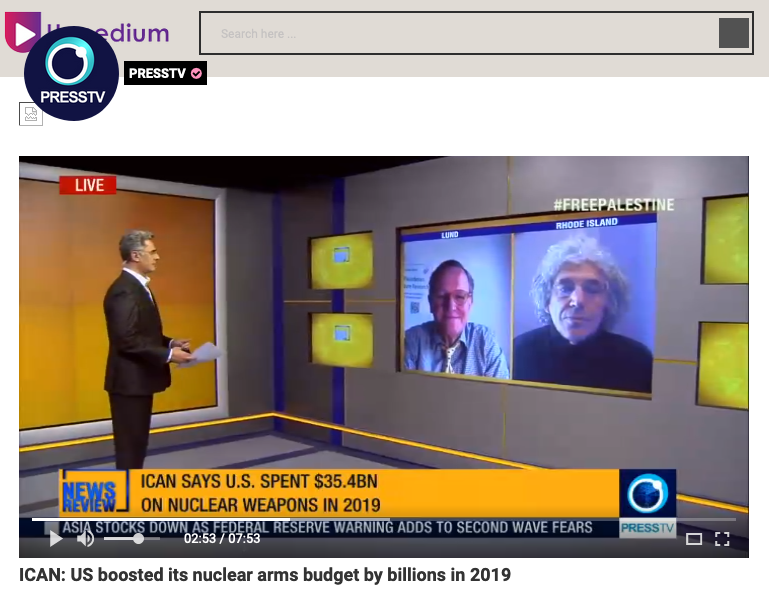
ICAN: The US boosted its nuclear arms budget A record $73 billion spent on nukes in 2019 – says ICAN. Nuclear-armed states spent a record $73 billion on nuclear weapons in 2019, a nearly 10% increase from 2018, and the US accounted for almost half of the spending, a new report states. Please find a short conversation about that at PressTV’s Channel at Urmedium.
RichardFalk
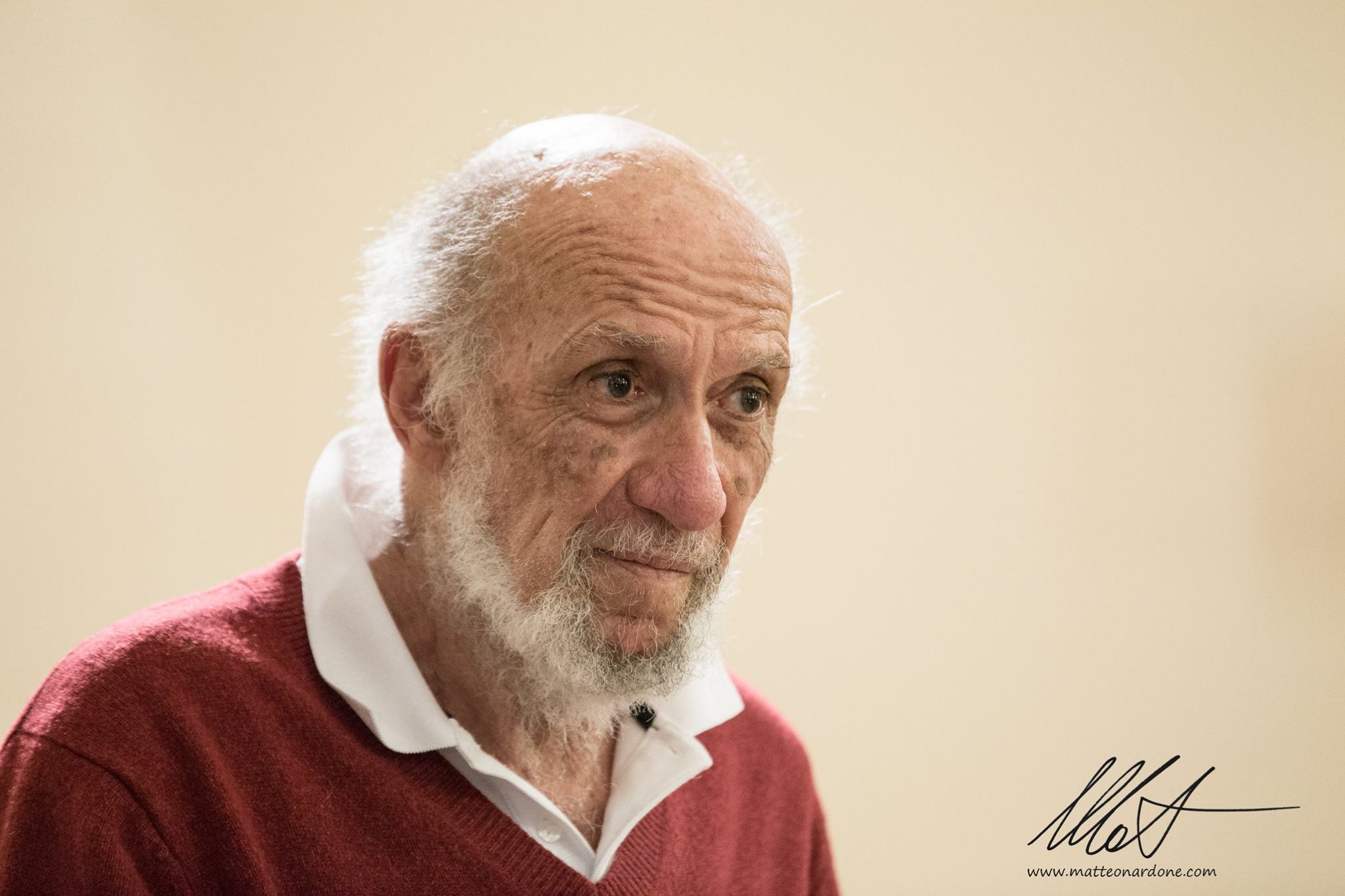
Richard Falk May 16, 2020 Prefatory Note Republication of opinion piece published in Al Jazeera English on May 13, 2020. The published AJE text has been slightly modified. Annexation foreplay These are the strangest of times. On this almost everyone will agree. Lives all over the planet are being torn apart either by COVID-19 or as a result of its devastating social and economic dislocations. In such a moment, it is hardly surprising that the best and worst of humanity is being showcased. Yet what seems worse beyond even these forebodings is the persistence of gangster geopolitics in its various manifestations. Intensifying U.S. sanctions in the midst of the health crisis on already deeply afflicted societies and suffering populations such as Iran and Venezuela is one striking example. This display of the primacy of geopolitics is highlighted by its rejections of numerous high profile humanitarian appeals for the suspension of...
ChatGPT Image 9 jun 2026, 11_11_33
The war in Syria has dropped out of the news, like almost everything else, in a time when the Coronavirus seems to dominate all discourse and reporting. But the regime of Bashar al-Assad continues to strangle its own country. The Russians continue to bomb on his behalf, terrifying civilians and hospitals. The Americans work semi-clandestinely to undermine both the regime and its Russian backers. There is no sign in the US-Soviet relationship of what was called in the 1970s and 80s détente. The big powers, Russia, the US, the UK and France appear intent on maintaining their interests in the Middle East. Russia has long been a friend of Syria and has had its single foreign base there since Soviet days. For even longer the US, France and the UK have been a friend of Saudi Arabia and today provide weapons for the Saudi air force so it can support...
61898c8628d848129d3fcd0b160773da_18
Richard Falk May 08, 2020 More than earlier crises of my lifetime, including the Great Depression, World War II, 9/11, the COVID-19 pandemic illuminates as never before, how precarious and uncertain is the future wellbeing, and possibly survival, of the human species. The concreteness, immediacy, and haunting uncertainties of the pandemic is quite terrifying on its own, but its heuristic pedagogy seems applicable to a range of potentially catastrophic threats of global scope, most obviously climate change, biodiversity, nuclear weaponry. Originally posted on Richard Falk’s blog on May 3, 2020 What we should now be able to realize even while asleep is that when the under-preparedness of governance and political leadership is based on ignoring a scientific consensus is combined with radical uncertainty and myopic nationalism the stage is set for planetary and species disaster, and not only personal grief and national emergency. These signature traits of the 21st century heighten...
image-1-696x392-1
John Scales Avery May 7, 2020 We See Clearly What Is Near to Us There is a remarkable contrast in the way that governments around the world have responded to the COVID-19 pandemic and the way that they have responded to the climate emergency. The pandemic, which indeed represents an extremely grave danger to humanity, has produced a massive global response. Borders have been closed, airlines have become virtually inoperative, industries, restaurants and entertainments have been closed, sporting events have been cancelled or postponed, people have been asked to stay at home and practice social distancing, and the everyday life of citizens around the world has been drastically changed. John Scales Avery By contrast, let us consider the threat that if immediate action is not taken to halt the extraction and use of fossil fuels, irreversible feedback loops will be initiated which will make catastrophic climate change inevitable despite human...
Categories

Year

Author / Contributor

Region