
Gangster geopolitics in the global jungle: Annexation tops Israel’s Macabre Dance Card

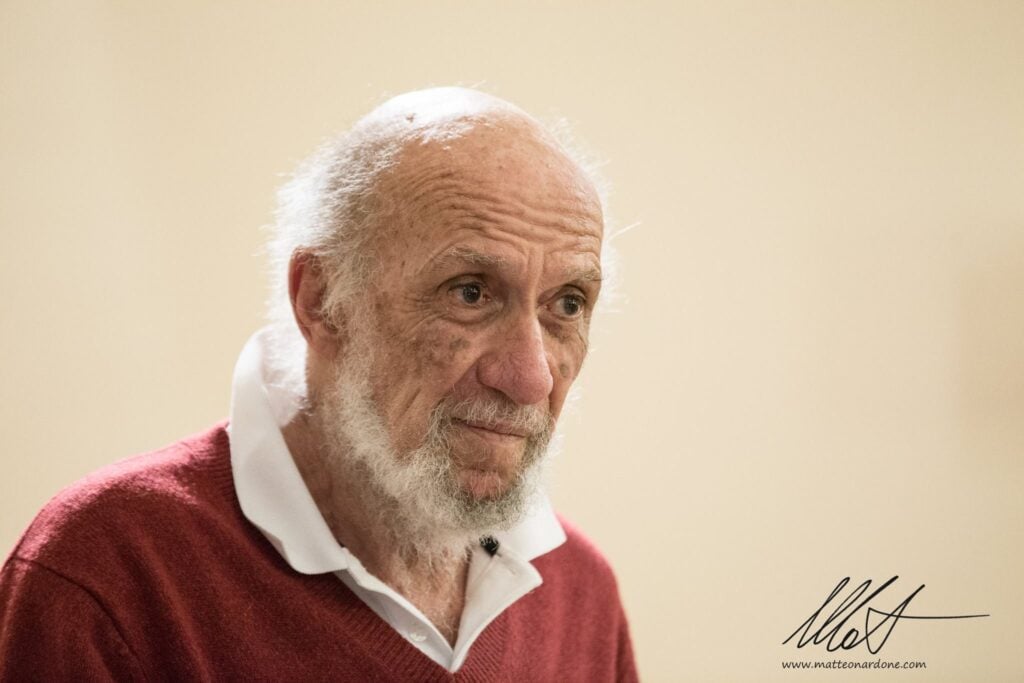
Richard Falk

May 16, 2020

Prefatory Note

Republication of opinion piece published in Al Jazeera English on May 13, 2020. The published AJE text has been slightly modified.

Annexation foreplay

These are the strangest of times. On this almost everyone will agree.

Lives all over the planet are being torn apart either by COVID-19 or as a result of its devastating social and economic dislocations. In such a moment, it is hardly surprising that the best and worst of humanity is being showcased.

Yet what seems worse beyond even these forebodings is the persistence of gangster geopolitics in its various manifestations.

Intensifying U.S. sanctions in the midst of the health crisis on already deeply afflicted societies and suffering populations such as Iran and Venezuela is one striking example.

This display of the primacy of geopolitics is highlighted by its rejections of numerous high profile humanitarian appeals for the suspension of sanctions, at least for the duration of the pandemic. Instead of suspension and empathy, we find tone-deaf Washington almost gleefully upping its ‘maximum pressure’ policy, perversely grabbing the opportunity to rachet up the pain level.

Another dark tale is the macabre Israeli dance around the disruptive lawlessness of the annexation pledge that Netanyahu has promised to implement as early as July, having the assent of his power-sharing rival, Benny Gantz, to proceed without the need to gain the assent of his coalition co-leader.

It is not even controversial to insist that any annexation of occupied Palestinian territory directly violates fundamental norms of international law. Maybe because of this, Israel is poised to annex without even attempting to offer legal justifications for overriding the widely endorsed and rigidly interpreted rule that a sovereign state is not allowed to annex foreign territory acquired by force.

This instance of annexation additionally involves an extreme repudiation of international humanitarian law as embodied in the Fourth Geneva Convention. It amounts to a unilateral move by Israel to change the status of land in the West Bank from that of occupier, since 1967, to that of its sovereign territorial authority.

It also disregards the legal pledge in Oslo II (1995) to transfer to Palestine by stages jurisdiction over Area C in the post-Oslo administrative mapping of the West Bank. And further, such contemplated annexation directly challenges the authority of the UN, which by an overwhelming continuous consensus regards Israel’s presence in the West Bank, East Jerusalem, and Gaza as solely based on force and occupation, making any modification dependent on a prior authoritative expression of Palestinian consent, which is even hard to imagine ever being given.

Not only is annexation unlawful, but has the potential to be regionally disruptive, agitating neighbors, especially Jordan, possibly Egypt, and directly challenges the continuing European zombie attachment to a two-state solution.

What has generally been overlooked in the extensive commentary on the annexation prospect is that it not only ignores the Palestinian self-determination, it also ‘forgets’ that the UN has an unfulfilled promise and responsibility to find a just solution for Palestine that it inherited from the United Kingdom that had been administering the territory between the two world wars. 

What had been even in the days of the League ‘a sacred trust’ becomes in the era of post-colonial gangster geopolitics ‘wanton disregard.’

Israelis insist annexation is about ‘security’

For all these reasons, it is not surprising that even Israeli heavyweights, including former heads of Mossad and Shin Bet, as well as retired IDF security officers are sounding an alarm. Some militant Zionists oppose annexation at this point because it will expose the delusion that Israel is a democracy as well as a State of the Jewish people as worries mount that absorbing Palestinians in the West Bank will in due course threaten Jewish ethnic hegemony.

Of course, none of this Israeli/Zionist ‘second thoughts debate’ objects to annexation because it violates international law, sidesteps and undermines UN or EU authority, and ignores Palestinian inalienable rights. All the objections to annexation from within Israel or among Zionist militants are couched by exclusive reference to a variety of concerns about alleged negative impacts on Israeli security.

In particular, these critics from within Israel’s national security establishment are worried about disturbing Arab neighbours and further alienating world public opinion, especially in Europe, and to some extent worry about the reactions of ‘liberal Zionists,’ and thus weakening solidarity bonds of overseas Jews with Israel in the U.S. and Europe.

The pro-annexation side of the Israeli policy debate also mentions security considerations, especially with respect to the Jordan Valley and the settlements, but much less so. Unlike the critics, the more ardent proponents of annexation are land claimants. They invoke a Jewish biblical entitlement to Judea and Samaria (known internationally as the ‘West Bank’).

This entitlement is reinforced by referencing Jewish deep cultural traditions and centuries of historical connections between a small Jewish presence as being continuous and this land being treated as a self-created sacred guardianship. As with Israeli critics of annexation, supporters feel no need to explain, or even notice, the disregard of Palestinian grievances and rights.

Annexationist don’t dare put forward an argument that the Jewish claims are more deserving of recognition than are the competing national claims of Palestinians, undoubtedly because their case is so weak in terms of uncontested modern ideas of law, as well as the ethics of territorial entitlement.

As has been case throughout the Zionist narrative, Palestinian grievances, aspirations, and even the existence of a Palestinian people is not part of the Zionist imaginary except as political obstacles and demographic impediments.

At the same time, all long Zionism has been tactically opportunistic about disclosing the full extent of its project ans instead acting in public as if what it could gain under a given set of circumstances was all that it wanted and expected at some future point to acquire.

When one considers the evolution of the main drift of Zionism since its inception, the longer-term aspiration of marginalizing Palestinians in a single dominant Jewish state that encompassed the whole of Israel’s ‘promised land’ has never been forsaken.

In this sense, the UN partition plan while accepted as a solution at the time by the Zionist leadership, is better interpreted as a stepping stone to recovering as much of the promised land as possible.

In the course of the last hundred years, from a Zionist perspective utopia became reality, while for the Palestinians reality became dystopia.

The macabre dance

How the prelude to annexation is being addressed by Israel and the United States is as dismaying as is the underlying erasure of the Palestinians, except possibly as a restive population to be kept fragmented and as disunited as possible so that their resistance and objections can be efficiently muted.

Israel has already privileged annexation in the Gantz/Netanyahu unity government, making a proposal for annexation to be submitted to the Knesset any time after July 1.

The only precondition accepted by the agreement establishing the Netanyahu/Gantz unity government was confirming the contours of the annexation to the territorial allocations embodied in the notoriously one-sided Trump/Kushner ‘From Peace to Prosperity’ proposal which seems reasonable to treat as tantamount to an outright stamp of approval by the U.S. Government.

Even without the disclosure of the Trump peace plan, U.S. approval was hardly ever in doubt. It follows from Trump’s endorsement of Israel’s annexation of the Golan Heights in occupied Syrian territory a few months ago.

As could be expected, Trump’s America is creating no friction, not even whispering to Netanyahu at least to offer legal justifications or explain away the negative effects of annexation on Palestinian peace prospects. Instead, the American Secretary of State, Mike Pompeo, has given a green light to West Bank annexation even before Israel formalized its claim, declaring provocatively that annexation is a matter for the Israelis to determine on their own (as if neither Palestinians nor international law had any relevance). He added that the U.S. will convey its opinions privately to the government of Israel.

Perhaps, this is a wily move by Washington in effect, leaving it to Israel to handle any regional or UN blowback resulting from carrying out this controversial annexation. If an international pushback of any consequence occurs, the Israeli government would have to take responsibility for handling the outcry.

In this sense, perhaps the Trump administration is learning the game, by this time seeking to avoid, or at least deflect, the angry reactions directed at the U.S. in the UN and elsewhere after announcing in December 2017 its intention to move the American embassy from Tel Aviv to Jerusalem.

Gangster geopolitics

In the undisclosed background, the callousness of the annexation initiative seems designed to neuter the UN and blunt international criticism of Israel. It is expected that annexation will be greeted by a strong rhetoric of denunciation from several European leaders and possibly candidate Biden, but unaccompanied by any serious push for an international campaign to reverse this taking of Palestinian land.

On the basis of past experience, it seems likely that after a few days of media coverage concerns will subside, and the world will move on. Even the Palestinians discouraged by years of fruitless waiting, seem to be suffering, at least temporarily, from a combination of resistance fatigue and ineffectual solidarity initiatives.

Such an assessment is best understood as one more sign that Israel/U.S. relations are being managed in accord with ‘gangster geopolitics,’ and without paying heed to international law or UN authority. Such a pejorative label intends to condemn any annexation such as this one that sweeps law and morality aside while political space is forcibly cleared for land theft.

While gangster geopolitics may be extinguishing the last remnant of Palestinian hopes for political compromise and a diplomacy based on a genuine commitment to equity and equality, there are voices of resistance struggling to be heard.

I highlight my dissent to annexation by describing this critical response as ‘gangsta geopolitics’ borrowing from pop culture’s ‘gangsta rap’ that fights back from the streets of the world on behalf of the people suffering from racist police tactics. Of course, this is a metaphor, yet it illuminates an incredible pattern of official behavior that is hard to believe is acknowledged in Israeli public discourse.

First, there is the defiant nature of the Israeli annexation claim.

Secondly, there is the single qualification that Israel must obtain a geopolitical stamp of approval from the U.S. Government before going forward with annexation.

Thirdly, that the U.S. Government seems to throw the ball back to Israel by saying the decision to annex is Israel’s to make, yet it will give Israel the benefit of its private opinion on the matter, presumably on the tactics of timing and presentation, without any consideration of matters of principle.

There is a ghostly melody accompanying this macabre dance. Israel tames its unilateralism by a gesture of geopolitical deference, and by this posturing, acts as if the approval of the United States matters as something more than a political show of support. The U.S. doesn’t question the Israeli logic, yet it doesn’t want to accept responsibility for a public show of approval, leaving Israel free to act as it wishes although withholding, at least for now, any expression of approval or disapproval with respect to annexation.

This leaves unattended the awkward gap between the Israeli unity government agreement with its requirement to obtain U.S. approval and Pompeo’s demurrer.

Whether this will cause any problems as the July date approaches is unlikely, especially as Israel will present annexation as a partial implementation of the Trump proposals. I suspect that the U.S. private message will be one of discreet approval, which Netanyahu will undoubtedly treat as satisfying the agreement with Gantz.

What stands out here is the arrogance of the politics of annexation.

Not only are the rules and procedures of the world public order cast aside, but the internal discourse on the transfer of rights is carried on as if the people most affected are irrelevant, a kind of ‘internal Orientalism.’

Let’s hope that we who resort to gangsta rap to put these developments in the perspective they deserve, can do more at the time when the annexation move is formalized than gnash our teeth in frustration while observing this lamentable spectacle unfold.


Professor Falk became an adviser to TFF when it was established in 1985.

Related Posts

Below are TFF-related media mentions, comments, videos and social media posts published elsewhere but not on this homepage. We happen to catch and list only a fraction. Regarding video comments and debates, we recommend that you go to the TFF Video Channel on Substack where many of them are reproduced. Jan Oberg is a contributor to China Daily – 52 million daily clicks – and Global Times, CGTN and CCTV (the national television), China Investment, Xinhua News Agency and several others. Articles and videos on these media very often multiply into countless Chinese (and Western media) that re-post them from these main media. Thanks to The China Academy, his analyses, interviews and comments are frequently posted on YouTube channels such as Thinkers Forum and Wave Media. These videos are often re-posted on Bilibili (China’s YouTube), the China Content Center on TikTok, and on the Chinese edition of TikTok, Douyin.com. This means reaching hundreds of millions of viewers worldwide over a year. While there are too many to catch on all these...
Jan Oberg TFF director October 13, 2026 According to Alfred Nobel’s will, the Nobel Peace Prize shall be awarded: ”to the person who has done the most or best to advance fellowship among nations, the abolition or reduction of standing armies, and the establishment and promotion of peace congresses.” Further down, he also expresses how the prize for the “champions of peace” shall be decided: “that for champions of peace by a committee of five persons to be selected by the Norwegian Storting. Alfred Nobel’s will is remarkably short and clear. But few seem to have read it. Nobel did not say that the committee itself should consist of members of parliament. He entrusted the Storting with appointing five persons. In principle, it could have selected diplomats, mediators, peace researchers, conflict-resolution specialists, or other individuals with recognised expertise in matters of peace from around the world. Instead, the Storting gradually...
The Quest for Humane Survival Richard Falk Professor emeritus, Princeton UniversityTFF Associate since 1986October 12, 2026 After decades of teaching and writing about international law in academic frameworks that were not institutionally situated within law school environments—at Princeton and the University of California, Santa Barbara—I found myself most receptive to the TWAIL outlook. It has been especially illuminating in clarifying the extent to which international law evolved as a dialogical critique of Europe’s efforts to legitimize its colonial undertakings. In particular, TWAIL has exposed how international law has functioned to legalize the subjugation of Third World peoples, securing conditions for exploitative investment and trade relations, the coercive enforcement of public debts, and an ideology of cultural superiority. TWAIL’s exposure of these economic legacies of colonialism has influenced my understanding of the history and development of international law, broadly conceived, as an ideological project of the Western sub-system of the world...

Recent Articles

Below are TFF-related media mentions, comments, videos and social media posts published elsewhere but not on this homepage. We happen to catch and list only a fraction. Regarding video comments and debates, we recommend that you go to the TFF Video Channel on Substack where many of them are reproduced. Jan Oberg is a contributor to China Daily – 52 million daily clicks – and Global Times, CGTN and CCTV (the national television), China Investment, Xinhua News Agency and several others. Articles and videos on these media very often multiply into countless Chinese (and Western media) that re-post them from these main media. Thanks to The China Academy, his analyses, interviews and comments are frequently posted on YouTube channels such as Thinkers Forum and Wave Media. These videos are often re-posted on Bilibili (China’s YouTube), the China Content Center on TikTok, and on the Chinese edition of TikTok, Douyin.com. This means reaching hundreds of millions of viewers worldwide over a year. While there are too many to catch on all these...
Jan Oberg TFF director October 13, 2026 According to Alfred Nobel’s will, the Nobel Peace Prize shall be awarded: ”to the person who has done the most or best to advance fellowship among nations, the abolition or reduction of standing armies, and the establishment and promotion of peace congresses.” Further down, he also expresses how the prize for the “champions of peace” shall be decided: “that for champions of peace by a committee of five persons to be selected by the Norwegian Storting. Alfred Nobel’s will is remarkably short and clear. But few seem to have read it. Nobel did not say that the committee itself should consist of members of parliament. He entrusted the Storting with appointing five persons. In principle, it could have selected diplomats, mediators, peace researchers, conflict-resolution specialists, or other individuals with recognised expertise in matters of peace from around the world. Instead, the Storting gradually...
The Quest for Humane Survival Richard Falk Professor emeritus, Princeton UniversityTFF Associate since 1986October 12, 2026 After decades of teaching and writing about international law in academic frameworks that were not institutionally situated within law school environments—at Princeton and the University of California, Santa Barbara—I found myself most receptive to the TWAIL outlook. It has been especially illuminating in clarifying the extent to which international law evolved as a dialogical critique of Europe’s efforts to legitimize its colonial undertakings. In particular, TWAIL has exposed how international law has functioned to legalize the subjugation of Third World peoples, securing conditions for exploitative investment and trade relations, the coercive enforcement of public debts, and an ideology of cultural superiority. TWAIL’s exposure of these economic legacies of colonialism has influenced my understanding of the history and development of international law, broadly conceived, as an ideological project of the Western sub-system of the world...

TFF on Substack

Discover and subscribe to more peace materials on TFF Substack

Most Popular

Below are TFF-related media mentions, comments, videos and social media posts published elsewhere but not on this homepage. We happen to catch and list only a fraction. Regarding video comments and debates, we recommend that you go to the TFF Video Channel on Substack where many of them are reproduced. Jan Oberg is a contributor to China Daily – 52 million daily clicks – and Global Times, CGTN and CCTV (the national television), China Investment, Xinhua News Agency and several others. Articles and videos on these media very often multiply into countless Chinese (and Western media) that re-post them from these main media. Thanks to The China Academy, his analyses, interviews and comments are frequently posted on YouTube channels such as Thinkers Forum and Wave Media. These videos are often re-posted on Bilibili (China’s YouTube), the China Content Center on TikTok, and on the Chinese edition of TikTok, Douyin.com. This means reaching hundreds of millions of viewers worldwide over a year. While there are too many to catch on all these...
Jan Oberg TFF director October 13, 2026 According to Alfred Nobel’s will, the Nobel Peace Prize shall be awarded: ”to the person who has done the most or best to advance fellowship among nations, the abolition or reduction of standing armies, and the establishment and promotion of peace congresses.” Further down, he also expresses how the prize for the “champions of peace” shall be decided: “that for champions of peace by a committee of five persons to be selected by the Norwegian Storting. Alfred Nobel’s will is remarkably short and clear. But few seem to have read it. Nobel did not say that the committee itself should consist of members of parliament. He entrusted the Storting with appointing five persons. In principle, it could have selected diplomats, mediators, peace researchers, conflict-resolution specialists, or other individuals with recognised expertise in matters of peace from around the world. Instead, the Storting gradually...
The Quest for Humane Survival Richard Falk Professor emeritus, Princeton UniversityTFF Associate since 1986October 12, 2026 After decades of teaching and writing about international law in academic frameworks that were not institutionally situated within law school environments—at Princeton and the University of California, Santa Barbara—I found myself most receptive to the TWAIL outlook. It has been especially illuminating in clarifying the extent to which international law evolved as a dialogical critique of Europe’s efforts to legitimize its colonial undertakings. In particular, TWAIL has exposed how international law has functioned to legalize the subjugation of Third World peoples, securing conditions for exploitative investment and trade relations, the coercive enforcement of public debts, and an ideology of cultural superiority. TWAIL’s exposure of these economic legacies of colonialism has influenced my understanding of the history and development of international law, broadly conceived, as an ideological project of the Western sub-system of the world...
Read More
girl-5894831_1280
Below are TFF-related media mentions, comments, videos and social media posts published elsewhere but not on this homepage. We happen to catch and list only a fraction. Regarding video comments and debates, we recommend that you go to the TFF Video Channel on Substack where many of them are reproduced. Jan Oberg is a contributor to China Daily – 52 million daily clicks – and Global Times, CGTN and CCTV (the national television), China Investment, Xinhua News Agency and several others. Articles and videos on these media very often multiply into countless Chinese (and Western media) that re-post them from these main media. Thanks to The China Academy, his analyses, interviews and comments are frequently posted on YouTube channels such as Thinkers Forum and Wave Media. These videos are often re-posted on Bilibili (China’s YouTube), the China Content Center on TikTok, and on the Chinese edition of TikTok, Douyin.com. This means reaching hundreds of millions of viewers worldwide over a year. While there are too many to catch on all these...
Nobel-Prize-Plaque
Jan Oberg TFF director October 13, 2026 According to Alfred Nobel’s will, the Nobel Peace Prize shall be awarded: ”to the person who has done the most or best to advance fellowship among nations, the abolition or reduction of standing armies, and the establishment and promotion of peace congresses.” Further down, he also expresses how the prize for the “champions of peace” shall be decided: “that for champions of peace by a committee of five persons to be selected by the Norwegian Storting. Alfred Nobel’s will is remarkably short and clear. But few seem to have read it. Nobel did not say that the committee itself should consist of members of parliament. He entrusted the Storting with appointing five persons. In principle, it could have selected diplomats, mediators, peace researchers, conflict-resolution specialists, or other individuals with recognised expertise in matters of peace from around the world. Instead, the Storting gradually...
law-419057_1280
The Quest for Humane Survival Richard Falk Professor emeritus, Princeton UniversityTFF Associate since 1986October 12, 2026 After decades of teaching and writing about international law in academic frameworks that were not institutionally situated within law school environments—at Princeton and the University of California, Santa Barbara—I found myself most receptive to the TWAIL outlook. It has been especially illuminating in clarifying the extent to which international law evolved as a dialogical critique of Europe’s efforts to legitimize its colonial undertakings. In particular, TWAIL has exposed how international law has functioned to legalize the subjugation of Third World peoples, securing conditions for exploitative investment and trade relations, the coercive enforcement of public debts, and an ideology of cultural superiority. TWAIL’s exposure of these economic legacies of colonialism has influenced my understanding of the history and development of international law, broadly conceived, as an ideological project of the Western sub-system of the world...
images-2
Advocates of nuclear disarmament are regularly dismissed by the champions of nuclear deterrence as naïve and unrealistic, utopian or even irresponsible. Yet this ‘doctrine’ of deterrence, regarded by France as the ‘cornerstone’ of its national security, is based on quasi-religious beliefs, a theory that cannot be proven, risky gambles and fragile assumptions. So much so that one might legitimately ask which side the ‘Care Bears’ are on. Marc FinaudVice-President of Initiatives for Nuclear Disarmament (IDN) October 9, 2026 This article was originally published on Pressenza When it comes to these things being treated as religious concepts, look here. Idealists and realists It was Hubert Védrine, François Mitterrand’s former Foreign Minister, who repeatedly coined the phrase: ‘Europeans are a sort of Care Bears who don’t realise they’re living in Jurassic Park’. He applies this reference to the cartoon for well-behaved children not only to what he regards as weakness or idealism...
8824b09f-33a5-43f9-9fd0-550f28cda24d_1536x1024
What the West Borrowed from Asia and What It Left Behind Jan Krikke October 8, 2026 The article was originally published here In the late 1960s, the musical Hair announced that the Age of Aquarius was dawning. Its opening anthem promised a transformation of human consciousness: an era of peace, harmony and understanding. Half a century later, a familiar echo of that promise is a meditation app offered by your employer. You can find it in the same list of benefits as the pension plan and the gym discount. How did a spiritual revolution become an employee benefit? The answer lies in the history of the movement known as New Age: where it came from, what it borrowed from Asia, and why the meaning of what it borrowed changed in the process. Two definitions will help. New Age is a loose label for a wide range of spiritual practices and...
Screenshot 2026-10-04 210142
Small and different + among the 10% most active + 9,000 texts + 150 Associates + 60 000 a day — and a stubborn belief that peace is smarter and must be secured by peaceful means. In 2026, the Transnational Foundation for Peace and Future Research (TFF) turns 40. On Monday, October 5, 2026, a new TFF homepage will go live — a new gateway to more than 9,000 articles, analyses, research papers and other contributions produced over four decades of independent peace research. But this is not simply a new website. For four decades, TFF has worked from a simple conviction: peace is smarter than militarism and can be brought about by peaceful means. This is not merely an aspiration. It is the principle expressed in the UN Charter and the Gandhian tradition that has guided our work from the beginning. TFF is a research-based, independent and people-financed foundation....




