Terrorism

Category

Year

Author / Contributor

Region

Sort by

Showing 1-10 of 210 stories

ChatGPT Image 9 jun 2026, 11_11_33
It’s the most repeated maxim in all the reportage on the war in Afghanistan: “The Americans have the watches, we, the Taliban, have the time.” “Play it again, Sam” was said in “Casablanca”. It should be played, said and listened to in Kabul and Washington today. This is America’s longest war ever – 18 years and counting. It has cost over one trillion dollars and taken 2,500 American lives. President Barack Obama, blind-sided by the generals, he confided later, pumped up the numbers of troops to 100,000. Before very long, Obama came to realize that even if he did a Lyndon Johnson and sent in half a million troops it would end up as it did in Vietnam with a stalemate (still unanswered is why, after 18 years, the Afghan army isn’t trained to do the job themselves). Obama then rolled back the numbers. Three years ago President Donald Trump,...

US-sanctions
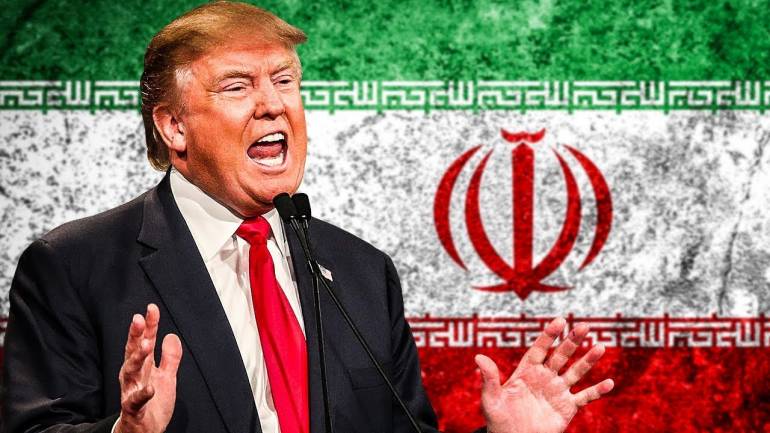
Prefatory Note: The post below is a slightly modified version of an interview published in The Nation on September 25th, following the September 14th attack on Saudi oil facilities. It follows a pattern with respect to Iran of accusations, denials, and public uncertainties. This combination of elements, given the leadership in Washington and Tehran, one blustering, the other inflexible, can easily produce an unintended stumble into war. A second shorter interview is appended, conducted prior to the attacks by an Iranian journalist, M.J. Hassani of Tasnim News Agency. It illustrates the seeming rigidity of Iran’s Supreme Guide, considered as having the final word on government policy, exceeding that of the elected leadership. Originally posted on Richard Falk’s personal blog on October 1, 2019, here Daniel Falcone Introduction to the Interview: After accusations of Iranian drone attacks on Saudi oil facilities, Iranian officials and authorities indicated that “full-fledged war” with the United States could...
Veteran
Or – The US, A Shameless Warrior Yesterday, the US Ambassador to Denmark, Carla Sands, tweeted the following: As will be seen below, there were four photos from an event in Copenhagen. The first shows all the people present, including former Danish Prime minister Fogh Rasmussen (also on the 4th photo with the ambassador), the present Danish defence minister, Trine Bramsen (also on the 2nd photo to the right), and veterans. The third photo is indeed very touching if you note the veteran sitting to the Ambassador’s right side – his right arm and hand as well as his two legs. The Ambassador’s text is revealing for how a representative of the US Empire performs these days. The day is called Wounded Warrior – and of course it would be more difficult to make a barbeque for Dead Warriors – and the ambassador emphases (only) that it reminds us of...
Islamophobia
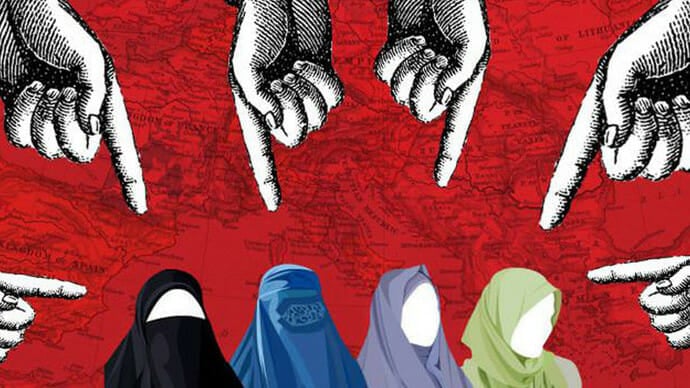
Islamophobia can be said to refer to the way Islam is being alienated in society by other cultures through fear and distrust against people belonging to the Islamic faith. Muslims are often portrayed in an increasingly negative context as witnessed in media, legislation and public debates. By Idriss Jazairy June 1, 2019 Islam is often presented as an ‘isolated culture’ with its own distinct features, which are allegedly incompatible with certain values upheld in Western societies. It is the rise of such a polarizing context that results in growing fear against Muslims, prejudice of other cultures and the ‘us versus them’ paradigm. Originally published human-wrongs-watch.net Although Arabs are a Semitic people like the Jews themselves, the media know that anti-Semitism is banned for the latter but tolerated for the former in the name of freedom of expression. Following the 9/11 terrorist attacks in the US by individuals – who were...
war_memorial
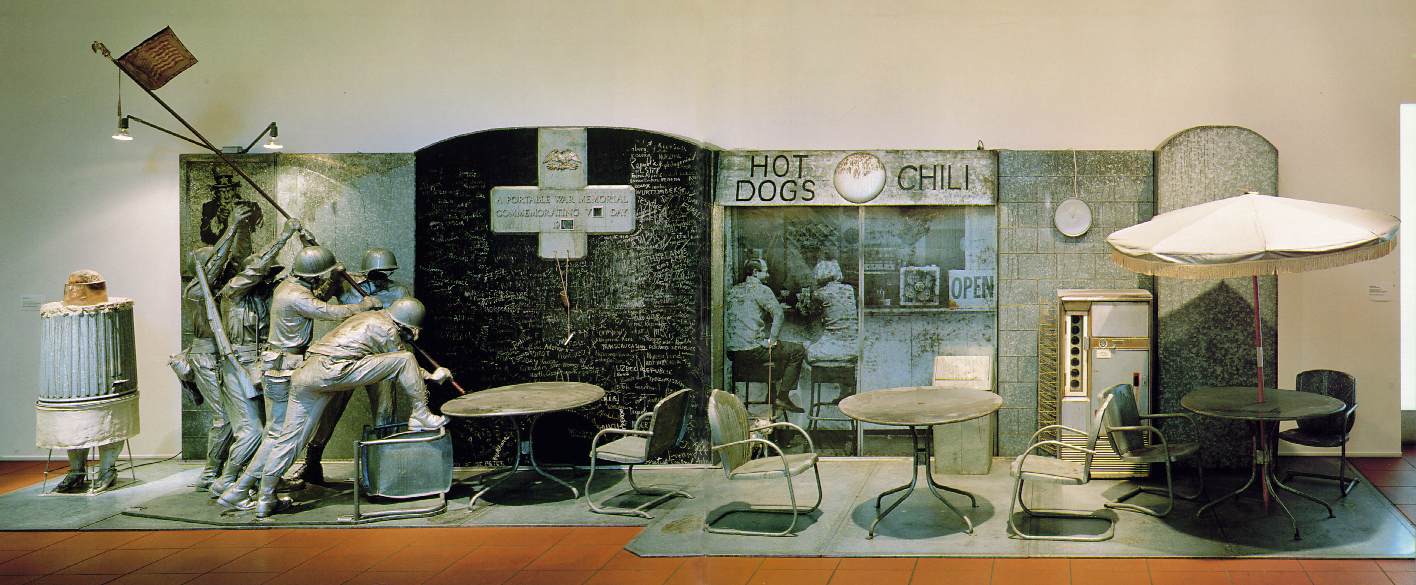
, the US taxpayers are paying US $ 32 million. That is now close to US$ 5000 billion in total! Add to that the tragedy of the absurd: from Vietnam to Syria, 1955 till today or 64 years, there is no documentable evidence that all of its wars, interventions, occupations, meddlings, regime changes have been anything but failures. There is no evidence either that today’s world is a better place than it would have been without these wars, alliances, deterrence and confrontational policies. But there is plenty of hard evidence that the United States of America is in relative decline as a world power. Plenty of facts to show that others – who spend much less on their military and have no Empire – are growing and destined to surpass the US on fundamental indicators in just a few years. As the largest military machine in human history, it has...
000_1A55LN
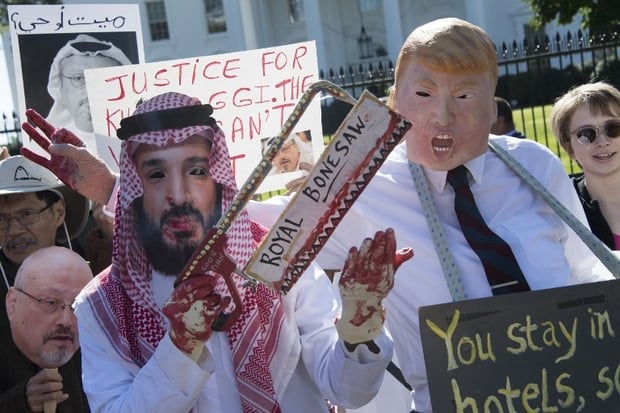
Photo: Demonstrators dressed as Saudi Crown Prince Mohammed bin Salman and US President Donald Trump protest outside the White House in Washington on 19 October 2018, demanding justice for missing Saudi journalist Jamal Khashoggi (AFP) (Photo credit: middleeasteye.net).   Tehran has repeatedly delivered on its promises, while Washington has fallen short and backed Riyadh’s disastrous regional adventures. November 22, 2018   By Seyed Hossein Mousavian In a recent op-ed in The New York Times, Thomas Friedman criticised former US President Barack Obama’s bet on Iran and President Donald Trump’s bet on Saudi Arabia, noting that both countries responded with their worst impulses. Friedman argues that the Iran nuclear deal was a bet worth making, but like many critics of the deal, he claims that it enabled Iran’s overreach in four Arab capitals: Baghdad, Damascus, Sanaa and Beirut. I believe he is wrong. In the Iran-US wrangling over the past three decades, Tehran...
GarethPorter-e1540558470864
Eisenhower’s worst nightmare has come true, as defense mega-contractors climb into the cockpit to ensure we stay overextended   By Gareth Porter November 20, 2018 What President Dwight D. Eisenhower dubbed the “military-industrial complex” has been constantly evolving over the decades, adjusting to shifts in the economic and political system as well as international events. The result today is a “permanent-war complex,” which is now engaged in conflicts in at least eight countries across the globe, none of which are intended to be temporary. This new complex has justified its enhanced power and control over the country’s resources primarily by citing threats to U.S. security posed by Islamic terrorists. But like the old military-industrial complex, it is really rooted in the evolving relationship between the national security institutions themselves and the private arms contractors allied with them. Originally published at theamericanconservative.com The first phase of this transformation was a far-reaching privatization...
NotIranToo_FR_4_72dpi_ForNet
  Utterly destructive, self-defeating and spelling the end of the U.S. Empire   By Farhang Jahanpour September 22, 2018 In view of the macro-historical perspective on the Middle East-West relations and the concrete cases referred to in this series – Afghanistan, Iraq, Libya and Syria – it is clear that the demonization of Middle Eastern leaders as a prelude to invasion and their downfall has a long history. Such rulers are often used to serve the economic and political interests of various Western countries, in the same way that the Saudi Crown Prince Mohammed Bin Salman and the United Arab Emirates’ Crown Prince Mohammad Bin Zayed are being used at the moment to make them purchase tens of billions of dollars’ worth of US, British and French weapons. When they have outlived their usefulness, they will probably meet the same fate as that of Qadhafi or Saddam Hussein. However, despite...
NotIranToo_FR_4_72dpi_ForNet
    By Farhang Jahanpour September 20, 2018   1. An ally in warfare and torture Although the tragic events in Syria are too close to us to pass a definitive judgement about what has happened there and we need some perspective before we can make any definitive statements, nevertheless, some of the outlines of what led to that catastrophe are already clear for all to see. When the United States invaded Kuwait in order to dislodge the Iraqi forces that had occupied that country, Syria was one of the countries that joined the US-led coalition. Shortly after the invasion of Iraq in 2003, Syria was one of the main destinations for rendered suspects to be tortured in Syrian black sites. In the chilling words of former CIA agent Robert Baer in 2004: “If you want a serious interrogation, you send a prisoner to Jordan. If you want them to be tortured,...
NotIranToo_FR_4_72dpi_ForNet
    By Farhang Jahanpour September 20, 2018   On 20 March 2018, the former French President Nicolas Sarkozy was taken into police custody in Paris to be questioned over allegations that he received millions of Euros in illegal funding from Qadhafi for his presidential campaign. Investigators were examining claims that Qadhafi’s regime secretly gave Sarkozy €50 million overall for the 2007 campaign. Such a sum would be more than double the legal campaign funding limit and also violates French rules against foreign financing of elections. (See: “Former French President Nicolas Sarkozy in police custody over investigation into Gaddafi funding”, The Independent, 20 March 2018. Sarkozy entertained Qadhafi lavishly at the Elyse Palace, even allowing him to pitch his tent in the grounds of the palace. Yet, later on, Sarkozy was the cheerleader for the attack on Libya, which resulted in the brutal murder of Qadhafi and the destruction of...
NotIranToo_FR_4_72dpi_ForNet
    By Farhang Jahanpour September 18, 2018   1. Some omitted facts and perspectives Prior to the Iraq war, the only thing that one heard on most Western channels about that country was Saddam Hussein and his alleged chemical and nuclear weapons. Saddam Hussein became synonymous with Iraq. Nothing was said of Iraq’s long history as a cradle of civilisation or its people who, like people all over the world, simply wished to live in peace and pursue a normal life. The same was done to Afghanistan, Libya and Syria, when the Taliban, Mu’ammar Qadhafi and Bashar al-Assad were continuously demonised – while it was omitted and forgotten that the West had befriended, and in some cases supported, and sponsored those rulers in the past. Initially, Saddam Hussein was supported by the CIA to fight against Abd al-Karim Qasim who had toppled the Hashemite monarchy and had formed an...
NotIranToo_FR_4_72dpi_ForNet
    By Farhang Jahanpour September 18, 2018   1. The Carter Doctrine, Brzezinski and the Stinger missiles

 After the Soviet invasion of Afghanistan on Christmas Day 1979, President Jimmy Carter issued his Carter Declaration, stating that the Persian Gulf was part of America’s vital interest and America would defend it by all means possible. A policy proclaimed by President Jimmy Carter in his State of the Union Address on 23 January 1980 stressed that the United States would use military force, if necessary, to defend its “national interests” in the Persian Gulf. The statement that came to be known as the “Carter Doctrine” concluded: “Let our position be absolutely clear: An attempt by any outside force to gain control of the Persian Gulf region will be regarded as an assault on the vital interests of the United States of America, and such an assault will be repelled by any...
Categories

Year

Author / Contributor

Region