Russia international relations

Category

Year

Author / Contributor

Region

Sort by

Showing 1-10 of 190 stories

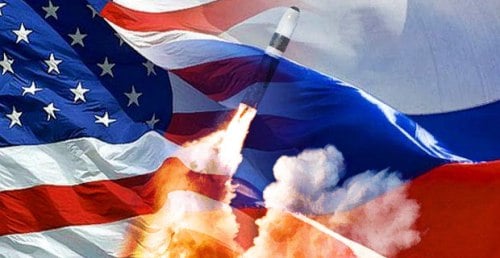
russia-us-nuclear_missile_war
    By Gordon M. Hahn February 14, 2018 The US and the rest of the West continue to carry out the same failed Russia policy that let to the ‘new Cold War. That policy can be summed up in the following words: We, with our NATO and EU expansion, will ignore your interests and national security concerns; you must follow our model immediately or feel our wrath. Beginning in the 1990s a Western expansion model’ — NATO and EU expansion without Russia — drove Moscow to retrench on democracy and establish a soft authoritarian regime and led inevitably to the Ukrainian conflict and ‘new cold war.’ Originally published at Gordon Hahn’s website here The new cold war – for now limited in its hot sphere to proxy wars in Ukraine and Syria – has led to a doubling down on this failed Western approach by continuously intensifying sanctions and...
xBE6082B0-F4F4-4448-98FF-752CB68D3A47-720x480.jpeg.pagespeed.ic_.ddpPx9foRs
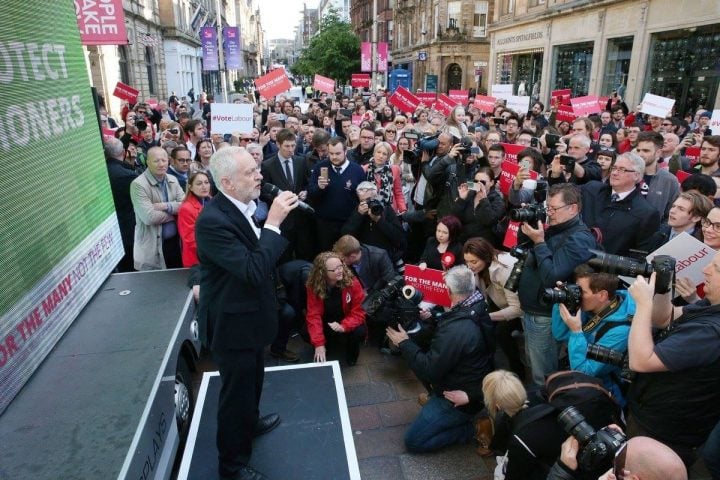
Jeremy Corbyn June 2017 (Image by Jeremy Corbyn Facebook)   By Silvia Swinden A Russian father, former double spy convicted in Russia and exchanged by Britain for other spies, and his daughter were found unconscious on a bench in Salisbury. Preliminary assessment suggests a nerve gas agent. The government has jumped to accuse Russia and in particular Putin of ordering this assassination attempt. The word “war” has been repeated in many speeches from PM May and other members of her government. Originally published by Pressenza here Jeremy Corbyn has appealed for clam and to involve international bodies that deal with chemical warfare in order to test the substance properly as well as establishing controls on the money laundering activities of Russian oligarchs and mafias operating in the UK rather than a simple diplomatic tit-for-tat. Unsurprisingly this has caused a deluge of criticism from the media (the BBC photoshoped his picture...
Admiral_Kuznetsov_aircraft_carrier
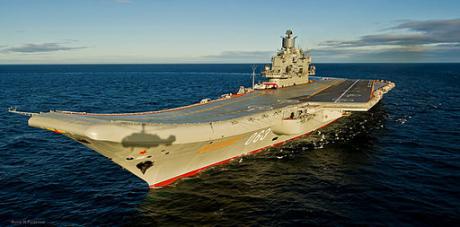
Fearology and medialised threat perception management that serves militarism   By Paul Rogers February 22, 2018 Is Russia a military threat to the west? A larger past and closer detail offer fresh light. Most analysts blame Vladimir Putin’s aggressive political stance for the renewed hostility between Russia and the western states of the North Atlantic Treaty Organisation (Nato). The deteriorating relationship has been evident for a decade and more. The fallout from Moscow’s interventions in Georgia / South Ossetia (2008), Ukraine / Crimea (2014), and Syria (2015), as well as its reported disruption in the United States presidential election (2016), are but the main episodes. Lesser ones include displays of military strength that attract wide coverage in the western media. Originally published by OpenDemocracy here. Before looking in more detail at the latter, it is worth offering a touch of historical perspective on great-power interference. In particular, at a time...
против-всех-e1518695833363
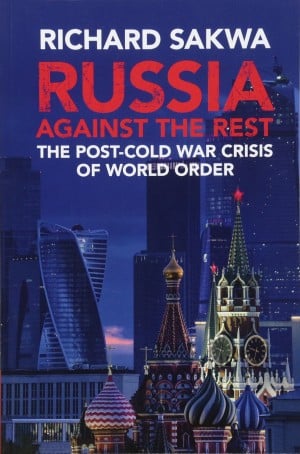
    Rethinking Russia sat down with University of Kent’s Professor Richard Sakwa to discuss his new book Russia Against The Rest, its relations with the West, its role in a new world order as well as its greatest challenges in 2018. Originally published on February 15,2018 at Rethinking Russia here   University of Kent’s Professor Richard Sakwa believes that there will be the intensification of an anti-Russian policy in the West in the future. He also writes about it in his new book Russia Against The Rest: The Post-Cold War Crisis of World Order that was released in October 2017. Rethinking Russia sat down with him to discuss the book, Russia’s role in a new global order as well as its greatest challenge in 2018.   Rethinking Russia: How could you explain the title of your book “Russia Against The Rest”? Richard Sakwa: The point is to stress the...
Russia-Saudi-meet-630x378
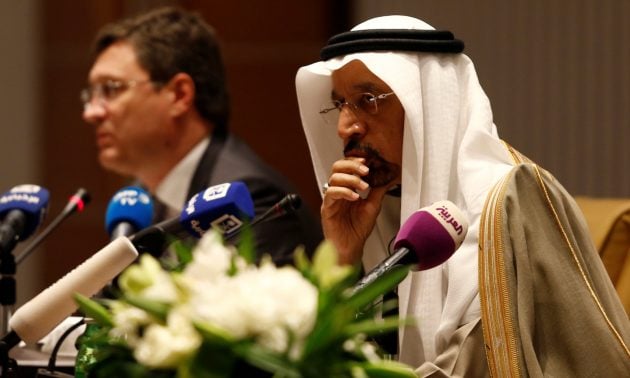
Hardly 10 months after honoring the visiting US president, the Saudis are open to a Russian-Chinese consortium investing in the upcoming Aramco IPO*   By M. K. Bhadrakumar February 16, 2018 In the slideshow that is Middle Eastern politics, the series of still images seldom add up to make an enduring narrative. And the probability is high that when an indelible image appears, it might go unnoticed – such as Russia and Saudi Arabia wrapping up huge energy deals on Wednesday underscoring a new narrative in regional and international security. Originally published by Asia Times here The ebb and flow of events in Syria – Turkey’s campaign in Afrin and its threat to administer an “Ottoman slap” to the United States, and the shooting down of an Israeli F-16 jet – hogged the attention. But something of far greater importance was unfolding in Riyadh, as Saudi and Russian officials met...
putin
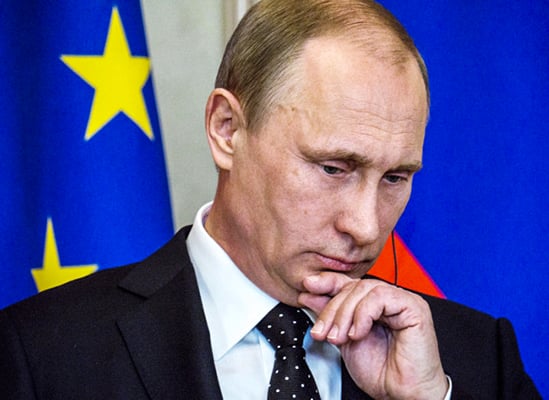
  By Stephen F. Cohen Delivered on the annual Nation cruise, December 2, 2017, introduced by Nation Editor and Publisher Katrina vanden Heuvel.     Jan Oberg comments Listening to professor Cohen gives you hope. Hope that there is something called solid scholarship and the courage to share it publicly in spite of the incredibly, systematic biases about Russia and Vladimir Putin in the Western media and policy circles. It’s a concise presentation, making very clear points in the best of academic traditions. Cohen debunks a series of central domain assumptions which – and there must be a purpose – shape the Western generalized view of Russia/Putin in this era of the Second Cold War. Any student, scholar and concerned citizen should see this before talking about these issues.  
RichardFalk
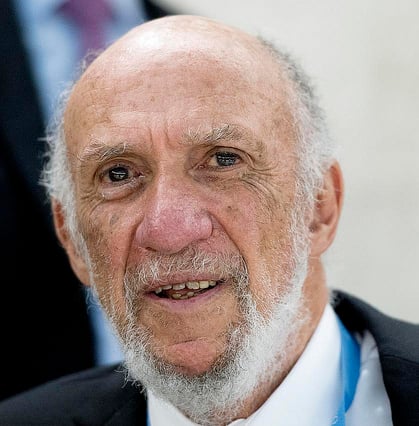
By Richard Falk • Prefatory Note -This post addresses the need for dialogue with the political, economic, and cultural ‘other,’ that is, those multitudes acutely alienated from and angry with secular globalism and the Enlightenment legacy often equated with ‘modernity’ and ‘modernization.’ At the core is a search for closure on the nature of reality as well as feelings about equity (given many dimensions of inequality) and ethical innovation (revisionist approaches to gender, sexuality, marriage). Does reason or faith or tradition provide greater closure? Can the Thomistic grand synthesis of the 13th Century be repeated under 21st Century condition in the rough waters of controversy generated by Trump and Trumpism? Is this too Western a way of putting the problem? I write as an American, but there are many parallels in other countries. The first step is to admit being out of touch with the ferment below the surface. A...
lenin_300
• Published in Bulletin of Peace Proposals 3-1990, pp 287-298 and on TFF’s homepage at the same time   1. Four hypotheses The West has lost a close enemy, the Soviet Union and Eastern Europe. Which reactions can be discerned and what psycho-political emotions are they indicative of? How did the West cope with the first years of this new post-Cold War situation? Can we mourn the death of an enemy, can we heal ourselves after the loss? How does one learn to live a new life without a close enemy? Has the West done what it ought to do for itself and for the former enemy? “The West” of course is a term hanging loose. We employ it in this article as meaning interchangeably “NATO, the Western hemisphere, the United States and Western Europe and a few cases, Western or Occidental culture”. The first hypothesis of this essay is...
slavjul11-17x
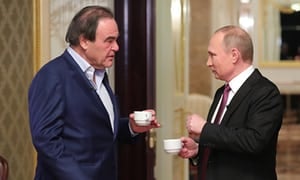
  By Oliver Stone • The unique 4 times an hour interview with Russia’s president. Via .xmovies8.fm See them here…    
4_1
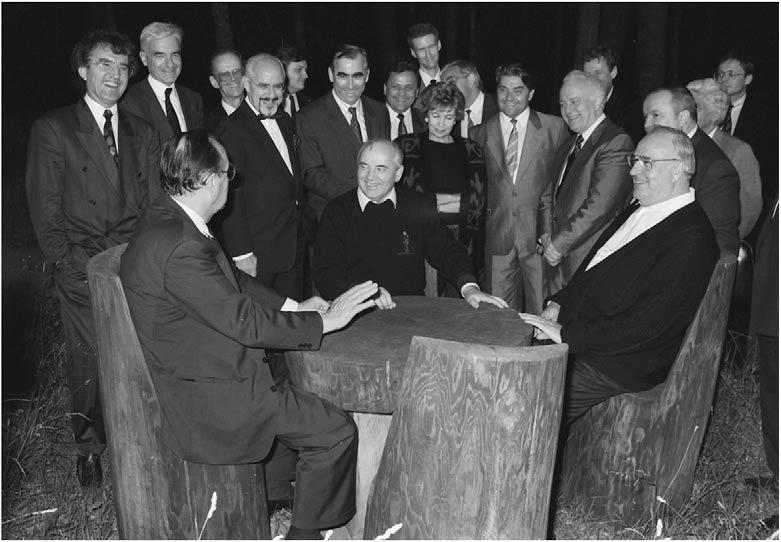
Michail Gorbachev discussing German unification with Hans-Dietrich Genscher and Helmut Kohl in Russia, July 15, 1990. Photo: Bundesbildstelle / Presseund Informationsamt der Bundesregierung. By Svetlana Savranskaya and Tom Blanton January 7, 2022 Declassified documents show security assurances against NATO expansion to Soviet leaders from Baker, Bush, Genscher, Kohl, Gates, Mitterrand, Thatcher, Hurd, Major, and Woerner. Slavic Studies Panel Addresses “Who Promised What to Whom on NATO Expansion?” Washington D.C., December 12, 2017 – U.S. Secretary of State James Baker’s famous “not one inch eastward” assurance about NATO expansion in his meeting with Soviet leader Mikhail Gorbachev on February 9, 1990, was part of a cascade of assurances about Soviet security given by Western leaders to Gorbachev and other Soviet officials throughout the process of German unification in 1990 and on into 1991, according to declassified U.S., Soviet, German, British and French documents posted today by the National Security Archive at George Washington...

Categories

Year

Author / Contributor

Region