Russia international relations

Category

Year

Author / Contributor

Region

Sort by

Showing 1-10 of 190 stories

skanskaMeurling
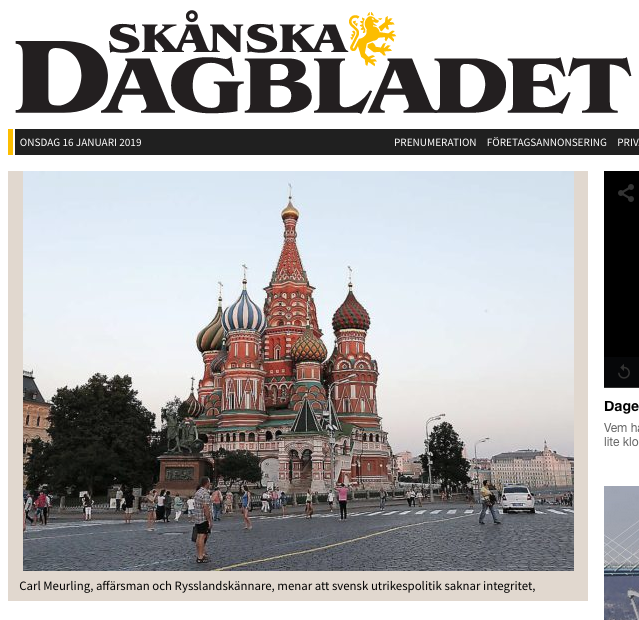
Carl Meurling 16 januari 2019 Opinion i Skånska Dagbladet 21 december 2018 Carl Meurling är investerare i Ryssland, men skriver som privatperson. På många sätt är jag en vanlig svensk familjefar. För två år sedan förändrades mitt liv.Utrikespolitiska institutet (UI) gav då ut en rapport, i vilken jag och en rad kända och okända svenskar utnämndes till agenter för Kreml. Personligen fick jag äran att pryda Aftonbladets löp med Putin. Sedan dess har jag försökt förstå varför vi blev uthängda. Min slutsats är att den svenska utrikesförvaltningen delvis har privatiserats av utländska särintressen. Det är oacceptabelt och en säkerhetsrisk för Sverige. För vissa är jag nog ändå ovanlig. Redan som barn var jag intresserad av Ryssland, och genom värnplikten lärde jag mig ryska. Jag har sedan dess arbetat med att investera egna och andras kapital i Ryssland. Det har varit en fantastisk resa. Denna artikel publicerades av Skånska Dagladet 21...
JesperMJ
Den 18. december bringer Altinget en nyhed med overskriften ”Russisk statsmedie gav den falske historie luft”. Jeg vil i denne artikel foretage en analyse af Altingets artikel, som jeg mener, har kastet almindelige journalistiske principper om kildekritik og bestræbelser på objektivitet over bord, fordi historien omhandler den gamle sovjetiske fjende fra øst. Det danske politiske medie Altinget er et udmærket kritisk journalistisk medie, som behandler dansk politik og den offentlige debat på mangfoldig vis. Nu har Altinget rettet sin kritiske journalistik mod det store russiske statsmedie Sputnik, som Altinget kan dokumentere bringer en falsk nyhed den 4. november. Altingets nyhed om Sputniks falske nyhed kommer i forlængelse af deres tidligere afsløring den 13. december af, at Jyllands-Posten den 7. november havde skrevet den samme historie som Sputnik. Begge medier skriver, at 20.000 migranter i Bosnien stod ved grænsen til EU. Det viste sig at være 5000 migranter i stedet, da...
StephenFCohen
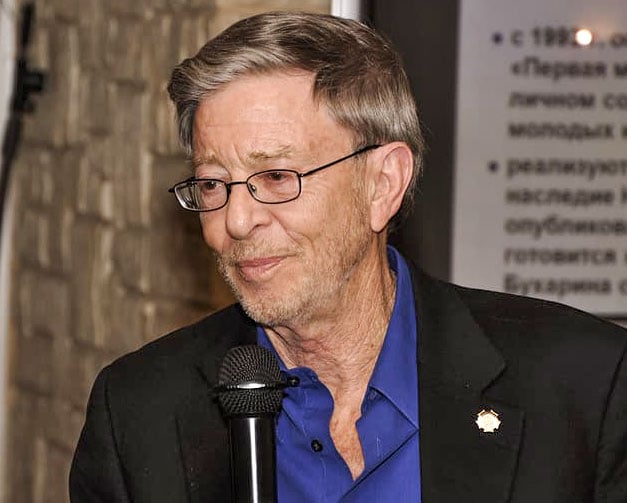
  By Stephen F. Cohen November 26, 2018   Stephen F. Cohen, professor emeritus of Russian studies and politics at NYU and Princeton, and John Batchelor continue their (usually) weekly discussions of the new US-Russian Cold War. (Previous instalments, now in their fifth year, are at TheNation.com.) Links under the article. Originally published by The Nation on November 21, 2018, here On the fifth anniversary of the onset of the Ukrainian crisis, in November 2013, and of Washington “punishing” Russia by attempting to “isolate” it in world affairs—a policy first declared by President Barack Obama in 2014 and continued ever since, primarily through economic sanctions—Cohen discusses the following points: 1. During the preceding Cold War with the Soviet Union, no attempt was made to “isolate” Russia abroad; instead, the goal was to “contain” it within its “bloc” of Eastern European nations and compete with it in what was called the...

picture-1420-1404305283
  By Gareth Porter TFF Associate October 25, 2018 The idea promoted by the NYT’s Shane & Mazzetti that the Russian government seriously threatened to determine the 2016 election does not hold up when the larger social media context is examined more closely, reports Gareth Porter.   In their long recapitulation of the case that Russia subverted the 2016 election, Scott Shane and Mark Mazzetti of The New York Times painted a picture of highly effective Russian government exploitation of social media for that purpose. Shane and Mazzetti asserted that “anti-Clinton, pro-Trump messages shared with millions of voters by Russia could have made the difference” in the election. “What we now know with certainty: The Russians carried out a landmark intervention that will be examined for decades to come,” they write elsewhere in the 10,000-word article. Originally published at consortiumnews.com But an investigation of the data they cite to show that the...
NotIranToo_FR_4_72dpi_ForNet
  Utterly destructive, self-defeating and spelling the end of the U.S. Empire   By Farhang Jahanpour September 22, 2018 In view of the macro-historical perspective on the Middle East-West relations and the concrete cases referred to in this series – Afghanistan, Iraq, Libya and Syria – it is clear that the demonization of Middle Eastern leaders as a prelude to invasion and their downfall has a long history. Such rulers are often used to serve the economic and political interests of various Western countries, in the same way that the Saudi Crown Prince Mohammed Bin Salman and the United Arab Emirates’ Crown Prince Mohammad Bin Zayed are being used at the moment to make them purchase tens of billions of dollars’ worth of US, British and French weapons. When they have outlived their usefulness, they will probably meet the same fate as that of Qadhafi or Saddam Hussein. However, despite...
NotIranToo_FR_4_72dpi_ForNet
    By Farhang Jahanpour September 20, 2018   1. An ally in warfare and torture Although the tragic events in Syria are too close to us to pass a definitive judgement about what has happened there and we need some perspective before we can make any definitive statements, nevertheless, some of the outlines of what led to that catastrophe are already clear for all to see. When the United States invaded Kuwait in order to dislodge the Iraqi forces that had occupied that country, Syria was one of the countries that joined the US-led coalition. Shortly after the invasion of Iraq in 2003, Syria was one of the main destinations for rendered suspects to be tortured in Syrian black sites. In the chilling words of former CIA agent Robert Baer in 2004: “If you want a serious interrogation, you send a prisoner to Jordan. If you want them to be tortured,...
NotIranToo_FR_4_72dpi_ForNet
    By Farhang Jahanpour September 20, 2018   On 20 March 2018, the former French President Nicolas Sarkozy was taken into police custody in Paris to be questioned over allegations that he received millions of Euros in illegal funding from Qadhafi for his presidential campaign. Investigators were examining claims that Qadhafi’s regime secretly gave Sarkozy €50 million overall for the 2007 campaign. Such a sum would be more than double the legal campaign funding limit and also violates French rules against foreign financing of elections. (See: “Former French President Nicolas Sarkozy in police custody over investigation into Gaddafi funding”, The Independent, 20 March 2018. Sarkozy entertained Qadhafi lavishly at the Elyse Palace, even allowing him to pitch his tent in the grounds of the palace. Yet, later on, Sarkozy was the cheerleader for the attack on Libya, which resulted in the brutal murder of Qadhafi and the destruction of...
NotIranToo_FR_4_72dpi_ForNet
    By Farhang Jahanpour September 18, 2018   1. Some omitted facts and perspectives Prior to the Iraq war, the only thing that one heard on most Western channels about that country was Saddam Hussein and his alleged chemical and nuclear weapons. Saddam Hussein became synonymous with Iraq. Nothing was said of Iraq’s long history as a cradle of civilisation or its people who, like people all over the world, simply wished to live in peace and pursue a normal life. The same was done to Afghanistan, Libya and Syria, when the Taliban, Mu’ammar Qadhafi and Bashar al-Assad were continuously demonised – while it was omitted and forgotten that the West had befriended, and in some cases supported, and sponsored those rulers in the past. Initially, Saddam Hussein was supported by the CIA to fight against Abd al-Karim Qasim who had toppled the Hashemite monarchy and had formed an...
NotIranToo_FR_4_72dpi_ForNet
    By Farhang Jahanpour September 18, 2018   1. The Carter Doctrine, Brzezinski and the Stinger missiles

 After the Soviet invasion of Afghanistan on Christmas Day 1979, President Jimmy Carter issued his Carter Declaration, stating that the Persian Gulf was part of America’s vital interest and America would defend it by all means possible. A policy proclaimed by President Jimmy Carter in his State of the Union Address on 23 January 1980 stressed that the United States would use military force, if necessary, to defend its “national interests” in the Persian Gulf. The statement that came to be known as the “Carter Doctrine” concluded: “Let our position be absolutely clear: An attempt by any outside force to gain control of the Persian Gulf region will be regarded as an assault on the vital interests of the United States of America, and such an assault will be repelled by any...
MairedMaguire_PhSh
In examining the future, we must look to the past. As we watch the media today, we are spoon fed more and more propaganda and fear of the unknown, that we should be afraid of the unknown and have full faith that our government is keeping us safe from the unknown. But by looking at media today, those of us who are old enough will be reminded of the era of Cold War news articles, the hysteria of how the Russians would invade and how we should duck and cover under tables in our kitchens for the ensuing nuclear war. Under this mass hysteria, all Western governments were convinced that we should join Western allies to fight the unknown evil that lies to the east. Later through my travels in Russia during the height of the Cold War with a peace delegation, we were shocked by the poverty of the...
China-US
  Thwarting the anti-dollar coalition should be Washington’s top national priority   By Gal Luft August 30, 2018   The United States is currently waging economic warfare against one tenth of the world’s countries with cumulative population of nearly 2 billion people and combined gross domestic product (GDP) of more than $15 trillion. These include Russia, Iran, Venezuela, Cuba, Sudan, Zimbabwe, Myanmar, the Democratic Republic of Congo, North Korea and others on which Washington has imposed sanctions over the years, but also countries like China, Pakistan and Turkey which are not under full sanctions but rather targets of other punitive economic measures. In addition, thousands of individuals from scores of countries are included in the Treasury Department’s list of Specially Designated Nationals who are effectively blocked from the U.S.-dominated global financial system. Many of those designated are either part of or closely linked to their countries’ leadership. Published by Yahoo...
pence-montenegro-markovic-ap-img
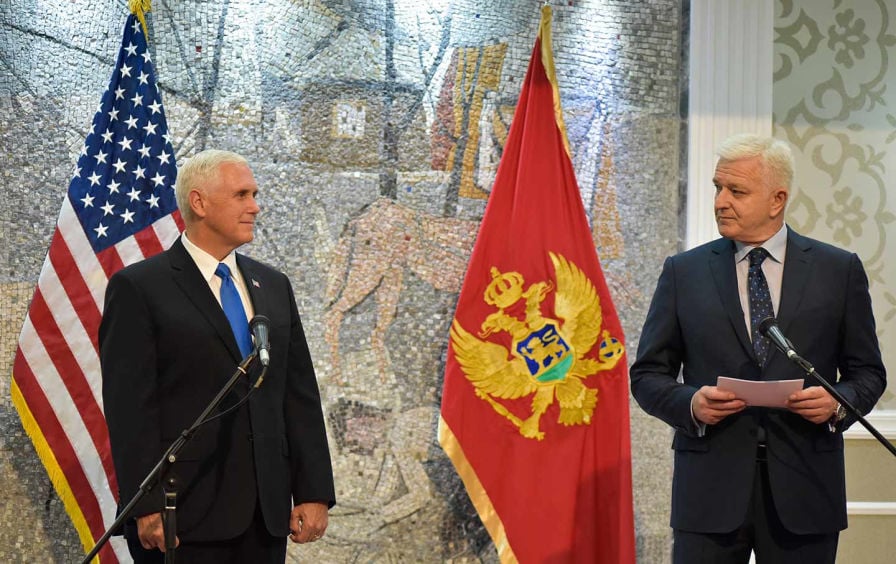
U.S Vice President Mike Pence, left, joined by Montenegro’s Prime Minister Dusko Markovic during a joint press conference in Villa Gorica in Podgorica, Montenegro on August 2, 2017. (AP Photo / Risto Bozovic)   Did Montenegro’s NATO accession increase the collective defense of the West or merely protect a corrupt regime? When Fox News host Tucker Carlson recently asked President Donald Trump why the United States should defend Montenegro, Trump responded by saying that if Montenegrins decided to “get aggressive.… Congratulations, you’re in World War III.” The subsequent outcry was predictable; a New York Times editorial quickly attacked Trump’s comments as revealing “another facet of his ignorance of and disdain for America’s historic place in the world and its alliances.” Yet Trump’s comments—inarticulately expressed as they were—were in fact in line with the thinking of past American presidents leery of getting the country involved in foreign problems with no bearing...
Categories

Year

Author / Contributor

Region