proposals

Category

Year

Author / Contributor

Region

Sort by

Showing 1-10 of 300 stories

stephenzunes
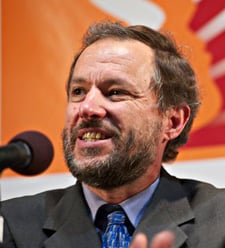
Although the impulse to try to end the ongoing repression by the Syrian regime against its own people through foreign military intervention is understandable, it would be a very bad idea. Empirical studies have repeatedly demonstrated that international military interventions in cases of severe repression actually exacerbate violence in the short term and can only reduce violence in the longer term if the intervention is impartial or neutral. Other studies demonstrate that foreign military interventions actually increase the duration of civil wars, making the conflicts longer and bloodier, and the regional consequences more serious, than if there were no intervention. In addition, military intervention would likely trigger a “gloves off” mentality that would dramatically escalate the violence on both sides.
ChatGPT Image 9 jun 2026, 11_11_33
/10/jonathanpower2.jpg”> After the Soviet Union invaded Afghanistan in 1979 and got totally bogged down there was a joke circulating in Moscow. “Why are we still in Afghanistan? Answer: We are still looking for the people who invited us”. Zbigniew Brzezinski, architect of US policy in Afghanistan when he was President Jimmy Carter’s national security advisor, was convinced Afghanistan would become the Soviet Union’s Vietnam. In fact the Soviet Union’s Vietnam has become America’s Afghanistan. There is truth in both these cynical observations. And there are lies, distortions and self-delusion built into the narrative. Only Russia has been more or less honest. Under President Mikhail Gorbachev it decided to cut its losses and withdraw and was open about the reason it did so. Today the debate in the US is contorted.
richardfalk
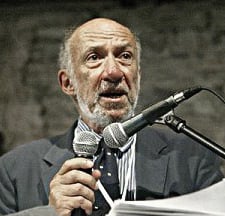
In his important article in the New York Times, March 17, 2012, James Risen summarized the consensus of the intelligence community as concluding that Iran abandoned its program to develop nuclear weapons in 2003, and that no persuasive evidence exists that it has departed from this decision. It might have been expected that such news based on the best evidence that billions spent to get the most reliable possible assessments of such sensitive security issues would produce a huge sigh of relief in Washington, but on the contrary it has been totally ignored, including by the highest officers in the government.
johangaltung
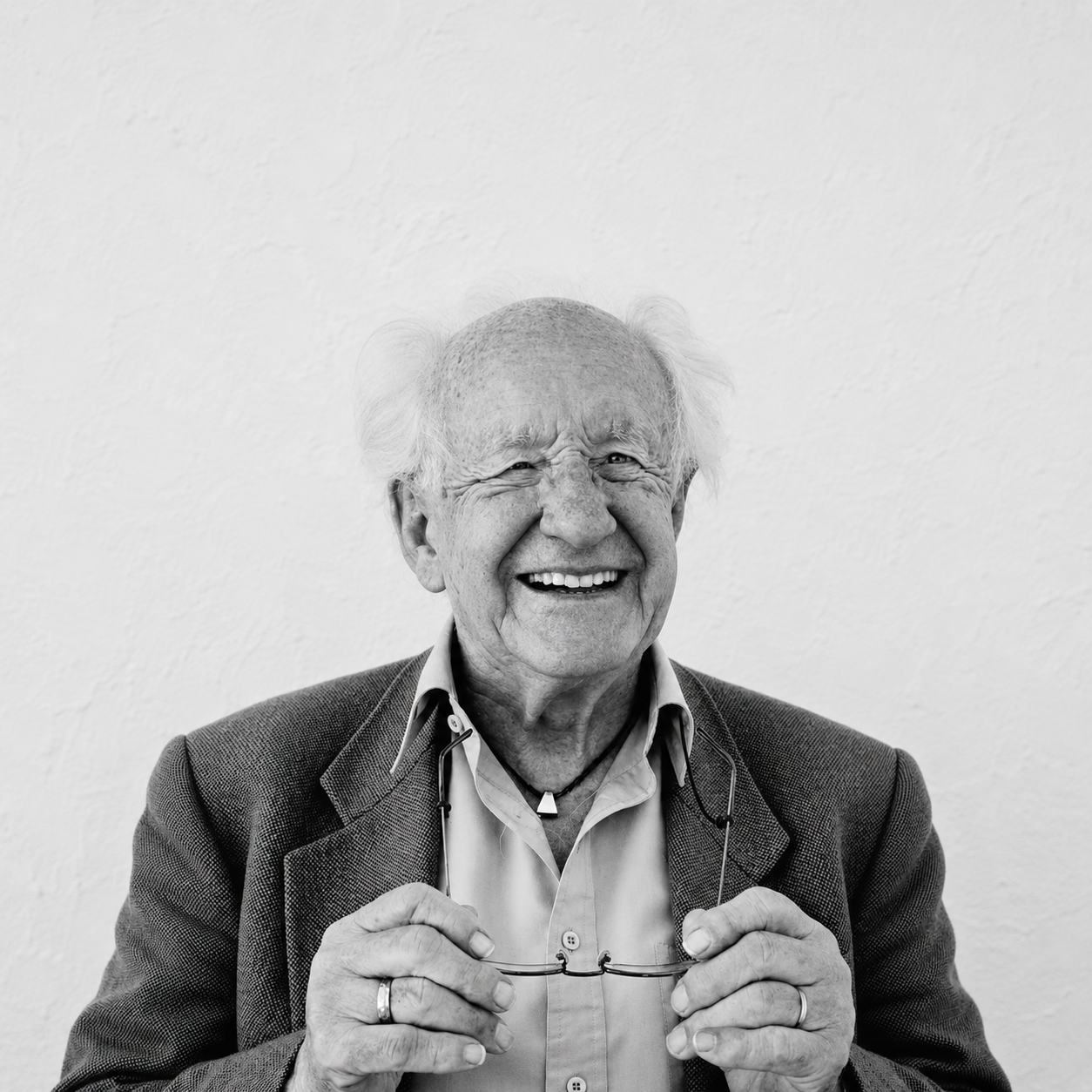
We all feel desperate watching the horrible killing, feeling the suffering of the bereaved, the whole people. But, what to do? Could it be that the UN, and governments in general, have a tendency to make the same mistake, again and again, of putting the cart before the horse? The formula they use is generally: [11 Get rid of No. 1 as key responsible, using sanctions; then [2] Cease-fire, appealing to the parties, or intervening, imposing; [3] Negotiation among all legitimate parties; and from that [4] A political solution as a compromise between the positions. It looks so logical. There is a key responsible, President Assad, ordering the killing; get rid of him by all means. Then the cease-fire, the fire ceasing; then negotiation, and then the solution emerges. Logical, yes; but maybe not very wise.

richardfalk
The latest occupation crime in Afghanistan is a shooting spree on March 11 by a lone American soldier in the village of Balandi in the Panjwai District of Kandahar Province of Afghanistan. 16 Afghan civilians, including women and children, were shot in their homes in the middle of the night without any pretense of combat activity in the area. Such an atrocity is one more expression of a pathological reaction by one soldier to an incomprehensible military reality that seems to be driving crazy American military personnel on the ground in Afghanistan. The main criminal here is not the shooter, but the political leader who insists on continuing a mission in face of the evidence that it is turning its own citizens into pathological killers.
ChatGPT Image 9 jun 2026, 11_11_33
/10/jonathanpower2.jpg”> Approximately half the people of Africa own a mobile phone. In many African countries phone technology is ahead of Europe and North America. Money can be transferred from the city to an upcountry village. Bills can be paid. In Ghana farmers can receive text messages reporting the price of yams and corn two towns away and thus find the best market without a middleman. In Kenya residents of small villages can receive texts to say when the perambulating doctor will next be coming. In parts of West Africa nurses are storing patients’ data on phones. It may be more difficult to build up fast internet penetration on pcs but in some countries 40% of mobile owners are using phones for email and the internet. The IMF says that the telecommunication sector is adding 2% to Nigeria’s already handsome annual economic growth. Black Africa has come late to the party...
ChatGPT Image 9 jun 2026, 11_11_33
/10/jonathanpower2.jpg”> If it bleeds it leads! The mantra of many a newsroom. In their new book, “Pax Ethnica” two great journalists, Karl Meyer and Shareen Brysac, argue that day in and day out ethnic conflict and tension along religious and cultural lines makes for reliable, if dispiriting, headlines. Journalists regularly play plenty of attention to failed states, sectarian violence and societies at the breaking point. But what about those unsung exceptions, the communities of the world where diverse groups live together in harmony?
richardfalk
Pundits in Europe and North America in recent months have delighted in citing with a literary smirk ‘zero problems with neighbors,’ which has been the centerpiece of Ahmet Davutoglu’s foreign policy agenda since he became Foreign Minister on May 1, 2009. Mr. Davutoglu had previously served as Chief Advisor to both the Prime Minister and Foreign Minister ever since the AKP came to power in 2002, and was known in those years as the ‘architect’ behind the scenes. Critics of the zero problems approach point to the heightened Turkish tensions with Syria and Iraq, the persisting inability of Ankara to overcome the hostile fallout from Mavi Marmara incident with Israel, and even the revived salience of the long unresolved dispute with the Armenian diaspora sparked by a new French law that makes the denial of genocide associated with the 1915 massacres a crime and has led to a dramatic worsening...
stephenzunes
The Syrian pro-democracy struggle has been both an enormous tragedy and a powerful inspiration. Indeed, as someone who has studied mass nonviolent civil insurrections in dozens of countries in recent decades, I know of no people who have demonstrated such courage and tenacity in the face of such savage repression as have the people of Syria these past 10 months.
daisakuikeda
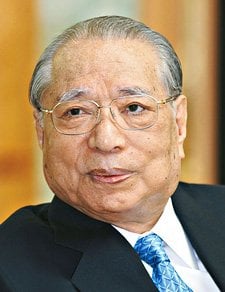
By Daisaku Ikeda President of Soka Gakkai International (SGI) Every year Dr. Ikeda publishes his thoughts on what must be done to secure a better future for us all. He is a true contributor to the TFF pro-peace orientation that emphasizes how important it is to “imagine a better world”. We are proud to have had this wise, visionary leader of what is probably the world’s largest peace movement, as TFF Associate over many years. Much more about him here. The economist Amartya Sen, a renowned advocate of the methods and approaches of human security, has emphasized “the dangers of sudden deprivation.” Such unanticipated threats can take the form of natural disaster and conflict, and can also arise from economic crises and rapid environmental degradation brought about by climate change. It is crucial that we respond vigorously to such threats, which can grievously undermine people’s lives, livelihoods and dignity.
richardfalk
A critique of western policies vis-à-vis Iran and two pro-peace proposals The public discussion in the West addressing Iran’s nuclear program has mainly relied on threat diplomacy, articulated most clearly by Israeli officials, but enjoying the strong direct and indirect backing of Washington and leading Gulf states. Israel has also engaged in covert warfare against Iran in recent years, somewhat supported by the United States, that has inflicted violent deaths on civilians in Iran. Many members of the UN Security Council support escalating sanctions against Iran, and have not blinked when Tel Aviv and Washington talk menacingly about leaving all options on the table, which is ‘diplospeak’ for their readiness to launch a military attack.
Imagen-thumbnail-The-Transnational-1
Time for a strategy for the transformation of conflict worldwide? Globally, in the 21st century, two unprecedented factors are affecting war: violent conflict is being prevented with the skills of fast-growing localised peace building initiatives, and more wars are ending through negotiation rather than military victory. Yet military expenditure has increased 45% over 10 years, and only minute amounts are spent on the prevention of conflict. Does this extraordinary situation call for a global strategy to change the way the world deals with war?
Categories

Year

Author / Contributor

Region