
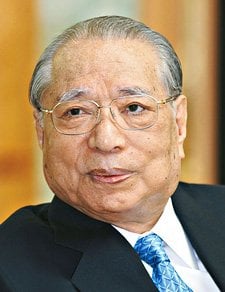
2012 Peace Proposal: Human Security and Sustainability: Sharing reverence for the dignity of life

By Daisaku Ikeda
President of Soka Gakkai International (SGI)
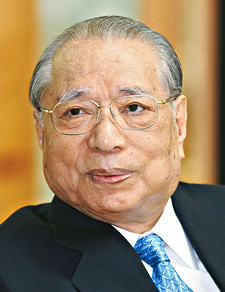
Every year Dr. Ikeda publishes his thoughts on what must be done to secure a better future for us all. He is a true contributor to the TFF pro-peace orientation that emphasizes how important it is to “imagine a better world”.
We are proud to have had this wise, visionary leader of what is probably the world’s largest peace movement, as TFF Associate over many years.
Much more about him here
.

The economist Amartya Sen, a renowned advocate of the methods and approaches of human security, has emphasized “the dangers of sudden deprivation.” Such unanticipated threats can take the form of natural disaster and conflict, and can also arise from economic crises and rapid environmental degradation brought about by climate change. It is crucial that we respond vigorously to such threats, which can grievously undermine people’s lives, livelihoods and dignity.

It is the nature of disasters that they destroy those things that are most precious, necessary and irreplaceable to human life. They inflict the suffering of the loss of friends and family members, the destruction of homes and the shredding of the bonds of community. When disasters strike, society as a whole must be prepared to offer long-term support, sharing the responsibility to assist people in rebuilding their lives.

The treatise “On Establishing the Correct Teaching for the Peace of the Land,” authored by Nichiren (1222-82), whose teachings are the foundation of the belief of members of the Soka Gakkai International (SGI), provides a useful framework for thinking about our contemporary world. Three aspects of this text are especially relevant in light of present-day conditions and the imperatives of human security: the philosophical stance that the highest priority of the state must be the well-being and security of ordinary people; a call for the establishment of a worldview rooted in a vital sense of our interconnectedness; and the insight that the greatest empowerment is realized when, through dialogue, we advance from a shared concern to a shared action-oriented pledge or vow.

Such empowerment is of particular relevance to the restoration of people’s sense of mental equilibrium and health in post-disaster situations, “the recovery of the heart.” Buddhism teaches that whatever our individual circumstances, we can always discover the capacity to help others; it also assures us that those who have suffered the most have the right to the greatest happiness.

Humanitarianism, human rights and sustainability

Turning to specific proposals, three major challenges–natural disasters, environmental degradation and poverty, and nuclear weapons–present future generations with threats and burdens that will only become greater the more we delay. Humanitarianism, human rights and sustainability need to be the core elements of a future vision of:

A world that, refusing to overlook human tragedy wherever it occurs, unites in solidarity to overcome threats;
A world that, based on the empowerment of individuals, gives priority to securing the dignity and right of all people to live in peace;
A world that, remembering the lessons of the past, does not allow unborn generations to inherit the negative legacies of human history and directs all its energies to transforming those legacies.

Disaster risk reduction

Regarding disaster risk reduction, international frameworks to support disaster-affected populations need to be strengthened, specifically by applying a rights-based approach and including such responses in the mandate of the Office of the United Nations High Commissioner for Refugees (UNHCR).

Human rights need to be given a central stress in all relief efforts, focusing on the right of those affected by disasters to live with dignity. We need to create a culture of human rights that champions the dignity of those afflicted by disasters, threats and social injustice. At the same time, it is absolutely vital that people be empowered to transform their own circumstances, and here a focus on women will prove indispensable.

Women bear a disproportionate burden of the deprivations resulting from disasters, and they are often exposed to grievous threats. At the same time, there is a need to afford greater recognition to women’s special capacities to contribute. Women must be empowered as effective change agents in the fields of disaster risk reduction, recovery and reconstruction, in line with similar recognition of their potential roles in conflict prevention, resolution and peacebuilding. Specifically, disaster risk reduction and recovery could be included in the scope of UN Security Council Resolution 1325, or a new resolution could be adopted with a focus on the roles women play in these areas.

Sustainable development

Ahead of the United Nations Conference on Sustainable Development (Rio+20) slated to be held in Rio de Janeiro, Brazil, this June, there have been many calls for the establishment of Sustainable Development Goals.

A set of common goals for a sustainable future should inherit the spirit of the Millennium Development Goals of alleviating the distortions in our global society generated by poverty and income disparities, and should also address the full range of human security issues.

Sustainable energy is also a key issue we need to face. As made painfully clear by the accident at the Fukushima Nuclear Power Plant that accompanied the devastating earthquake and tsunami which struck Japan last March, a rapid transition to an energy policy that is not dependent on nuclear power is urgently required. At the same time, the International Atomic Energy Agency (IAEA) needs to play a central role in responding to nuclear power plant accidents, in the decommissioning of obsolescent nuclear reactors and in handling the back end of the nuclear fuel cycle.

Nuclear abolition

For years, the SGI has promoted a movement to manifest the will of the world’s people for the outlawing of nuclear weapons through the adoption of a Nuclear Weapons Convention (NWC). There are numerous signs that we are now positioned at a tipping point where a “cascade” of governments start supporting adoption of an NWC.

The leading role played by civil society in developing a draft NWC and in actively seeking the start of negotiations demonstrates that the spiritual wellspring and normative source for such a treaty exist as a vital presence in the hearts and minds of the world’s ordinary citizens. What is required now is to take this living, breathing awareness and give it concrete form as a binding legal agreement expressing the shared conscience of humankind.

We must initiate concrete negotiations that will culminate in the realization of an NWC. One way to do this would be to present it as a basic treaty establishing the legal framework of a world without nuclear weapons with a set of associated protocols. The basic treaty would allow signatory states to clearly commit to the goal of a world without nuclear weapons and undertake a process of mutual threat reduction. Separate protocols could enumerate prohibited activities such as development and production, use or threat of use, and establish procedures for decommissioning and verification. NGOs and forward-looking governments should establish an action group to embark on this venture.

We should set a target of 2015 for the release–or better yet, the signing–of an agreed-upon draft of the basic framework treaty. Hiroshima and Nagasaki would provide a suitable venue for this, at a nuclear abolition summit to mark the effective end of the nuclear era. The Nuclear Non-Proliferation Treaty (NPT) Review Conference, scheduled for 2015, provides a good opportunity for such a summit.

The struggle for peace, like the struggle for human rights and humanity, should be thought of as the work of generating an uninterrupted and unstoppable flow of commitment connecting and passed on from one generation to the next. This is the conviction that has supported the SGI’s efforts to help build a better future for all, to promote a movement of empowerment that is of, for and by the people, laying the foundations for a global society of peace and harmonious coexistence.
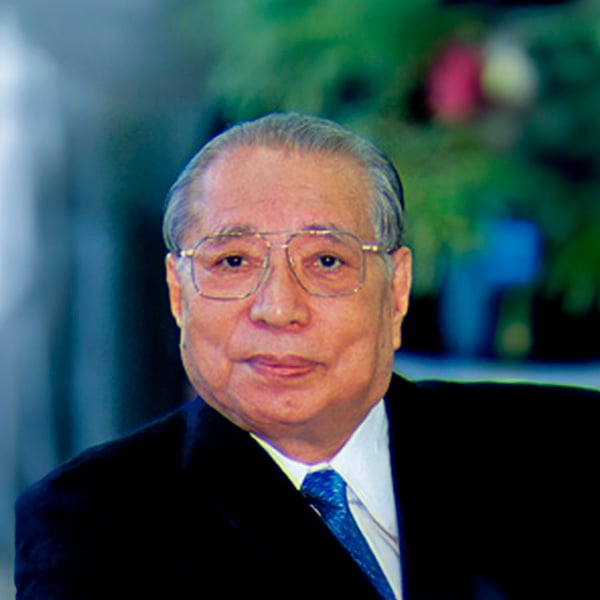

Originally published here

Related Posts

Photos © TFF 2000 Read PressInfo 90 “Lift the Sanctions and Bring More Aid to Yugoslavia” See Pictures from Belgrade © TFF 2000 Please reprint, copy, archive, quote or re-post this item, but please retain the source.
By Jan ObergTFF co-founder and director February 11, 2026 PART 3 — ECONOMICS, TRADE & FINANCIAL SOVEREIGNTY A. Trade Measures & Market Signaling Economic pressure can be applied instantly and scaled without violence. Immediate Measures (within a week) Government boycott US goods and services  A very powerful signal which over time will be felt. Targeted tariffs on selected U.S. goods Symbolic but high-visibility sectors send a clear message. Suspend trade facilitation talks A peaceful pause that signals deep concern. Freeze U.S. participation in public procurement – military procurement in particular A nonviolent way to reduce influence. Competition law review of U.S. corporations A legal tool to scrutinise market dominance. Longer-Term Measures EU–Asia–Africa trade corridors Reducing reliance on U.S. markets. European supply chains for critical minerals Strategic autonomy in resource access. European Strategic Trade Authority Monitoring coercive practices globally. Euro-denominated commodity markets Weakening the dollar’s pricing monopoly. The EU must resume contacts and negotiations with Russia, focusing on energy cooperation To...
PART 2 — Diplomacy, Law and Nonviolent Power By Jan ObergTFF co-founder and director January 26, 2026 This is the second of four TFF-created idea portfolios designed to curb the global reach of the United States and, in both the short and long term, help catalyse a worldwide nonviolent resistance to what many observers describe as the Trump administration’s uniquely confrontational, destructive and world-threatening policies. These portfolios outline what governments and citizens across the world can do through dynamic diplomacy, creative initiatives, and strictly nonviolent means. They are typical TFF works in that we do not only tell what the problem is and how bad it will go – as 90+% of all commentators, experts and scholars do – we tell what we think can be done, inviting you to think of what you think you can do. It seems painfully clear to me that the current political dynamics in Washington increasingly resemble the most dangerous...

Recent Articles

Tony Robinson October 4, 2026 Violence is easy to recognise when someone is being beaten, shot or killed. It becomes more difficult when nobody is holding a weapon. Poverty, discrimination, exploitation and repression can restrict a human life just as effectively, although they do so in very different ways and with very different consequences. Simply adding more categories to an ever-growing list of forms of violence does not really solve the problem. The more interesting question is what all these different situations have in common and why it makes sense to describe them using the same word. Human beings do not simply react to what happens around them. They remember the past, imagine things that do not yet exist, make plans and undertake projects. Workers organise because they imagine different working conditions; people migrate because they imagine another life somewhere else; social movements emerge because people refuse to accept the...
It’s a matter of principles, courage, vision and pulling together – while the militarist world is falling apart… Peter Langille October 3, 2026 “Here, then, is the problem which we present to you, stark and dreadful and inescapable: Shall we put an end to the human race; or shall mankind renounce war?”The Bertrand Russell—Albert Einstein Manifesto, July 9, 1955 ⁕ The forecast for what’s ahead is worrisome. The sharp rise in armed conflicts over the past three years is adding to what was already the highest level in over seventy years. Genocides, which should be prevented are supported. A shared climate emergency that jeopardises survival is ignored. Diverse polls now suggest that people are war-weary, worried and interested in a more effective United Nations. And, there are viable policy options for a more secure world! Yet governments are doubling-down, betting on more war and investing heavily. If current trends persist,...
Johan Galtung 1930-2024October 2015 Published here on October 3, 2026 Let us focus on Civilization for conflict analysis and remedies. Major forms of disorder use violence; war is state organized violence. The most belligerent states are the United States of America and Israel, both with civilization roots. National Evangelism, the US Protestant Christian civilization– more national than evangelical–justifies US warfare as exceptionalism of a people chosen by God, with a manifest destiny to run the world. Orthodox Judaism justifies Israeli warfare to conquer and expand from Nile to Euphrates as a religious right and duty to the Eternal One. The third most belligerent country, the UK, no longer believes it is God-chosen but chosen by the USA; not quite the same but something. But the root cause of global disorder lies in the Occident–with Islam–seeing itself as the single, universal civilization valid for all at all times, all others being...

TFF on Substack

Discover and subscribe to more peace materials on TFF Substack

Most Popular

Tony Robinson October 4, 2026 Violence is easy to recognise when someone is being beaten, shot or killed. It becomes more difficult when nobody is holding a weapon. Poverty, discrimination, exploitation and repression can restrict a human life just as effectively, although they do so in very different ways and with very different consequences. Simply adding more categories to an ever-growing list of forms of violence does not really solve the problem. The more interesting question is what all these different situations have in common and why it makes sense to describe them using the same word. Human beings do not simply react to what happens around them. They remember the past, imagine things that do not yet exist, make plans and undertake projects. Workers organise because they imagine different working conditions; people migrate because they imagine another life somewhere else; social movements emerge because people refuse to accept the...
It’s a matter of principles, courage, vision and pulling together – while the militarist world is falling apart… Peter Langille October 3, 2026 “Here, then, is the problem which we present to you, stark and dreadful and inescapable: Shall we put an end to the human race; or shall mankind renounce war?”The Bertrand Russell—Albert Einstein Manifesto, July 9, 1955 ⁕ The forecast for what’s ahead is worrisome. The sharp rise in armed conflicts over the past three years is adding to what was already the highest level in over seventy years. Genocides, which should be prevented are supported. A shared climate emergency that jeopardises survival is ignored. Diverse polls now suggest that people are war-weary, worried and interested in a more effective United Nations. And, there are viable policy options for a more secure world! Yet governments are doubling-down, betting on more war and investing heavily. If current trends persist,...
Johan Galtung 1930-2024October 2015 Published here on October 3, 2026 Let us focus on Civilization for conflict analysis and remedies. Major forms of disorder use violence; war is state organized violence. The most belligerent states are the United States of America and Israel, both with civilization roots. National Evangelism, the US Protestant Christian civilization– more national than evangelical–justifies US warfare as exceptionalism of a people chosen by God, with a manifest destiny to run the world. Orthodox Judaism justifies Israeli warfare to conquer and expand from Nile to Euphrates as a religious right and duty to the Eternal One. The third most belligerent country, the UK, no longer believes it is God-chosen but chosen by the USA; not quite the same but something. But the root cause of global disorder lies in the Occident–with Islam–seeing itself as the single, universal civilization valid for all at all times, all others being...
Read More
Living-Peace-Sign-Budapest-copy
Tony Robinson October 4, 2026 Violence is easy to recognise when someone is being beaten, shot or killed. It becomes more difficult when nobody is holding a weapon. Poverty, discrimination, exploitation and repression can restrict a human life just as effectively, although they do so in very different ways and with very different consequences. Simply adding more categories to an ever-growing list of forms of violence does not really solve the problem. The more interesting question is what all these different situations have in common and why it makes sense to describe them using the same word. Human beings do not simply react to what happens around them. They remember the past, imagine things that do not yet exist, make plans and undertake projects. Workers organise because they imagine different working conditions; people migrate because they imagine another life somewhere else; social movements emerge because people refuse to accept the...
b54a1f10-8c65-4f0b-9dd5-4abc0a7d04cc_2659x2659
It’s a matter of principles, courage, vision and pulling together – while the militarist world is falling apart… Peter Langille October 3, 2026 “Here, then, is the problem which we present to you, stark and dreadful and inescapable: Shall we put an end to the human race; or shall mankind renounce war?”The Bertrand Russell—Albert Einstein Manifesto, July 9, 1955 ⁕ The forecast for what’s ahead is worrisome. The sharp rise in armed conflicts over the past three years is adding to what was already the highest level in over seventy years. Genocides, which should be prevented are supported. A shared climate emergency that jeopardises survival is ignored. Diverse polls now suggest that people are war-weary, worried and interested in a more effective United Nations. And, there are viable policy options for a more secure world! Yet governments are doubling-down, betting on more war and investing heavily. If current trends persist,...
010
Johan Galtung 1930-2024October 2015 Published here on October 3, 2026 Let us focus on Civilization for conflict analysis and remedies. Major forms of disorder use violence; war is state organized violence. The most belligerent states are the United States of America and Israel, both with civilization roots. National Evangelism, the US Protestant Christian civilization– more national than evangelical–justifies US warfare as exceptionalism of a people chosen by God, with a manifest destiny to run the world. Orthodox Judaism justifies Israeli warfare to conquer and expand from Nile to Euphrates as a religious right and duty to the Eternal One. The third most belligerent country, the UK, no longer believes it is God-chosen but chosen by the USA; not quite the same but something. But the root cause of global disorder lies in the Occident–with Islam–seeing itself as the single, universal civilization valid for all at all times, all others being...
Screenshot 2026-10-02 011738
Jan ObergPhD, director, The Transnational Foundation for Peace and Future Research, TFFLund, Sweden October 2, 2026 This is my full original manuscript. The Chinese Academy of Social Science, CASS, makes two publications out if it. 1. China’s Five-year plan emphasized the capabilities of basic research and original innovation. It is regarded as the goal of the future social development, which, as required, should be significantly enhanced. Can you comment on the importance of original innovation in research and academic study? I believe it is easier to define “original innovation” in the natural sciences than in social sciences. The breaking points of what constitutes something new, or innovative, are not quite as sharp in the latter. But in both fields it is about opening up something that was closed, unseen, unexplored before – making manifest what was earlier latent. Innovations come in many forms and shapes – naming something that was not...
arctic-circle-map
The agreement is catastrophic both because of what it says and what it doesn’t mention. It reduces further the major asset of security policies: Freedom of action. Jan Oberg TFF director September 25, 2026 A couple of hours before the agreement was signed on September 22, 2026, I published the following 13 hypotheses about what it would most likely contain on TFF Substack (in English). I was wrong on only the first point. Contrary to what Trump had written on his Truth Social platform, it does not appear to come into force immediately. In fact, it turned out to be worse than even I had anticipated. After these hypotheses now come a number of reflections in light of what the agreement actually contains, and does not contain, as well as the way in which it has generally been presented by major media outlets and by the public-service broadcaster DR. My...
girl-5894831_1280
Below are TFF-related media mentions, comments, videos and social media posts published elsewhere but not on this homepage. We happen to catch and list only a fraction. Regarding video comments and debates, we recommend that you go to the TFF Video Channel on Substack where many of them are reproduced. Jan Oberg is a contributor to China Daily – 52 million daily clicks – and Global Times, CGTN and CCTV (the national television), China Investment, Xinhua News Agency and several others. Articles and videos on these media very often multiply into countless Chinese (and Western media) that re-post them from these main media. Thanks to The China Academy, his analyses, interviews and comments are frequently posted on YouTube channels such as Thinkers Forum and Wave Media. These videos are often re-posted on Bilibili (China’s YouTube), the China Content Center on TikTok, and on the Chinese edition of TikTok, Douyin.com. This means reaching hundreds of millions of viewers worldwide over a year. While there are too many to catch on all these...




