proliferation

Category

Year

Author / Contributor

Region

Sort by

Showing 1-10 of 43 stories

presstv
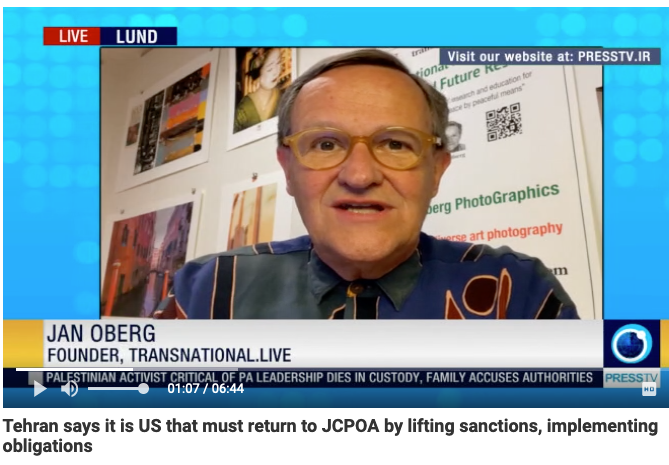
Comment On June 26, I gave this comment to Iran’s PressTV concerning the drawn-out negotiations in Vienna. The US under Trump left the nuclear agreement – the JCPOA – unilaterally and all it has to do is, simply, to rejoin it unilaterally. It cannot have a legitimate role standing outside shouting in its demands on Iran. Iran’s position is clear and fair: lift the sanctions, stick to the JCPOA and Iran will immediately get back into full compliance. Indeed, what could there to talk about? – Oberg asks. Here is the link to the interview. NOTEIncidentally, I found out a couple of days later that what I say above is also what official China says (July 1, 2021).
Screenshot
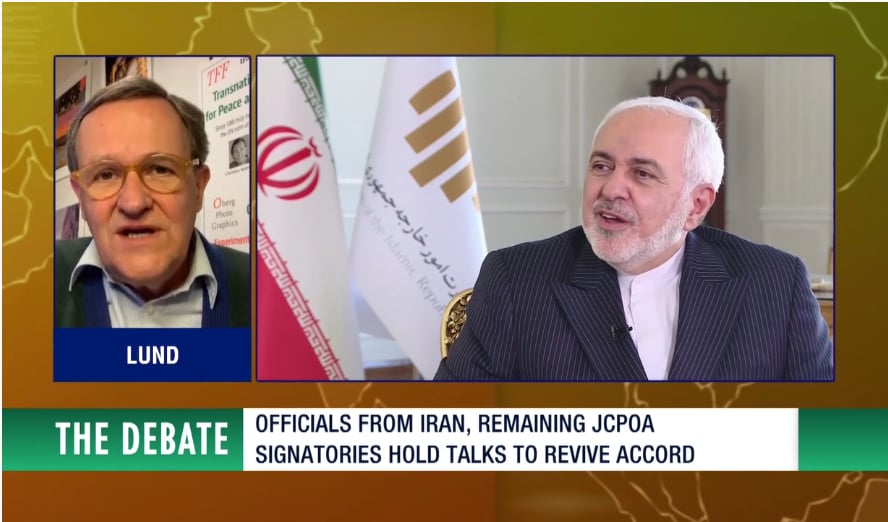
Yesterday, I was invited by Irans’ PressTV to comment – with professor Marandi at Tehran’s University – on the Biden administration’s policy on the JCPOA – the nuclear deal with Iran and the present discussion in Vienna. You may remember that it was signed in 2015 and that the Trump administration left it unilaterally and in violation of international law while also slamming more suffocating sanctions on Iran and its people. It’s fairly obvious that this is not going to go anywhere – probably not meant to, either. It’s also pretty obvious what Washington should do. Please watch also TFF Associate, professor Farhang Jahanpour, commenting on another program – Scope/Indusdotnews – here. Click on this image and watch The Debate Wonder what DailyMotion is? Read here and ask yourself why Google-owned YouTube closed down PressTV.
DSC_9457-1000_72
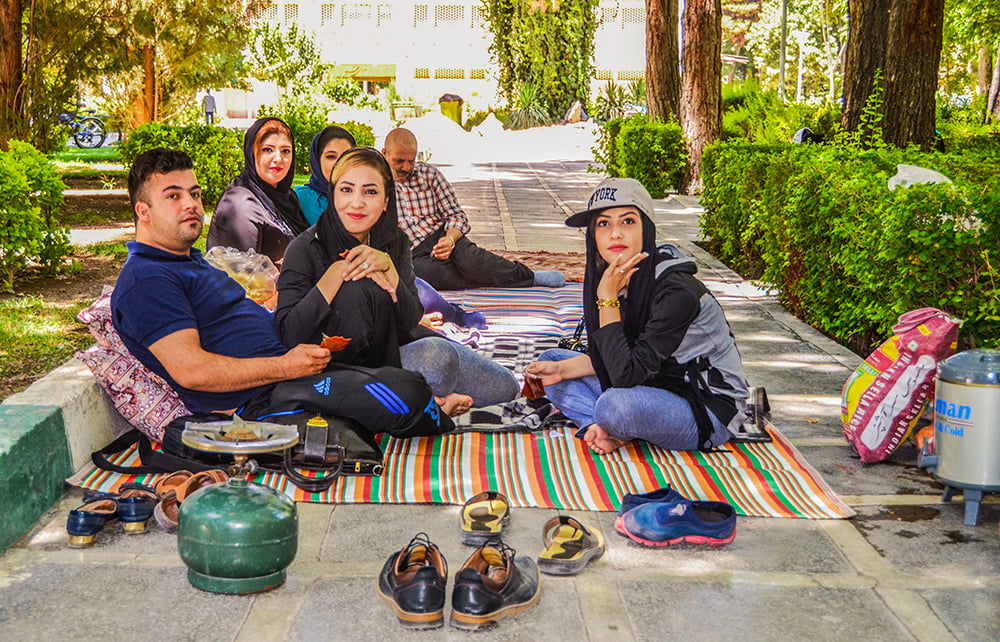
© Jan Oberg – How much longer shall the Iranian people suffer? And shall they also be bombed? NEW – Listen to this article here Jan Oberg March 1, 2021 The West-Iran conflict is extremely a-symmetric. It’s the West that has, historically, sought to influence, change, threaten, demanded obedience from, punished (with sanctions and more), liquidated high-level politicians and scholars, shot down a civilian plane, demonised and excluded Iran. Not to speak of giving Saddam Hussein the chemical weapons and the green light for his war on Iran in 1980. Iran has not done similar harm to the West. Originally published by Transcend Media Service, TMS The conflict’s roots go back to 1953 when the US’s CIA and the UK’s MI6 orchestrated a coup d’etat, or regime-change, in Tehran and deposed the democratically elected Prime Minister, Dr Mohammad Mossadegh and installed the Shah and made Iran the most militarized country...

201802
Karin Utas Carlsson December 1, 2020 The purpose of this article is to highlight the thoughts of peace researcher John W. Burton put forward towards the end of the last century. He is seen as the father of Human Needs Theory, a way of thinking behind the concept of human security, increasingly in focus in today’s debate. According to peace researcher Jan Öberg, the term human security was first used in a research report by him in 1978. Öberg analyses the concept and writes its history (Öberg, 20-05-28). This is a line of thought very different from the established defence and foreign policy, based on power politics. I strongly believe that the world would be less violent and a much better place for most of us if we used constructive methods of conflict resolution, including promoting peace. As we shall see, Human Needs Theory provides a theoretical framework for achieving...
Nuclear-Weapons-Ban
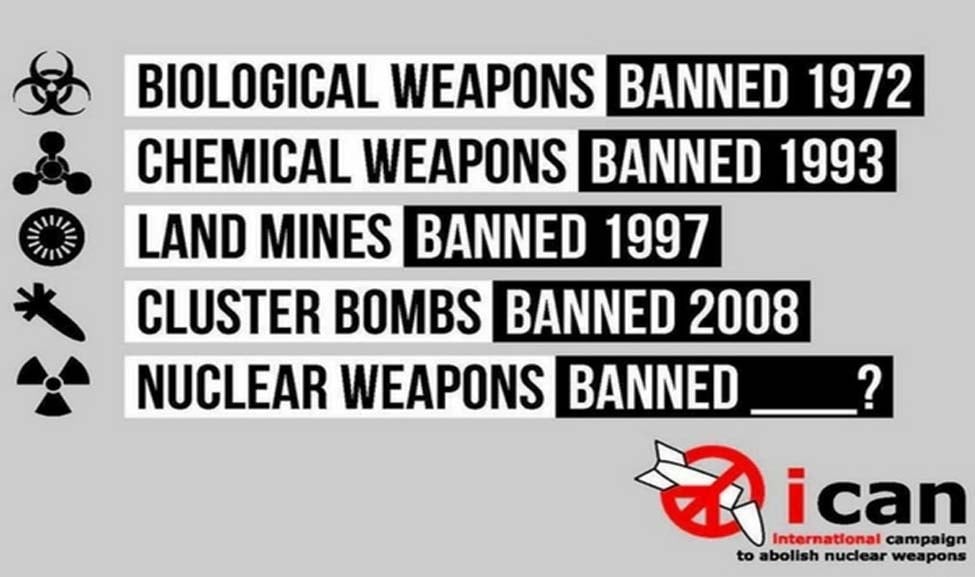
On the 7th UN Day – two days ago – the 50th UN member, Honduras, ratified the Nuclear Weapon Ban Treaty – or the Treaty On the Prohibition Of Nuclear Weapons (TPNW). It’s a milestone in the global struggle to make nuclear weapons a parenthesis in human history. We have much to thank millions of peace workers for as well as, of course, ICAN (International Campaign to Abolish Nuclear Weapons) – winner of the Nobel Peace Prize 2017. It’s well-known to most that Iran has been harassed for years – you may say for not having nuclear weapons and for having signed the Nuclear Non-Proliferation Treaty and votes in favour of adopting the TPNW; Israel which is a nuclear country has not signed any relevant treaty and obstructs the ongoing work of Middle Eastern UN members to secure that the region of the Middle East will become a nuclear-free zone....
2014-10-29-Peace
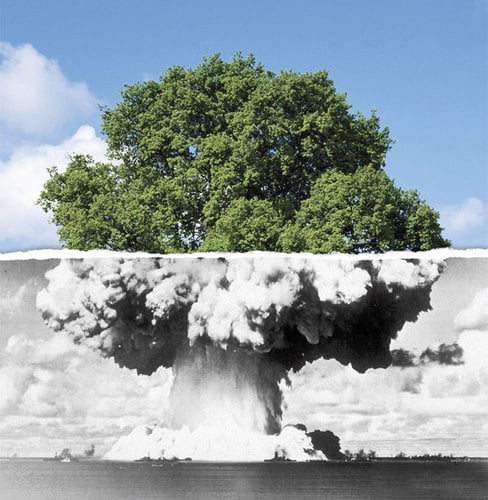
Jan Oberg August 6, 2020 It is natural and human to commemorate what happened in Hiroshima and Nagasaki. But these stories, films and photos from back then must never come to serve as a museum for just a historical event. It would also be fairly naive – now 75 years later – to believe that showing such images of the destruction and listening to Hibakushas (survivors) will help abolish the nukes of today. They’ve been seen too many times to make such an impact on today’s people; there is a certain psychic numbing and a mass denial of the fact that “it could happen this afternoon too.” 1) If they had such a – desirable deterrent – effect, nuclear weapons would be gone long ago. While of course Hiroshima and Nagasaki and their victims must never be forgotten, it’s extremely important that Hiroshima and Nagasaki Days are used to focus...
urmedium
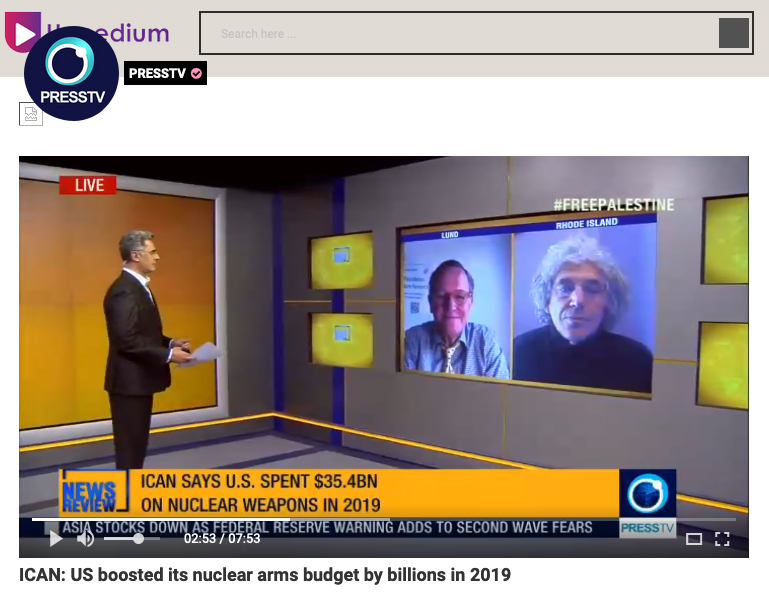
ICAN: The US boosted its nuclear arms budget A record $73 billion spent on nukes in 2019 – says ICAN. Nuclear-armed states spent a record $73 billion on nuclear weapons in 2019, a nearly 10% increase from 2018, and the US accounted for almost half of the spending, a new report states. Please find a short conversation about that at PressTV’s Channel at Urmedium.
ChatGPT Image 9 jun 2026, 11_11_33
The Europeans have not done well in countering President Donald Trump’s onslaught on Iran. When Trump unilaterally decided that the US should withdraw from the 2015 Iran Nuclear Deal, which committed Iran to winding down its nuclear research in return for the West, Russia and China (the latter two were also part of the deal) lifting sanctions which were crippling the Iranian economy, the Europeans huffed and puffed and then did little. The UN membership considered the 2015 deal to be very fair. The Security Council gave it unanimous support. Indeed, the US is now in breech of international law by opting out. But if the Europeans had had the guts when President Donald Trump announced the US withdrawal they would have pushed for debate on this issue at the Security Council and got the US condemned, even punished. Unfortunately, Trump had the Europeans’ guts for braces. After shouting loudly...
Sitara-one-min
By Pressenza New York September 18, 2019 Originally posted on Pressenza New York’s website on September 09, 2019 here On this show we speak with Alice Slater about the historical process of nuclear weapon treaties and the relationship between the US and Russia. Alice is the UN NGO Representative of the Nuclear Age Peace Foundation, sits on the boards of World Beyond War, Nuclear Ban US, and the Global Network Against Weapons and Nuclear Power in Space, and is a member of the Global Council of Abolition 2000. She is on the NYC Working Group for the Nobel Prize-winning International Campaign to Abolish Nuclear Weapons (ICAN) ‘s campaign to promote the newly passed treaty to ban the bomb. Alice is a member of the NYC Bar Association and has written numerous articles and op-eds for Pressenza. Political actions you can take to ban the bomb and cut down the war...
shutterstock_714035503
By Kevin Cashman and Cavin Kharrazian Iranian foreign minister Mohammad Javad Zarif recently visited the Group of Seven (G7) at the invitation of French president Emmanuel Macron, in what was seen as an overture to the Trump administration to negotiate over sanctions that have plagued the Iranian economy. Back in 2018, after months of increasingly hostile rhetoric, the US government withdrew from the Joint Comprehensive Plan of Action (JCPOA), or “Iran Deal,” and imposed a “maximum pressure” campaign that included unilateral, economy-wide sanctions. The Iran Deal was an agreement that provided Iran relief from existing sanctions in exchange for limits on its enrichment of uranium, among other concessions. These sanctions hampered trade between the European Union, whose leaders have sought to salvage the Iran Deal. Originally posted on September 1, 2019, on the Center for Economic and Policy Research (CEPR) here When President Trump reimposed sanctions in November 2018, it cut off...
INF
, marks for Europe. Comment Today is a tragic day for Europe, indeed for the world – but do the media highlight that fact on their front pages? Of course, they don’t. The INF Treaty has made Europe less insecure since 1987. But Russia and the US have accused each other of violating it. The bigger reasons for this tragedy are that a) there is a new Cold War in Europe and b) since other countries are now able to develop similar INF weapons – Inter-mediate range Nuclear Forces (INF) with the particular range mentioned in this movie – they want to have their hands free. And, one might almost say, as usual – the policies of the US have spearheaded today’s tragedy, particularly with the totally counterproductive and de factor offensive Ballistic Missile Defence, BMD, that Russia – legitimately – sees as a threat. Just listen to a man...
ChatGPT Image 9 jun 2026, 11_11_33
There’s never been a full-scale war between two nuclear-armed states. If Iran one day did cross the nuclear threshold the same deterrence will apply. No one rational would want to provoke their own incineration. Columbia University professor, Kenneth Waltz, the distinguished theorist on the conduct of war, wrote in Foreign Affairs that with Israel possessing over 200 nuclear weapons (which the US refuses to publically admit) Iran having a bomb would bring stability. I would never go as far as Waltz on that last point. The launch of nuclear weapons can always be done by accident or by the rogue action of one or two of the members of the launch team in the silo. It has nearly happened in the US a number of times, and probably in the Soviet Union too. Moreover, if Iran got really close to building a bomb, Saudi Arabia would follow in short order,...
Categories

Year

Author / Contributor

Region