Peace theory

Category

Year

Author / Contributor

Region

Sort by

Showing 1-10 of 69 stories

peace-blog-1020
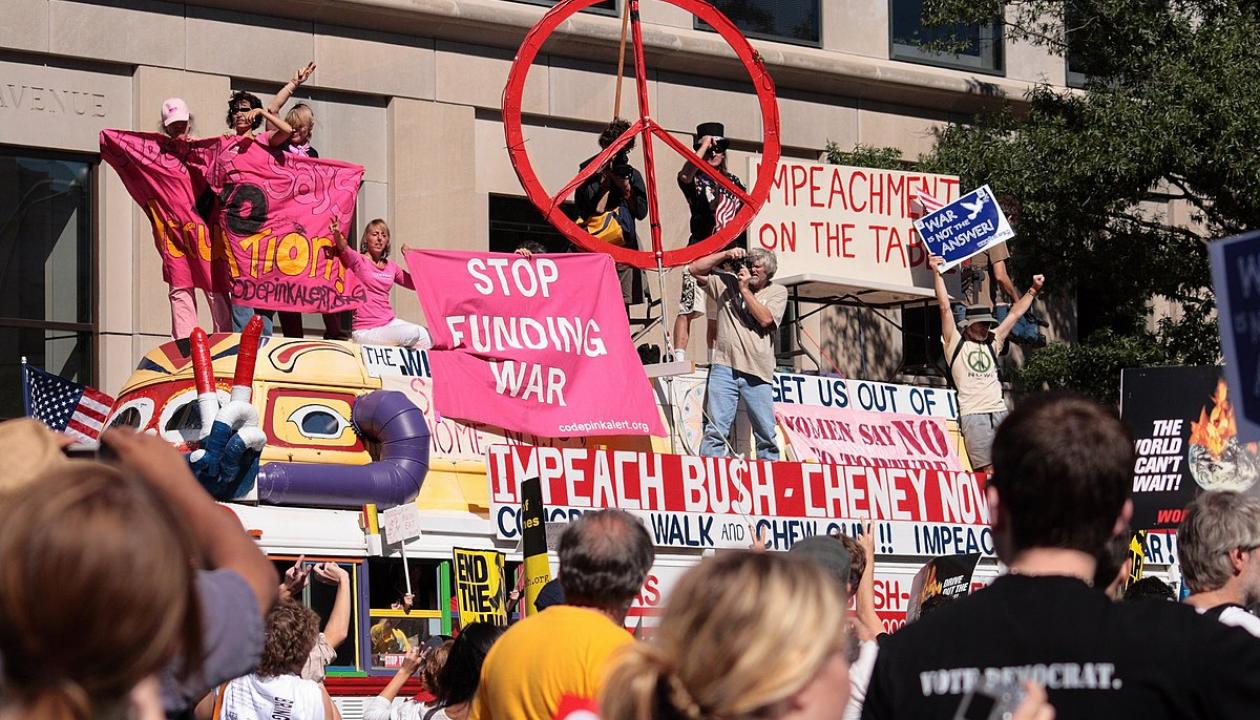
Hear this on Spotify By Rachael Mellor September 7, 2021 Over the years people have found incredible inspiration in the brave words, actions, and leadership of peace heroes – Nelson Mandela, Martin Luther King Jr and Mahatma Gandhi, to name a few. They display courage, moral strength and compassion to gain the right to freedom and safety, regardless of political or religious differences. To achieve peace, we must compete against governmental institutions, law and order, high-level corruption, the global arms trade, injustices, human rights abuses, and persecution – often at risk to our own personal safety. Originally published at Better World Info What Better World Info has to offer Better World Info is a central information hub covering a vast range of peace topics, useful tools and reliable information specifically for peace activists. The site is here to help you, and to serve as a tool to support your project. The...

21dew
When a Nordic dispute over the strategically important Åland Islands arose in the early 20th century, Finland and Sweden turned to international mediation to resolve the issue peacefully. Photo permission and credit by Douglas P. Fry. Douglas P. Fry, Geneviève Souillac March 30, 2021 The ancestral tribes of the Iroquois lived in constant fear of each other and of societies further afield. Archaeological evidence shows that they constructed high stockades around their villages for protection. Then, the Mohawk, Oneida, Onondaga, Cayuga, and Seneca transformed themselves into a union of cooperating neighbors. According to legend, they planted a great white pine and buried their weapons of war beneath it, symbolizing the adoption of new norms, values, and intertribal relations based on peace. Could we tap the knowledge of how such successful transformations from war to peace operate and apply these guiding principles globally? Could emulating the features of existing non-warring systems provide insights and...
PeaceResearchProblem
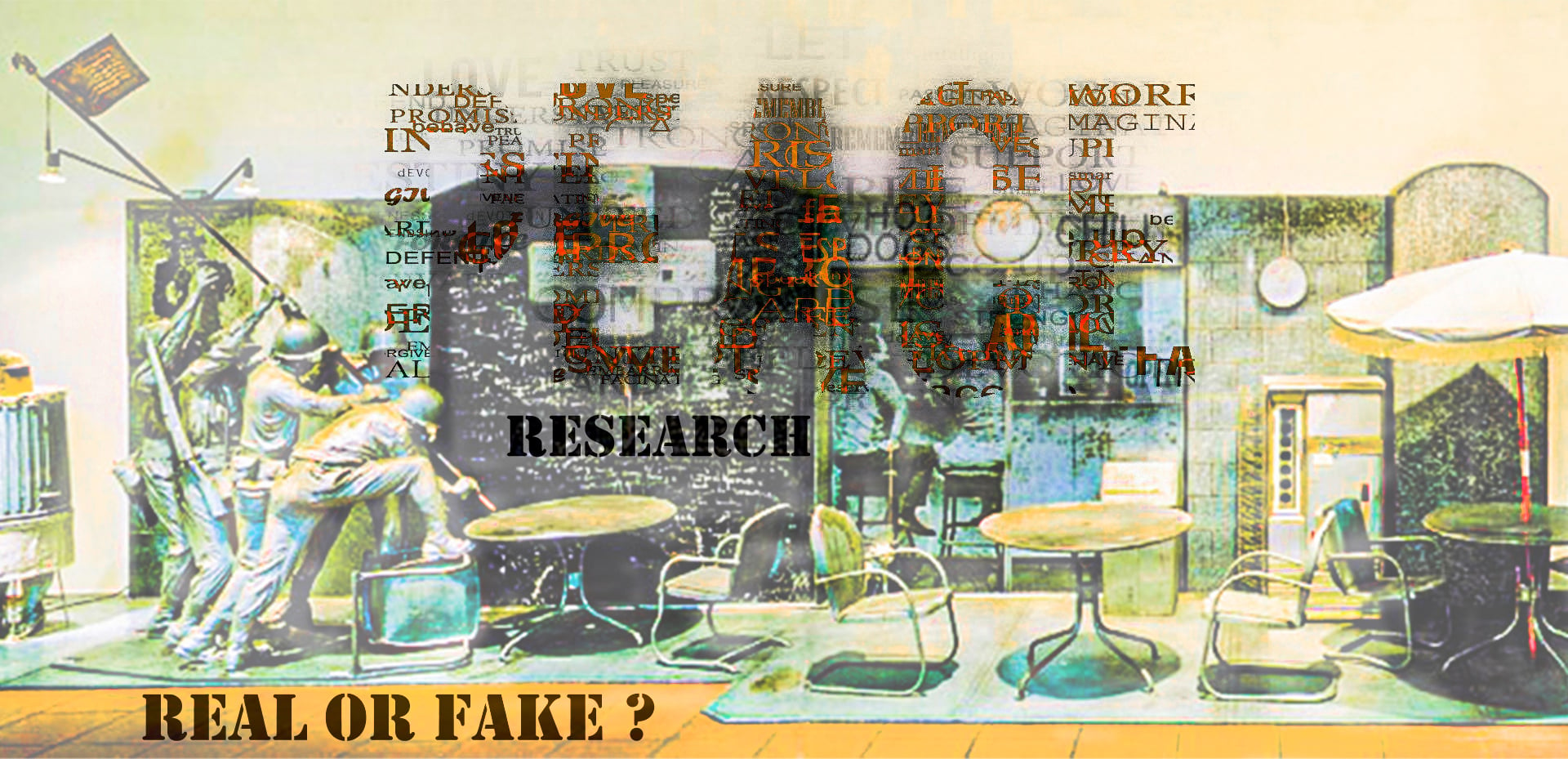
Photo collage © Jan Oberg 2021 Researchers who question the legitimacy of US wars, seem to experience being ousted from their positions in research and media institutions. The example presented here is from the Institute for Peace Research in Oslo (PRIO), an institution that historically has had researchers critical of wars of aggression – and who can hardly be labelled friends of nuclear arms. Ola Tunander, Research Professor Emeritus at PRIO Originally published in Norwegian by “Modern Times/Ny Tid”, Whistleblower supplement, March 1, 2021 A researcher is said to seek objectivity and truth. But he or she learns to select their research topics and arrive at conclusions in accordance with what the authorities and management expect, and this despite the fact that academic freedom is codified in Norway through the “freedom to express oneself publicly”, “freedom to promote new ideas” and “freedom to choose method and material». In today’s societal...
SchoolsNotBombs
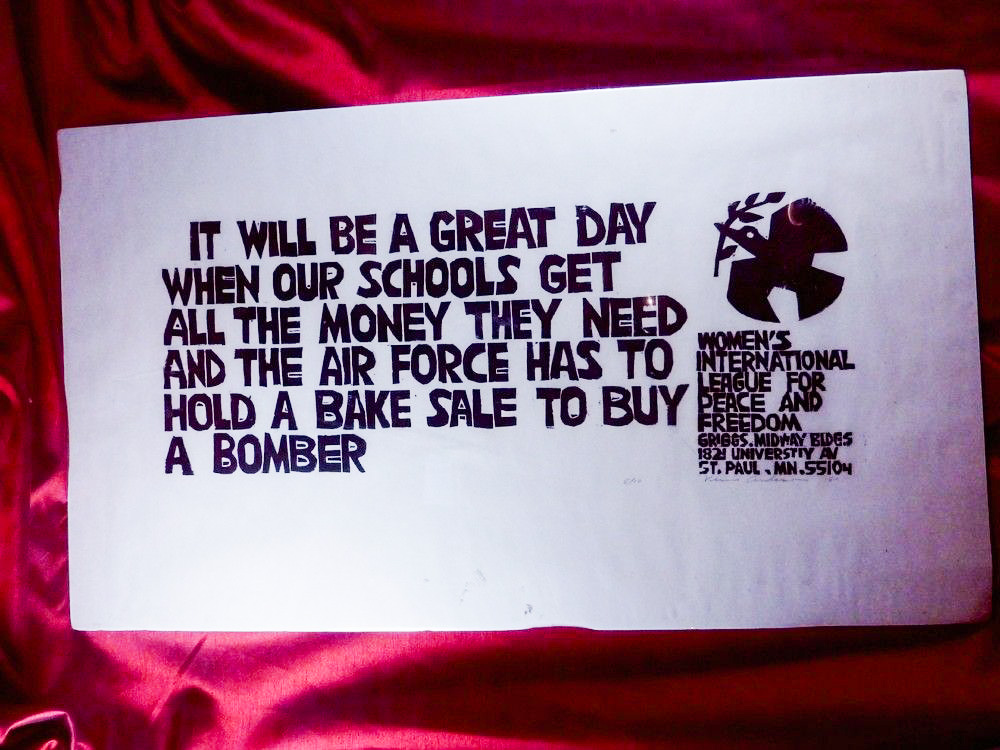
The 1987 Right Livelihood Award Acceptance Speech  Peace appeals to the hearts; studies to the brain. Both are needed, indeed indispensable. But equally indispensable is a valid link between brain and heart. The history of peace studies is, of course, a collective story, and it did not start in the 1950s – it is as old as humankind, as is the history of war studies, the study of war with warlike means. Originally published at Transcend I guess the same applies to what today is called security studies, or the study of peace with warlike means, balance of power, balance of terror, deterrence through credible retaliation etc. Needless to say, that is not what peace studies are about. Peace studies are about peace with peaceful means, and I think it is generally accepted today that this has to be done in a holistic manner and with a global perspective, or...
echo-grid-BefmnpXPZ80-unsplash
Dr. Gary G. Kohls February 9, 2021 A half-century ago, The New York Times accused Martin Luther King Jr. of “slander” for decrying the Vietnam War and The Washington Post detected “unsupported fantasies” in his speech, recalled more favourably by Gary G. Kohls. Originally published on Jan. 19, 2014; slightly edited for the time element. Originally posted on Consortium News on January 19, 2021 Martin Luther King Jr.’s Riverside Church speech was titled “Beyond Vietnam: A Time to Break Silence.” It was delivered exactly one year before his April 4, 1968 assassination in Memphis. In the speech, King declared, “A nation that continues year after year to spend more money on military defense than on programs of social uplift is approaching spiritual death.” The people who heard that speech recognized it as one of the most powerful speeches ever given articulating the immorality of the Vietnam War and its destructive impact...
arrest
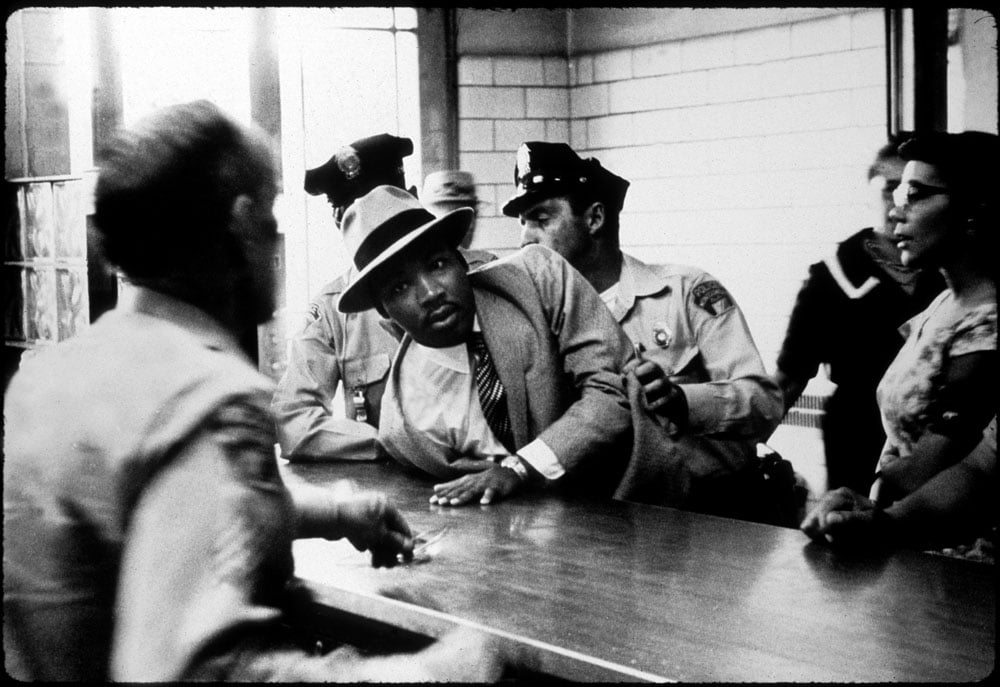
Kazu Haga February 9, 2021 Nonviolence is not simply the absence of violence, but about taking a proactive stand against violence and injustice, and working to repair the harm. Originally posted on Waging NonViolence on January 16, 2020 The following is an edited version of a chapter from Kazu Haga’s new book, “Healing Resistance: A Radically Different Response to Harm,” published with permission from Parallax Press. In Kingian Nonviolence, a philosophy developed out of the teachings of Martin Luther King Jr., there is a distinction made between nonviolence spelled with a hyphen, and nonviolence spelled without a hyphen. “Non-violence” is essentially two words: “without” “violence.” When spelled this way, it only describes the absence of violence. As long as I am “not being violent,” I am practicing non-violence. And that is the biggest misunderstanding of nonviolence that exists. I live in one of the most diverse neighborhoods in Oakland, with an equal mix of...
WorldmoiresHeader
Welcome to my worldmoires – a word I have invented for the occasion. It means writing about my life in the perspective of global affairs and trends that have influenced my work and myself since I was born in the middle of the preceding century.  And the occasion? I’m approaching the 50th anniversary of my work as a peace, conflict and future researcher.  The Transnational Foundation for Peace and Future Research, TFF, that my wife Christina and I have established turned 35 on January 1, 2021.  I hope you will find something of interest and follow the creation of the book – of which only the first small fraction is hereby launched. Now explore…
RichardFalk
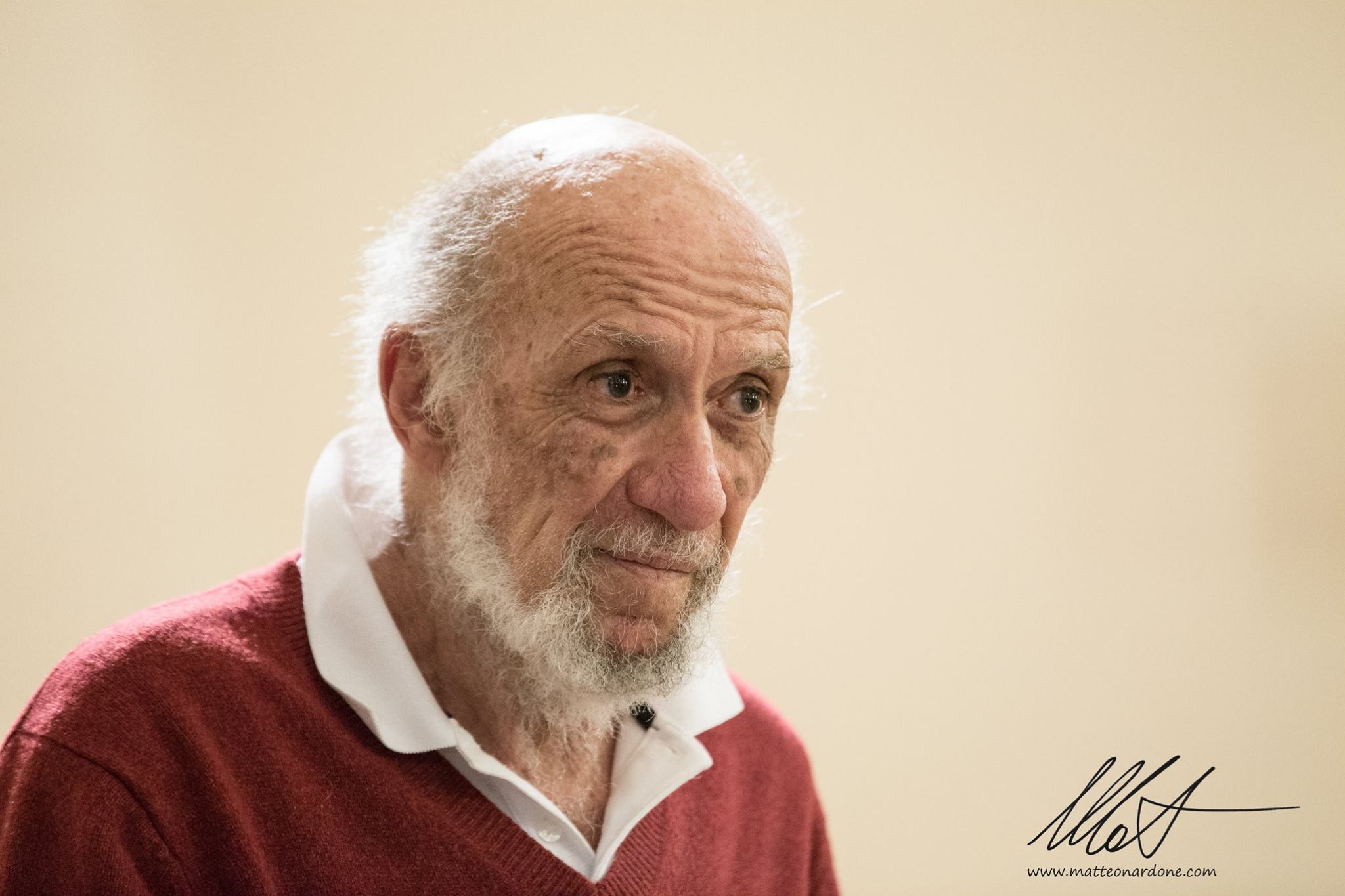
Richard Falk December 29, 2020 Unlike most of my interviews, this one is not directly about current political concerns. It rather explores ‘peace’ in its manifold identity. The interview was conducted by Miguel Mendoça a couple of months ago for a book project consisting of such interviews from a variety of persons whose life and work touches on the theme of peace. Miguel has since abandoned the project in favour of producing his own poems. Whether such abstract ideas as peace can be usefully explored independent of concrete circumstances haunts this text. I accept most of the blame. The interaction made me realize how little thought I have given to peacefulness as a personal trait and peace as the core of benevolent political arrangements, whether local or planetary and how their interaction may be understood. I recall being rather bemused more than 25 years ago when a meditation practice was...
201802
Karin Utas Carlsson December 1, 2020 The purpose of this article is to highlight the thoughts of peace researcher John W. Burton put forward towards the end of the last century. He is seen as the father of Human Needs Theory, a way of thinking behind the concept of human security, increasingly in focus in today’s debate. According to peace researcher Jan Öberg, the term human security was first used in a research report by him in 1978. Öberg analyses the concept and writes its history (Öberg, 20-05-28). This is a line of thought very different from the established defence and foreign policy, based on power politics. I strongly believe that the world would be less violent and a much better place for most of us if we used constructive methods of conflict resolution, including promoting peace. As we shall see, Human Needs Theory provides a theoretical framework for achieving...
Screenshot
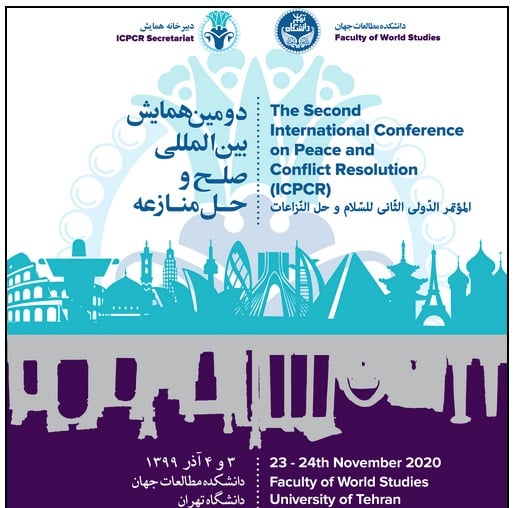
November 23 and 24, 2020, marks an important event in the international academic/university history of peace and conflict research. The reason is that the Faculty of World Studies at Tehran University holds a large – online – conference – “International Conference on Peace and Conflict Resolution (ICPCR)”. My colleague and friend there, associate professor Ali Akbar Alikhani, is the dynamic pioneer of this important endeavour which includes an international Master’s program in peace and conflict studies. It comes in the wake of a lecture I gave at the Faculty 6 years ago about peace and conflict research. As far as I’m informed, Iran is the second country in the Muslim world to establish a fill program of academic peace and conflict studies (Malaysia the first), and this conference marks the opening of this new academic field. Iran’s bustling capital also hosts an interesting, very lively, Tehran Peace Museum – but...
RichardFalk
TFF celebrates the world-renowned international law professor, activist, writer, TFF Associate and dear friend By Jan Oberg November 13, 2020 At TFF, we are blessed by having a number of peace and future scholars, world-leading in their professions, who have followed world events over many decades and continue to be committed to world order change and public education. I say “blessed” because I assume that the reader share my reverence for high age and the sharing of long life experience as well as the wisdom that may accompany it in the midst of the youth-worshipping which characterises the ageing and increasingly grumpy West itself – also sometimes called age discrimination. Last month we celebrated Johan Galtung at 90. And today, Richard Falk at 90 – both world-renowned mega-productive scholars restlessly seeking ways to make the world a more peaceful place. And both TFF Associates, mentors and friends of the founders...
osama-750_1439889739_725x725
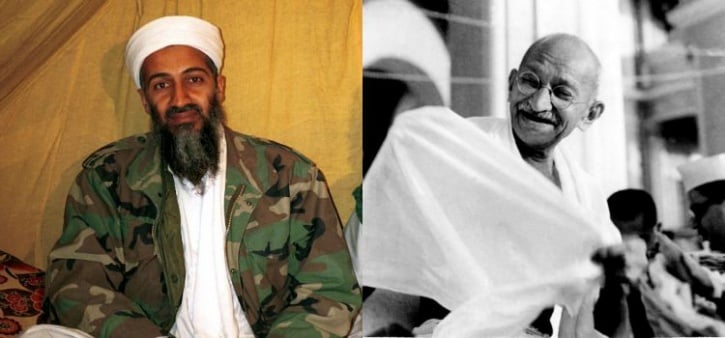
By Bhikhu Parekh November 5, 2020 If he were alive today, how might Mahatma Gandhi, the greatest apostle of non-violence, challenge Osama Bin Laden’s worldview? Bhikhu Parekh is Vice-President of The Gandhi Foundation, a professor of political philosophy, a Labour peer, and the author of three books on Gandhi. This article first appeared in Prospect Magazine in April 2004. Originally published at Gandhifoundation.org Bhikhu Parekh’s preface Like millions around the world, I found the atrocities of 9/11 abhorrent and utterly condemn such acts of terror. Despite the war against terror, we continue to see more horrors such as that in Madrid. What drives the bombers? How do they live with their deeds? Is there no alternative to the cycle of violence? No one is better qualified to advise on this than Mahatma Gandhi, the great apostle of non-violence. My imaginary exchange between him and Bin Laden tries to do two things: to comprehend...
Categories

Year

Author / Contributor

Region