Peace philosophy

Category

Year

Author / Contributor

Region

Sort by

Showing 1-10 of 80 stories

x6A3363E6-65C2-4CF7-8E51-03EFCA63E9C4.jpeg.pagespeed.ic_.fgFloJ_1Rt
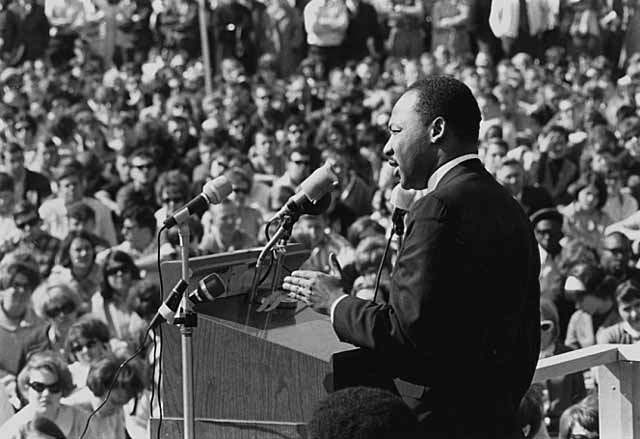
Martin Luther King, Jr., speaking against the Vietnam War, St. Paul Campus, University of Minnesota | 27 April 1967 . (Image by Minnesota Historical Society| Creative Commons)   By Robert Burrowes, Australia April 4, 2018 Fifty years ago, on 4 April 1968, the Reverend Martin Luther King Jr. was assassinated The night before he died, King gave another of his many evocative speeches; this one at the packed Mason Temple in Memphis. The speech included these words: ‘Men for years now have been talking about war and peace. Now no longer can they just talk about it. It is no longer a choice between violence and non-violence in this world, it is non-violence or non-existence. That is where we are today.’ In clearly identifying this stark choice and having been inspired by Mohandas K. Gandhi’s wide-ranging social concerns, King’s concerns were also broad: ‘The Triple Evils of poverty, racism and...
SPARInstaLogoNOTextShadowLogo
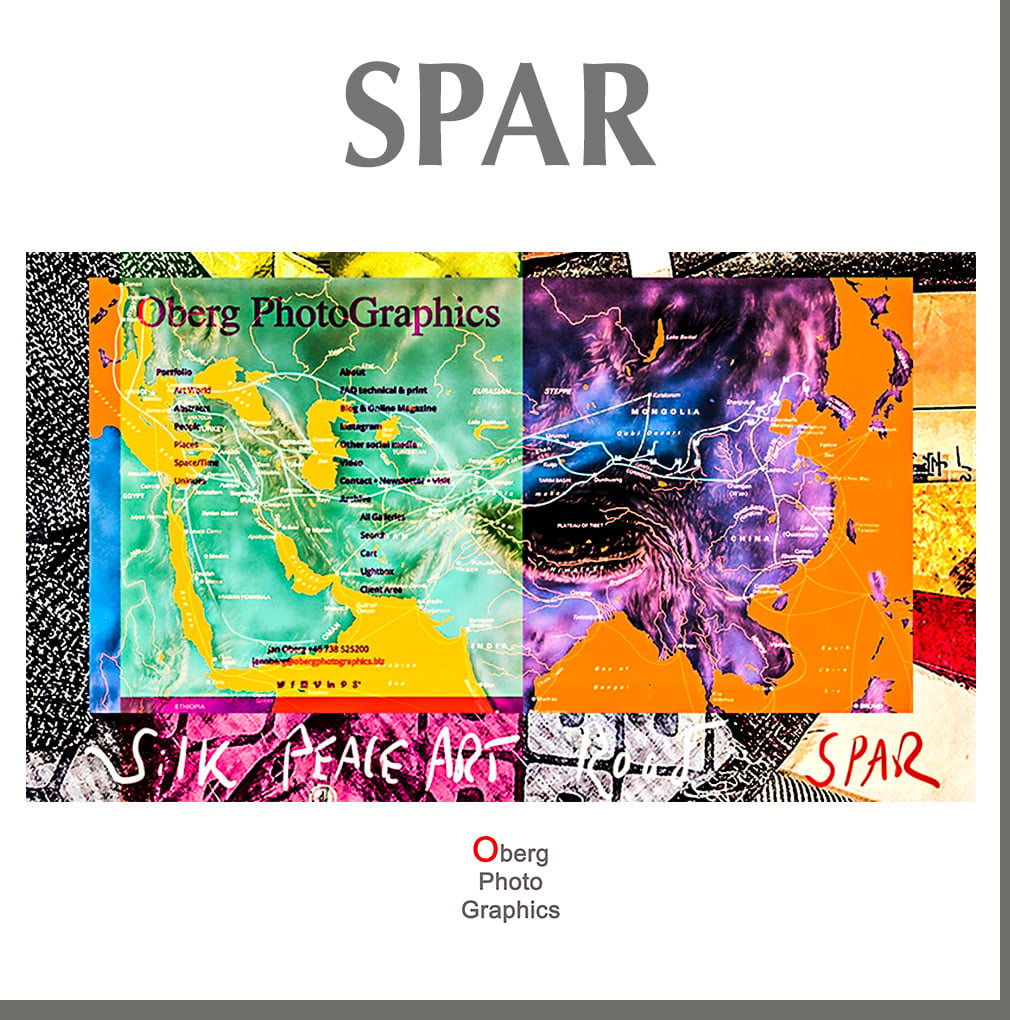
  . This exciting opportunity stimulated the development of a bigger idea that combines Oberg’s work for peace and art photography with a focus on the Chinese-initiated Silk Belt and Road Initiative, the largest and most visionary in today’s world in terms of linking people and cultures into cooperation rather than confrontation. In various ways the project – with the Road as metaphor – stretches from Shanghai over Myanmar, Kazakhstan, Georgia, Iran and Syria to Venice and seeks to promote cooperation and peace in the process. The “Silk PeaceArt Road” project is made public at this very early development stage where no funding is secured to encourage you to share co-operative ideas, contacts you may have in China and along the Silk Road or to potential partners, artists, sponsors, art institutions, etc. The project integrates peace work and art photography and it is the first cooperative endeavour by TFF and...
GeneSharp
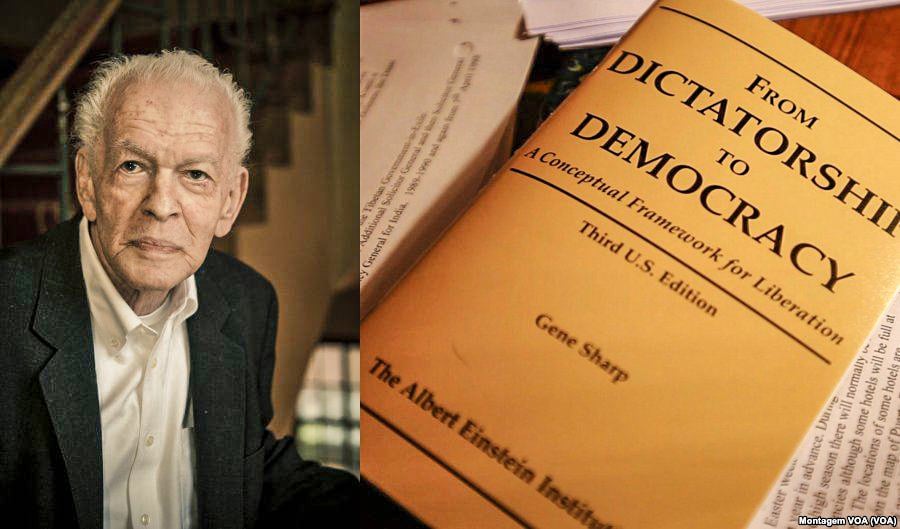
Obituary Just a week after his 90th birthday Gene Sharp passed away. The journal New Statesman once described Gene Sharp as the “Machiavelli of Nonviolence” and Thomas Weber labelled him “the Clausewitz of Nonviolent Action.” Who was this man and what is his contribution to our understanding of the possibilities to use nonviolent actions in large scale societal conflicts? Gene Sharp completed his baccalaureate in 1949, just a few scant years after the close of World War II, and quickly turned his attention to the study of nonviolence. After serving nine months in prison for being a conscientious objector to the Korean War, Sharp worked as secretary for A.J. Muste. He next joined the editorial team of Peace News in London before accepting an invitation from Arne Næss to join him in Oslo with Johan Galtung and others to study the philosophy and practice of Mohandas Gandhi. Throughout this time,...
cropped-davidindc-1-e1516137163905
By David Swanson Remarks at Peace and Justice Studies Association Conference in Birmingham, Alabama, October 28, 2017. Thank you for inviting me. Can everyone who thinks that war is never, and can never be, justified please raise your hand. Thank you. Now if you think every war is always justified. Thank you. And finally all the moderates holding the balanced subtle middle ground: some wars are justified. Thank you. You may not be surprised to hear that this room is not typical of this country. Typical is for absolutely everyone to pile into that last group. The relationship between peace and war is clearly not understood by the U.S. public as along the lines of that between alive and dead. Peace and war are things people imagine can coexist. In Virginia, where I live, a school board member once said he would support recognizing the international day of peace as...
MLK
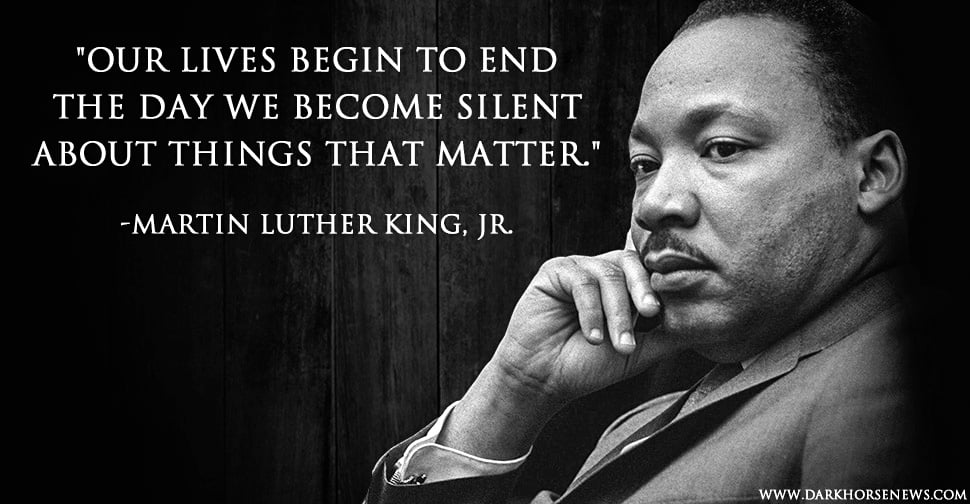
  By Rev. John Dear 15 Jan 2018 • It was early 1968.  Since the previous spring Martin Luther King, Jr. had been pursuing a course that for many was unthinkable.  He had deliberately connected the dots between the  movement  for civil rights and the struggle to end the war in Vietnam, and had paid the price. Originally published by Transcend Media Service here He was roundly criticized by the Johnson administration and the media, as well as people in his own movement. From the right he was attacked for having the gall to question US foreign policy.  From the left he was lambasted for losing focus and not keeping his eyes on the prize. He even got it from a childhood friend who stopped by the house one afternoon to vent. “Why are you speaking out against the Vietnam War?” he carped. King put aside his customary oratory. “When I speak about nonviolence,” he patiently explained, “I mean nonviolent all the way.” As David Garrow’s classic biography of King, Bearing the Cross, reports, he went on to say: “Never could I...
recursive-squared
  By John S. Uebersax • Pitirim Sorokin, a leading 20th century sociologist, is someone you should know about. Consider this quote of his: The organism of the Western society and culture seems to be undergoing one of the deepest and most significant crises of its life. The crisis is far greater than the ordinary; its depth is unfathomable, its end not yet in sight, and the whole of the Western society is involved in it. It is the crisis of a Sensate culture, now in its overripe stage, the culture that has dominated the Western World during the last five centuries… Via wordpress.com Shall we wonder, therefore, that if many do not apprehend clearly what is happening, they have at least a vague feeling that the issue is not merely that of “prosperity,” or “democracy,” or “capitalism,” or the like, but involves the whole contemporary culture, society, and man?...

Imagen-thumbnail-The-Transnational
  By Joseph Lumbard Assistant Professor of Classical Islam at Brandeis University and former advisor for interfaith affairs to the Royal Jordanian Court, is a general editor for The Study Quran. His other publications include Islam, Fundamentalism, and the Betrayal of Tradition and Submission, Faith and Beauty. Joseph Lumbard, Love for the Prophet Muhammad: A Key to Countering Islamism and Islamophobia. Tikkun 1 August 2015; 30 (3): 46–48 at Duke University Press Non-muslims often struggle to understand Muslims because they fail to grasp the role that the Prophet Muhammad plays in our lives. Failing to realize the breadth of the Prophet’s teachings and the depth of love for the Prophet throughout the Islamic world, many non-Muslims are quick to believe ISIS, the Wahhabis, and other militant groups when they claim that it is they who adhere to the precepts set by the Prophet Muhammad and are thus the true followers...
gittings_0
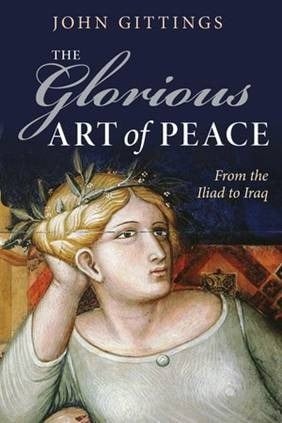
  By John Gittings • “Although most people have always sought to live in peace, our perception of the past is over-dominated by a narrative that is obsessed with war”, argues John Gittings – long-standing ORG Adviser and Guardian Writer, in his latest book ‘The Glorious Art of Peace: From the Iliad to Iraq’, published this year by Oxford University Press. August 2012 In this special article for ORG, based on his book, John Gittings demonstrates that we need to open our minds to an alternative view of history, which acknowledges the strength of the case for peace, as it has been argued from ancient times to the present day. This rich record of peace thought and argument is not only of great historical interest: It highlights the need to understand that peace is essential for civilisation, and that we must find better ways to educate for peace, to develop more...
Categories

Year

Author / Contributor

Region