Peace

Various aspects of and approaches to this “essentially contested” concept.

And various ways of thinking across cultures.

Stuff here is both theoretical and practical – with an emphasis on the former.

We thought that a slightly blurred image of a sunset – the far horizon – could illustrate these endeavours.

The moment we think we know exactly what peace is, it isn’t.

It’s a never-ending process … exploration.

But peace is not just the absence of war and other types of violence.

It is something essential and substantial in and of itself.

Category

Year

Author / Contributor

Region

Sort by

Showing 1-10 of 889 stories

johangaltung
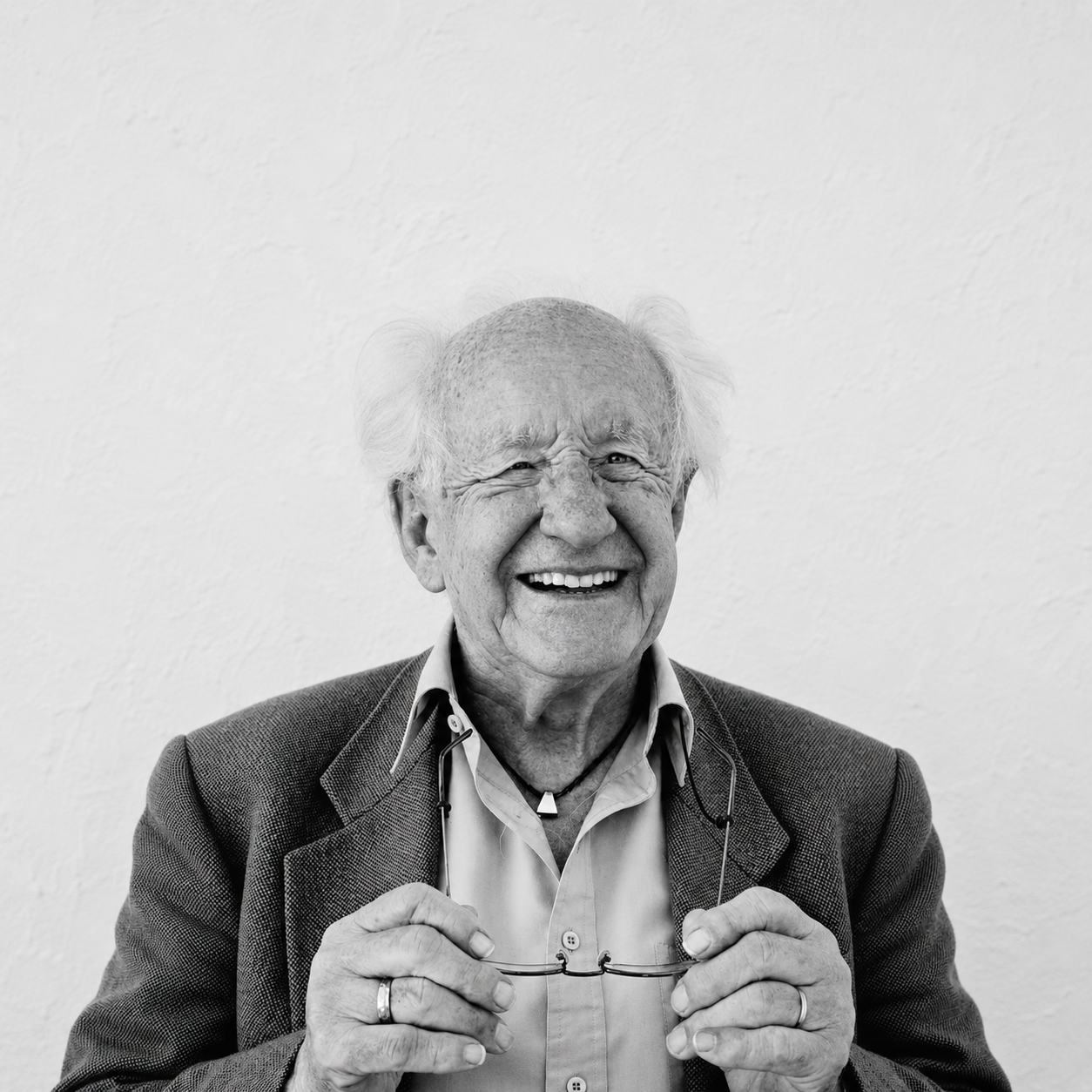
Keynote Speech, International Peace Research Association (IPRA) – 7 Jan 2006 On professionalization in general Generally, the sociology of professions identifies three characteristics of a profession: The purpose of peace research is to produce intersubjectively communicable and verifiable KNOWLEDGE according to the general rules of research. Thus, research is incompatible with secrecy, as research has to take place in public space. And one purpose of peace studies is the communication of the findings of peace research, in line with general rules for education, another public space activity. The free access of the rest of society to what happens is of the essence. As peace workers are not planning to hurt or harm, in other words to exercise violence, s/he has nothing to conceal. In the following a person exercising the peace profession will be referred to as “peace worker”, like “social worker”, or “peace professional” like “health professional”. Others may...
lenin_300
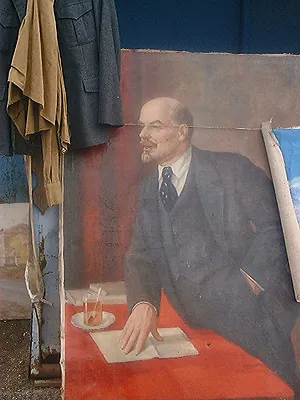
• Published in Bulletin of Peace Proposals 3-1990, pp 287-298 and on TFF’s homepage at the same time   1. Four hypotheses The West has lost a close enemy, the Soviet Union and Eastern Europe. Which reactions can be discerned and what psycho-political emotions are they indicative of? How did the West cope with the first years of this new post-Cold War situation? Can we mourn the death of an enemy, can we heal ourselves after the loss? How does one learn to live a new life without a close enemy? Has the West done what it ought to do for itself and for the former enemy? “The West” of course is a term hanging loose. We employ it in this article as meaning interchangeably “NATO, the Western hemisphere, the United States and Western Europe and a few cases, Western or Occidental culture”. The first hypothesis of this essay is...
Imagen-thumbnail-The-Transnational
  By Rabbi Michael Lerner • In case you who missed it, here’s Rabbi Lerner’s talk at Muhammed Ali’s funeral. If it inspires you, please read below for how to be an ally with Rabbi Lerner to help build the world he describes. To read the transcript of his speech, click here. Wondering why Rabbi Lerner got invited and how to respond to the handful of naysayers who have been upset by Lerner’s powerful message? Please read below. Muhammad Ali had known Rabbi Lerner as a friend and ally in the 1960s and early 1970s when both were indicted by the U.S. government for their roles in opposing the war in Vietnam. He then wrote Rabbi Lerner to praise his book with Cornel West Jews and Blacks: Let the Healing Begin. Approximately seven years ago, he decided to invite Rabbi Lerner to represent the American Jewish community at his memorial service. Rabbi Lerner...
Imagen-thumbnail-The-Transnational
  By Joseph Lumbard Assistant Professor of Classical Islam at Brandeis University and former advisor for interfaith affairs to the Royal Jordanian Court, is a general editor for The Study Quran. His other publications include Islam, Fundamentalism, and the Betrayal of Tradition and Submission, Faith and Beauty. Joseph Lumbard, Love for the Prophet Muhammad: A Key to Countering Islamism and Islamophobia. Tikkun 1 August 2015; 30 (3): 46–48 at Duke University Press Non-muslims often struggle to understand Muslims because they fail to grasp the role that the Prophet Muhammad plays in our lives. Failing to realize the breadth of the Prophet’s teachings and the depth of love for the Prophet throughout the Islamic world, many non-Muslims are quick to believe ISIS, the Wahhabis, and other militant groups when they claim that it is they who adhere to the precepts set by the Prophet Muhammad and are thus the true followers...
luce
  By Heather Dubois • Religion, after all, is a powerful constituent of cultural norms and values, and because it addresses the most profound existential issues of human life (e.g., freedom and inevitability, fear and faith, security and insecurity, right and wrong, sacred and profane), religion is deeply implicated in individual and social conceptions of peace. Scott Appleby explains that the ambivalence of religion lies in the interpretation of the sacred, in imperfect human perception: “At any given moment any two religious actors, each possessed of unimpeachable devotion and integrity, might reach diametrically opposed conclusions about the will of God and the path to follow.” In other words, religion can underwrite both conflict and peace on its own terms. It is an intervening variable that sometimes escalates, sometimes de-escalates conflict behavior. Via Journal of Religion, Conflict and Peace As Appleby notes, “Religious leaders and their followers make choices as to...
logo_home
  By Bishnu Pathak • The objective of this paper is to explore the initiatives and practices of different countries in truth seeking. Many countries during the post-conflict, colonial, slavery, anarchical and cultural genocide periods establish the Truth Commissions to respond to the past human wrongdoings: crimes and crimes against humanity. Enforced Disappearances (ED), killings, rapes and inhumane tortures are wrongdoings. Truth Commission applies the method of recovering silences from the victims for structured testimonies. The paper is prepared based on the victim-centric approach. The purpose reveals the piecemeal fact-findings to heal the past, reconcile the present and protect the future. The study covers more than 50 Commissions in a chronological order: beginning from Uganda in 1974 and concluding to Nepal in February 2015. Two Commissions in Uruguay were formed to find-out enforced disappearances. Colombian and Rwandan Commissions have established permanent bodies. The Liberian TRC threatened the government to submit...
gittings_0
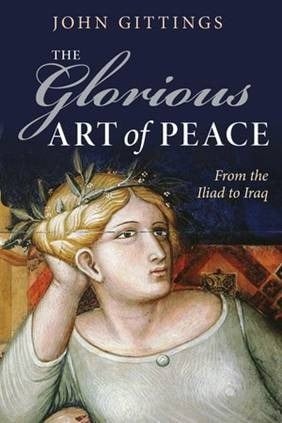
  By John Gittings • “Although most people have always sought to live in peace, our perception of the past is over-dominated by a narrative that is obsessed with war”, argues John Gittings – long-standing ORG Adviser and Guardian Writer, in his latest book ‘The Glorious Art of Peace: From the Iliad to Iraq’, published this year by Oxford University Press. August 2012 In this special article for ORG, based on his book, John Gittings demonstrates that we need to open our minds to an alternative view of history, which acknowledges the strength of the case for peace, as it has been argued from ancient times to the present day. This rich record of peace thought and argument is not only of great historical interest: It highlights the need to understand that peace is essential for civilisation, and that we must find better ways to educate for peace, to develop more...
mkg-photo
• The People’s Charter to Create a Nonviolent World was launched simultaneously on 11 November 2011 at several locations around the world. May 25, 2011 by robertjburrowes As of 20 December 2017: 2,270 individuals from 103 countries have signed the Nonviolence Charter pledge, and 112 organisations from 36 countries have endorsed the Nonviolence Charter. Individuals: Signing the Charter The Nonviolence Charter can be read and signed by individuals online: click on ‘Read Charter’ or ‘Sign Charter’ in the sidebar. Organisations: Endorsing the Charter To advise that an organisation endorses The Nonviolence Charter, please send the name and website of the organisation to Robert: flametree@riseup.net The endorsing organisation, together with its website, will be listed on this website on the ‘Organisations’ page. The aim of The Nonviolence Charter is to create a worldwide movement to end violence in all of its forms. The Charter is intended to give voice to the millions...
file-20171128-7450-19olpkk
  By Michael Greenwell* • It came as a slight relief to see at least some measured coverage of Donald Trump’s recent visit to South Korea. Sections of the media have been predicting World War III – and focusing on barbed and incendiary comments between Trump and North Korean leader Kim Jon-un – so stories that take a more measured tone should be welcomed … by everyone. North Korea has now launched another ballistic missile, and further doomsday journalism could inflame current hostilities in the region. Any positive influence to avoid actual military action and encourage all nations to stick to a peaceful, negotiated resolution is in the whole world’s interest. The US president missed the press opportunity to stand at the border of North Korea on his recent trip, and it’s encouraging that he didn’t glower at the checkpoint, eyeballing his opponent like a boxer before a fight. It...
f67f17e1df4e8d46cdddc96c2ddd77b03128e49d_800x600
  By Julia Bacha A spot-on talk about nonviolence in conflict in general and the role it plays in the Palestine-Israel conflict. Most often the people who struggle with non-violent means are simply overlooked by the media.   See more…
jake-lynch-180x167-150x150
 Peace journalism is when editors and reporters make choices – about what to report, and how to report it – that create opportunities for society at large to consider and to value non-violent responses to conflict. If readers and audiences are furnished with such opportunities, but still decide they prefer war to peace, there is nothing more journalism can do about it, while remaining journalism. On the other hand, there is no matching commitment to ensuring a fair hearing for violent responses, if only because they seldom struggle for a place on the news agenda. How come? To report is to choose. ‘We just report the facts’, journalists say, but ‘the facts’ is a category of practically infinite size. Even in these days of media profusion, that category has to be shrunk to fit into the news. The journalist is a ‘gatekeeper’, allowing some aspects of reality through, to emerge,...
2732
• The United Nations has saved millions of lives and boosted health and education across the world. But it is bloated, undemocratic – and very expensive. The United Nations has saved millions of lives and boosted health and education across the world. But it is bloated, undemocratic – and very expensive. By Chris McGreal, The Guardian It was Dag Hammarskjöld, the tragic second UN secretary general, who had it best. The United Nations, he said, “was created not to lead mankind to heaven but to save humanity from hell”. The kind of hell Hammarskjöld had in mind was not hard to imagine in the wake of world war and Hitler’s extermination camps, and with the atom bomb’s shadow spreading across the globe. How much of a part the UN played in holding nuclear armageddon at bay divides historians. But there is little doubt that in the lifetime that has passed...
Categories

Year

Author / Contributor

Region