Peace

Various aspects of and approaches to this “essentially contested” concept.

And various ways of thinking across cultures.

Stuff here is both theoretical and practical – with an emphasis on the former.

We thought that a slightly blurred image of a sunset – the far horizon – could illustrate these endeavours.

The moment we think we know exactly what peace is, it isn’t.

It’s a never-ending process … exploration.

But peace is not just the absence of war and other types of violence.

It is something essential and substantial in and of itself.

Category

Year

Author / Contributor

Region

Sort by

Showing 1-10 of 889 stories

cropped-davidindc-1-e1516137163905
By David Swanson Remarks at Peace and Justice Studies Association Conference in Birmingham, Alabama, October 28, 2017. Thank you for inviting me. Can everyone who thinks that war is never, and can never be, justified please raise your hand. Thank you. Now if you think every war is always justified. Thank you. And finally all the moderates holding the balanced subtle middle ground: some wars are justified. Thank you. You may not be surprised to hear that this room is not typical of this country. Typical is for absolutely everyone to pile into that last group. The relationship between peace and war is clearly not understood by the U.S. public as along the lines of that between alive and dead. Peace and war are things people imagine can coexist. In Virginia, where I live, a school board member once said he would support recognizing the international day of peace as...
Burundi
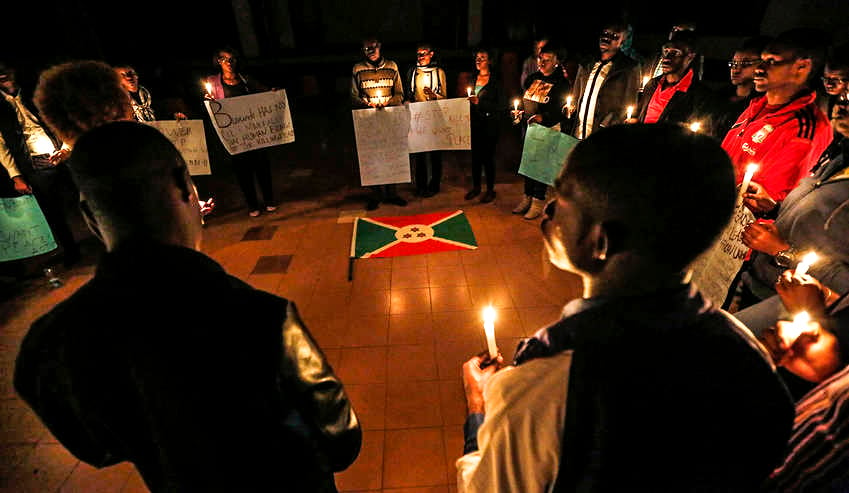
Burundi’s ongoing political instability highlights the stark divide between global conflict prevention rhetoric and practice.   By Priyal Singh for ISS TODAY.  First published by ISS Today • Since Burundian President Pierre Nkurunziza announced that he would run for a third term in early 2015, political instability across the country has tested the limits of global conflict prevention responses. This instability has included a failed coup d’état, violent clashes between government and opposition forces, increasing suppressionof the media and civil society, as well as targeted assassinations. The violence has resulted in more than 400,000 Burundians fleeing to neighbouring states and over 55,000 internally displaced, amid allegations of serious human rights violations in the country. Burundi’s instability, however, appears not to feature the central elements or drivers generally associated with the conflicts of other countries. The presence of transnational organised criminal syndicates has not featured prominently, nor have the influence or...
Imagen-thumbnail-The-Transnational
Shock. It’s a word that has come up a lot since November – for obvious reasons.I’ve spent a lot of time thinking about shock. Ten years ago, I published “The Shock Doctrine,” an investigation that spanned four decades from Pinochet’s U.S.-backed coup in 1970s Chile to Hurricane Katrina in 2005. I noticed a brutal and recurring tactic by right wing governments. After a shocking event – a war, coup, terrorist attack, market crash or natural disaster – exploit the public’s disorientation. Suspend democracy. Push through radical “free market” policies that enrich the 1 percent at the expense of the poor and middle class. The Trump administration is creating chaos. Daily. Of course many of the scandals are the result of the president’s ignorance and blunders – not some nefarious strategy. But there is also no doubt that some savvy people around Trump are using the daily shocks as cover to...
1481541228836
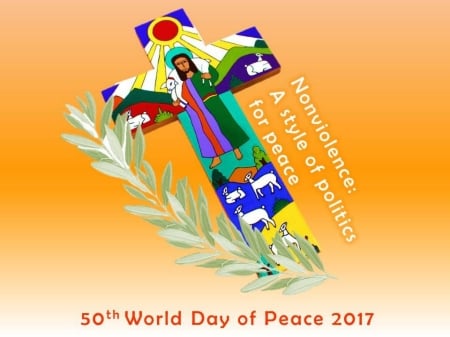
Pope Franciskus’ Message for the 50th World Day of Peace   1. At the beginning of this New Year, I offer heartfelt wishes of peace to the world’s peoples and nations, to heads of state and government, and to religious, civic and community leaders. I wish peace to every man, woman and child, and I pray that the image and likeness of God in each person will enable us to acknowledge one another as sacred gifts endowed with immense dignity. Especially in situations of conflict, let us respect this, our “deepest dignity”,[1] and make active nonviolence our way of life. This is the fiftieth Message for the World Day of Peace. In the first, Blessed Pope Paul VI addressed all peoples, not simply Catholics, with utter clarity. “Peace is the only true direction of human progress – and not the tensions caused by ambitious nationalisms, nor conquests by violence, nor repressions...
MLK
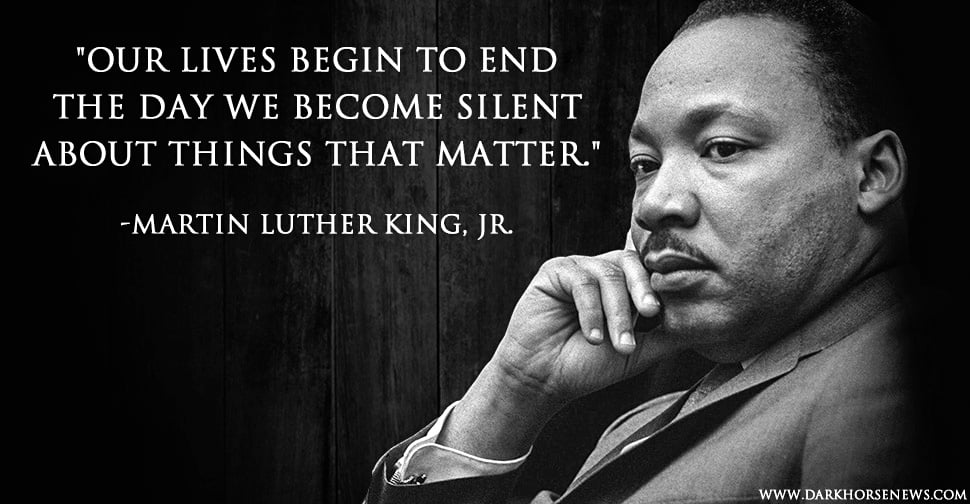
  By Rev. John Dear 15 Jan 2018 • It was early 1968.  Since the previous spring Martin Luther King, Jr. had been pursuing a course that for many was unthinkable.  He had deliberately connected the dots between the  movement  for civil rights and the struggle to end the war in Vietnam, and had paid the price. Originally published by Transcend Media Service here He was roundly criticized by the Johnson administration and the media, as well as people in his own movement. From the right he was attacked for having the gall to question US foreign policy.  From the left he was lambasted for losing focus and not keeping his eyes on the prize. He even got it from a childhood friend who stopped by the house one afternoon to vent. “Why are you speaking out against the Vietnam War?” he carped. King put aside his customary oratory. “When I speak about nonviolence,” he patiently explained, “I mean nonviolent all the way.” As David Garrow’s classic biography of King, Bearing the Cross, reports, he went on to say: “Never could I...
RichardFalk
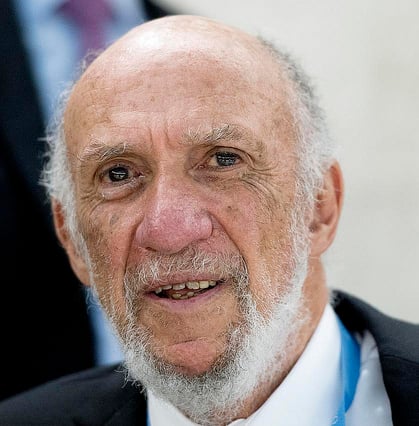
  By Richard Falk This post is a modified version of an article published in Middle East Eye on Jan. 1, 2018. It contends that the proper priority for genuine advocates of peace between Israelis and Palestinians should be centered around apartheid rather than be devoted to reviving an Oslo style ‘peace process’ (always a sham) or proclaiming the goal of an independent and sovereign Palestine as attainable without first dismantling the apartheid structures that subjugate the Palestinian people as a whole so as to maintain the Zionist insistence on Israel as the state of the Jewish people (rather than providing a homeland within a normal and legitimate state based on ethnic and religious equality, human rights, and secular principles.   Originally published on the “Global Justice in the 21st Century” blog   Despite all appearances to the contrary, those in the West who do not want to join the premature...
Fredrik-S.-Heffermehl-150x150
By Fredrik S. Heffermehl* 23 Oct 2017 • The parliament will select a new Nobel Committee only in a month’s time–and we fear the worst. But there are 19 law professors backing our demands. Below, our letter to parliament. I. Parliament must change its routine for selections for the Nobel Committee, legislators must comply with the law even in cases where Swedish law applies When this autumn the Norwegian Parliament, Stortinget, shall elect three members to the Norwegian Nobel Committee, it must take the consequences of recent clarifications by Swedish authorities of tasks and responsibilities within the Nobel Foundation, point II below. These rulings are legally binding also when the body body assisting the Nobel Foundation is the parliament of another country. Via transcend.org In our view, the clarifications mean that the routine for election of Nobel Committee members introduced in 1948, must cease. The Storting’s task here is neither...
johangaltung
Farewell Seminar SCAR, George Mason University, Arlington-VA 6 Dec 2017 • Two basic institutions in Western history and individual lives: Christianity offering Salvation to those following Laws, Commandments, and Science offering Truth to those who believe in scientific laws. After Enlightenment ushered in a godless world, one is waning and the other vexing, seen as antithetical to each other. Is evolution being contested by “intelligent design”? By “diversity and symbiosis”? Neither one nor the other?  Or both? We do not know, nor do we come to grips with evolution beyond homo sapiens. Neither did Christianity. Via transcend.org But we are used in history to successors carrying the imprints of predecessors, and vice versa.  We are used to plus ça change plus ça este la même chose (the more it changes, the more it stays the same). And the more intended Italian cambiamo le cose affinche se mantengono le stesse (we...
johangaltung
• Keynote, World Futures Studies Federation Conference – Jondal, Norway 7 Jun 2017 West of Jondal is Torsnes, named after the Nordic war god Thor with his Hammer, a center of the Viking era from 800 to 1050, only 250 years. Why so short? Successful with raids and colonization–Gardarike in Russia, Iceland, Greenland, Vineland in Canada. And then: fini. Why? Because they had no future. Evil Lóki had killed Good Baldur – next to Torsnes is Belsnes=Baldursnes. They were doomed. Enters Christianity with Evil Satan and Good God, restoring hope. The end. The Soviet Union Empire had no future: Communism was undefined. Enters Orthodox Christianity – Putin is a true believer – hope restored. The United States Empire has no future: “Allies” refuse to fight US wars and US capitalism increases inequality with reduced growth. Enter Campaigner Trump ‘Making America Great Again’ by buying-hiring American; President Trump making America isolated,...
Evelin_Lindner_2017
New book by Evelin Lindner • Humankind has reached a boiling point. Violence, hatred, and terror have become deeply entangled with honor, heroism, glory, loyalty, and love. Over the past five percent of modern human history on planet Earth, roughly the past ten millennia, human activity has reached a crescendo of rapid and ruthless competition for domination, a fight for power over people and the planet, where “might” has become “right.” Within this context, a dangerous culture of honor has evolved, in which destruction is mercilessly merged with love: “It is my duty, if I love my people, to heroically destroy our enemies and secure all resources for us,” underwritten by an ominous motto: “If you want peace, prepare for war.” Humanity has haphazardly constructed an entire world-system on top of this merger, holding the whole world hostage through never-ending cycles of domination and humiliation. The consequence, today, is the...
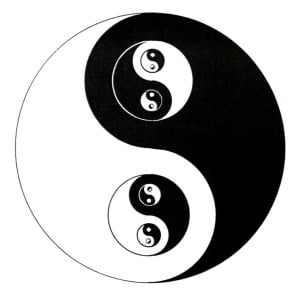
recursive-squared
  By John S. Uebersax • Pitirim Sorokin, a leading 20th century sociologist, is someone you should know about. Consider this quote of his: The organism of the Western society and culture seems to be undergoing one of the deepest and most significant crises of its life. The crisis is far greater than the ordinary; its depth is unfathomable, its end not yet in sight, and the whole of the Western society is involved in it. It is the crisis of a Sensate culture, now in its overripe stage, the culture that has dominated the Western World during the last five centuries… Via wordpress.com Shall we wonder, therefore, that if many do not apprehend clearly what is happening, they have at least a vague feeling that the issue is not merely that of “prosperity,” or “democracy,” or “capitalism,” or the like, but involves the whole contemporary culture, society, and man?...
John-Scales-Avery-2
Portrait of a TFF Associate • John Scales Avery is a theoretical chemist at the University of Copenhagen. He is noted for his books and research publications in quantum chemistry, thermodynamics, evolution, and history of science. His 2003 book Information Theory and Evolution set forth the view that the phenomenon of life, including its origin, evolution, as well as human cultural evolution, has its background situated in the fields of thermodynamics, statistical mechanics, and information theory. Since 1990 he has been the Chairman of the Danish National Group of Pugwash Conferences on Science and World Affairs. Between 2004 and 2015 he also served as Chairman of the Danish Peace Academy. He founded the Journal of Bioenergetics and Biomembranes, and was for many years its Managing Editor. He also served as Technical Advisor to the World Health Organization, Regional Office for Europe (1988-1997). A complete list of books and many of...
Categories

Year

Author / Contributor

Region