Nuclear dangers

Category

Year

Author / Contributor

Region

Sort by

Showing 1-10 of 134 stories

Screenshot
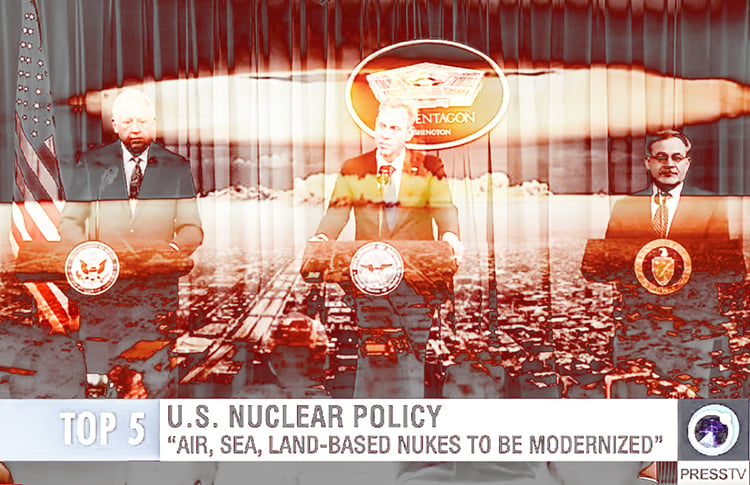
  By Jan Oberg Commenting on PressTV – also on how the Western mainstream press that publishes any piece of hysteria about Russia and China keep virtually silent about this and also the equally dangerous US National Defence Strategy that appeared a few days before this. Photo collage above © Jan Oberg 2018        
nuclearism
  No it didn’t. The mainstream media are totally irresponsible in their priorities. At the moment of writing, five hours after the world’s most dangerous document was presented, no major Western media has featured it prominently. This means it won’t be. No chance it would go viral. The increasing risk of nuclear war isn’t important. While people talk about fake, a much larger issue is omission: What is hidden to you? What world order issues are deliberately down-graded? What threats to humanity end up at the bottom of page 38 after 10 pages of sports, entertainment and celebrity stories. Another technique is cover-up, talking about something else such as the ever convenient North Korean “threat” or Russia’s latest evil plot. It’s not only ignorance. There are media and other power elites who know exactly what to hand out to you and how. And what to fake, omit and cover up...
512px-Doomsday_clock_2_minutes.svg_
By Paul Rogers 30 January 2018 Summary North Korea and Russia may be the focus of contemporary Western fears of imminent nuclear-armed conflict but development and deployment of “useable” nuclear weapons has been a constant throughout the atomic age and by all nuclear-armed states. Current revision of the United States’ declared nuclear posture is only the most visible manifestation of adjustments to all the main nuclear arsenals, with the UK at the vanguard of deploying technologies potentially calibrated for pre-emptive rather than retaliatory strike.   Introduction The August 2017 briefing in this series, Limited Nuclear Wars – Myth and Reality, focused on the common misconception that nuclear weapons exist as ultimate deterrents against catastrophic attack and that by maintaining the ability to retaliate they therefore deter the initial aggression. Some of the emphasis of the briefing was on the UK’s position following the Prime Minister’s firm declaration to Parliament that...
Pentagon
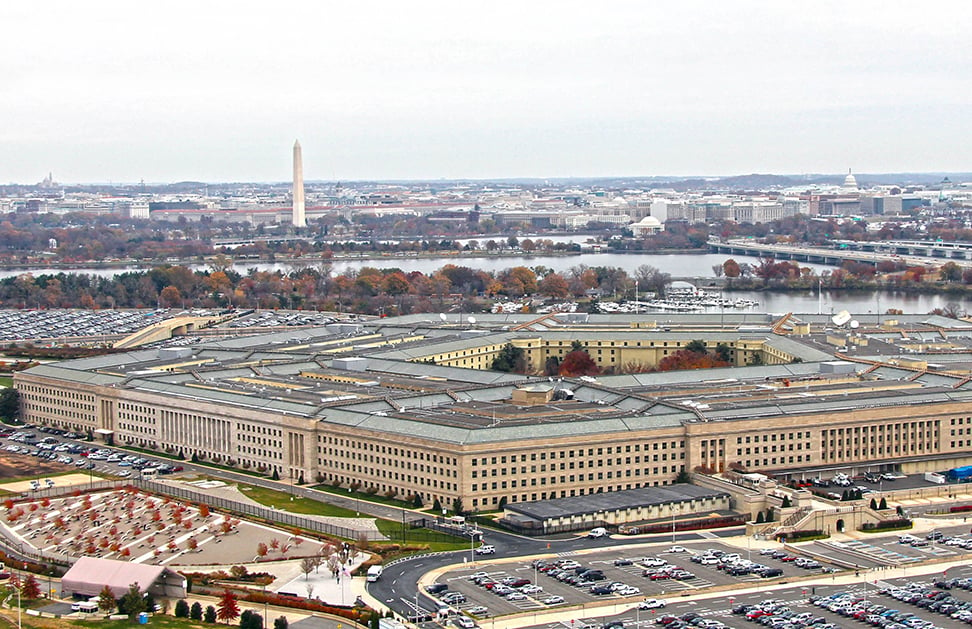
  By Jan Oberg On January 16, 2018, David E. Sanger and William J. Broad of the New York Times reported that “A newly drafted United States nuclear strategy that has been sent to President Trump for approval would permit the use of nuclear weapons to respond to a wide range of devastating but non-nuclear attacks on American infrastructure, including what current and former government officials described as the most crippling kind of cyberattacks. For decades, American presidents have threatened “first use” of nuclear weapons against enemies in only very narrow and limited circumstances, such as in response to the use of biological weapons against the United States. But the new document is the first to expand that to include attempts to destroy wide-reaching infrastructure, like a country’s power grid or communications, that would be most vulnerable to cyberweapons. (JO italics) The draft document, called the Nuclear Posture Review, was...

5a4d47fc1c0000220068e6f8
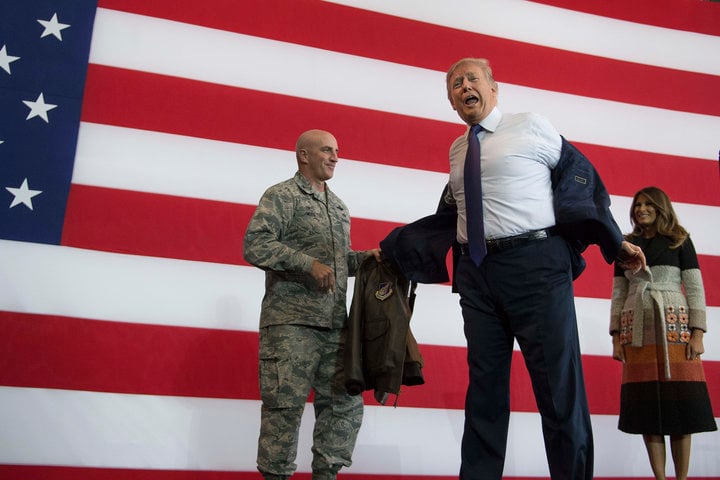
His first Nuclear Posture Review: more nukes, more posturing. By Ashley Feinberg Photo: Jim Watson via Getty Images President Donald Trump at Yokota Air Base in Tokyo on Nov. 5.   In his first year in office, President Barack Obama gave a landmark address in Prague in which he famously affirmed “clearly and with conviction America’s commitment to seek the peace and security of a world without nuclear weapons.” The commitment to total nuclear disarmament was a major departure from the George W. Bush administration — the first time, in fact, that the United States had declared a nuclear-free world a major policy goal.   The original is published at Huffington Post on January 11th, 2018 – and there you will also be able to read the whole Nuclear Posture Review   Now, eight years later, it’s the Trump administration’s turn to lay out its nuclear weapons policy. And according to a pre-decisional draft of...
Imagen-thumbnail-The-Transnational
  By Jan Oberg A few comments in advance of President Trump’s speech on January 11 concerning the nuclear deal, JCPOA, with Iran and why it would be stupid of him to isolate the US by violating the agreement’s letter and spirit. Iran’s response will also be very important and here it is essential to build on the goodwill of the world rather than risking giving the US a pretext for more Iranophobia and future military action. January 10, 2018 on PressTV.    
maxresdefault-1
  By Robert Green   Robert Green Commander, The British Royal Navy, Retired. When nuclear-armed nations face off, the threat of mutually assured destruction is expected to keep the worst from happening. But is this a rational strategy? Or is it one that is doomed to failure? In this eye-opening and powerful talk, Commander Robert Green shares his experience piloting nuclear-armed aircraft – and his shift to becoming a staunch opponent of nuclear deterrence. Commander Robert Green served for twenty years in the British Royal Navy. As a bombardier-navigator, he flew in Buccaneer nuclear strike aircraft and anti-submarine helicopters equipped with nuclear depth-bombs. His final appointment was as Staff Officer (Intelligence) to the Commander-in-Chief Fleet during the 1982 Falklands War. He chaired the UK affiliate of the World Court Project, which led to the International Court of Justice judgment in 1996 that the threat or use of nuclear weapons would...
print-logo-1
By Juan Cole Fascism as a political ideology is difficult to define, in part because it usually contains a big dose of populism, and the content of populism differs from people to people Via juancole.com In my view Mussolini’s fascism in Italy is a fair exemplar of the phenomenon. One characteristic fascist societies have in common is social hierarchy. Men are better than women, they hold. Men are entitled. Some ethnicity is better than all the other ethnicities. White people are entitled (even if some white supremacists in Anglo-Saxon societies wouldn’t consider Mussolini’s Italians or Franco’s Spanish to be “white.” Hitler put off an alliance with Italy because he was still hoping he could get the white British to join him and they seemed to him a superior race). A corollary is that some ethnicities are sick or polluting to society and need to be eliminated, made to emigrate or...
GarethPorter-e1540558470864
By Gareth Porter • The Trump administration has been telling people for months that the crisis with North Korea is the result of North Korea’s relentless pursuit of a nuclear threat to the US homeland and past North Korean cheating on diplomatic agreements. However, North Korea reached agreements with both the Clinton and George W. Bush administrations that could have averted that threat, had they been completed. Instead, a group of Bush administration officials led by then-Vice President Dick Cheney sabotaged both agreements, and Pyongyang went on to make rapid strides on both nuclear and missile development, leading ultimately to the successful late November 2017 North Korean intercontinental ballistic missile (ICBM) test. Via antiwar.com The record shows, moreover, that Cheney and his allies derailed diplomatic efforts to curb North Korean nuclear and missile development, not because they opposed “arms control” (after all, the agreements that were negotiated would have limited only North...
RichardFalk
By Richard Falk • Prefatory Note -This post addresses the need for dialogue with the political, economic, and cultural ‘other,’ that is, those multitudes acutely alienated from and angry with secular globalism and the Enlightenment legacy often equated with ‘modernity’ and ‘modernization.’ At the core is a search for closure on the nature of reality as well as feelings about equity (given many dimensions of inequality) and ethical innovation (revisionist approaches to gender, sexuality, marriage). Does reason or faith or tradition provide greater closure? Can the Thomistic grand synthesis of the 13th Century be repeated under 21st Century condition in the rough waters of controversy generated by Trump and Trumpism? Is this too Western a way of putting the problem? I write as an American, but there are many parallels in other countries. The first step is to admit being out of touch with the ferment below the surface. A...
girl-with-baby-l-300x245
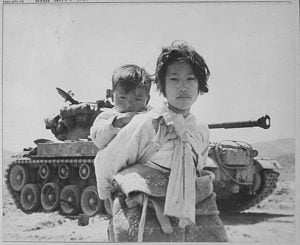
Special Report: Many Americans simply view North Korea and its leaders as “crazy,” but the history behind today’s crisis reveals of a more complex reality that could change those simplistic impressions, as historian William R. Polk explains. Via consortiumnews.com By William R. Polk The U.S. and North Korea are on the brink of hostilities that if begun would almost certainly lead to a nuclear exchange. This is the expressed judgment of most competent observers. They differ over the causes of this confrontation and over the size, range and impact of the weapons that would be fired, but no one can doubt that even a “limited” nuclear exchange would have horrifying effects throughout much of the world including North America. So how did we get to this point, what are we now doing and what could be done to avoid what would almost certainly be the disastrous consequences of even a...
lenin_300
• Published in Bulletin of Peace Proposals 3-1990, pp 287-298 and on TFF’s homepage at the same time   1. Four hypotheses The West has lost a close enemy, the Soviet Union and Eastern Europe. Which reactions can be discerned and what psycho-political emotions are they indicative of? How did the West cope with the first years of this new post-Cold War situation? Can we mourn the death of an enemy, can we heal ourselves after the loss? How does one learn to live a new life without a close enemy? Has the West done what it ought to do for itself and for the former enemy? “The West” of course is a term hanging loose. We employ it in this article as meaning interchangeably “NATO, the Western hemisphere, the United States and Western Europe and a few cases, Western or Occidental culture”. The first hypothesis of this essay is...
Categories

Year

Author / Contributor

Region