Nato

Category

Year

Author / Contributor

Region

Sort by

Showing 1-10 of 189 stories

ChatGPT Image 9 jun 2026, 11_11_33
  Two mistakes, committed on President Barack Obama’s watch, were the triggers for the end of the long post-Cold War period of good relations with Russia. They were the attack on Libya by the US, France and the UK and the subsequent killing of its long-time dictator, Muammar Gadhafi. The second was the crisis in Ukraine. Russia was very angry about the first. Having been persuaded by Western diplomacy that the reason for their would-be intervention was essentially humanitarian to forestall any more mass killing in the Libyan civil war, the US and NATO double-crossed Russia. After having gained Russia’s abstention in a UN Security Council vote on a resolution authorizing military intervention the Western powers set about hunting Gadhafi. With the second, Ukraine, Russia felt undermined. This was the result of the twin policies of NATO expansion up to Russia’s border – which the US, Germany, France and the...
the-cold-war-russia-america
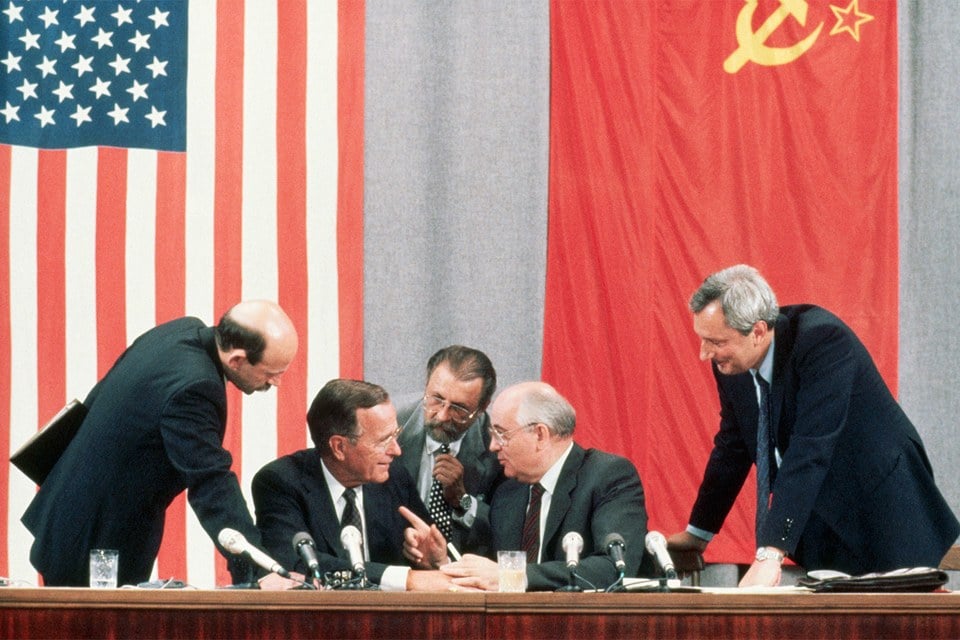
Photo: US President George Bush and Soviet President Mikhail Gorbachev at the Moscow Summit 1991 By Peter Turnley/Corbis/VCG/Getty Images Over the last four month, ten articles about the new Cold War have been published on the TFF Associates blog. And on our social media you’ll find hundreds of brilliant, informative posts written by others. While this new Cold War is certainly different from the first Cold war that ended in 1989, we are not in doubt that there is a new such tragic war and that the risk of military confrontation between Russia and NATO countries in Europe has increased. We also happen to think it could have been avoided. This Cold War has to do with, among many other things, NATO’s counterproductive expansion since 1994, the way Yugoslavia broke down and was broken up, with Ukraine and now Syria as well as – perhaps surprisingly to some – the...
Imagen-thumbnail-The-Transnational
  On the occasion of the Summit in NATO – North Atlantic Treaty Outdated/Obsolete. Here the 8 main arguments. Please share if you like! The Western media will not raise these critical questions, the rest of us must… Here the original link at Facebook Live with all comments and viewer statistics      
180711-trump-nato-summit-brussels-njs-1316_b69bf6853aeb5ba16e5d56a7db6eb421.fit-760w
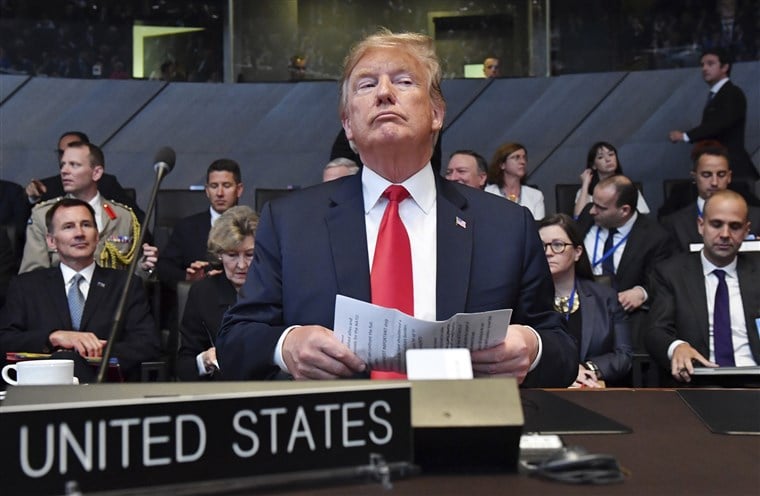
Introduction An interview with Daniel Falcone on the future of NATO that considers Trump’s brazen challenges and the tepid responses of European political leaders, and what this interplay signifies for the future of world order. At least, Trump’s approach has so far avoided the drift toward Cold War 2 that might have happened had Hillary Clinton become president, but Trump’s trade war mentality may hasten the advent of a different kind of second Cold War, with China and Europe at its epicenter, that is, if the Trump presidency is not undermined in the November elections or otherwise. We should be puzzled by the seeming passivity of the deep state in the U.S. Does it not exist after all? Q1: What are the reasons for Trump’s insistence that NATO is just another extension of corruption and an institutional burden for the United States? RF: It is difficult to evaluate Trump’s particular...
ChatGPT Image 9 jun 2026, 11_11_33
Russian president Vladimir Putin has been in a benign mood after a perfectly organized World Cup which gave Russians and foreigners the rare freedom to mass in the street. In response the world TV audience has looked at Russia with new eyes. Maybe there’s a new Russia coming to the boil which, if the West could seize the chance, could help the two countries make a pot of very tasty and good tea! Maybe. The Donald Trump/Vladimir Putin encounter is as convoluted as they come. There seem to be two American policies towards Russia – one led by the president, the second led by his advisers. On nearly every issue, bar two, Trump appears to be more dovish than his Administration. He never criticizes Putin publically. Trump hasn’t made a great fuss about the Russian presence in Syria, nor its coziness with Iran and China. He hasn’t criticized the crackdown...
Trump-Putin-Summit
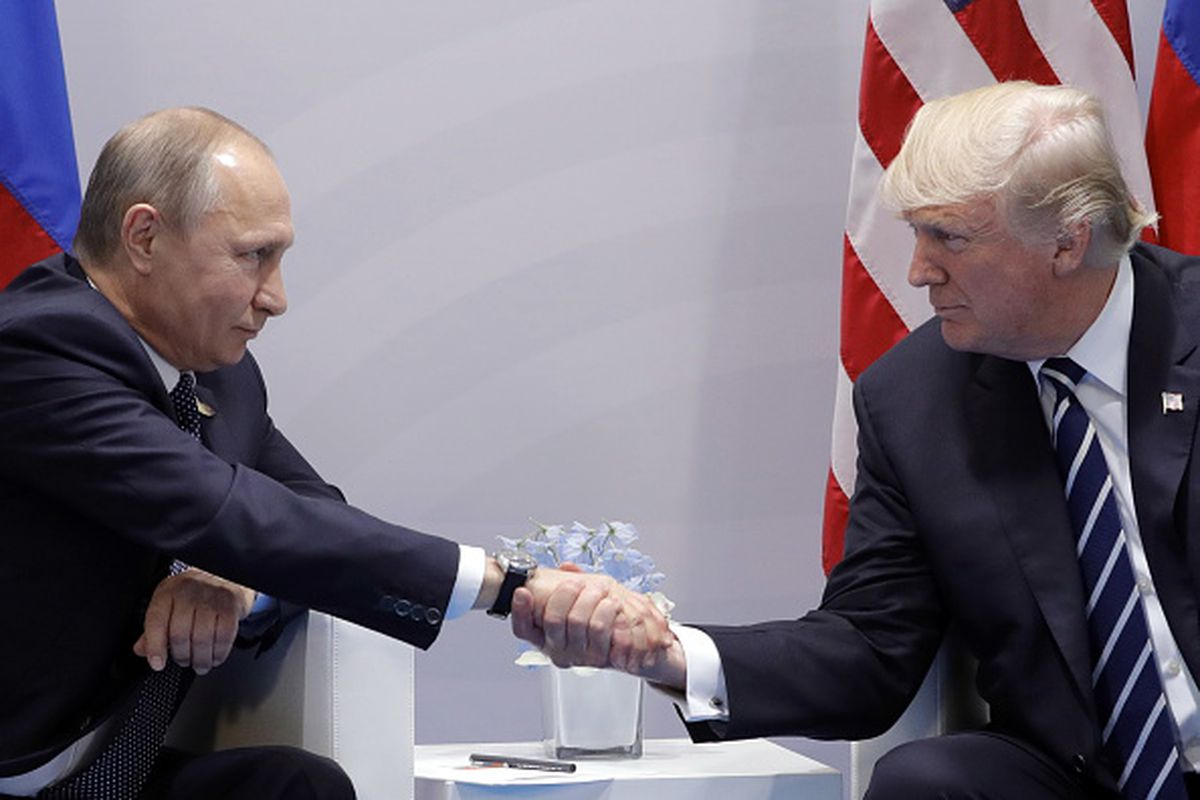
(Russia President Vladimir Putin and US President Donald Trump shake hands during a bilateral meeting on the sidelines of the G20 summit in 2017. Photo: Mikhail Metzel/TASS via Getty Images) By Gordon M. Hahn 5 July, 2018 The Trump-Putin summit was successfully delayed by the liberal/neocon, Washington/NATO deep state network. By the time, Trump fought his way free from the morass of the collapsing ‘Russiagate’ investigation, relations were so bad that Putin rejected Trump’s invitation to the White House and agreed to meet in neighboring Finland. This suggests the level of distrust Putin has towards Washington, his low expectations for a successful summit, and the high price he is likely to demand for concessions on his part. With the summit at hand, it is important for the Trump administration to understand what are the key problems that have tightly wound the Russian-Western knot, for only by understanding the way the...
JOAleppo_FBPage
• This is the second of two articles about the coming end of NATO as we know it and what can be done. The first you find here. It may be good to have at least browsed that one before you read on here. The Banality of Militarism In the field of science, business and culture, new ideas, innovative methods, doing new things and doing old things in new ways are activities usually rewarded and admired. That keeps these fields vibrant, alive and interesting to others too. However, in the field of the all-pervasive, omni-present paradigm of basic military defence and security thinking and policy – drop peace because no one has a peace policy – no such dynamics exist. The same old tune is played over and over again – to make you fearful and pay: The same old tune is played over and over again – to make...
nato
• On the occasion of the NATO Summit in Brussels and the Putin-Trump meeting in Helsinki This analysis comes in two parts – one critical and one constructive: This one on “NATO’s crisis and the Transatlantic conflict” and the second on “Make NATO civilian and civilised.” My apologies for writing a bit long, it isn’t comme il faut nowadays. But I happen to be a researcher who believes in knowledge, background and intellectual arguments in fields such as defence, security and peace – in other words, belonging to a race threatened by extinction in the era of fake and marketing. Indeed, so old fashioned am I that I don’t believe in world security matters being dealt with in Twitter- or spin doctor- style or in narratives and diplomacy conducted through advertisement videos. The follow-up second part of this analysis can be found here. • • When the Berlin Wall came...
HardFacts
  By Jan Oberg Will Europe to continue to bow to US demands now that Trump has withdrawn from the Iran Deal? That’s the question John Wight asks of peace researcher Jan Oberg, on this week’s program. A conversation with John Wight of “Hard Facts” at Sputnik Radio, May 16, 2018.    
1-1
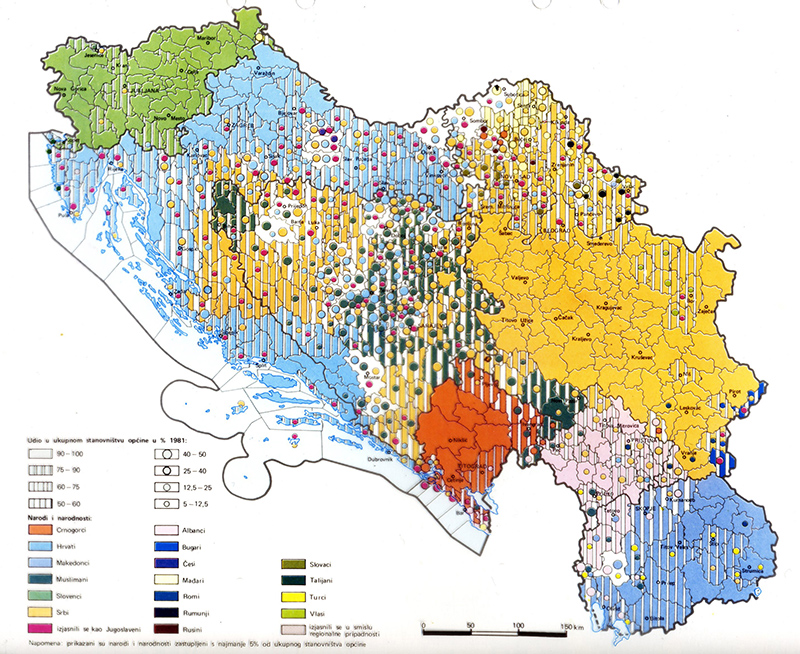
The ethnic map few understood. Should make it clear that cutting up Yugoslavia in independent republics could not be done without bloodshed. (1) Yellow = Serbs, Dark Green = Muslims, Light Blue = Croats,  Light Green = Slovenes, Orange = Montenegrins, Pink = Albanians, Darker Blue = Macedonians   , marks the 19th anniversary of NATO illegal and illegitimate bombing of Yugoslavia, Serbia and its Kosovo, province during 78 days. It has – one is tempted to say: of course – been conveniently forgotten by the West itself. It was masterminded by the United States under Bill Clinton and Secretary of State Madeleine Albright after the so-called negotiations between Serbs and Albanians in Rambouillet outside Paris (the parties never met face-to-face) While Clinton may be best remembered for his relations with Monica Lewinsky and his wife, Hillary Clinton, some of us also remember him (and Albright) for bombing Afghanistan, Sudan,...

samuelsen
  Af Jan Øberg Et tidssvarende og relevant forsvarsforlig ville være et hvor man fordomsfrit og med bred ekspertise havde spurgt: Givet at verden ser ud som den gør – og kan forventes at gøre i de næste 20-30 år – hvilken politik på de relevante militære og civile områder bør Danmark så vælge for at få færrest mulige fjender, bidrage til reduktion af krig og risici herfor hjemme og ude og i det hele taget bidrage til en fredelige verden? Det netop indgåede forsvarsforlig indebærer istedet en kraftig militær oprustning og øget beredskab for at deltage i international krige under USAs ledelse. Det åbner mulighed for at Danmark anskaffer Tomahawk-krydsermissiler og bygger helt på et postuleret, u-argumenteret trusselsbillede. Der køres en tur ad de udlagte skinner uden tanke på endestationen bare nogle få kilometer længere fremme. Og den endestation hedder ikke fred i nogen rimelig intellektuel forstand af bergebet....
Screenshot
    Excerpts from Summary of the 2018 National Defense Strategy of the United States of America: “For decades the United States has enjoyed uncontested or dominant superiority in every operating domain. We could generally deploy our forces when we wanted, assemble them where we wanted, and operate how we wanted. Today, every domain is contested air, land, sea, space, and cyberspace.” In plain words: An admission of two things, namely that the US considers it right, or natural, to dominate the entire world and do what it pleases. And that it’s relative power is decreasing. • 
”Challenges to the U.S. military advantage represent another shift in the global security environment. Our network of alliances and partnerships remain the backbone of global security. China and Russia are now undermining the international order from within the system by exploiting its benefits while simultaneously undercutting its principles and ‘rules of the road.’...
Categories

Year

Author / Contributor

Region