Middle East conflict formation

Category

Year

Author / Contributor

Region

Sort by

Showing 1-10 of 118 stories

ChatGPT Image 9 jun 2026, 11_11_33
Of all the present foes of America it is Iran which has consistently been over time the number one.  Since its Islamic Revolution in 1979 that overthrew the secular-minded Shah and supplanted him with a militant, sometimes warlike, Islamic theocracy, it has been America’s Great Satan. (But for Europe rather less so, although no country has broken ranks with Washington.) In the current edition of Foreign Affairs two professors, Daniel Benjamin and Steven Simon, write, “Imagine historians 100 years from now trying to decide which foreign power the US feared most in the decades from the late Cold War…They would see Russia first as an archenemy, then as a friend, and finally as a challenging nuisance. They would see China become a great power rival. North Korea would appear as sideshow. Only one country would be depicted as a persistent and implacable foe: Iran.” A couple of months ago it...
bofuq374gwgf
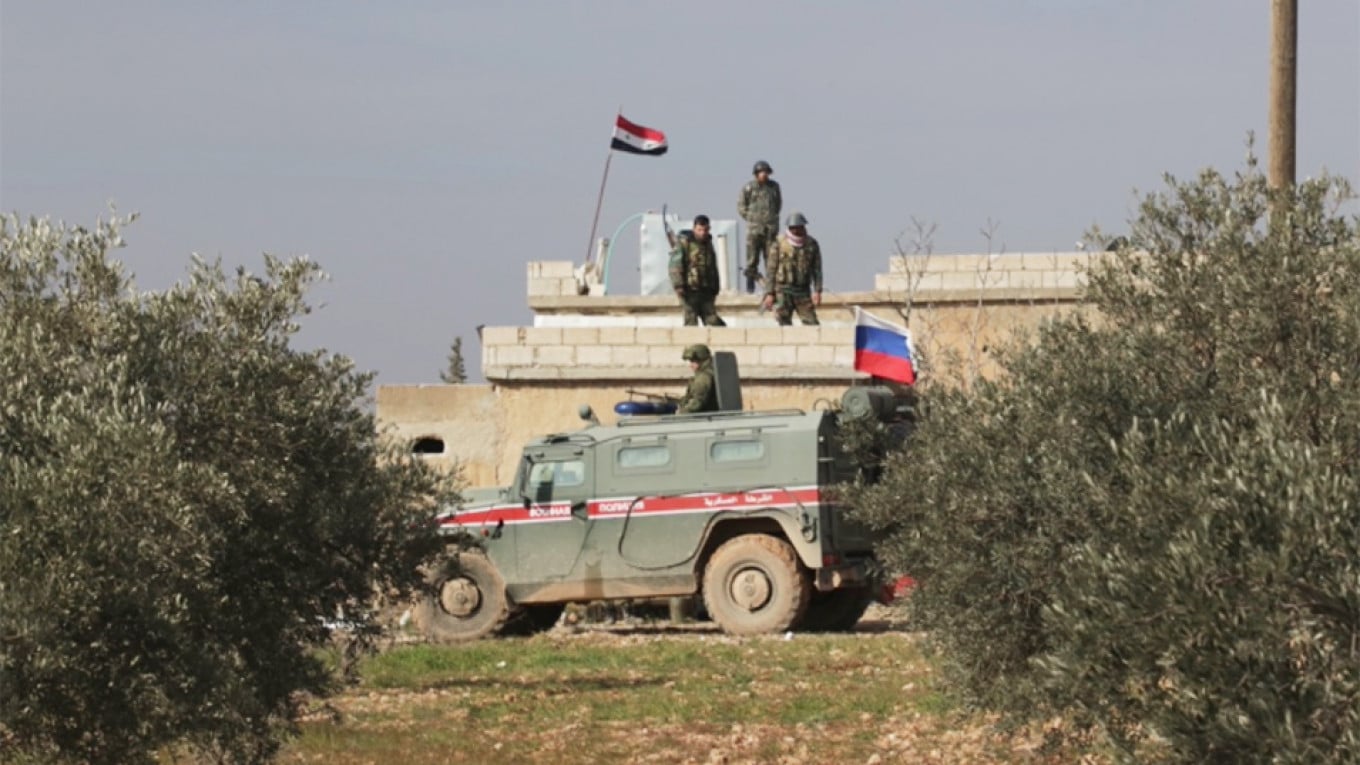
By Scott Ritter November 4, 2019 At a time when the credibility of the United States as either an unbiased actor or reliable ally lies in tatters, Russia has emerged as the one major power whose loyalty to its allies is unquestioned, and whose ability to serve as an honest broker between seemingly intractable opponents is unmatched. Originally posted on Truthdig.com on October 30, 2019 here If there is to be peace in Syria, it will be largely due to the patient efforts of Moscow employing deft negotiation, backed up as needed by military force, to shape conditions conducive for a political solution to a violent problem. If ever there was a primer for the art of diplomacy, the experience of Russia in Syria from 2011 to the present is it. Like the rest of the world, Russia was caught off guard by the so-called Arab Spring that swept through the Middle...
turkey-russia-putin-erdogan-921407
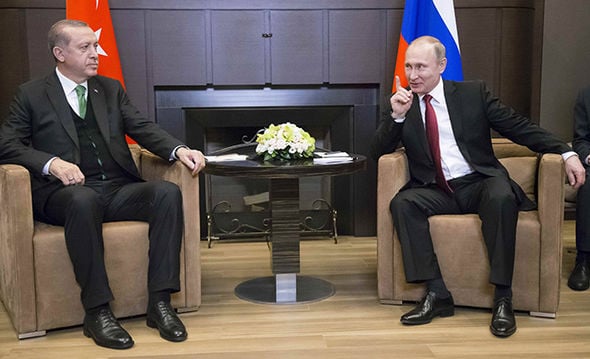
Interviewed by RT International Among other things, I argue that the international so-called ‘community’ – there definitely is no such thing – is still regrettably simple, or primitive, when it comes to making peace. Here two leaders meet and discuss affairs pertaining fundamentally to what shall happen on the territory of a third sovereign state which is not present. Their focus is on the means of violence – which have already been used and created the situation whereas there is no awareness, it seems, of how important it would have been to address the underlying conflicts. Conflicts are the basic unit if you want to create peace – the violence mostly a symptom of conflicts – problems – un-resolved. International law is violated in several ways – and has been the last 10-15 years when it comes to Syria. It started with the US deciding to go for regime change...
US-sanctions
Prefatory Note: The post below is a slightly modified version of an interview published in The Nation on September 25th, following the September 14th attack on Saudi oil facilities. It follows a pattern with respect to Iran of accusations, denials, and public uncertainties. This combination of elements, given the leadership in Washington and Tehran, one blustering, the other inflexible, can easily produce an unintended stumble into war. A second shorter interview is appended, conducted prior to the attacks by an Iranian journalist, M.J. Hassani of Tasnim News Agency. It illustrates the seeming rigidity of Iran’s Supreme Guide, considered as having the final word on government policy, exceeding that of the elected leadership. Originally posted on Richard Falk’s personal blog on October 1, 2019, here Daniel Falcone Introduction to the Interview: After accusations of Iranian drone attacks on Saudi oil facilities, Iranian officials and authorities indicated that “full-fledged war” with the United States could...

ChatGPT Image 9 jun 2026, 11_11_33
Insurgencies may not die, but at least, like old soldiers, they usually fade away. Well, that seemed to be the case with the Kurdistan Workers’ Party, the PKK. For the best part of five years between 2000 and 2005 there was a truce in Turkey’s bitter and savage civil war. But it did not last. The Kurdish “problem” goes back to the Ottoman Empire. The rugged mountains where Turkey, Iraq and Iran meet have been called Kurdistan since the early 13th century, and the Kurds’ roots can be traced back at least 2,000 years. Most of the world’s 20m Kurds live in the region, although well over a million have emigrated to Istanbul, Baghdad, Tehran and Beirut, often assimilating well with the local people. Turkish President Recip Tayyip Erdogan blames the PKK for its provocations. However, it is the army that often has done the provoking, even on occasion using...
c8ddd0cb93fc674b1cb425fea6242d22
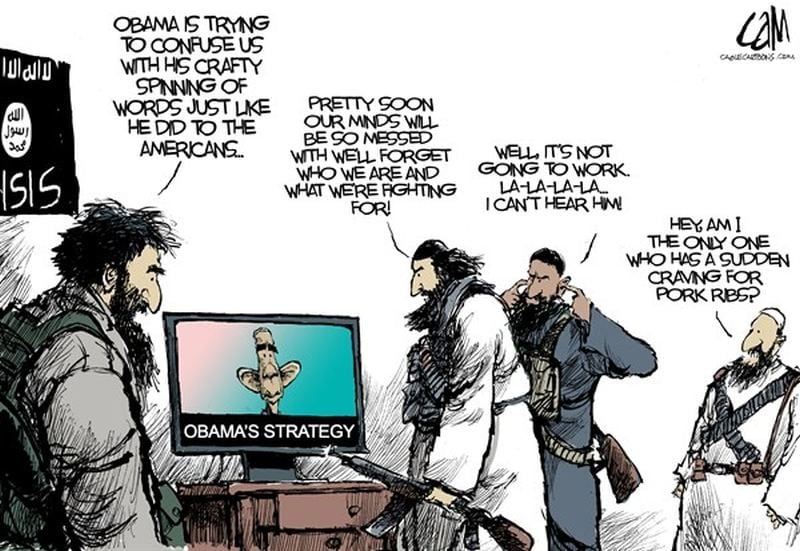
By Gordon M. Hahn October 1, 2019 Five or six years ago, when I was still working most intensively on issues related to jihadism in Russia and globally, I warned of the Caucasus Emirate-tied network running from Russia’s North Caucasus to ISIS in Syria and Iraq through Turkey, Azerbaijan and Georgia (with Tbilisi’s connivance) (see previous articles here and here). Originally posted on Gordon M. Hahn’s personal blog on September 29, 2019 here Somewhat more recently, I also had written about former US President Barak Obama’s Muslim Brotherhood (MB) strategy for bringing ‘Islamic democracy’ to the Muslim world and its dire consequences in Egypt, Libya, Syria and elsewhere in what came to be misnamed the ‘Arab Spring’.  America’s hopefully accidental but nevertheless resulting connivance with ISIS and Al Qai`da-tied groups (e.g., AQ-tied Jabhar al-Nusrah) was exacerbated by intentional connivance by one of Obama’s partners in creating the Arab winter: Turkish...
FarhangOld
Iran’s Foreign Minister Dr Mohammad Javad Zarif gave a speech at the Stockholm International Peace Research Institute (SIPRI). SIPRI is a highly respected research institute with a special place in the hearts of peace-lovers throughout the world. In a world where there are so many think thanks and organisations advocating war and conflict, the few peace institutes have a big role to play to fill the void and provide an alternative voice to the dominant clamour of corporate media that represent the establishment and its reliance upon conflict and the military-industrial complex. The sanctions on Iran violate international law The latest series of American extraterritorial sanctions on Iran have given rise to enormous hardships and food and medical shortages experienced by ordinary Iranians. The dispatch of military forces and warships to the Persian Gulf have brought the world to the verge of another devastating war in the Middle East that...
IranColl_2_PhSh-kopia
Iran Collage # 1 On August 21, 2019, Iran’s foreign minister, Dr. Javad Zarif, gave a speech at the Stockholm International Peace Research Institute, SIPRI. Zarif spoke at length without a manuscript, in details and with references to facts and history of the region and the conflict’s history – based on a cohesive framework of theories, concepts and interpretation – which, taken together, places him in a category of his own among the world’s foreign ministers. The UN Security Council Resolution – 598 of 1987 – that Zarif refers to can be read here. One should indeed be grateful to SIPRI for having invited him. • Politically correct, tired routine coverage by the leading Swedish media Generally speaking, leading Swedish mainstream media have been promoting a negative view of Iran as well as Javad Zarif himself. The largest coverage has been about human rights in Iran, Iran as a threat...
cropped-Counquest_of_Jeusalem_1099
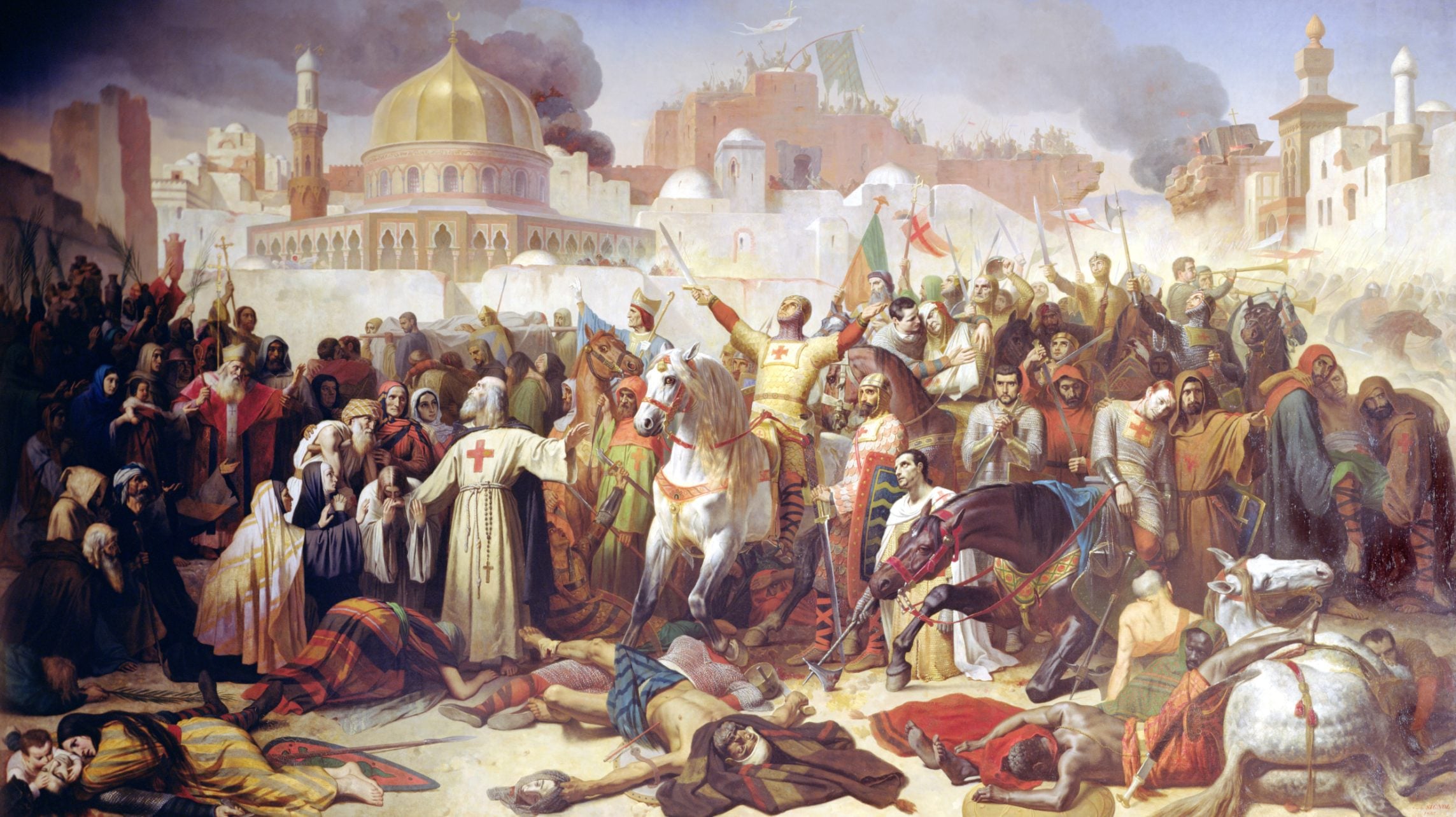
By Dr. William R. Polk June 27, 2019 Exclusive: Many Americans and Westerners are baffled by the violent rage expressed by many Muslims, but the reasons for their anger are real, deriving from a “deep history” of anti-Islamic wars and colonial exploitation of the Middle East, as ex-U.S. diplomat William R. Polk describes. Originally published by Consortium News on August 15, 2015, here The issue of terrorist attacks on America has been so politically sensitive that most commentators have simply wrapped themselves in the flag and closed their eyes and ears. Yet, even in fairy tales, ostriches were never saved by burying their heads in the sand. It is not a good defensive posture and it wouldn’t be wise for real-life Americans to behave like make-believe ostriches. If we want to be safe rather than sorry in the dangerous world we now inhabit, we need to be clear-headed, logical and informed. Those...
stonemen2-1-
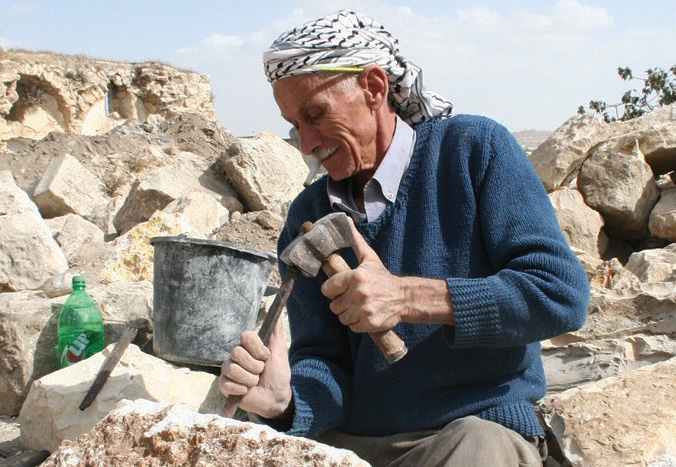
Andrew Ross’s Stone Men: The Palestinians Who Built Israel, Verso, 2019. On May 10th Andrew Ross came to University of California, Santa Barbara for a discussion of his extraordinary book, Stone Men, offering the audience a lively presentation enlivened by a Powerpoint array of informative pictures. I took part in a conversation with Andrew that was held prior to giving the small, yet intense, audience an opportunity to participate with questions. Andrew expressed the most startling aspect of Stone Men in these words:“..it would be no exaggeration to say that the ‘stone men’ of Palestine have built every state in the region except their own.” (3) Originally published on May 13th, 2019 on Richard Falk’s blog here His very readable text mainly adopts a somewhat narrower focus, concentrating its efforts on the particular role of Palestinian workers and the rich stone quarries of Palestine in the physical evolution of the Israeli state, not only establishing its architectural...
IMG_7593_1000_72
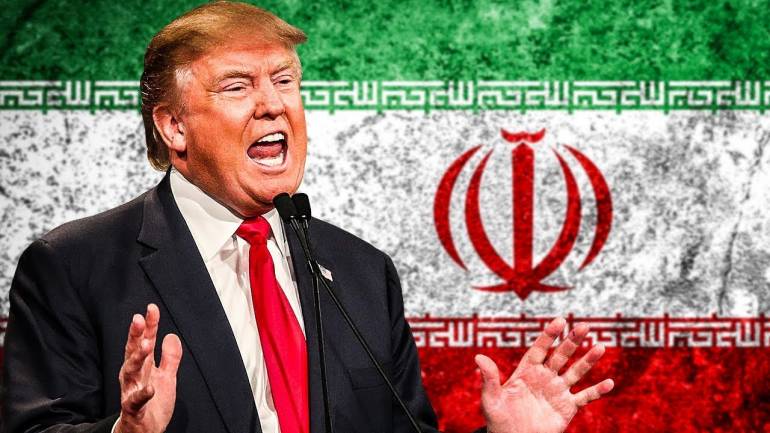
On Monday, 13 May 2019, the New York Times posted an article with the title “White House Reviews Military Plans Against Iran, in Echoes of Iraq War”. Besides the aircraft carrier and other naval forces already sent to the Persian Gulf, plans include sending as many as 120,000 US troops to the region. There is a great danger that an attack on Iran might be sparked by a Gulf-of-Tonkin-like false flag incident involving Saudi oil ships. On Sunday, 19 May, Donald Trump tweeted: “If Iran wants to fight, that will be the official end of Iran. Never threaten the United States again!”. He did not specify how or when Iran had threatened the US. Why is the possibility of a military attack on Iran especially worrying? Such a war would completely destabilize the already-unstable Middle East. In Pakistan, the unpopularity of the US-Israel-Saudi alliance, as well as the memory of...
US-sanctions
Trump’s statement amounts to a de facto declaration of war on Iran. Objectively speaking, it is a lie that Iran threatens the US. It is a lie that the US sends aircraft carriers to the region in self-defence. It’s lies as blatant as the one about Saddam’s weapons of mass destruction. You may think that this is just psychological warfare and positioning. It is not. Because: Over time, this type of statements develop its own dynamics and the US will not be able to back down from what it threatens to do without loosing face. President Trump’s statement is a blatant violation of international law, the UN Charter’s Article 2.4 which states:“All Members shall refrain in their international relations from the threat or use of force against the territorial integrity or political independence of any state, or in any other manner inconsistent with the Purposes of the United Nations.” In...
Categories

Year

Author / Contributor

Region